Peter Hoskin

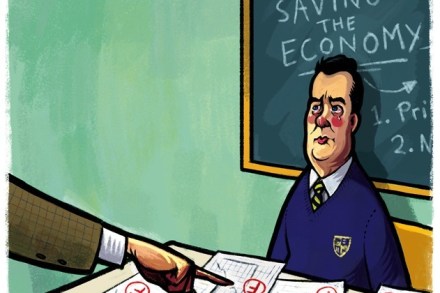
Without growth, Osborne’s best-laid schemes will go awry

Strikes, Olympic boycotts and obesity league tables — it's a dreary set of newspaper front covers this morning. But none of them are quite so dreary as the Telegraph's, which speaks of ‘The return of recession’. According to their story, the OECD has told ministers that its latest set of forecasts, released on Monday, will have the UK economy shrinking for the first six months of next year. They're not the first forecasting organisation to suggest a double-dip — going by the Treasury's overview of indpendent forecasts, Schroders Investment Management have economic ‘growth’ at -0.4 per cent in 2012 — but they are the most prominent so far. Shudder ye might. Of course, one forecast does not make a recession by itself.

From the archives: A nation ablaze

A more recent gem from the archives than we would normally mine, but with the forthcoming government report into the riots — and with Fraser's and David's recent posts — we reckoned you might care to (re-)read Harriet Sergeant's piece from this summer. It formed the centrepiece of an issue largely dedicated to those fiery disturbances, and which also included thought-provoking articles by Theodore Dalrymple and Ravi Somaiya. Here it is: These rioters are Tony Blair's children, Harriet Sergeant, The Spectator, 13 August 2011 On the third day of the London riots I received a telephone call from Mash, a member of a Brixton gang who I befriended three years ago. He was standing outside an electronics shop in Clapham, watching the looting.

A Clegg-up for young workers?

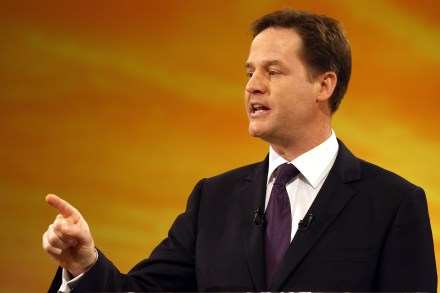
There was a time when Nick Clegg was the most agile and persistent defender of the coalition's deficit reduction programme. But now — although he's still got it in him — he is more often wheeled out to announce some spending wheeze or other. A couple of weeks ago, it was the next instalment of the government's regional growth fund. Today, it's a £1 billion scheme, spread out over three years, to encourage companies to take on young people. This latest scheme is one of those that looks very neat on paper. Put aside questions about how it will be funded, and what we have is a plan whereby £2,275 will be paid to companies for each young recruit they bring on. It means that, in effect, the state will cover half of the youth minimum wage for a six-month period.

Talkin’ ’bout long-term stagnation

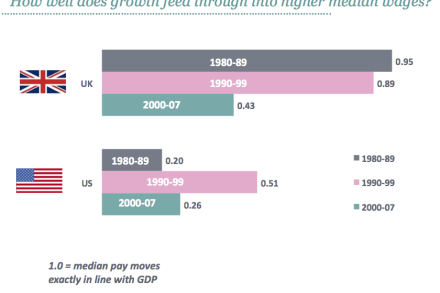
Politics is often a messy squiggle, but this morning's Resolution Foundation event did much to reduce it to a binary choice. Do we follow the US into a decades-long stagnancy around low-to-middle-income earners? Or do we not? James Plunkett explained the basic dilemma on Coffee House earlier, but more was said by a group of panellists which included Jared Bernstein, Martin Wolf, Steve Machin and Lane Kenworthy. Here, for the saddest CoffeeHousers, are eight points that I've distilled from my notes. This is more reportage than opinion, but I thought you might care to applaud or eviscerate some of the arguments that were put forward: 1) The UK triumphant. Or not quite — but at least we've outpaced the US on most measures of income growth for low-to-middle earners.

Saif Gaddafi captured — but what now?

Remember when Saif Gaddafi was the Anointed One of those who wanted a freer, more liberal Libya? Now, he's at the mercy of militiamen in the city of Zintan, having been captured today. It leaves Abdullah al-Senussi, the former intelligence chief, as the most infamous member of the old regime still on the run. The details of the capture are still hazy, like so much else during Libya's revolution. What's striking is that, unlike his father, Saif Gaddafi appears to have been unharmed by the process. Reuters are sure they spoke with him earlier today (although the man wouldn't confirm his identity), and the only wounds he was carrying were, he claimed, sustained during a Nato air strike, ‘one month ago’.

Assessing the sick

Should GPs determine whether people on long-term sick leave are too ill to work? Perhaps not, according to the draft copy of a government-commissioned review into sickness absence. It proposes setting up a new, separate and independent body to assess those on long-term sick leave, on the grounds that doctors have no incentive — nor, perhaps, the specific knowledge — to prod and coax them back towards employment. The new service, it is said, would advise sick leavers, and their employers, about just what they can and can't manage. If the government does introduce this, it will be another sign of their intent to untangle the problems with sickness benefits.

Some advice for Osborne

In the latest issue of the magazine, a flock of politicians, commentators and economists offers George Osborne some advice for growing the economy. There are ten contributions in total, but here are three for CoffeeHousers' consideration: Arthur Laffer Chairman, Laffer Associates Cut the 50p tax Reducing the burden which government places on the economy, through tax cuts, is the surest way to promote growth. I have never heard of a country that taxed itself into prosperity. Yet Britain last year raised the top rate of income tax from 40 per cent to 50 per cent. For more economic growth, and more tax revenue, this rate should be lowered immediately.

Osborne sells off the Rock

‘Sir Richard Branson set to buy Northern Rock.’ So read the headlines in November 2007 — and now they're finally true. It has been announced this morning that Virgin Money is going stump up £747 million to return the bank to the private sector. This, says George Osborne, ‘is an important first step in getting the British taxpayer out of the business of owning banks.’ By the looks of it, Virgin will be paying less than they would have done four years ago, but they have also had to make various assurances about how they will handle the Rock. When Branson's bid failed in 2007, and the bank was nationalised, it was because the government started worrying about what they saw as 'extortion' on Virgin's part.

Clark versus May, round 2

The simmering feud between Brodie Clark and Theresa May has boiled over today. Speaking to the home affairs select committee earlier, the former border official didn't just repeat the substance of his resignation statement from last week, but ramped it up into a rhetorical assault on the home secretary. ‘I never went rogue and I never extended the trial without the Home Secretary’s advice,’ he said of the recent easing of border controls. ‘I’m just very conscious that over 40 years I’ve built up a reputation and over two days that reputation has been destroyed and I believe that has been largely due to the contributions of the Home Secretary,’ he added for emphasis.

Halfon seeks to cool the inflationary fires

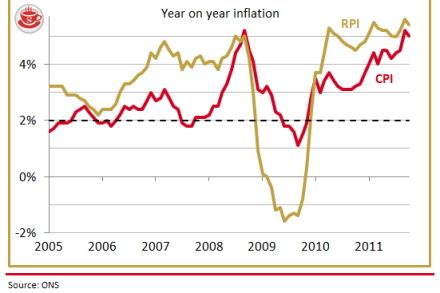
Don't whip out the cava just yet, CoffeeHousers. Inflation, in both its CPI and RPI incarnations, may be down on last month's figures, but the latest numbers are hardly cause for jubilation. At 5.0 per cent in October, CPI is still over double the Bank of England's target figure, and it's far outpacing the average growth in people's wages. The truth is that living costs remain constrictive, and at a time when the economy could teeter back into cataclysm at any moment.      Hence Robert Halfon's motion on fuel prices, which will be debated in the Commons today. It's another one of those motions triggered by an e-petition (112,189 signatures and rising), and it makes a simple plea: people are struggling, so how about doing more to cut the cost of fuel?

Will Project Merlin keep on keeping on?

How goes the lending part of the government's Project Merlin accord with the banks? Judging by the figures released by the Bank of England today, neither brilliantly nor terribly. The amount loaned to small and medium enterprises fell to £18.8 billion in the third quarter of this year, from £20.5 billion in the second quarter. But, as the Tory press office has been quick to point out, it still exceeds the equivalent amount dished out last year. And, what's more, the banks are still on course to meet the lending targets for 2011 — for both SMEs and companies in general — that were set out in the agreement itself.

Alexander drags Labour closer towards the Tories on Europe

You know, having read through Douglas Alexander's Guardian article a couple of times now, and listened to his appearance on the Today programme earlier, I'm still not sure how Labour's new stance towards Europe is particularly different from the official Tory one. The shadow foreign secretary tries to suggest that Dave and George's position is reckless — ‘they seem worryingly complacent about the prospect of a two-speed Europe’ — but he goes on to echo much of it himself. And so, he suggests, ‘We should engage now with the fact that Germany is seeking treaty change and seize this opportunity to safeguard the rights of non-euro members.

Cameron’s growing attachment to schools reform

A change of pace, that's what David Cameron offers in an article on schools reform for the Daily Telegraph this morning. A change of pace not just from the furious momentum of the eurozone crisis, but also in his government's education policy. From now on, he suggests, reform will go quicker and further. Instead of just focussing on those schools that are failing outright, the coalition will extend its ire to those schools that ‘drift along tolerating second best’. Rather than just singling out inner city schools, Cameron will also cast his disapproval at ‘teachers in shire counties… satisfied with half of children getting five good GCSEs’. And rightly so, I'd say. In fact, the whole article is cause for optimism on a cold Monday morning.

Son of Brownies

How generous of Ed Balls to publish a transcript of his interview on the Politics Show earlier, so that we can amble through it on a Sunday evening. It contains, as you'd expect, more disagreeable parts than agreeable, and nothing more so than his comments about the national debt, deficit and all that. Two of his arguments, in particular, are worth alighting on because they're Brownies in the classic mould, and will probably be served up again and again: 1) ‘After the Second World War we took a number of years to repay our much higher level of debt. The government and Vince Cable have tried to get this done in one Parliament and it is backfiring.

Why Cameron can’t laugh off the Mercer story

And the most eyebrow-raising story of the day has to be this one in the People. It's their account of what Patrick Mercer is supposed to have said about David Cameron whilst being taped at a party last weekend — and it makes for perversely hilarious reading, whomever's side you take.    CoffeeHousers have probably read some of the quotations already. But if you haven't, then their tone is captured in this exchange from the People's transcript: GUEST: Where did David [Cameron] go wrong? MERCER: Well, he was born.

From the archives: A world at peace

To mark last year's Armistice Day, we republished The Spectator's editorial reponse to the end of the first world war. This year, here is the editorial from the end of the second world war: A world at peace, The Spectator, 17 August 1945 The world is at peace. That assertion is possible at last. The war that most concerned this country and Russia ended in May. The war that most concerned the United States and parts of the British Commonwealth has ended in August. It has laid unequal strains on various Allied Powers. Britain and America have been at war with Japan for nearly four years, Russia for no more than a week. China for eight — and in effect for fourteen — years.

Where does Cameron stand on 50p now?

One letter, that's all it takes. After 38 City types wrote a letter to the Daily Telegraph this morning, urging George Osborne to drop the 50p rate of income tax, Westminster types have been chirruping on about it ever since. All three party leaders have had their say, except, so far as I can tell, Ed Miliband — although Ed Balls stood in for him anyway. Of all the responses, it is David Cameron's that is the most noteworthy and perhaps even surprising. Speaking about deficit reduction on the Jeremy Vine Show earlier, the PM was unequivocal: ‘We have to try and do this in a way that is fair so that the broadest backs bear the biggest burden,’ he said, ‘That's why we haven't changed, for instance, the 50p tax rate.

The eurozone’s cash-flow problems

The markets, it seemed, wanted Berlusconi to go. Berlusconi duly announced his resignation yesterday. And now what? The interest paid on Italian ten-year bonds has just hit 7 per cent. The eurocrisis is hastening ever onwards, with our without the departing Italian PM. 7 per cent, as you will be reminded frequently today, is the rate at which bailouts became necessary for Greece, Ireland and Portugal. It's not certain whether it will mean the same for Italy — as Sky's Ed Conway recently blogged, some analysts reckon they could cope with a rate of around 8 per cent — but it does suggest that investors are rapidly losing faith in the country's creditworthiness.