
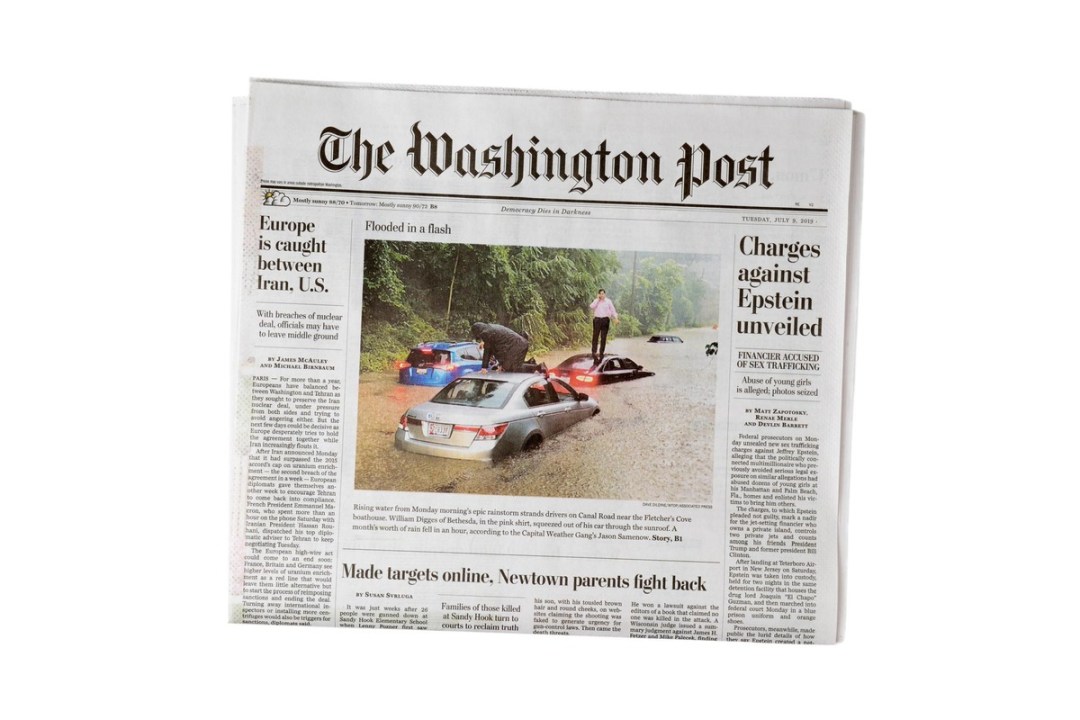
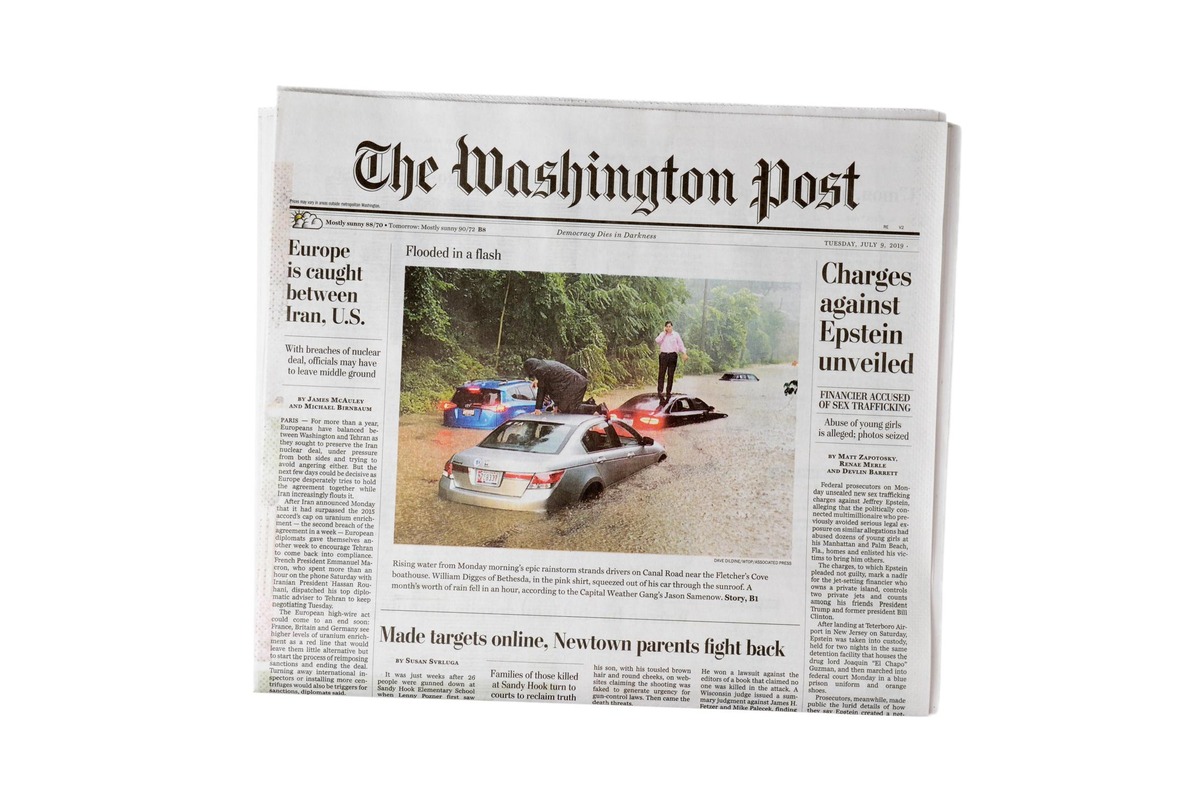
What does Jeff Bezos’s gutting of the Washington Post say about America’s sense of itself and of its place in the world? Bezos has scrapped much of the paper’s foreign coverage, as well as the books and sports sections. Over three hundred reporters and editors have been fired – including publisher Will Lewis. The Ukraine bureau has been closed, along with Berlin and the entire Middle Eastern and Iran team. You’d think there wasn’t much going on in the world.
Does that mean that American readers are no longer interested in books or foreign news? That doesn’t sound true. The numbers of literate, educated and interested readers in the US who were devoted followers of the Post’s world-class books section and prizewinning foreign coverage haven’t collapsed. What’s changed is something different. The people who do care about world affairs and literature are not the kind of people whose attention Bezos wants to attract. His new demographic is fans of Amazon’s new Melania documentary.
Many agonized Post readers – as well as veteran journalists, the most Twitter-literate boomers around – have observed the bitter irony that a man whose fortune was founded on selling books has so callously scrapped such a storied literature section. But they miss the point. Amazon does indeed sell about half of the 300 million books sold in the US – but that now accounts for just $28 billion of the company’s $718 billion 2025 revenue.
The axing of the foreign news section – including the firing of the entire Kyiv bureau, the Middle East staff and most of the Iran team – is also an obvious chop if your focus is on a core readership of Beltway politics obsessives and local Washington city-beat readers. Comprehensive worldwide news coverage is a prestige project now reserved for publications whose readers either have bucks in the global game – Bloomberg, the Wall Street Journal, the Financial Times, the Economist – or number themselves among the few outlets with aspirations to be papers of record. In the US, the list of general-interest, non-financial newspapers with a serious international presence has now dwindled to just one – the New York Times.
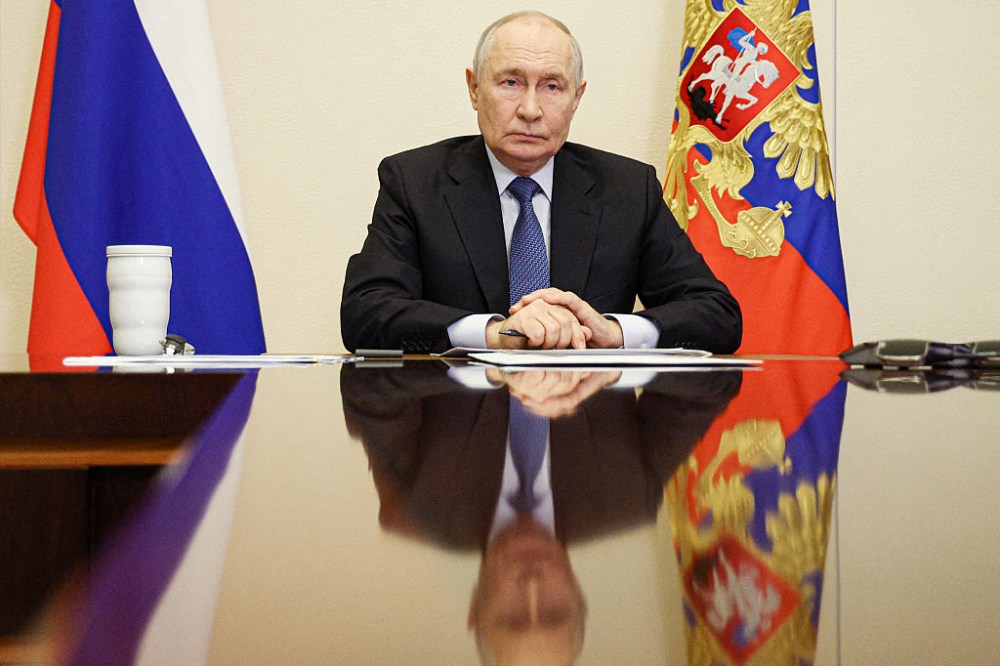
Even in the heyday of American print journalism, foreign news was always a hard sell. When I joined the Moscow Bureau of Newsweek – then owned by the Washington Post Company – as a correspondent in 1997 getting a Russia story into “the book” was as hard as pitching a foreign film to the Oscars. There were dozens of categories for all things American, but just a handful of tiny slots for News from Elsewhere. It was only on a few seismic occasions when the outside world came to bite the US on the ass – most notably on 9/11 – did a shocked newsroom sit up and take notice. For a little while at least. “Why they hate us” was the half incredulous, half-indignant cover line of Fareed Zakaria’s cover story explaining the road to 9/11 to domestic US readers.
Bezos doesn’t care about foreign news because most of America doesn’t care. This is not irrational. The fundamental disinterest of most Americans about the rest of the world is founded not so much on incuriosity as a sense of the absolute distance of everywhere else from their country, and the perception that the distant world is basically unimportant to most day-to-day American lives. In Europe, a foreign country is a short road trip away. For most Americans, especially the 53 percent that don’t have a passport, abroad is a distant and probably dangerous planet.
The most seismic part of Bezos’s jettisoning a third of the Post’s staff is what it says about what it means to own a major newspaper in the world today. A century ago the likes of William Randolph Hearst and the great British press barons Lords Northcliffe (a Canadian), Beaverborook and Rothermere (Irish-born brothers) made and broke governments and policies. Today Rupert Murdoch stands alone at the apex of media and politics – and even he long ago shifted the seat of his power to TV’s Fox News. Clearly, Bezos quickly came to see his ownership of the Post as a political liability rather than a tool of influence. When the Post declined to endorse Kamala Harris for president (though stopped short of supporting Trump) the furore in liberal media circles was huge – and a lose-lose for Bezos who caught all the flak for allegedly interfering with editorial policy but without being able to deliver the Post for MAGA. If you want real political influence today, buy Twitter. Or Joe Rogan – though he’s probably the only podcast host with a little ideological wiggle-room. Most of the podcast universe, from Breitbart across to Pod Save America – exists in tight ideological corrals. The general-interest, politically-balanced podcast either hasn’t been invented or its so niche that nobody listens to it.
Even when owning a major US legacy publication ceased to be a political power play, until relatively recently it was at least prestigious in elite circles. US News and World Report owner Mort Zukerman famously joked that without his magazine he would be “just another rich Jew on the beach.” In November 2023 Bezos brought in big-hitting media manager Will Lewis as chief executive and publisher in a bid to turn the paper’s fortunes around. He now departs alongside the newsroom staff who are paying the price for his failure to turn the Post into an enviable asset. It now seems that the Post is no longer a prestige property – at least not in the kind of elite circles that interest Bezos. “He bought the Post thinking that it would give him some gravitas and grace that he couldn’t get just from billions of dollars, and then the world changed,” Post associate editor David Maraniss said of Bezos. “Now I don’t think he gives us – I don’t think he gives a flying fuck.”
One thing Bezos’s purge of the Post is definitely is not about is the money. “If Jeff Bezos could afford to spend $75 million on the Melania movie & $500 million for a yacht to sail off to his $55 million wedding to give his wife a $5 million ring, please don’t tell me he needed to fire one third of the Washington Post staff,” blasted Senator Bernie Sanders. It has been calculated that Bezos could afford to cover the Post’s $100 million annual loss for five years with the profits Amazon generates in a single week.
“Democracy dies in oligarchy,” fumed Sanders. But the one thing about the Post story that is completely unsurprising – and historically-rooted – is that oligarchs have for a century and a half been the usual proprietors of newspapers all over the world. Rather, what is most significant about the Post saga is that America’s oligarchs have apparently lost interest in mainstream media, even as a prestige toy.
What happens next? I know because it happened to Newsweek. Great media properties holed below the waterline sink link the Titanic – slowly at first, almost heedlessly, then very fast. These cuts will bleed readers and a fast death spiral will ensue. “This is a case study in near-instant, self-inflicted brand destruction,” says former Post executive editor Martin Baron.
Does it matter? Famously, the Post’s motto is that democracy dies in darkness. But maybe democracy in the age of Trump has already found different, multicoloured and variously focused, sources of illumination with which to see its way forward.



Comments