Michael Simmons

Michael Simmons

Michael Simmons is The Spectator's economics editor. Contact him here.

Revealed: GPs are over-diagnosing mental health conditions

Britain is turning sadness into sickness. More than four in five GPs believe that the ups and downs of normal life are being wrongly redefined by society as mental disorders. The news, from the Centre for Social Justice’s (CSJ) report Change the Prescription, follows comments from Tony Blair, who said: ‘You’ve got to be careful of encouraging people to think they’ve got some sort of condition other than simply confronting the challenges of life.’ It seems reasonable to ask why GPs continue to prescribe pills that the vast majority of their profession consider to be inappropriate The findings in the CSJ’s report show that: Some 84 per cent of GPs believe everyday challenges of life should not be seen as mental health problems.

Employment suffers largest fall since pandemic

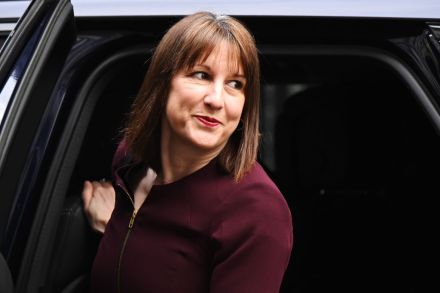
Rachel Reeve’s £25 billion National Insurance rise is beginning to bite. According to the latest data on our labour market, released this morning by the Office for National Statistics, payrolled employment fell by 47,000 last month — the sharpest fall since the pandemic. Meanwhile, the number of vacancies in the economy fell for the 30th consecutive period, unemployment rose to 4.4 per cent and there have been 21,000 more redundancies than in the same period a year ago. In a boost to those British workers still in jobs, pay is on the up. The ONS’s figures show that once inflation is removed the average worker experienced a 2.4 per cent pay rise in the three months to November last year.

Reeves’s worst week so far?

16 min listen

It's been a tricky week for Rachel Reeves: an onslaught of criticism for the levels of borrowing costs, GDP at 0.1 per cent, and stagflation still gripping the UK economy. Remarkably she has come out of it looking stronger – politically at least. But can she afford to celebrate? The Spectator's Kate Andrews and data editor Michael Simmons join the podcast to discuss the economy, and go through some of the most striking graphs from The Spectator'sdata hub this week. Produced by Natasha Feroze.

Empire of Trump, the creep of child-free influencers & is fact-checking a fiction?

43 min listen

This week: President Trump’s plan to Make America Greater In the cover piece for the magazine, our deputy editor and host of the Americano podcast, Freddy Gray, delves into Trump’s plans. He speaks to insiders, including Steve Bannon, about the President’s ambitions for empire-building. Could he really take over Canada, Greenland and the Panama Canal? And if not, what is he really hoping to achieve? Academic and long-time friend of J.D. Vance, James Orr, also writes in the magazine this week about how the vice president-elect could be an even more effective standard-bearer for the MAGA movement. Freddy and James joined the podcast, just before Freddy heads off to cover Trump’s inauguration.

Is public sector headcount out of control?

Eyebrows were raised in the House of Lords this week as the Justice and Home Affairs Committee heard evidence that the Ministry of Justice is having to recruit from overseas to staff Britain’s overcrowded jails. Mark Fairhurst, the national chairman of the Prison Officers’ Association, said: We are recruiting from overseas and you are getting recruits from overseas, we have heard, turning up at the gate with suitcases and family in tow asking “Where is my accommodations?” [...] We have got examples of overseas recruits sleeping in their cars because they have no accommodations.

Sturgeon-Murrell split & Scotland’s Reform challenger

13 min listen

Former Scotland First Minister Nicola Sturgeon has announced she is separating from her husband Peter Murrell, former chief executive of the SNP. The announcement comes as the police probe into the SNP’s funds and finances remains ongoing, with Sturgeon and ex-SNP treasurer Colin Beattie under investigation while Murrell was charged with embezzlement in April 2024.  Katy Balls is joined by The Spectator’s editor Michael Gove, and data editor Michael Simmons, to discuss the separation, why the investigation is still ongoing four years later, and what chances Scottish Labour or Reform have against the SNP in 2025.

Catherine Lafferty, Michael Simmons, Paul Wood, Philip Hensher, Isabel Hardman and Damian Thompson

39 min listen

On this week’s Spectator Out Loud: Catherine Lafferty argues that the drive to reduce teenage pregnancies enabled grooming gangs (1:27); following Luke Littler’s world championship victory, Michael Simmons says that Gen Z is ruining darts (6:32); Paul Wood looks at the return of Isis, and America’s unlikely ally in its fight against the terrorist group (10:35); Philip Hensher reviews a new biography of the Brothers Grimm by Ann Schmiesing, and looks at how words can be as dangerous as war (17:57); Isabel Hardman highlights the new garden now open at the Natural History Museum (26:57); and, Damian Thompson reveals he watched videos of plane crashes to distract himself from the US election coverage – why? (31:40).  Produced and presented by Patrick Gibbons.

Luke Littler’s bland entourage

Luke ‘The Nuke’ Littler, born two weeks after the first iPhone was unveiled, stormed the Professional Darts Corporation world championships last week to become, at 17, the sport’s youngest ever world champion. How Littler behaved after his win shows how different young sports stars are today. Littler didn’t celebrate by going out drinking; no hotel rooms were trashed. Instead, within hours of his quarter- and semi-final victories, he was on the video-game streaming website Twitch via phone call to his red-headed gaming friend Morgan Burtwistle – known online as ‘AngryGinge’.

2024: Cindy Yu, Michael Simmons, Angus Colwell, Igor Toronyi-Lalic, Mary Wakefield, Fraser Nelson and Michael Gove

38 min listen

On this week’s 2024 Out Loud: Cindy Yu examined Chinese work ethic (1:13); Michael Simmons declared his love of the doner kebab (6:28); Angus Colwell reported from Israel in July (9:27); Igor Toronyi-Lalic explained the inspiration behind the cinema of Marguerite Duras (14:41); Mary Wakefield analysed the disturbing truth of the Pelicot case (20:38); Fraser Nelson signed off as editor of The Spectator (27:01); and Michael Gove revealed his thoughts as he sat down at the editor’s desk (33:15).  Produced and presented by Patrick Gibbons.

Why Britain’s benefits problem is likely to get worse

More than half of Britons receive more from the state than they pay in taxes, according to figures from the Office for National Statistics. The proportion of those receiving more through benefits than they paid in taxes last year fell slightly to 52.6 per cent, down a percentage point compared with the year before. The data – which factors in use of public services, such as schools and the NHS, as well as welfare payments and benefits – highlights the fundamental problem underlying the British state: how do we support a population that is aging, getting ill and becoming increasingly workshy?As you’d expect, more than 85 per cent of pensioners are so-called net recipients who take more from the state than they put in.

Muhammad has been a popular name for ages

Muhammad topped the list of most popular boy’s baby names in England and Wales last year, knocking Noah from first place. The figures, released by the Office for National Statistics this morning, show that Muhammad was the most common name given to newborn boys last year; 4,661 boys were named Muhammad with 4,382 Noahs. The year before there were 4,586 Noahs and 4,177 Muhammads. When you analyse the names by different spelling, though, it becomes clear just how popular the name is. The spellings Muhammad, Mohammed, Mohammad and Mohamed combine for a total of 7,730 baby boys in 2023. That’s just over one in every 40 births. While today’s news perhaps seems a milestone demographic change in Britain's story, it’s really nothing new.

How twee triumphed, Graham Brady on Tory turmoil & celebrating pigs in blankets

37 min listen

This week: are we drowning in a sea of twee? Gareth Roberts writes the cover article this week, arguing against what he sees as the hideous triviality of our times. ‘The British have lost their aversion to glutinous sentimentality,’ he declares. How did we get here, and who are the worst offenders? Gareth argues that the triumph of twee has left us unable to face serious things with seriousness. Could there be sinister consequences if we don’t take this more seriously? Gareth joined the podcast to make his case, alongside Josh Cohen, psychoanalyst and author of All The Rage (00:49). Then: was Graham Brady the ‘kingmaker’ or the ‘kingslayer’ of the past Tory era? The shadow cabinet member and Conservative M.P.

The many faces of pigs in blankets

There are not many phrases that offend me more than ‘pigs in blankets’. The correct name for this dish is, of course, kilted sausages. In fact, the bacon-wrapped cocktail sausage has many incorrect names: the Irish go with kilted soldiers while the Germans call them Bernese sausages. The Americans for some reason wrap hotdogs in croissant pastry and call them saucisson en croûte, as though they’re some kind of European delicacy, à la Escoffier. Careful though, sometimes these deviations in name mask a greater sin. One Christmas, my posh nan promised ‘devils riding horseback’. I was thrilled for what I assumed must be the Nigella-fied version. Instead, she served baked prunes stuffed with almonds and wrapped in a sliver of bacon.

Does anyone know how many people live in Britain?

Can Britain trust its economic statistics? The nation’s arbiters of numerical truth, the Office for National Statistics, yesterday released what on the face of it was good news for the Home Office and a vindication of the previous Conservative government’s policies to reduce worker visas and the number of dependants of migrants arriving in the UK. But in truth – and in the same data dump – the previous year’s figure had been revised up so much (by 307,000) that had it not been, the net migration figure published yesterday would have matched the previous record high.These revisions matter.

Starmer attacks ‘open border’ Tories, plus Andrea Jenkyns defects

15 min listen

It's been a day of press conferences in Westminster. First to Reform UK, where Nigel Farage unveiled their newest defection: Dame Andrea Jenkyns, who had served as a Conservative MP from 2015-24. Could there be more defections on the horizon?  Next to Keir Starmer who reacted to the newly published migration figures from the ONS. Net migration for the 12 months to June 2024 stands at 728,000. But the real story was the revised 2023 figures, which showed net migration exceeding 900,000. The politics from the press conference were solid - but what about policy announcements? Oscar Edmondson speaks to James Heale and Michael Simmons, and they also look ahead to tomorrow's unpredictable assisted dying vote. Produced by Patrick Gibbons and Oscar Edmondson.

Labour should be cautious about celebrating the fall in net migration

How can you miss over 300,000 migrants? This morning the Office for National Statistics revised up its previous record high net migration figure to 906,000 meaning that since 2021, 307,000 more migrants are in the country than the ONS previously knew about. So, has Britain turned the corner on migration? There has been a 20 per cent fall in net migration in the year to June compared to the 12 months before, according to figures published this morning by the ONS. Some 1.2 million people migrated to the UK compared with 1.3 million the year before. Meanwhile, 479,000 left the UK, up from 414,000 the previous year.

Who should Labour target to ‘get Britain working’?

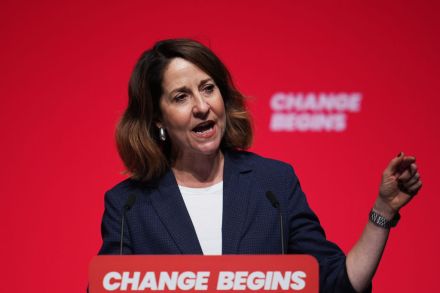
Labour talks of having the ‘bold ambition of an 80 per cent employment rate’. But who should they target to get there? The government published its white paper this week on ‘getting Britain working’ and tackling the growing health and disability benefits bill, which is forecast to hit £120 billion.  Figures slipped out by the Office for National Statistics today give more insight on which groups could perhaps be better targeted. These figures split out employment rates by parental status, and show that already more than 80 per cent of married (or cohabiting) mothers and 93 per cent of married (or cohabiting) fathers with dependent children are working. This doesn’t leave a huge amount of room for boosting the employment rate in a huge section of the population.

Can Keir Starmer get Britain back to work?

10 min listen

The government have announced their latest effort to get Britons back into work. A series of benefit changes intend to tackle the fact that Britain is the only major economy where the employment rate has fallen over the past five years, largely because more people are out of work due to long-term ill health. Why are the UK's post-pandemic figures so much worse than other countries? And can Labour's plans work? The Spectator's data editor Michael Simmons joins Katy Balls and James Heale.

Is Rachel Reeves running out of luck?

11 min listen

An unexpected rise in inflation today takes the rate to higher than the Bank of England's target, and adds to Rachel Reeves's worries. James Heale talks to Katy Balls and The Spectator's data editor Michael Simmons about the latest figures, and they also discuss the shadow minister Alex Burghart's performance at Prime Minister's Questions. Produced by Cindy Yu.

Inflation surge hits Britain’s ailing economy

Inflation rose to 2.3 per cent in the year to October, up from 1.7 per cent in September – its lowest level since the early weeks of the first lockdown in 2021. This surge above the Bank of England’s 2 per cent target was higher than economists and markets had expected. Worryingly, core inflation (which excludes more volatile goods like food and energy) has also increased slightly to 3.3 per cent – up from 3.2 per cent in September. The largest contributors to the rise in inflation were from the effects electricity and gas prices are having on household costs.