Michael Simmons

Michael Simmons

Michael Simmons is The Spectator's economics editor.

Britain’s economy is growing – but Labour could soon stop that

From our UK edition

Britain’s economy has surprised again. GDP grew 0.1 per cent in August, according to the Office for National Statistics (ONS). That’s obviously not much – but after 0.4 per cent growth in both June and July, pretty much every forecaster had expected a contraction. All of August’s growth came from production, which was up 0.8 per cent, while services were flat and construction continued its slump. Growth in AI, the ONS said, was driving things along with the legal and advertising sectors. Taken together, the surprisingly resilient growth figures – by the stagnant standards we’ve grown used to – we’ve had means that so far, at least, we are the fastest-growing economy in the G7.

A quarter of children could be classed as disabled by 16

From our UK edition

There is a statistic that should be leading the 10 o’clock news every single night: one in four Britons are disabled. Either it’s true and we have become one of the least healthy nations on earth or something has gone wrong in how we classify disability. But this is not a problem confined to adults. Data from the benefits system shows how the problem is starting in the very young, setting in motion what the Times’s Fraser Nelson reveals the Department for Work and Pensions privately calls a dependency ‘pipeline’ and ‘almost a dirty secret’. https://youtu.be/3e-3iLZBPpY?si=pd2nS-WA_6hWyX-Q In the episode, we reveal figures that show almost one in ten six-year-olds are now regarded as disabled by the benefits system.

The IMF has faith in Britain. Should it?

From our UK edition

Britain’s economy has come out near top of the class in the latest report from the International Monetary Fund. Overnight from the IMF’s meeting in Bangkok, its World Economic Outlook was published, finding that Britain’s economy will grow faster this year than it had expected. The new forecast put GDP growth this year at 1.3 per cent, up from the 1 per cent it had predicted in July. Next year it downgraded the pace of growth slightly from 1.3 per cent to 1.2 per cent. The new figures would make the UK the joint-second-fastest growing economy in the G7 after America. The upgrade for this year was thanks to the UK and world economies faring better against the Hormuz oil shock and the latest problems caused by the Houthi branch of just stop oil.

Three ways to get Britain’s economy moving

From our UK edition

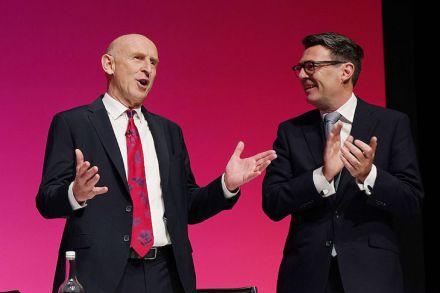
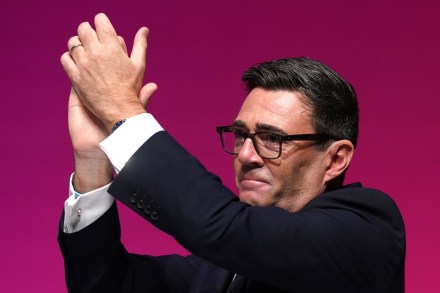
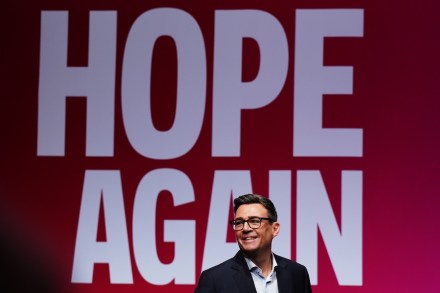
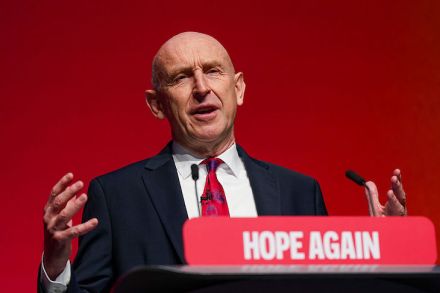
There was a palpable frustration from the Prime Minister in his Labour conference speech this week. ‘I would love to go quicker’, Andy Burnham told delegates, explaining he was constrained by the reality of our public finances. But his frustration isn’t just about not being able to splash the cash within the fiscal rules. He feels he needs a fresh mandate before making the more radical changes he’s keen to make. In some ways we should be thankful; despite the clearly impressive oratory and the totally sound decision to break the ratchet effect of the triple lock, it was a speech with some quite radical socialist principles at its core. Principles that have Britain’s financial ruin at their end. That’s for the election though.

Burnham calls time on the triple lock

From our UK edition

Not all heroes wear capes. Some wear black T-shirts. Andy Burnham has done what nearly every British politician knows needs to be done but dares never do. In his first speech as Prime Minister to the Labour party conference in Liverpool, Burnham announced the beginning of the end for the state pension triple lock. From 2030 the triple lock will switch to a double lock of inflation or 2.5 per cent with a longer-term adjustment to keep pace with earnings over time – a sort of double and a half lock. It is welcome progress although the details could be messy.  It’s the most progress we’ve ever had on dismantling the dreadful triple lock It will not, as Burnham intends, touch the sides on sorting out social care.

John Healey’s ‘new age of industrialisation’ is a fantasy

From our UK edition

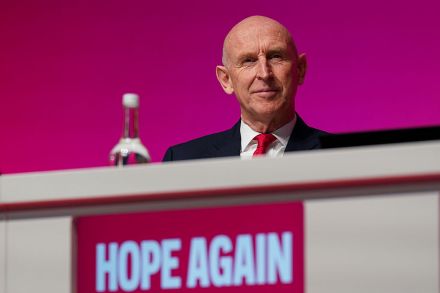
The first half of John Healey’s first Labour conference speech as Chancellor reminded me of old men in a bowls club reminiscing about the Korean war. For more than 15 minutes Healey set out his credentials as a Labour veteran. He’d gone from his constituency Labour party to the trade union movement and then to No. 11 (note, no mention of private business experience). He’s been around the block so long that Labour is ‘literally’ his family, he said, paying tribute to his wife. Once the thanks to the Mrs were out of the way, things moved to his true love: Gordon Brown. It felt, at times, like the Liverpool Convention Centre had been given over for a Brown memorial rather than the governing party’s conference.

Can John Healey dodge another round of tax rises?

From our UK edition

Ever since bond vigilantes around the world decided it was time to offload their holdings in sovereign debt, Westminster has assumed that tax rises are inevitable. It makes sense. Yields have soared, the market has priced in multiple interest rate hikes and earlier this week the Office for National Statistics (ONS) revealed that the government has overshot its borrowing forecasts. There are 23 Bloomberg Terminals across the Treasury, the Office for Budget Responsibility (OBR) and other agencies and their users will have been poring over them over the last couple of weeks to turn market reality into fiscal forecasts.

The wealthy person’s guide to fleeing Britain

Behind the scenes of The Spectator’s wealth tax debate this month there were lots of nervous whispers. ‘Wealthy people we work with are absolutely terrified about an exit tax,’ one Westminster figure remarked. The economist Arthur Laffer, one of the debate’s speakers, couldn’t believe a wealth tax was even being considered. Britain is already near the top of his famous curve – the point beyond which taxation reduces the Treasury’s take – and seems determined to push things to destruction. The latest fiscal rumour – that we might seize millions on a wealthy migrant’s departure – is a dangerous one. According to reports, it’s also the reason Chris Rokos, the third-highest taxpayer on the Sunday Times tax list, has decided to leave for Greece.

The Bank holding interest rates will be of little relief for John Healey

From our UK edition

The Bank of England has just voted six-three to hold interest rates at 3.75 per cent, a decision that makes Britain’s central bank an outlier following rate hikes from both the European Central Bank and America’s Federal Reserve. It’s the sixth time in a row the Bank has voted to hold rates. The decision also comes in spite of yesterday’s news that inflation climbed further away from the Bank’s 2 per cent target, hitting 3.1 per cent in August, and the Monetary Policy Committee’s own forecast that rising energy prices will drive inflation above 4 per cent in the first few months of next year. In a letter to the chancellor, Andrew Bailey, the Bank’s governor, also warned energy bills are likely to rise 24 per cent in the winter.

Another cost of living crisis is coming

From our UK edition

Britain is heading head first towards another cost of living crisis. Figures released by the Office for National Statistics (ONS) show inflation rose to 3.1 per cent last year – up from 2.9 per cent the month before. ‘Sharp’ rises in petrol and diesel costs were the main driver, the ONS said, with air fares making a considerable contribution too. The Chancellor, John Healey, put the blame on global events, saying: ‘The war in the Middle East is impacting on inflation worldwide, not just here at home. In our bills, our weekly shop and at the petrol pumps.

Britain’s public sector wage spiral

From our UK edition

Britain is in a wage spiral – though not a traditional one. Instead, job and wage growth is surging in the public sector while the private sector struggles. Unions put pressure on the government because of the cost of living, Labour grants pay rises, the cycle continues and a dwindling private sector picks up the bill. Figures just released by the Office for National Statistics (ONS) show that while private sector wage growth in the three months to July was flat at 2.9 per cent, it grew to 6.3 per cent in the public sector. Statisticians continue to insist that this is partly a ‘base effect’ whereby the timing of public sector pay rises occurred earlier than normal, but this explanation has been used for so long it is no longer credible.

Britain is growing. Will Healey mess it up?

From our UK edition

There are lots of reasons to seriously worry about the economy at the moment. The price of oil is surging, bonds are slumping (meaning yields are up again) and interest rate hikes are possible.  So it’s a relief to see this morning's GDP figures, just published by the Office for National Statistics (ONS), show Britain’s economy grew by 0.4 per cent in July. Most forecasts had predicted there’d be no growth at all. Instead, strong growth in the services sector was enough to cancel out weaker figures in production and construction. Within services, the largest contributing industries were admin and support services with the ONS saying computer programming and consultancy too.

Labour must go further and faster in the North Sea

John Healey stood in front of two giant robotic arms this week and promised to ‘make Great Britain Growth Britain again’. The Chancellor also promised, borrowing a catchphrase from his neighbour in No. 10, to deliver ‘good growth in every postcode’. In the North Sea, 150 miles east off the coast of Aberdeen, lies the first big test of this promise. The 6,000-ton Jackdaw extraction platform is ready to start pumping gas from a field three miles below the surface. Twenty years after the Jackdaw field was first successfully prospected, it will, at the stroke of a ministerial pen, finally be allowed to operate.

Bond markets are panicked by Burnham’s Britain

From our UK edition

When Andrew Griffith was appointed shadow chancellor on Monday, Labour MPs made much merriment of his involvement in the Liz Truss mini-Budget. Just a day later, Lord O’Neill, Burnham’s economics adviser when he entered No. 10, was pointing out that not since ‘Liz Truss days’ have we seen gilt yields rise as much as they did yesterday. A global sell-off in bonds due to fears of resurgent inflation and interest rate hikes helped push Britain’s 10-year yield to its highest level since 2008. The 30-year – a good proxy for our country’s long-term viability as a going concern – shot up to 5.85 per cent – its highest since the late 1990s. Those rises continued when markets opened a few moments ago.

The SNP’s food price cap bill is stupid and cynical

From our UK edition

If the first job of a government is national security the second probably ought to be food security. Odd, then, that the SNP seems to be pursuing a policy of national starvation. During May’s Holyrood election, economists – as well as anyone with a brain – panned the governing party’s manifesto commitment to introduce price caps on essential foods sold in supermarkets. This was an unnecessary electoral stunt that no one in the party had any intention of actually delivering.  Today, the Scottish government has begun going through the motions of pretending they will try to implement the policy by announcing a consultation period and releasing the draft Food Price Cap (Scotland) Bill.

Are tax rises coming?

From our UK edition

Welcome to kite-flying season. With exactly two months to go until Andy Burnham and John Healey’s first Budget, we’re beginning to get a shape of what's likely to happen. The headline is that they want this to be a nothing fiscal event. Headroom will be maintained, minor cost of living interventions will be funded and there’ll be a load of froth about plans for fiscal devolution.Healey, for his part, is determined to avoid the leaks that plagued Rachel Reeves’s last Budget. The Treasury has apparently rolled out some high-tech computer system to stop leaks happening. But they’re hard to avoid. I don’t think I’ll be kicked out of the magic circle for telling you nobody sends you a leak by forwarding it from their civil service email.

Jenny Gilruth was my teacher – the bullying claims don’t surprise me

From our UK edition

When I heard that a civil service insider had made bullying allegations against Scotland’s deputy first minister, Jenny Gilruth, I was not surprised. I’ve been at the receiving end of her ire myself. Gilruth taught modern studies – politics mixed with sociology – at my Edinburgh comprehensive school. She had a reputation for being a bit of a meanie and not someone you wanted to disappoint; she was certainly a disciplinarian. Those traits seem to have stayed with her as she climbed Edinburgh’s greasy public-sector pole, leaving teaching after a stint at Education Scotland before becoming an MSP and eventually John Swinney’s deputy.

Britain’s books are getting harder than ever to balance

From our UK edition

There’s good and bad news in the public finance figures, released by the Office for National Statistics this morning. July saw something of a borrowing splurge, with £1.8 billion needed from the markets to keep Britain afloat. That was up two-thirds on July last year and £2.3 billion above forecasts from the Office for Budget Responsibility, which had expected a surplus. But on a year-to-date basis, the borrowing figures were actually not that bad. Indeed, on the face of it, they make for fairly good news. In the financial year to July, overall borrowing has come in £6 billion lower than in the same period in 2025 – and only slightly above the OBR’s forecast.

Inflation hits Burnham’s cost of living pledge

From our UK edition

This week, Andy Burnham, in an article about how much he loves buses, declared that he will lead a ‘cost of living government’. Yet costs are going up, as confirmed by figures released by the Office for National Statistics (ONS), which show that inflation increased to 2.9 per cent in July – up from 2.6 per cent the month before. The rise was driven mostly by the 13 per cent increase in the energy price cap, which saw gas prices increase at their fastest rate in nearly four years. Crude oil and petroleum prices fell for manufacturers but this was not enough to offset the energy costs faced by consumers.

Burnham’s jobs apocalypse

From our UK edition

Is the Burnham bounce about to fizzle out? This morning has seen the first shaky set of economic figures since his ascension to Mayor of Great Britain. Figures released by the Office for National Statistics (ONS) show 13,000 jobs disappearing in July, following a fall of 13,000 in June too. In total, just under 100,000 jobs have been lost in the last year and 188,000 have gone since the election. Even more worrying in today’s release, though, is the headline unemployment figure of 4.9 per cent. Though flat, many economists had expected it to plunge. They predicted that because the figure is made up of an average of the previous three months and a large reading in March was due to drop out today, almost certainly sending the headline rate down.