James Walton

James Walton is The Spectator’s TV critic

The BBC at its nation-unifying best

From our UK edition

Children of the Blitz began with the surprising news – to me anyway – that while 800,000 British children in places likely to be bombed were evacuated during the war, two million weren’t. The evacuees’ stories have long been a TV staple, but this riveting documentary was the first programme of any kind I can remember about those who stayed at home. The experience was recalled with extraordinary vividness by people mainly in their nineties or beyond, all of whom gave the type of revelatory interview that programme-makers don’t get merely by pointing the camera and asking questions, but through the careful building of wholly justified trust.

In a fairer world, The Cage would receive a lot more attention than Half Man

From our UK edition

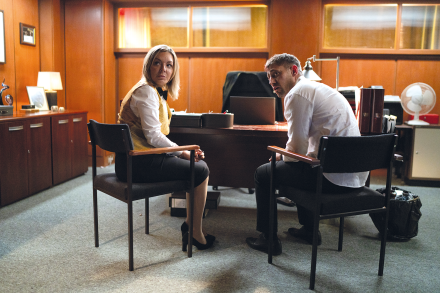
Half Man, Richard Gadd’s follow-up to the all-conquering Baby Reindeer, began with approximately ten seconds of some people at a wedding in rural Scotland having a good time. Two episodes later, they’re still about the only characters we’ve seen who aren’t having a gruesomely bad one. After that brief blast of jollity, the show moved to a nearby barn where the groom Niall (Jamie Bell) and his old chum Ruben (Gadd) were renewing their acquaintance in what would prove a characteristic way: with Niall looking terrified as Ruben menacingly recalled their former intimacy, menacingly caressed him, menacingly taunted him and menacingly smashed him repeatedly in the face.

Big Mistakes is hysterical – but not in a good way

From our UK edition

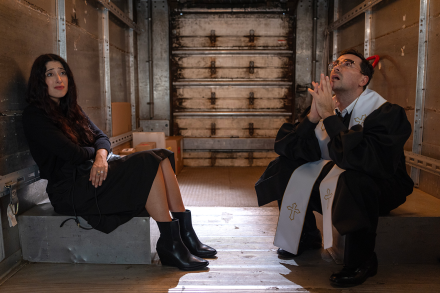
When following up a successful sitcom, should a writer head off into new territory or not? That was the question facing Dan Levy after Schitt’s Creek and John Morton after WIA – and now we have their answers: ‘yes’ and ‘not really, even with a change of country’ respectively. Curiously, both seem to have made the wrong choice. ‘Schitt’s,’ Levy has explained, ‘was so warm and sweet and cuddly. My natural curiosity was to go somewhere else more dangerous’; specifically, to provide ‘a story that’s thrilling but never not funny. That became the big challenge of the writers’ room.

Over-cautious and clumsy: The Downfall of Huw Edwards reviewed

From our UK edition

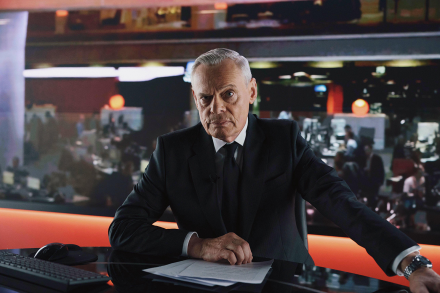
It’s not easy for a drama to be over-cautious and clumsy at the same time. Or to turn a real-life story that shocked (and, let’s face it, titillated) the nation into an oddly flat piece of television. So how did the much-hyped Power: The Downfall of Huw Edwards manage to do both? The answer, I’d suggest, is by failing to interrogate – or even engage much – with its own material. Instead, it opted to simply pass on the facts drawn from its own research, making only the most half-hearted and sometimes contradictory attempts to explain them. The programme began with Edwards (Martin Clunes) in his voice-of the-nation pomp, as he announced the Queen’s death.

Charming: The Other Bennet Sister reviewed

From our UK edition

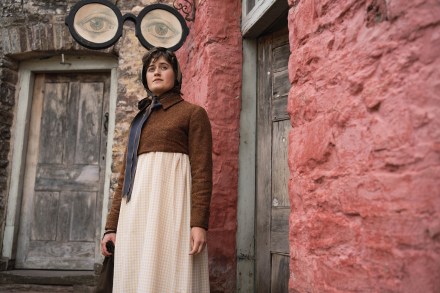
The Other Bennet Sister is to Pride and Prejudice what Tom Stoppard’s Rosencrantz and Guildenstern Are Dead is to Hamlet. The events of the original novel are all there, but the focus is on a character Jane Austen mostly neglected and occasionally scorned. One effect is that the other sisters, including the sainted Lizzy, come across as smug and snooty According to Mary Bennet’s opening voiceover: ‘It is a sad fact of life that if a young woman is unlucky enough to come into the world without expectations, she had better do all she can to ensure she is born beautiful. To be poor and handsome is misfortune enough; but to be penniless and plain is a hard fate indeed.

Bonkers: Young Sherlock reviewed

From our UK edition

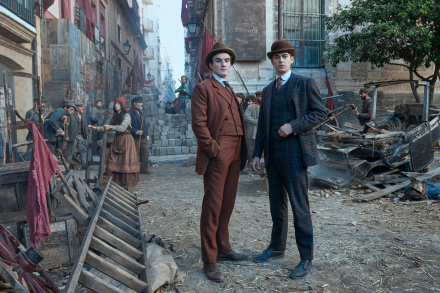
Judging from the two biggest new streaming dramas around, the taste these days runs towards the kitchen sink – not as in gritty northern blokes smoking Woodbines and moaning a lot; rather, as in the writers throwing in everything but. A fortnight ago, I reviewed Lisa McGee’s How to Get to Heaven from Belfast: a Netflix show that doesn’t so much combine slapstick, violence, cheery banter, mean banter, mystery, media satire and dark broodings on life, as simply shuttle between them. Now comes Young Sherlock, directed by Guy Ritchie, where again anybody searching for dramatic unity will search in vain.

Foot-to-the-floor entertainment: How to Get to Heaven from Belfast, Lisa McGee’s sequel to Derry Girls, reviewed

From our UK edition

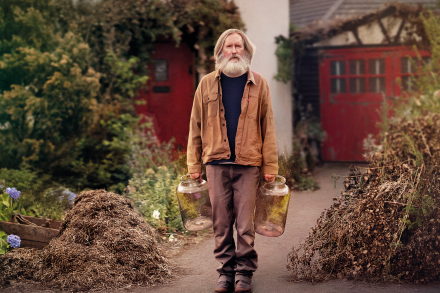
How do you follow a great sitcom? Judging from How to Get to Heaven from Belfast and Small Prophets, the answer is by keeping the same sort of characters, having a plot about a missing woman and adding a touch of the supernatural. Both shows – Lisa McGee’s successor to Derry Girls and Mackenzie Crook’s to Detectorists, respectively – also reflect a slightly mad (in theory) but wholly justified (in practice) confidence that the goodwill established by a much-loved series means viewers will go wherever you lead them, no matter how strange things become. And in McGee’s case, they become very strange indeed. How to Get to Heaven began as if we were in for a dark, rather solemn thriller.

Fascinating: The Fabulous Funeral Parlour reviewed

From our UK edition

The Fabulous Funeral Parlour ended with possibly the least necessary caption in TV history: ‘Filmed in Liverpool’. Whenever I go back there (quite often these days for family reasons), I’m struck all over again by how the whole city seems engaged in the production, distribution and promotion of Scouseness. Yet, even by normal Liverpudlian standards, the people in this old-school, narrator-less documentary put in an impressive shift. Leading the way was Hayley, the owner of both the parlour in question and, despite fierce competition, the most extravagant trout pout we saw. Hayley’s mother died five years ago aged 59, and it was then that she decided to set up Butterflies Rising Funeral Care.

The worst Agatha Christie adaptation I can remember

From our UK edition

When it comes to Agatha Christie adaptations, there are normally two possible responses to the denouement. One is a deep satisfaction that the unlikeliest suspects were the inevitable culprits after all. The other’s the same as that – except approximately a quarter of an hour later you suddenly find yourself thinking: ‘Hold on a minute…’ But with Agatha Christie’s Seven Dials, neither was the case. The unlikeliest suspects remained laughably unlikely even as their guilt was revealed – and the ‘Hold on a minute’s came not after the show finished, but with pretty much every twist of a plot that, almost impressively, kept finding new levels of preposterousness to scale.

Spectator Competition: Elementary

From our UK edition

For Competition 3431, you were invited to submit a passage in which Sherlock Holmes solves one of the great mysteries of our time. Many entries interpreted the ‘of our time’ bit quite loosely, with Holmes tackling the Princes in the Tower, the origins of Stonehenge and even the Big Bang. Nonetheless, after toying with pedantry, I decided to take the possibly generous line that some mysteries are for the ages and so still qualified – although in the event only one pre-21st-century mystery made the final cut. I was sorry not to have room for Richard Warren and Fay Dickinson, but the £25 vouchers go to the following. ‘I say, Holmes,’ said Watson, perusing the Daily Mail. ‘When is that Andrew chap going to get out of Royal Lodge?

Lucy Worsley’s sleuthing is rather impressive

From our UK edition

Lucy Worsley’s Victorian Murder Club opened with its presenter unexpectedly channelling that gravelly voiced bloke who used to do all those film trailers beginning ‘In a world…’. ‘The London Thames,’ she intoned as gruffly and menacingly as she could, ‘winding silently through the capital. But in Victorian times...’ dramatic pause ‘...it had a sinister side.’ She then introduced ‘a story that has haunted me since I first heard it’ – possibly, you couldn’t help thinking, from a TV producer keen to find her another true-crime project. In the late 1880s, a serial killer dismembered several women while also taunting the police and never being found.

What’s the greatest artwork of the century so far?

From our UK edition

15 min listen

For this week's Spectator Out Loud, we include a compilation of submissions by our writers for their greatest artwork of the 21st century so far. Following our arts editor Igor Toronyi-Lalic, you can hear from: Graeme Thomson, Lloyd Evans, Slavoj Zizek, Damian Thompson, Richard Bratby, Liz Anderson, Deborah Ross, Calvin Po, Tanjil Rashid, James Walton, Rupert Christiansen and Christopher Howse. Produced and presented by Patrick Gibbons.

The cardinals spill the beans on the conclave 

From our UK edition

Secrets of the Conclave seemed rather optimistically titled, given that everybody at this year’s papal election had made a solemn vow before God not to divulge any. But, while we duly heard nothing about backstage politicking – apart from regular assurances that none took place – this respectful and quietly charming documentary did succeed in humanising the strange process of picking a new pope, and even in supplying a few gentle revelations. It transpires, for example, that Catholic cardinals suffer from the same anxiety about phonelessness as the rest of us, with the requirement to hand in their mobiles before entering the Sistine Chapel initially causing feelings of slight panic.

Gothic lives matter: BBC2’s Civilisations reviewed

From our UK edition

Anybody growing weary of the debate surrounding the BBC’s unexamined assumptions and biases about modern politics might have expected to find some relief in a scholarly documentary about the sack of Rome in AD 410. Sad to say, though, the first episode of Civilisations: Rise and Fall offered very little of it. Of course, it’s not unusual for history programmes to want to prove that the people in the past were Just Like Us. But in this case the parallels drawn/rather desperately imposed were a particularly uncanny fit with those same pesky assumptions and biases.

Bleak but gripping: Channel 4’s Trespasses reviewed

From our UK edition

Yeats famously summarised Ireland in the four words, ‘Great hatred, little room’. But, as Louise Kennedy’s 2022 debut novel Trespasses showed, in 1970s Northern Ireland the hatred had grown even greater and the room even littler. Channel 4’s faithful adaptation began – as it would continue over its four parts this week – with the suffocating omnipresence of sectarianism. As 24-year-old Cushla (Lola Petticrew) drove through her small town, everything she saw screamed Catholicism or Protestantism: the graffiti, the flags, the ash on children’s foreheads at the start of Lent. By night, Cushla worked in a bar where the punters were either nervously or aggressively aware of each other’s religion.

The joy of Mortimer and Whitehouse: Gone Fishing

From our UK edition

If you didn’t already know that Down Cemetery Road was based on a novel Mick Herron wrote before the Slough House series – later adapted into TV’s Slow Horses – it mightn’t be too difficult to guess. After all, main character Zoë Boehm (Emma Thompson, no less) is a cynical sixty-something with a dodgy hygiene regime, who works in a ferociously shabby office and communicates mainly through the medium of the heartless yet undeniably funny wisecrack – but who nonetheless shouldn’t be underestimated by the arse-covering intelligence services she’s up against. She is, in other words, a female version of Slow Horses’ Jackson Lamb (also played by an Oscar-winning Brit).

Is there anything menopausal women can’t do?

From our UK edition

Is there anything menopausal women can’t do (on television)? Last Sunday, as a couple of them were still working on the daring theft of a Salvador Dali painting in ITV1’s Frauds, BBC1 launched Riot Women in which five others form a punk band. Meanwhile, two regular features of British TV remain actresses lamenting the lack of older women starring in drama series – and older women starring in drama series. Virtually all these shows also recall the headline from the American satirical magazine The Onion: ‘Women empowered by whatever a woman does.’ And that’s certainly true of Riot Women, written by Sally Wainwright (Happy Valley, Gentleman Jack etc.) and therefore set in the Calder Valley, with the author’s message never hard to detect.

Every line in the new Alan Partridge is perfect

From our UK edition

By now, viewers of TV thrillers are no strangers to a baffling prologue – but this week brought a particularly extreme example. Nine Bodies in a Mexican Morgue opened with shots of a desert, a cactus, an animal skull nailed to a cross and a moustachioed man driving a battered pick-up truck with a Virgin Mary on the dashboard. So we were definitely in Mexico. For a while, however, that was about all that was clear, as the words ‘Day Nine’ flashed up and the truck’s unidentified female passenger spied on a dilapidated military base through binoculars.

Mr Bates this isn’t: The Hack reviewed

From our UK edition

As we know, when terrestrial television has a big new hit these days, its response – once it’s got over the surprise – is to serve up a variation on the same formula. In the case of The Hack, the hit that inspired it is clearly Mr Bates vs the Post Office, as another real-life plucky underdog takes on a shadowy, powerful cabal – this time over phone-hacking – and struggles to get the story heard. In the first episode, the formula remained strong, but the variation bit fell somewhere between the unnecessary and the badly misguided. The episode opened with a voice-over urging us to imagine a country where ‘people believe they are living in a democracy’, when in fact they’re ‘being abused by a treacherous combination of press, police and politicians’.

The makers of Doc don’t seem to trust the show

From our UK edition

The drama series Doc began with the most literal of bangs. While the screen remained black, the sound-effects team knocked themselves out by creating a spectacular crashing noise. When the lights came on, we saw a smashed-up car containing ‘a female, unresponsive’. By the time she did respond – one major brain operation and seven seconds of the show later – it was apparent to the doctors that there was something high-concept wrong with her. As her colleagues at Minneapolis’s Westside hospital, they knew she was right to say her name was Amy Larsen, but her answers about her children’s ages, her current job status and the name of the president were all eight years out of date. Amy had forgotten everything between 2016 and the present day.