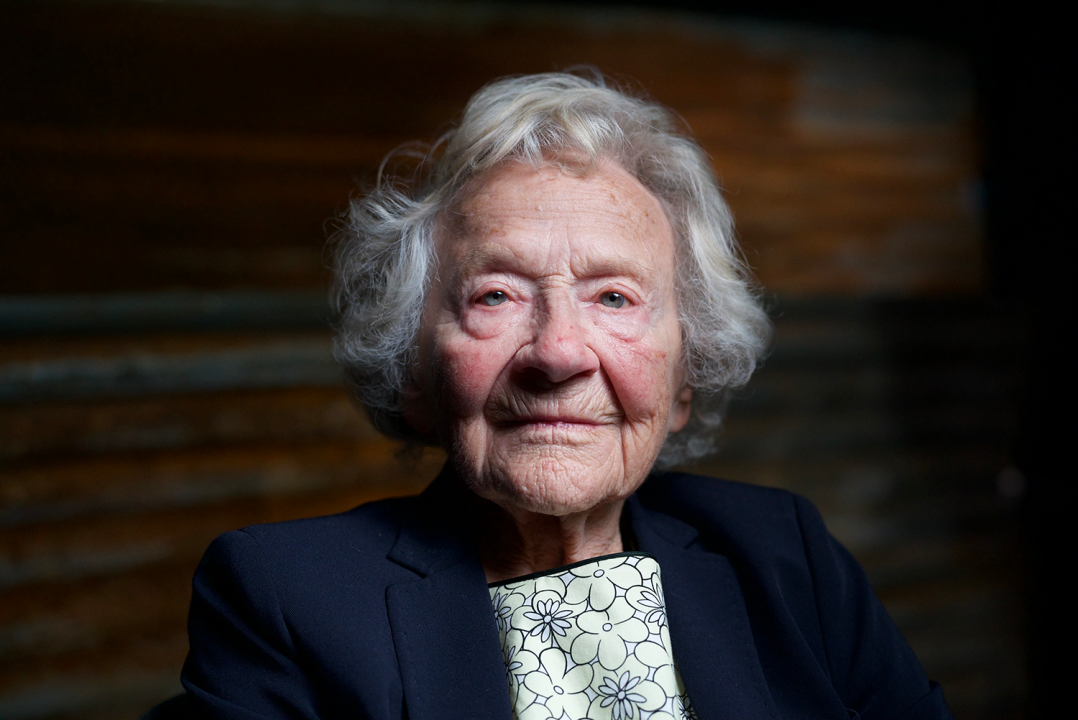
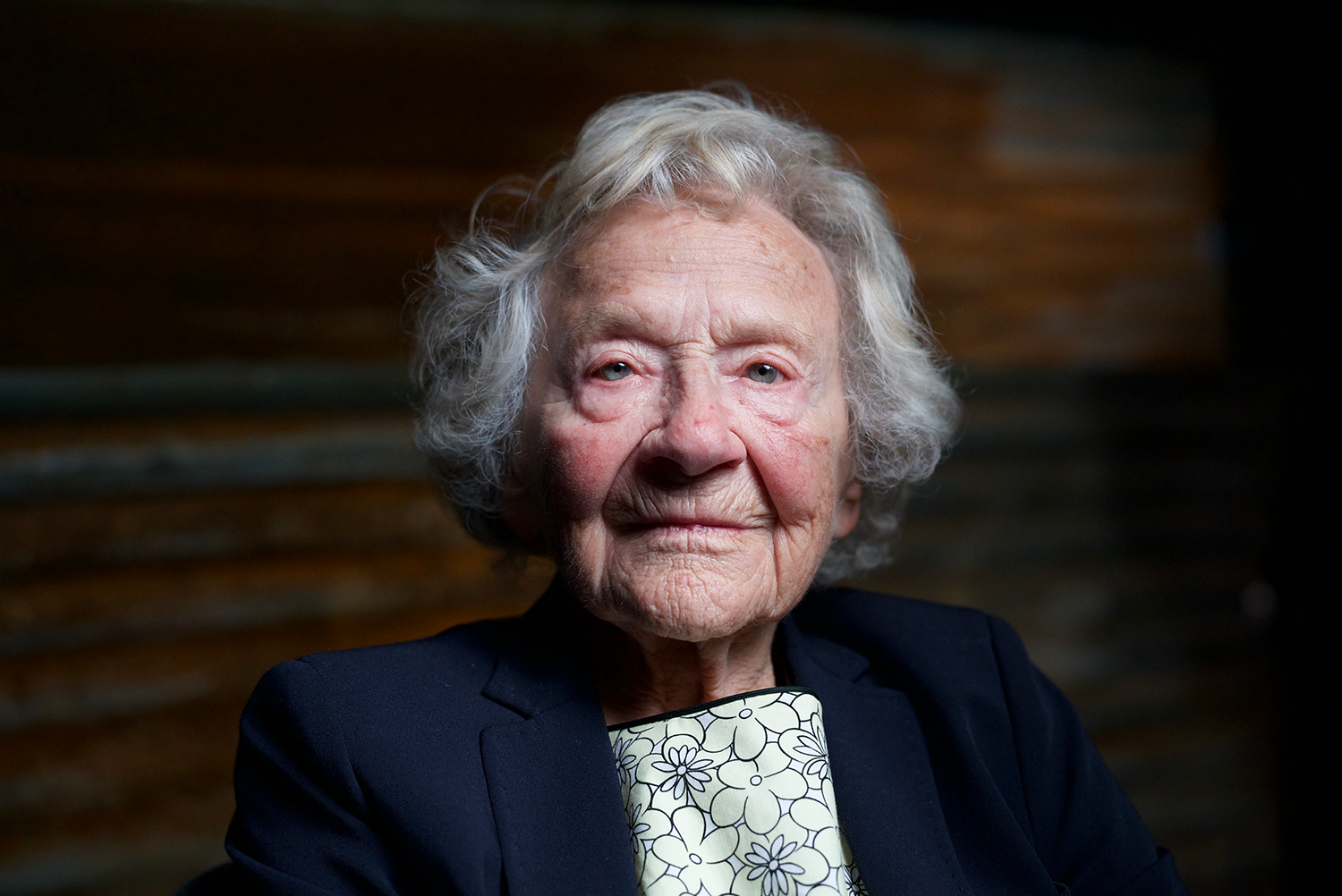
Children of the Blitz began with the surprising news – to me anyway – that while 800,000 British children in places likely to be bombed were evacuated during the war, two million weren’t. The evacuees’ stories have long been a TV staple, but this riveting documentary was the first programme of any kind I can remember about those who stayed at home. The experience was recalled with extraordinary vividness by people mainly in their nineties or beyond, all of whom gave the type of revelatory interview that programme-makers don’t get merely by pointing the camera and asking questions, but through the careful building of wholly justified trust.
The first we saw was 101-year-old Dorothea who, after some film of her in impressive yoga action, explained that ‘one doesn’t talk about it’, as it ‘opens too many doors to the horrors of one’s earlier life’. She had, however, decided to talk now, since ‘we’re all popping our clogs’ and this was the last chance for the survivors to be heard.
What made their interviews particularly revelatory was their perspective on how the war felt as a child: both not quite understanding and sort of understanding only too well what was going on. Several spoke of when they emerged from a bomb shelter to find so many familiar places had disappeared – and to suddenly realise what bombs actually did. Including to people. ‘They were dead and I’d never see them again,’ said 94-year-old Monica about a group of her schoolfriends. ‘That’s when I knew it was real. People weren’t playing games.’
Many had a heartbreaking – if again, semi-understood – sense of responsibility. As Monica also said: ‘You had to keep everything going. You couldn’t add to the unhappiness of your parents.’
To its further credit, the programme emphasised how widespread the bombing was. Gill from Coventry pointed out, with some passion, that ‘it’s annoying for people elsewhere that London is the be-all and end-all’. (My dad remembered how in heavily bombed Liverpool, cinema newsreels about the indomitable cockney spirit were booed.) So it was that we got harrowing tales of the destruction of Sheffield, Belfast, Hull and Cardiff – as well as Coventry and Liverpool.
But the interviewees also conjured up these places, and their own lives within them, before the destruction happened. And, while most looked back on their childhood resilience with a slightly bashful pride, they didn’t hide the lifelong effects. Patsy from Belfast – a scene-stealing tap dancer – was unable to speak for years after her house took a direct hit as she was being held in her mother’s arms. ‘You carry the consequences of it for ever,’ said Gill.
With one startling story after another, this 90-minute programme was far too rich to pay it full justice here – so let me just urge you to watch it and to see the BBC at its still considerable, even nation-unifying best.
Now, I’ve often thought it’d be interesting to have a cop show where the police are neither brilliant nor corrupt but simply rubbish at their job. Sad to say, though, the only time we really see that in a drama is when it’s a true-life one.
Certainly that’s the case with Believe Me, about ‘the Black Cab Rapist’ John Worboys – which is written by true-life-drama specialist Jeff Pope and firmly in the Mr Bates tradition of immaculately controlled righteous anger.
I urge you to watch it and to see the BBC at its still considerable, even nation-unifying best
In episode one, Sarah (Aimée Ffion-Edwards) hailed a taxi after a London night out in 2003. As they set off, the driver (Daniel Mays) told her he’d just had a big win at a casino and pressured her into having a glass of champagne to celebrate. She woke up the next morning in hospital with torn tights, a sore vagina and no memory of what had happened.
But, if anything, worse was to follow. When she reported the incident to police, offering them a number of eye-witnesses to the cabbie, they did nothing. Nothing, that is, except in interview after interview accuse her of having drunk too much, pretend to investigate and eventually discount her story – partly on the grounds that no London taxi driver would ever do such a thing.
In episode two it was 2007, with Sarah still traumatised and Worboys still deploying the same spiked-champagne tactics on women he’d picked up. One was Carrie Symonds (Miriam Petche), now Boris Johnson’s wife, who’s so far been a minor character but presumably won’t be in next week’s concluding episodes. Another was Laila (Aasiya Shah), a sweet-natured student, who, in a piece of dialogue apparently taken straight from the police transcript, was asked: ‘What type of girl would you describe yourself as?’ ‘What do you mean?’ wondered Laila. ‘You’re wearing red nail varnish,’ the policeman replied by way of clarification.
Meanwhile of course, Worboys was telling a female passenger about a casino win he’d just had.




Comments