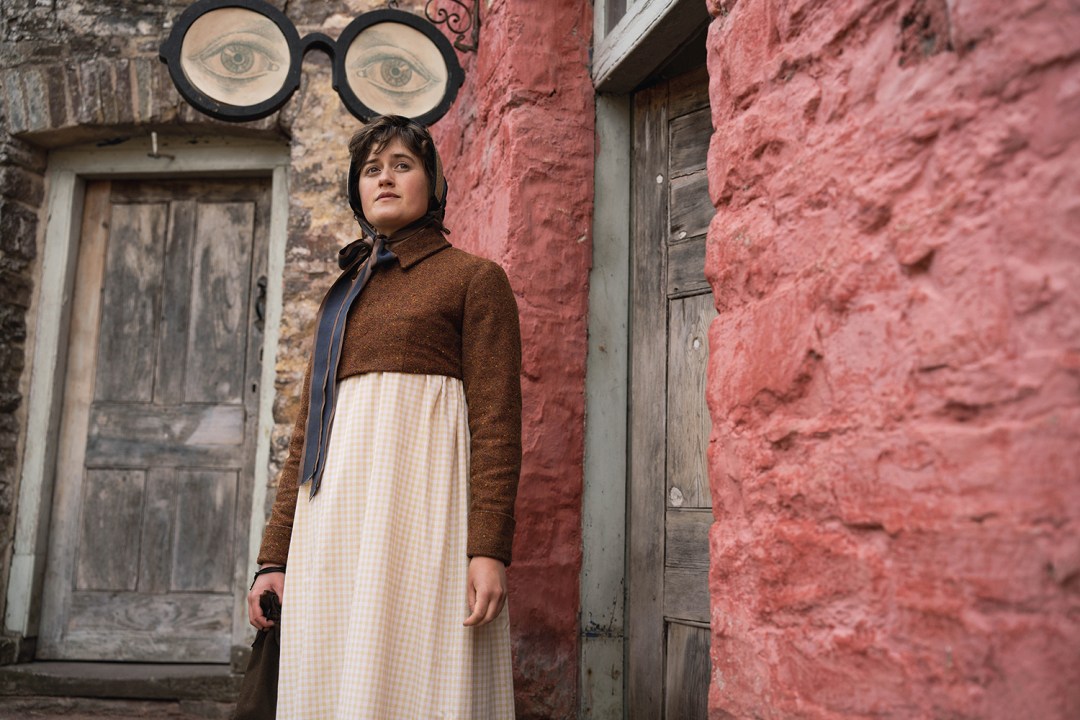
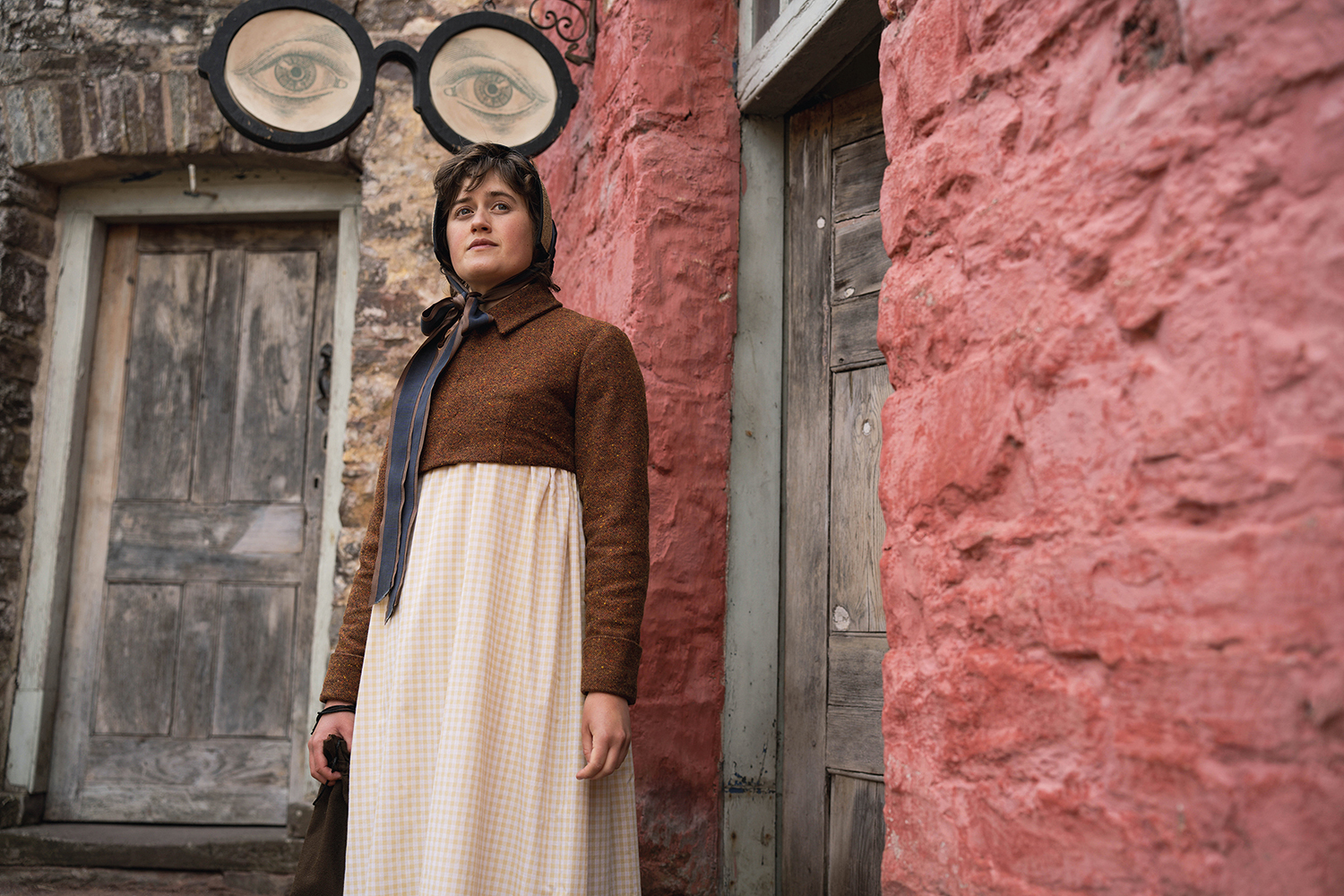
The Other Bennet Sister is to Pride and Prejudice what Tom Stoppard’s Rosencrantz and Guildenstern Are Dead is to Hamlet. The events of the original novel are all there, but the focus is on a character Jane Austen mostly neglected and occasionally scorned.
One effect is that the other sisters, including the sainted Lizzy, come across as smug and snooty
According to Mary Bennet’s opening voiceover: ‘It is a sad fact of life that if a young woman is unlucky enough to come into the world without expectations, she had better do all she can to ensure she is born beautiful. To be poor and handsome is misfortune enough; but to be penniless and plain is a hard fate indeed.’ This, it transpired, set the scene in more ways than one – not just in the plot, but in the script’s unforced mirroring of Austen’s language, Mary’s half-defiant, half-resigned melancholy and the programme’s overall ability to remain charming while being distinctly on the nose.
The Bennets’ backstory was then briskly sketched: Mr and Mrs B’s loving early marriage (a female hand gently caressing male flesh) followed by the birth of five daughters (a female hand fiercely gripping a bedpost). Returning to the present, the show established with equal efficiency that the legal entail whereby Mr Bennet’s house could pass only to a male heir meant Mrs B was already obsessed with good marriages for her girls.

Luckily, she had some promising material to work with – Jane’s ‘beauty’, Lizzy’s ‘wit’, Kitty’s ‘good humour’ and Lydia’s ‘spirit’. Which just left poor ‘ungainly’ middle sibling Mary, with her ‘awfully ruddy complexion’ and regrettable willingness to wear spectacles: a word her mother invariably enunciated much as Lady Bracknell did ‘handbag’.
One almost heretical effect of the changed focus is that the other sisters, including the sainted Lizzy, come across as smug and snooty. Another is that Mrs Bennet (Ruth Jones) moves from a figure of mildly malevolent fun to one of outright cruelty. At the Meryton Assembly, Mary had, much to her surprise, a good time, thanks to the attention of her clearly smitten optician. Until, that is, her old mum forbade her to dance with him any more because ‘his father owns a shop – with a bell’.
Completely crestfallen, Mary vowed to transform herself into ‘the intellectual one’ and to give up all thoughts of love. But as her friend Charlotte Lucas put it, the only alternative to marriage was ‘misery’ – certainly financial, but also of the kind that would come from living with her poisonous mother. Sadly, though, not even her knowledge of Dr Fordyce’s sermons was enough to win the odious but temporarily available Mr Collins. And she ended Sunday’s second half-hour episode with her sisters paired off, her father suddenly dying and she herself appearing utterly trapped.
Presumably with eight episodes still to go, she can’t be, otherwise it won’t be much of a series. Yet, whatever happens next, there’s one thing, I suspect, that the increasingly appealing Mary – played by Ella Bruccoleri with a mixture of heartbreaking vulnerability and heartbreaking efforts at steeliness – can rely on: the viewers will be warmly rooting for her.
Inside the Rage Machine brought the not unexpected news that social media sites create algorithms to get maximum engagement – and that maximum engagement generally comes with conspiracy theories or people shouting at each other.
Yet, although we sort of knew this already, presenter Marianna Spring did a solid and therefore terrifying job of laying out chapter and verse. She was good, too, at tracking down whistleblowers and internal documents to back up her claim that ‘preventing harm’ – once a priority for Big Tech – has been systematically downgraded. The programme also reminded us of such real-world consequences as the riots which followed online rumours that the Southport killer was a Muslim illegal immigrant.
A feeling persisted that the issue might be more complicated than Spring would like to think
All this sounded pretty convincing to me, even after the closing captions in which Big Tech denied everything. Nevertheless, a feeling persisted that the issue might be more complicated than Spring (and many of the rest of us) would like to think.
Most obviously, there’s the question of who gets to decide what’s misinformation and what constitutes harm. In all the cases Spring quoted, there was no doubt that the information had been false and the effects damaging. But among the ones she didn’t quote were Twitter’s 2020 ban on spreading ‘the popular conspiracy theory’ that Covid escaped from a Wuhan laboratory – and the widespread censoring of objections to puberty-blockers.
Needless to say, I’m not suggesting the programme was wrong to raise the concerns it did, or that they don’t represent a genuine and alarming problem. Yet the idea that there’s an easy fix in the shape of right-minded people dictating what’s acceptable felt, at the very least, over-optimistic. After all, social media has transformed the world so comprehensively and so quickly that all attempts to deal with the implications seem doomed to be both provisional and clumsy for years to come.




Comments