James Walton

James Walton is The Spectator’s TV critic

Lower your expectations for Spinal Tap II

From our UK edition

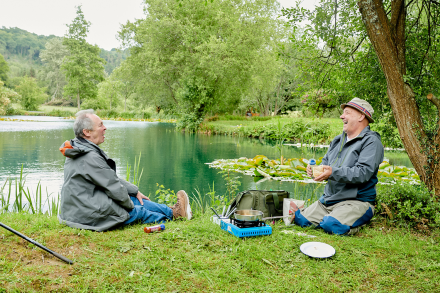
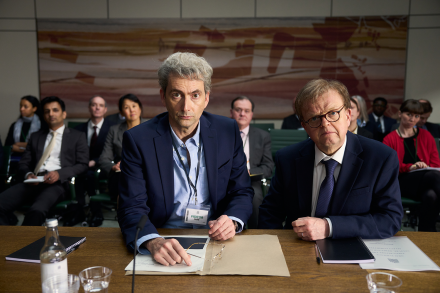
This Is Spinal Tap is now such a deserved comedy behemoth that it’s easy to forget how gradual its ascent to generally agreed greatness was. Only over the years did so many lines and scenes from a low-key 1984 mockumentary about a heavy-rock band (amps that ‘go to 11’, a tiny Stonehenge, a classically inspired piece called ‘Lick My Love Pump’) become part of our lives. Spinal Tap II: The End Continues, by contrast, comes amid a loud fanfare – which may be part of the problem, because the result certainly doesn’t live up to expectations that are inevitably sky-high. Then again, the sad truth is that it mightn’t have lived up to lower ones either.

Another Traitors rip-off – and it might be even better than the original: Channel 4’s The Inheritance reviewed

From our UK edition

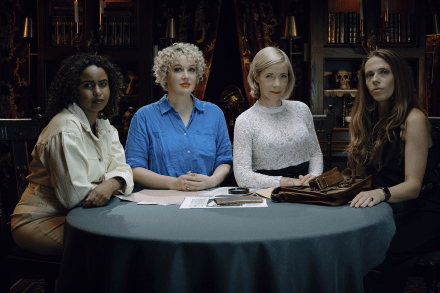
Another week, another show striving desperately to become the new Traitors. So it is that The Inheritance brings a group of disparate people together in a very big house, gives them tasks that win them money and invites them to pretend to cooperate while secretly behaving treacherously. In fact, about the only surprising thing about it is that it’s pretty good. It’s also, I think, pretty knowing: aware of its possible absurdity, often quite camp, yet still going about its business with a face set resolutely to po. The premise is that the very big house’s owner has died, leaving a rather implausible will that requires 13 strangers to compete for her money by collecting stuff and betraying each other.

Spectator Competition: All grown up

From our UK edition

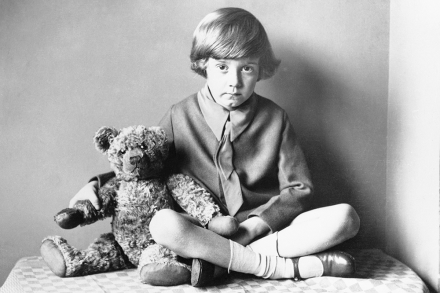
For Competition 3410 you were invited to imagine a celebrated character from a children’s book in later life. There were a lot of entries for this one, most of them excellent, and many of them pretty bleak – including Tiny Tim becoming Jack the Ripper. A possibly controversial policy of allowing only one winning entry per children’s author made for too many near-misses to list – but the £25 vouchers go to the following. Although the charges against her were dropped, the gluing of the council leader to his chair in protest against library closures brought Matilda Wormwood’s career as a librarian to an end. She was now trying publishing, which meant arguing with Mr Molly of Molly, Coddle and Gayne.

The power of BBC’s The Narrow Road to the Deep North 

From our UK edition

It’s been a good week for fans of TV dramas that are set partly in Syria, feature poetry-lovers confronting extreme violence, like to keep their viewers in the dark (sometimes literally) and have main characters with Australian accents (sometimes accidentally). But there are also significant differences between the two examples on display – with The Narrow Road to the Deep North the much more sombre and The Veil the considerably more bonkers. Adapted from Richard Flanagan’s Booker-winner, The Narrow Road began in Syria in 1941. Through what would prove the programme’s characteristic murk, a group of Australian soldiers led by one Dorrigo Evans could just about be seen rescuing a young boy and joshing about the respective size of their penises.

How to holiday White Lotus-style: Billionaire Playground reviewed

From our UK edition

Today’s television is notably fond of presenting us with very rich people to both despise and wish we lived like. As well as high-end dramas like Succession and The White Lotus (a programme that’s caused a huge rise in bookings for the resorts where its characters’ dreadfulness is filmed), there are any number of documentaries in which the bling’s the thing. Netflix, for example, has a genre called ‘Lavish Reality Lifestyles’ that consists of 38 different shows. In a mildly cunning twist, Billion Dollar Playground makes some of the staff who wait on the wealthy a kind of audience surrogate: mixing enthusiastic wonder at all that money can bring with beady-eyed disdain for the sense of entitlement displayed by those it brings it to.

None of Mitfords sounds posh enough: Outrageous reviewed

From our UK edition

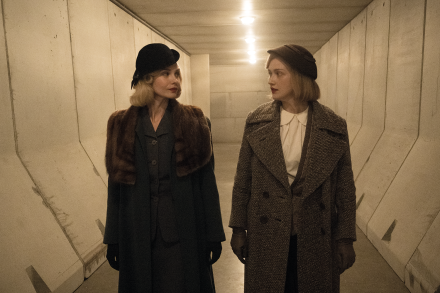
There aren’t many dramas featuring the rise of the Nazis that could be described as jaunty, but Outrageous is one. Oddly, this seems to be the first ever TV drama about the Mitford sisters – and, faced with the choice between playing it for laughs, going for a big historical soap opera or exploring the increasingly dark politics of the 1930s, the show’s writer Sarah Williams has, perhaps wisely, opted for all three. At times, admittedly, the clash of tones can be jarring, but generally in a way that feels like an authentic reflection of a story that remains irreducibly weird. The show also strikes a neat balance between acknowledging the Mitfords’ charm and never entirely succumbing to it.

Channel 4’s Beth is a sad glimpse into the future of terrestrial TV

From our UK edition

On the face of it, Beth seemed that most old-fashioned of TV genres: the single play. In fact, Monday’s programme was the complete version of a three-parter made for YouTube and excitedly announced as Channel 4’s first-ever digital commission. A less excited interpretation, however, might be that it was Channel 4’s first sign of surrender to the hostile forces of streaming now threatening all of Britain’s terrestrial networks. Either way, it was a peculiar watch that, over the course of its 36 minutes, felt less like a fully fledged drama than notes towards one. In a nervous bid to ensure YouTube viewers were gripped before they could search for something else, it began with a good-looking couple having sex. But not for long.

Why is the BBC making stuff up about Jane Austen?

From our UK edition

Jane Austen: Rise of a Genius began by saying that ‘getting into her mind isn’t easy’ – something you’d never have guessed from the rest of the episode, where both the narrator and the talking heads were able to tell us exactly what Austen was thinking and feeling at any given time. Like many Austen biographies, this one laments her sister Cassandra’s decision to burn most of her letters, but then takes full advantage of how little we consequently know about her to portray (or possibly make up) a woman whose attitudes are spookily close to its own. In a previous era, this might have meant presenting Austen as a gentle and contentedly domestic aunt. Now of course it means that ‘at a time when women were supposed to know their place, Austen ripped up the rulebook’.

Tantalisingly ambiguous – or just plain baffling: Hallow Road reviewed

From our UK edition

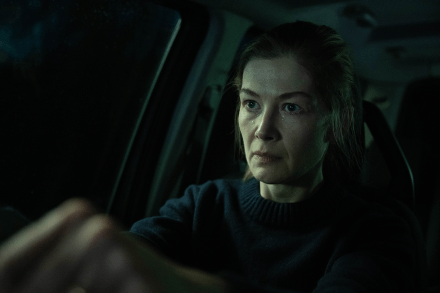
An 80-minute film which for almost all of the time features two people in a car mightn’t sound particularly ambitious. In fact, though, Hallow Road is bursting with so many ideas and genres that by the end they risk blowing it apart completely. At first, it looks as if we’re in for a mix of family drama, psychological thriller and anxiety dream – which indeed we are, but only for starters. After some characteristically disorientating (it turns out) shots of an apparent crime scene – an abandoned meal, glass strewn across the floor – Maddy Finch (Rosamund Pike) receives a 2 a.m. phone call from her distraught daughter Alice (the voice of Megan McDonnell). Following a row over dinner, Alice has driven off in her dad’s car.

How come the only Palestinians Louis Theroux met were non-violent sweeties?

From our UK edition

Louis Theroux: The Settlers was never likely to be a programme with much of a narrative arc – and so it proved. In the first 30 seconds, Louis put it to a Jewish householder on the West Bank that his house was ‘quite deep in what are called the Palestinian Territories’. ‘You call it the Palestinian Territories,’ the man replied. ‘I call it the heart of Judea.’ And that, on the whole, was that. Louis travelled from one Jewish settlement to another, doing his best to challenge the inhabitants with his faux-naif questions and impressive range of quizzical expressions. And yet, of course, none of them budged an inch.

Good lawyers make for bad TV

From our UK edition

Given that TV cameras aren’t allowed to film British criminal trials, Channel 4’s new documentary series Barristers: Fighting for Justice is a courtroom drama without the courtroom. As for the drama bit, the programme does its excitable and occasionally successful best – but isn’t always backed up by its own participants, who on the whole are a serious and disappointingly discreet bunch. All of them, you imagine, would have plenty of cracking tales to tell after a few drinks. As things stand, however, they stick firmly to no-shit-Sherlock generalisations. ‘What I do is present the defence case on behalf of my client,’ said one in Tuesday’s episode. ‘It’s very important that innocent people aren’t convicted,’ argued another.

How fun is it being part of an Amazonian tribe? 

From our UK edition

Tribe with Bruce Parry ran for three fondly remembered series in the mid-2000s. Now, upgraded to Tribe with Bruce Parry, it’s back, still championing traditional ways of life – including that of a TV presenter who lives among remote peoples, takes loads of drugs with them and marvels at their closeness to nature. Sunday’s episode featured some other age-old practices, too. Parry, for example, duly travelled up an Amazon tributary to a village where the locals were initially suspicious of ‘the white man’. He then won them over by mucking in with the chores and eating plenty of insects and grubs. His companions this time were the Waimaha, who live in the Colombian rainforest, communing with its spirits.

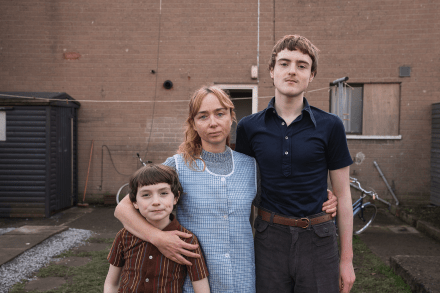
Netflix’s Adolescence is seriously flawed

From our UK edition

Bradley Walsh: Egypt’s Cosmic Code may sound like a pitch by Alan Partridge – but, impressively, the programme itself manages to be even odder than its title. Naturally, Tuesday’s opening episode began with Bradley emphasising that his interest in Ancient Egypt long predates his signing of the contract for the show. Indeed, it was back when he was an apprentice at Rolls-Royce that he first realised ‘whoever built the pyramids, it certainly wasn’t the Ancient Egyptians 4,500 years ago’. Sharing his scorn for this discredited idea was Tony McMahon, an ‘investigative historian’ who showed up now and again to say bonkers things in an authoritative and sonorous manner.

Anjelica Huston is comprehensively upstaged in the BBC’s new Agatha Christie

From our UK edition

Coincidentally, two of this week’s big new dramas began with a fourth wall-busting declaration of their narrative methods. At the start of Towards Zero, BBC1’s latest Agatha Christie adaptation, a man we later discovered to be a lawyer addressed the camera. ‘I like a good detective story,’ he told us. ‘But they begin in the wrong place. They begin with the murder’ – which should instead ‘come at the end of a long chain of cause and effect’. Get Millie Black opened with a voice-over explaining that ‘This is just another story about Jamaica… But like all stories in this country, it’s a ghost story’. As it transpired, both programmes followed their own prescripts – but in one case, with distinctly mixed results.

A return to the White Lotus

The White Lotus, now back for a third series, could perhaps be best described as Death in Paradise for elegant people. Most obviously, this is because its plots revolve around murders in an idyllic location — only with a far bigger budget, a much starrier cast and several episodes per story. But there’s also the fact that it follows the same pattern every time. So it was that season three began this week, rather like its predecessors, with some lovely scenery, a dead body and a caption reading "One week earlier." After that, we duly watched a bunch of rich, good-looking folks arriving at a luxury White Lotus resort where they were welcomed by the resolutely smiling staff and a nervous manager, before gazing round and marveling at the beauty of it all.

Lotus

The White Lotus is off to a shaky start

From our UK edition

The White Lotus, now back for a third series, could perhaps be best described as Death in Paradise for posh people. Most obviously, this is because its plots revolve around murders in an idyllic location – only with a far bigger budget, a much starrier cast and several episodes per story. But there’s also the fact that it follows the same pattern every time. So it was that season three began this week, rather like its predecessors, with some lovely scenery, a dead body and a caption reading ‘One week earlier’. After that, we duly watched a bunch of rich, good-looking Americans arriving at a luxury White Lotus resort where they were welcomed by the resolutely smiling staff and a nervous manager, before gazing round and marvelling at the beauty of it all.

Stately, sly and well-mannered: BBC1’s Miss Austen reviewed

From our UK edition

It is a truth universally acknowledged that lazy journalists begin every piece about Jane Austen with the words ‘It is a truth universally acknowledged’, so I’ll fight the temptation. In any case, the Miss Austen at the centre of BBC1’s new Sunday-night drama isn’t Jane, but her beloved sister Cassandra, best known for destroying most of Jane’s letters. Given that this has rendered our knowledge of the woman’s biography tantalisingly sketchy, Cassandra has attracted her fair share of resentment from Janeites. But rather cunningly, Miss Austen both exonerates her and takes full advantage of the sketchiness: high-mindedly questioning our entitlement to snoop into Jane’s private life, while feeling free to speculate on what that private life might have been.

Certainly intriguing: Apple TV+’s Prime Target reviewed

From our UK edition

Needless to say, there have been any number of thrillers that rely on what Alfred Hitchcock called a MacGuffin: something, however random, that the goodies have to find before the baddies do. Less common are those where the MacGuffin is the mathematical formula for prime numbers – which is where Apple TV+’s latest show comes in. His first thought on seeing a 204 bus was that 2042 is the sum of three consecutive cubes Prime Target began in ‘Baghdad, Iraq’ – and therefore in a bustling market. Or at least it bustled until a large gas explosion opened up a hole in the ground leading to a spectacular medieval chamber. For a while, the chamber went unexplained as we cut to ‘Cambridge, England’ – and therefore to eight strapping young men rowing on the river.

Playing Nice is beautifully done – but they miscalculated the opening scene

From our UK edition

There must have been a time when slow-burn psychological thrillers didn’t start with a scene of high drama followed by a caption that reads ‘Three months earlier’ – but if so, it’s getting hard to remember it. The latest programme to deploy the tactic was Playing Nice, which began with James Norton running towards the sea screaming ‘Theo!’ as a child’s body bobbed, face-down, in the waves. He was next seen, post-caption, laughing with his pre-school son in various picturesque Cornish locations while using the word ‘buddy’ a lot. Not to be outdone in the great-parent stakes, his wife also piled on the cuddles for little Theo. Before long, Miles had developed the habit of glowering menacingly when nobody was watching This idyll, however, didn’t last long.

Leavisites should stay away: Sky’s Bad Tidings reviewed

From our UK edition

Reviewing Sky’s The Heist before Christmas last year, I suggested that all feature-length festive television dramas begin with credits announcing a starry cast and end with a redeemed protagonist gazing up at some suddenly falling snow. Reviewing Sky’s Bad Tidings this year, I can rather smugly report that there’s no need to revise my theory. But just in case that isn’t enough television tradition to be going on with, here we also get that other Yuletide stand-by: the characters’ plans for the big day go hideously wrong, yet they still end up having the Best Christmas Ever. Viewed pleasantly drunk, I concede, Bad Tidings might just hit the spot The two main stars are Lee Mack and the man with a serious claim to be the breakout celebrity of 2024.