James Walton

James Walton is The Spectator’s TV critic

Spectator Competition: We can be heroes

From our UK edition

In Competition 3378, you were invited to give the full 18th-century, mock-heroic, rhyming-couplets treatment to any trivial recent event. Whether this was applied to news stories or more personal minor tragedies, the standard was remarkably high, with near misses for Alan Millard, Max Ross, Elizabeth Kay, Jasmine Jones and others. It was also striking just how many Spectator readers are impressively knowledgeable fans of I’m a Celebrity… Get Me Out of Here! The following win £25. As burnish’d russet fruit of spreading trees Burst from their spiny nests across the leas, Heroes were pitched in combat, ever bent On triumph in a momentous world event. For hark! The clash of conkers filled the air; Who dealt the mightiest blows, attacked with flair?

We’re wrong to mock Do They Know It’s Christmas?

From our UK edition

‘I hope we passed the audition,’ said an alarmingly youthful Bob Geldof at one point in The Making of Do They Know It’s Christmas? He was, of course, quoting John Lennon from the 1969 Beatles rooftop concert: an appropriate reference in the circumstances – because this documentary was a kind of Get Back for the Smash Hits generation. Like a far shorter version of Peter Jackson’s film of the Beatles at work, it mixed footage we’d seen before with stuff locked away in the vaults for decades. It was also equally unafraid of longueurs, equally determined to accentuate the positive and equally likely to warm the flintiest of hearts.

Spectator Competition: Plum assignment

From our UK edition

In Competition 3375 you were invited to submit an extract in which P.G. Wodehouse had a go at writing Raymond Chandler noir. Sad – and perhaps slightly pedantic – to report, quite a few entrants got this the wrong way round, writing Wodehouse’s material in a Chandler style, with references to hot dames at the Drones club etc. Some of these were admittedly very good but as The Spectator takes a stern line on the importance of reading the question, the following win £25 each. ‘Well done helping me sort that one out, Jeeves. The cops have arrested the chap with the face like an off-colour watermelon, and so Lydia won’t be going to the chair. More to the point, she seems to have given up on the idea that we are engaged.

Too cautious and wildly over the top at the same time: Paddington in Peru reviewed

From our UK edition

Toy Story or The Godfather? Which way would Paddington in Peru go? Would the third instalment of a much-cherished series prove even better than the second (which was even better than the first)? Or would it be a thumping disappointment? The anti-climactic answer turns out to be a firm ‘neither’. While enjoyable enough, this is a rare example of a film that’s both too cautious and wildly over the top at the same time. What really powers the film is the goodwill of the audience towards the franchise It begins with Paddington – voiced as irresistibly as ever by Ben Whishaw – getting a letter from the Reverend Mother at the Home for Retired Bears in Peru where his beloved Aunt Lucy lives.

A bit of a mess: Channel 4’s Generation Z reviewed

From our UK edition

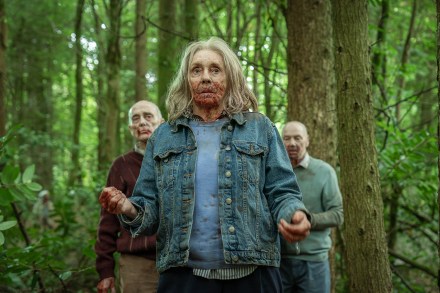
In the second of this week’s two episodes of Generation Z (Sunday and Monday), a teenage girl called Finn wondered why her friend Kelly was so distracted and tearful. As a well-informed type, Finn applied the principle of Occam’s razor and decided that Kelly must be pregnant. In this case, though, the simplest explanation definitely wasn’t the right one. What was ailing Kelly was that her nan had tried to stab her with a large kitchen knife prior to feasting on her flesh – until a male schoolfriend turned up, shot her nan with a crossbow and hid the body in the woods. Residents of the retirement home are also rampaging through the woods, chomping on cockapoos In some British towns, all this might have been something of a one-off.

A hit – but please don’t pretend it’s feminist: Disney+’s Rivals reviewed

From our UK edition

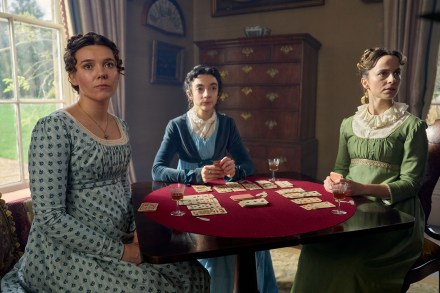
For most of my adult life, clever, well-read, feminist women have told me how much they love Jilly Cooper. It therefore came as a bit of shock when I finally tried her novels for myself and found what they contained. There is, for example, no mistaking Jilly’s scorn for women who are fat and/or hairy, her belief that all female unhappiness can be cured by a damn good rogering, and the idea that not only is it fair enough for middle-aged blokes to lech after teenage girls, but that teenage girls rather like it when they do. (I was also slightly disconcerted by her favourite word for female genitalia – which, by way of a big clue, is the surname of the 41st and 43rd US presidents.

Have today’s TV dramatists completely given up on plausibility?

From our UK edition

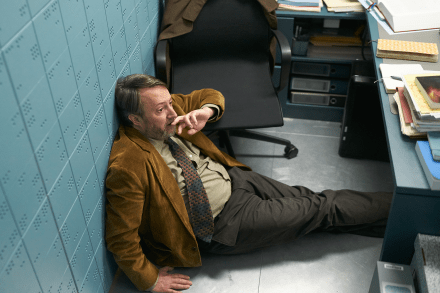
In advance, Ludwig sounded as if it was aimed squarely at the Inspector Morse market. Set among spires of impeccable dreaminess (in a cunning twist, those of Cambridge), it has a main character who solves crimes and cryptic crosswords with equal efficiency. Once the series began, though, it was clear that its sights were set a little lower than that. Instead, the show seems content to take its place as the latest proof that plausibility is out of fashion in TV drama these days. (In my last column I reviewed Nightsleeper, which had no time for it at all.) One reason this detective feels like the traditional fish out of water, for example, is that he’s not a police detective.

More Airplane! than Speed: Nightsleeper reviewed

From our UK edition

Earlier this year, ITV brought us Red Eye, a six-part drama set mainly on an overnight plane from London to Beijing. Displaying a heroic indifference to plausibility, the show was an increasingly deranged mash-up of every thriller convention known to man – while still posing (when it remembered to) as a thoughtful exploration of realpolitik. By the end, it was all so daft that the biggest influence no longer seemed to be Speed, but Airplane! Funnily enough, this week’s Nightsleeper was much the same thing – only this time on an overnight train from Glasgow to London. The first sign that the passengers wouldn’t get a restful sleep before Euston came when a mysterious beeping device with lots of wires was discovered in the guardroom floor.

An accidental spy: Gabriel’s Moon, by William Boyd, reviewed

From our UK edition

When was the last time you described – or indeed thought of – someone’s face as ‘even-featured’, ‘angular’ or ‘refined’? If the answer is never, I suspect you’re not a novelist, and definitely not one of the William Boyd, old-school kind. In 1983 Boyd was among the 20 writers on Granta’s famously influential list of Best Young British Novelists, along with the generation-defining likes of Martin Amis, Julian Barnes, Kazuo Ishiguro and Salman Rushdie. In the decades since, however, he’s increasingly moved away from more obviously literary fiction towards the sort that’s earned him the routine (and accurate) label of ‘master storyteller’.

Why are these dead-eyed K-pop groups represented as some kind of ideal?

From our UK edition

On Saturday, Made in Korea: The K-pop Experience began by hailing K-pop as ‘the multi-billion-pound music that’s taken the world by storm’. Unusually, this wasn’t TV hype. Last year, nine of the world’s ten bestselling albums were by Korean acts (the sole westerner being Taylor Swift). Even odder for people over 40, according to such reliable sources as Richard Osman on The Rest is Entertainment podcast and my children, South Korea has replaced America as the cultural centre of the Earth for many British teenagers. Korean youngsters are trained for pop stardom on an industrial scale But this global domination hasn’t come about by chance. Korean youngsters are trained for pop stardom on an industrial scale.

Ambitious, bold and confusing: BBC4’s Corridors of Power – Should America Police the World? reviewed

From our UK edition

Narrated by Meryl Streep, Corridors of Power: Should America Police the World? announced the scale of its ambition straight away. Before the opening titles, we’d already heard from Hillary Clinton, Colin Powell, Madeleine Albright and the late Henry Kissinger. We’d also seen the lines drawn up as to how its bold subtitle might be answered. It is an authentically confusing programme, where any firm moral position doesn’t stay firm for long As Clinton put it, in 1945 a question emerged whose implications would dominate post-war US foreign policy: ‘Why didn’t we do more to try to prevent the transport of the Jews?’ The immediate response was the heartfelt yet potentially glib declaration: ‘Never again.’ But what would that actually mean in practice?

Clear, thorough and gripping: BBC2’s Horizon – The Battle to Beat Malaria

From our UK edition

If you transcribed the narrator’s script in almost any episode of Horizon, you’d notice something striking: an awful lot of the phrases would end with a colon, and for one obvious reason: to play a neat trick on the viewers: that of making them keen to hear what comes next. (You get the idea.) Monday’s programme therefore began by explaining that the mosquito is ‘the target of one of medical science’s greatest quests: the battle to save millions of lives and end a scourge that has shaped human history: malaria’.

Utterly bog-standard: BBC2’s The Turkish Detective reviewed

From our UK edition

A partly subtitled show set in Istanbul might sound like a brave departure for a BBC Sunday night crime drama. But in fact, if you strip away The Turkish Detective’s minarets and bazaars (not hard given that they supply somewhat perfunctory local colour), what remains is, according to taste, either reassuringly familiar or utterly bog-standard. The series began with Mehmet Suleyman (Ethan Kai) leaving his job at the Metropolitan Police to take up fish-out-of-water duties in the city of his birth. Waiting for him at Istanbul airport was what at first seemed like a straightforward comedy foreigner, much given to muttering the words ‘very good, very good’ and driving like a maniac while smoking a lot.

Can Douglas Is Cancelled hold its nerve?

From our UK edition

Like many sitcoms, W1A featured a middle-aged man convinced that he’s the only sane person left in the world. Usually, of course, this merely goes to show how delusional the bloke is – but the subversive twist here was that Ian Fletcher, the BBC’s head of values, seemed to be right. Playing Ian, Hugh Bonneville therefore spent much of his screentime radiating a bemused dismay at the madness around him. The only question is whether the show will hold its nerve or whether Douglas will prove toxic after all Now, as the main character in the comedy drama Douglas Is Cancelled, Bonneville is at it again.

When piracy meets protest

From our UK edition

Sometimes there are advantages to being ill-informed. Knowing embarrassingly little about why 30 Greenpeace activists were jailed in Russia in 2013, or the wilder assertions made by the broadcaster Alex Jones (emphatically not the woman from The One Show) meant that two documentaries this week unfolded for me like the twistiest – if not necessarily the most plausible – of thrillers. Twenty-four per cent of Americans still doubt that the Sandy Hook massacre even happened Then again, in my slight defence, such ignorance seemed to be what both programmes were assuming – because, unlike many documentaries, they didn’t summarise or give away the story they were about to tell.

I worry Romesh Ranganathan might not have enough work

From our UK edition

Let’s say, for the purposes of this joke, that I was recently staying in a hotel and kept hearing through the wall a voice shouting, ‘Yes! Yes! Yes!’ At first I assumed it was someone having sex – but I later found out that the next-door room was occupied by Romesh Ranganathan’s agent. This year’s Comic Relief featured a W1A sketch where one of the gags was about how Ranganathan now presents everything on television. But the truth is, apart from that sketch, his only TV gigs so far this year have been presenting The Weakest Link, presenting the Baftas, co-presenting Rob & Romesh Vs…, co-writing and starring in the sitcom Avoidance as well as guest appearances on QI and Would I Lie to You?.

Nowhere near as miserable as I remember it: The Beatles – Let It Be reviewed

From our UK edition

Beatles lore has long held that the film Let It Be was a depressing portrait of the band falling apart. According to the same lore, that’s why Peter Jackson’s Get Back was such a revelation. Revisiting Michael Lindsay-Hogg’s footage of the group at work in January 1969, Jackson discovered there was far more joy around than anyone suspected – including the surviving Beatles. Yoko remains a darkly brooding presence (the revisionism that sees her as benign needs its own revision) All of which, it now turns out, only goes to prove the ever-reliable power of suggestion. I vaguely remember seeing Let It Be on TV in the 1970s, before it disappeared until last week – and finding it as miserable as I already knew everybody said it was. Except that it really isn’t.

How can anyone resist The Piano?

From our UK edition

One challenge facing any novel, drama or film about the Holocaust is to restore its sheer unimaginability. In Thomas Keneally’s Schindler’s Ark – filmed, of course, as Schindler’s List – when news reaches Krakow of what’s happening in Auschwitz, Keneally pauses for some editorialising. ‘To write these things now,’ he says, ‘is to state the commonplaces of history. But to find them out in 1942… was to suffer a fundamental shock, a derangement in that area of the brain in which stable ideas about humankind and its possibilities are kept.’ The Piano shamelessly seeks to move us – and shamelessly succeeds In The Tattooist of Auschwitz, the same fundamental shock is more gradual.

Danny Dyer’s new C4 programme is deeply odd

From our UK edition

Who do you think said the following on TV this week: ‘I love being around gay men – seeing a group of men expressing themselves the way they do is beautiful’? The answer, perhaps unexpectedly, is Danny Dyer, whose admittedly convincing schtick as the world’s most Cockney bloke was applied to the question of contemporary masculinity in a new programme for Channel 4. The result was a deeply odd mix of the touching, the illuminating, the silly, the thought-provoking, the cheerfully comic, the pensive and the completely confusing. At first, it looked as if the cheerfully comic would predominate. Danny Dyer: How to Be a Man opened with Danny showing us around his man cave and breezily announcing that ‘Channel 4 bunged me a few quid to travel the country talking to geezers’.

Dramatic, urgent and intriguing: BBC1’s This Town reviewed

From our UK edition

After conquering the world with Peaky Blinders (and before that by co-creating Who Wants to Be a Millionaire?), Steven Knight was last seen on British television giving us his frankly deranged adaptation of Great Expectations. Happily, he’s now returned to form with a show that, while not a retread exactly, is definitely Peaky-adjacent. In This Town we’re back in a Birmingham – this time in the 1980s – that’s rundown, riven, violent and soul-stifling, yet that Knight presents with unmistakable love. Nor, once again, is there any escaping the overwhelming power of the family as a blessing and a curse.