How do you follow a great sitcom? Judging from How to Get to Heaven from Belfast and Small Prophets, the answer is by keeping the same sort of characters, having a plot about a missing woman and adding a touch of the supernatural.
Both shows – Lisa McGee’s successor to Derry Girls and Mackenzie Crook’s to Detectorists, respectively – also reflect a slightly mad (in theory) but wholly justified (in practice) confidence that the goodwill established by a much-loved series means viewers will go wherever you lead them, no matter how strange things become.
And in McGee’s case, they become very strange indeed. How to Get to Heaven began as if we were in for a dark, rather solemn thriller. ‘I still dream about that night sometimes,’ a voice-over intoned as four frightened sixth-form girls from Belfast watched a burning shack in the woods.
A few seconds – and 20 years – later, three of them were experiencing carefully varied forms of middle-aged regret. Dara (Caoilfhionn Dunne) was a stressed-out family carer, mourning the life she didn’t have; Robyn (Sinead Keenan), a stressed-out mother, mourning the one she did; and Saoirse (Roisin Gallagher), a stressed-out TV writer infuriated by the world of television. All three then received an email from Gaye, the sister-in-law of Greta – the fourth girl in the opening scene, estranged from the others ever since – telling them that Greta had died and inviting them to her wake in Donegal.
Once they set off, the tone lurched again – this time into a broad comedy where, as the one-liners zinged, the women’s resemblance to Orla, Michelle and Erin from Derry Girls grew ever stronger.
Yet, if this is already sounding a bit of a hodgepodge, the show was barely clearing its throat. Arriving in the small town of Knockdara, the women booked into a hotel where the owner subjected them to a blizzard of stage Irish and the folks in the bar cackled gothically. Matters turned even more gothic when the three went to Greta’s spooky, isolated family home where, rather than a wake, they found just four family members apparently engaged in a competition as to who could be the most sinister.
And that was before we discovered that the emailing Gaye didn’t exist and that Greta’s death wasn’t as it seemed. It was also before – with the jokes still rumbling away – the women had all seen ghosts, Saoirse had developed a Thelma and Louise-style crush on a local hunk and the action had moved to a luxury resort in Portugal for a White Lotus-style showdown on a yacht featuring a female psychopath with a Dolly Parton fixation. Meanwhile, the satire on Saoirse’s TV world sporadically returned, to be joined by ruminations on Catholicism and the effects of trauma.
After the four episodes I’ve watched, the disparate elements, far from coalescing, are continuing to pile up and simply jostle together. But this, I would suggest, is sort of the point. McGee seems to have given herself permission to throw in whatever interests her and while it’s technically possible that everything will be neatly tied up by the end, at this stage that would feel almost like a betrayal of what’s gone before: a show that, if anything, prides itself on its own messiness.
Odder still, that pride might well be warranted. Fans of coherence should certainly look elsewhere. But what McGee gives us instead is exhilarating, foot-to-the-floor entertainment and (not in the Irish sense) the wildest of rides.
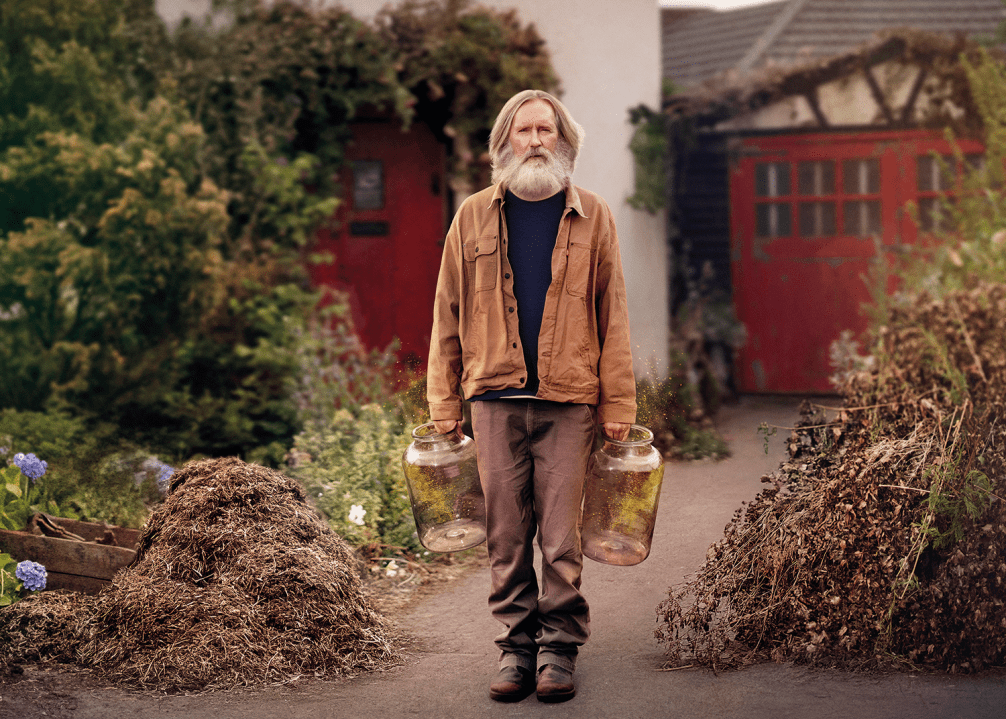
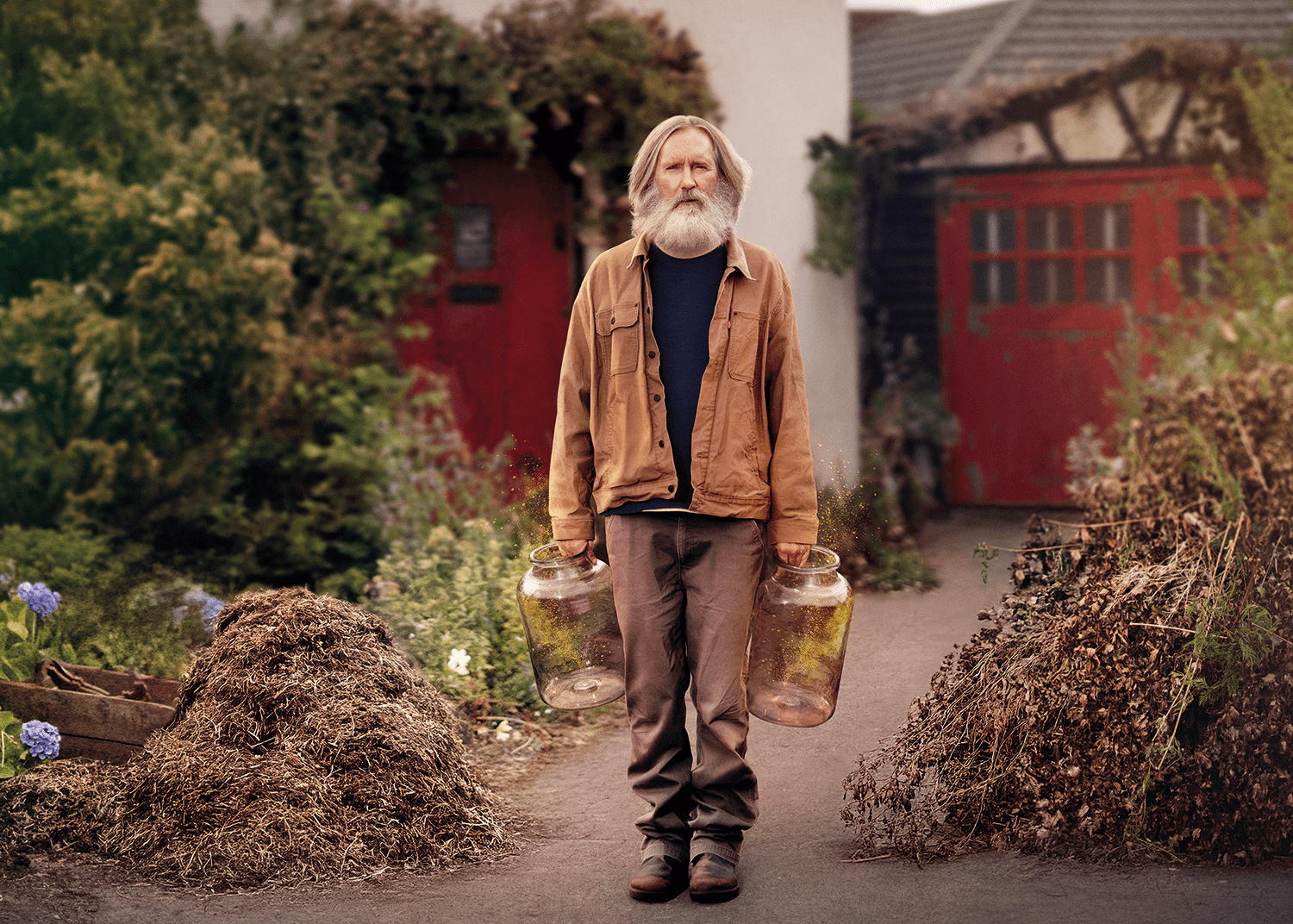
Small Prophets is a lot gentler and more controlled. It’s also a lot more realistic – except perhaps for the fact that the plot concerns a bloke in a northern suburb creating tiny truth-telling homunculi in glass jars.
Pearce Quigley plays Michael, the bloke in question – who, like the two leads in Detectorists, is an entirely unselfconscious eccentric (as opposed to ‘a bit of a character’) quietly going about his life without caring much about what people make of him or what else is going on in the world. Seven years ago, his girlfriend Clea disappeared and now he spends his time working in a DIY superstore – where he’s formed a deeply touching friendship with young Kacey (Lauren Patel) – and visiting his father Brian (Michael Palin, no less) in a local care home.
Brian doesn’t always remember that Clea has gone, but one day when he does, he recommends creating those homunculi – the recipe for which he got from an Italian mystic while doing National Service – who’ll be able to tell Michael what happened to her. By the end of this week’s second episode, the first of them had duly appeared.
As in Detectorists, the result has a winning blend of mild melancholy, calm acceptance of the way these people are and something approaching defiance about their right to be so. It is, in short, completely lovely.




Comments