Eliot Wilson

Eliot Wilson

Eliot Wilson was a House of Commons clerk, including on the Defence Committee and Counter-Terrorism Sub-Committee. He is contributing editor at Defence On The Brink and senior fellow for national security at the Coalition for Global Prosperity

Healey’s Palantir deal is a major boost for Britain’s army

President Donald Trump’s unprecedented (depending on your benchmark) state visit to the United Kingdom is underway and the deals are flowing. Sir Keir Starmer’s government desperately needs good news, not only economically but also to distract from the chaos everywhere else. He and his ministers will be hoping that a contract between the Ministry of Defence and Peter Thiel’s Palantir Technologies will be one of many positive outcomes. Palantir’s software essentially integrates the customer’s data with a large language model and allows ultra-fast decision-making drawing on huge amounts of information.

If Tony Radakin couldn’t reform the MoD, who can?

Admiral Sir Tony Radakin, having handed over his responsibilities last week after four years as chief of the Defence Staff (CDS), began his new life with a speech at the Institute for Government. His 20-minute address was no bland reminiscence: the former professional head of Britain’s armed forces had a great deal to get off his chest. He was positive about much that had happened over the past four years. The UK had led the way in supporting Ukraine, Nato had become larger and stronger and the 'Coalition of the Willing' had shown that European nations could act quickly and effectively.

Norway’s warship order is a boost for Britain’s defence industry

There was some good news for the government as politicians return to Westminster and Whitehall after the summer break: the Royal Norwegian Navy will buy at least five Type 26 anti-submarine warfare frigates from BAE Systems Maritime. The vessels will be built by BAE’s shipyards at Govan and Scotstoun in Glasgow and the overall agreement is being billed as worth £10 billion. There are aspects of the deal which are unquestionably positive. Norway’s selection of the Type 26 frigate over the American Constellation-class, the F126 from Germany and France’s Fregate de Defense et d’Intervention is a fillip for the UK’s defence industry.

Why a peacekeeping buffer zone in Ukraine won’t work

The 24 hours within which Donald Trump promised to end the war in Ukraine have turned into more than six months of desultory negotiations, and there is still no sign of even a temporary halt to the fighting. This is a blow for the so-called 'coalition of the willing', the loose affiliation of 31 countries assembled by Sir Keir Starmer and Emmanuel Macron to help implement the terms of a peace agreement between Russia and Ukraine. There had first been informal discussions between the UK and France about creating some kind of alliance as early as November 2024, but the Prime Minister formalised the idea in March this year when he hosted a summit in London and committed the coalition to supporting 'a strong, lasting deal that delivers a permanent peace in Ukraine'.

Trump’s military purge is a disaster waiting to happen

The Duke of Wellington, assessing newly arrived British soldiers during the Peninsular War, is supposed to have said, 'I don't know what effect these men will have on the enemy, but by God, they terrify me.' Having watched Donald Trump greet Vladimir Putin with a red carpet in Alaska a week ago, then direct his secretary of defense Pete Hegseth to sack another general and two admirals, I’m not certain that the US President even knows who the enemy in this case is. Leading the most recent casualties was Lieutenant General Jeffrey Kruse, an experienced intelligence officer serving as director of the Defense Intelligence Agency.

Are British troops prepared to defend Ukraine?

The events of the last few days – the Trump/Putin summit in Anchorage, the visit of European leaders to the White House and the virtual conference of the 'Coalition of the Willing' – have felt strangely detached and surreal. It has been almost like the anxiety dream of a stressed European diplomat: full of famous faces and sententious words, none of it making much sense. Even summing up the status quo is a challenge. Thanks to President Trump, we know that the idea of a ceasefire in Ukraine is now off the table and branded unnecessary. He has also said that the country will not be admitted to Nato, while his special envoy Steve Witkoff talked about a 'land swap' between Ukraine and Russia and 'robust security guarantees that I would describe as game-changing'.

Starmer’s coalition of the willing has been saved from itself

It is commonplace to accuse politicians of being out of touch. There is often some truth in the charge, and our elected representatives take it on the chin. One of the least likely politicians to face this charge has always been John Healey: the defence secretary has been one of the most sensible and pragmatic ministers in Sir Keir Starmer’s cabinet – not a high bar, admittedly. And yet there are signs that he has succumbed to the Ministry of Defence’s corrosive habit of dealing with the world as it wants it to be, not as it is. Our armed forces are in no position to deploy significant numbers of troops to Ukraine We all watched the news from Friday’s summit between Donald Trump and Vladimir Putin in Anchorage.

The Chagos Islands deal just gets worse and worse

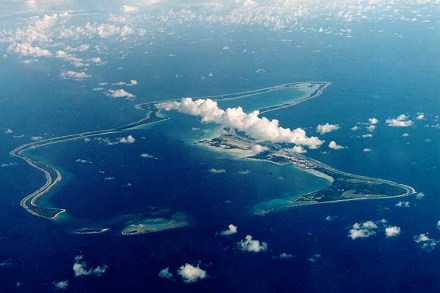
There has always been something mad about the government’s deal over the Chagos Islands. The British Indian Ocean Territory was formed in 1965 from the seven atolls of the Chagos Archipelago and over 1,000 smaller individual islands. They had previously been administered as part of the Crown Colony of Mauritius, a British possession since 1810. Mauritius became independent in 1968 and had long claimed sovereignty over the BIOT, which the United Kingdom had consistently rejected and which has never been upheld by a judgement in any international court.

Why is Spain trying to pick a fight with Trump on defence?

When I joined the House of Commons Clerk’s Department 20 years ago, there was a helpful list of formerly common phrases which were no longer to be used. Among them was 'Spanish practices', that arch description often applied to irregular or restrictive workplace arrangements, which I suspect had hardly been spotted in the wild for a decade or more. It was an impermissible slur, of course, dating from the days of the first Elizabeth, but it came back to my mind yesterday.

How will the army’s new Gurkhas fight without any guns?

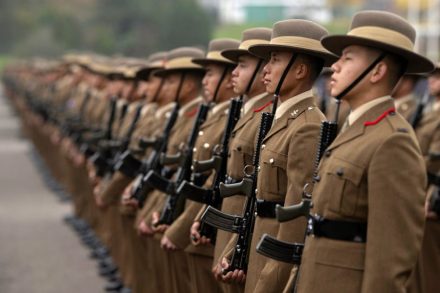
The British Army’s newest formation, the King’s Gurkha Artillery (KGA), has unveiled the cap badge it will wear. This is a huge moment of symbolism for any army unit: the army is a federation of battalions and regiments which attract and inspire fierce loyalty, and it is at that level that British soldiers seek their real collective identity. 117 pages (seriously) of the Army Dress Regulations specify how cap badges are worn. In this case, however, the new badge – the crossed Gurkha khukhuri and a field gun representing the Royal Artillery – is concealing at least as much as it represents. I am absolutely in favour of raising more Gurkha units.

Is David Williams the MoD’s fall guy?

Yesterday the Ministry of Defence (MoD) confirmed that its permanent secretary, David Williams, will be stepping down in a matter of weeks. He has served for just over four years, almost exactly the average tenure of his predecessors since the department was created in 1964, but it is difficult to regard the timing as a coincidence. It is still not yet three weeks since the catastrophic loss of data on Afghan nationals and others, and the MoD’s use of a super-injunction, were disclosed to parliament by defence secretary John Healey. This is not a failing individual. This is an ingrained, systemic, cultural malaise. And it has to be fixed. Williams is not explicitly being sacked: permanent secretaries very rarely are.

How much is the defence deal with the EU going to cost Britain?

The UK-EU summit in London in May was proclaimed as a 'new chapter' in the post-Brexit relationship. Only now are we finding out the true cost. Perhaps the British government should not have so eagerly chased a scheme that was bound to work to our disadvantage The EU’s Security Action for Europe (Safe) – a fund of €150 billion (£130 billion) to provide loans for member states to undertake urgent, large-scale defence procurement projects – was a key talking point at the meeting. The programme is a sensible one, aimed at boosting the European defence industry’s production capacity. However, it is now clear that the UK will need to pay a fee to participate.

Germany has become a useful ally for Britain

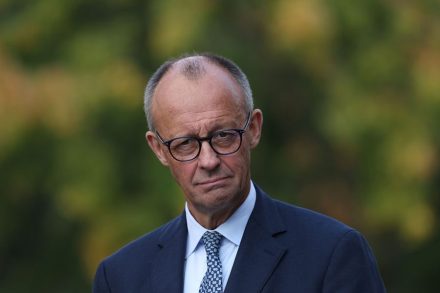
Yesterday the German Chancellor Friedrich Merz visited London for the first time since he took office in May. He and the prime minister have met on a number of occasions, and although the two lawyers are different characters – Sir Keir Starmer, the stiff, soi disant progressive human rights barrister; Merz, the abrasive, hard-nosed corporate counsel – they have forged a functional relationship. But this was Merz on Starmer’s home ground. The government has put a great deal of effort into bespoke bilateral relationships.

Are we sure the Afghan data debacle won’t happen again?

'Afghanistan' was the heading of Defence Secretary John Healey’s statement to the House of Commons on Tuesday – a word that hardly does justice to a three-year saga involving a catastrophic security breach and loss of data by the Ministry of Defence, a superinjunction and billions of pounds of taxpayers' money. Ministers and civil servants cannot be allowed to make policy and spend taxpayers’ money without any kind of oversight. That is not how a democracy works The bare bones of the story are these.

The Ministry of Defence has dropped the ball on fighter jets

If Defence Secretary John Healey didn’t have an anxious and unsettled weekend, he should have done. The Ministry of Defence once again has serious questions to answer over equipment, this time the F-35 strike aircraft programme, the cutting edge of the Royal Air Force’s offensive capabilities. It is a political commonplace that our executive faces inadequate parliamentary scrutiny, but there is one institution which can still cause ministerial pulses to quicken in panic: the National Audit Office (NAO). Established just over 40 years ago, the NAO carries out financial audits and value-for-money surveys on government departments.

Britain must wake up to the threat of Iran

The Islamic Republic of Iran is a 'wide-ranging, persistent and unpredictable' threat to the United Kingdom. That was the sobering conclusion this week of the intelligence and security committee, which has spent several years examining Iranian policy and activity, taking evidence and analysing a huge amount of classified information. The committee’s chairman, Lord Beamish (former Labour MP Kevan Jones), warned that the government had not developed a comprehensive or in-depth approach to the threat posed by Iran but had instead focused on short-term crisis management. The intelligence and security committee (ISC) of parliament is a unique body. Despite its name, it is not a select committee, but established by statute under the provisions of the Intelligence Services Act 1994.

Grey zone warfare is here. Britain must catch up

The 'grey zone' is the kind of ominous jargon beloved of the military, but for once it is well named: a wide range of hostile activities between states which stops short of the threshold of full-scale conflict, including espionage, cyber disruption and disinformation. It is a state which is neither peace nor war, and it is expanding all the time. The House of Commons Defence Committee has just published a report on the subject, Defence in the Grey Zone. It emphasises that, while the vast majority of the population has become insulated from conflict, this kind of activity brings the reality of disruption and violence to our everyday lives and is being exploited by our adversaries, especially Russia. Labour MP Tan Dhesi, chair of the committee, warned: Are we at war?

Europe must prepare to support Ukraine without America

It is unquestionably the case that people who should have known better were blinded by the Capri-Sun King’s glare when they reassured us that Donald Trump would not abandon Ukraine, that a second Trump administration would not really cut off military aid to Kyiv or effectively offer a free pass to Vladimir Putin. Yet that is what is happening. Last week the US Department of Defense halted a planned delivery of air defence missiles and precision munitions to Ukraine, the third time this year that such a stoppage has been put in place. The weaponry was part of a supply programme agreed under President Biden, but was halted as the Pentagon undertakes a 'capability review' to assess stockpiles currently held by the United States.

Why does Starmer want to grow Britain’s nuclear arsenal?

The government published its National Security Strategy 2025 earlier this week, a strange pushmi-pullyu document building on some policy reviews and anticipating others. It is disappointing and unfocused. The national security strategy was accompanied by an announcement perhaps just as significant: the government will buy at least 12 Lockheed Martin F-35A Lightning strike fighters which are 'dual capable', that is, they can deliver both conventional and nuclear weapons. These aircraft will give the Royal Air Force a nuclear role for the first time since 1998, and the UK’s nuclear capacity will no longer be reliant on the Royal Navy’s Vanguard-class ballistic missile submarines.

Starmer’s national security strategy fools no one

Sometimes it feels as if the government’s approach to defence and security could be summed up by the venerable punchline of the Irish farmer, 'I wouldn’t have started from here'. Despite having had more than four years as Leader of the Opposition to prepare, Sir Keir Starmer never quite seems able to seize the initiative as Prime Minister, often being left puce and blinking. Yesterday saw the publication of the UK’s national security strategy (NSS) 2025, Security for the British people in a dangerous world. It had been announced in February and promised before this week's Nato summit (in fact, it was released on the summit’s first day).