Eliot Wilson

Eliot Wilson

Eliot Wilson was a House of Commons clerk, including on the Defence Committee and Counter-Terrorism Sub-Committee. He is contributing editor at Defence On The Brink and senior fellow for national security at the Coalition for Global Prosperity

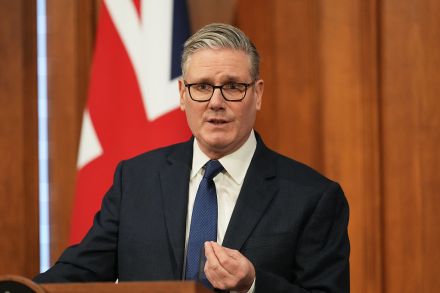
Keir Starmer’s legal past is catching up with him

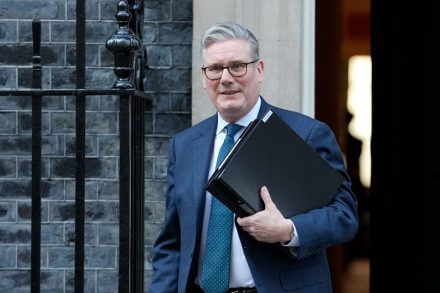
Sir Keir Starmer is the most distinguished barrister to occupy the premiership since H.H. Asquith more than a century ago. His legal career, however, has repeatedly bowled him difficult balls he has struggled to defend. The latest googly is that in 2007 he was leading counsel for an intervention to the House of Lords by a number of parties, including the Law Society of England and Wales and Liberty, seeking to re-examine the deaths of Iraqi civilians. The submission bearing Starmer’s name argued that, ‘the duty of effective investigation has not been fulfilled… they were perfunctory, lacking independence and wholly inadequate. Any suggestion that they satisfied the requirements of Article 2 ECHR is unarguable.

The nuclear flaw in Keir Starmer’s Chagos deal

The government’s treaty with Mauritius to hand over sovereignty of the British Indian Ocean Territory (BIOT), including the joint UK/US military facility on Diego Garcia, has caused anger and fierce debate since it was signed in May last year. In the latest setback, it appears to prevent the United States from handling or storing nuclear weapons at Naval Support Facility (NSF) Diego Garcia, unacceptably limiting its strategic use and autonomy. Earlier this month, Sir Keir Starmer said, 'I've been a lifelong advocate of international law and the importance of compliance with international law.

What Trump gets wrong about Afghanistan

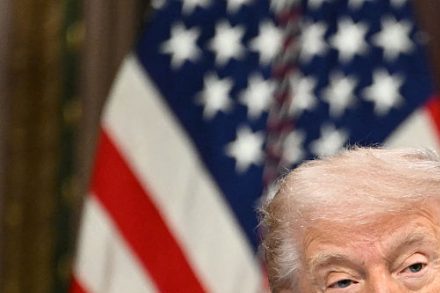
Long before he was president of the United States, Donald Trump was a caricature. Producer Mark Burnett approached him to be the lynchpin of The Apprentice precisely because he was a cartoonishly bombastic, ‘greed is good’ era figure addicted to displays of gold-plated opulence. Since occupying the White House, Trump has also frequently acted as a stereotypical American who sees everything as an achievement of the US of A, salvator mundi. And he has been doing it again with the war in Afghanistan. ‘We will always be there for Nato, even if they won’t be there for us,’ he blurted on his Truth Social platform earlier this month.

Even Europe knows Britain isn’t spending enough on defence

The United Kingdom’s allies in Europe are concerned that the British government is not allocating enough resources to defence and that our armed forces’ capabilities are already suffering as a result. No one likes to be openly chided by their friends – and it stings all the more because it is true. Last week, the Chief of the Defence Staff, Air Chief Marshal Sir Richard Knighton, appeared before the House of Commons defence committee. He had admitted that 'we are not as ready as we need to be for the kind of full-scale conflict that we might face'.

Why won’t the government buy the RAF new helicopters?

Sir Keir Starmer’s announcement last February that the government would increase defence spending to 2.5 per cent of GDP from April 2027 seems a long time ago. It was trumpeted as the 'biggest sustained increase in defence spending since the Cold War', but in fact represented a very modest rise from the 2.3 per cent of 2024/25. Events of the past year have now left it looking cautious and inadequate. As a direct consequence of this measly funding, Britain now looks set to lose out on the opportunity to update its stock of military helicopters, putting jobs – and the country's defence – at risk. In recent days, we learnt that the Ministry of Defence (MoD) estimates it will need another £28 billion over the next four years to meet the commitments it has set out.

Britain will struggle to put ‘boots on the ground’ in Ukraine

The current conflict in Ukraine has frequently been compared to the first world war. There is an echo of the same grimness and intensity: the huge artillery barrages, the sprawling network of trenches, the horrifying casualty rates. Amid all that, Sir Keir Starmer and Emmanuel Macron, clinging on to their 'coalition of the willing', are invoking another memory. If they can make The Big Push, we will reach a peace settlement monitored by their ad hoc European-led alliance. The two leaders have made a genuine step forward.

Kemi Badenoch is right to call for more defence spending

Kemi Badenoch has announced a series of commitments on defence spending that she would implement if she were to become prime minister. This is an important and sensitive issue as the war in Ukraine continues and there are repeated warnings about the heightened threats to the UK. The Conservatives would reallocate £17 billion of public expenditure to the Ministry of Defence (MoD), Badenoch said yesterday, because the 'defence of the realm must be the first priority of any government'. The most politically sharp-edged measure the Tories have announced is repurposing the National Wealth Fund (NWF), which Labour established to 'increase investment… to accelerate delivery of the government’s growth and clean energy missions'.

Can Britain afford Aukus?

'Full steam ahead': That was the verdict on the Aukus alliance from Defence Secretary John Healey after the United States concluded its review of the alliance this week. US Secretary of Defense Pete Hegseth delivered the good news to Healey and Richard Marles, Australia’s Minister for Defence, in Washington this week. But there's a catch: with no mention of increased defence spending in last month's Budget, does the UK really have the money to fund the grand plans Aukus commits it to? This renewed commitment to Aukus by America is good news and could not have been taken for granted.

Is the navy prepared to fend off Russia’s underwater threat?

The Royal Navy has traditionally been the mainstay of Britain’s military power on the global stage. It is approaching its 500th anniversary, when Henry VIII established the 'Navy Royal' in 1546, a standing maritime force with its own dockyards and secretariat, the Navy Board. As this year’s Strategic Defence Review made clear, it remains vital for the protection of the United Kingdom, the defence of the wider Euro-Atlantic area and Britain’s ability to project power across the globe. To do that, the Royal Navy has to be strengthened and modernised.

It feels as if Michael McFaul’s audience has long since left

From our US edition

Since the end of the Cold War, politicians and commentators have been searching for a new paradigm through which to understand international relations. Notwithstanding Francis Fukuyama’s oft-misunderstood The End of History, we have tried various patterns to classify the world order, of which George W. Bush’s “Axis of Evil,” first used in 2002, was among the more enduring. In Autocrats vs. Democrats: China, Russia, America, and the New Global Disorder, Michael McFaul acknowledges the widespread if nebulous consensus that the challenge presented by Russia and China is a kind of second Cold War – historian Niall Ferguson has labeled America’s relations with China “Cold War II.

Michael McFaul

The Ajax scandal is worse than embarrassing

Luke Pollard, recently promoted to Minister for Defence Readiness and Industry, must have looked forward to visiting General Dynamics UK in Merthyr Tydfil at the beginning of the month. The facility in south Wales builds the Ajax armoured fighting vehicle and its five variants (Ares, Athena, Apollo, Atlas, Argus: alliteration pays well in the defence sector), of which the British army has ordered a total of 589. The visit marked the vehicle’s initial operating capability (IOC), the development stage at which it is available in minimum, usefully deployable form. This was especially significant for Ajax because the platform has endured a torrid birth and evolution.

Russia’s spy ship is a warning to Britain – but are we ready?

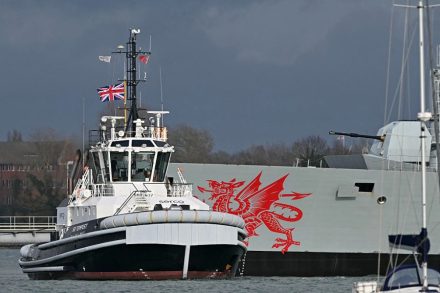
As a Russian spy ship lurks on the edge of British waters, Defence Secretary John Healey had a message for Vladimir Putin: ‘We see you, we know what you’re doing and...we are ready.’ Unfortunately, the reality is that Britain isn't quite as ready as it should be. Defence Secretary John Healey had a message for Vladimir Putin: ‘We see you, we know what you’re doing' Healey revealed during a Downing Street press conference this morning that the Yantar, currently just north of Scotland, has fired lasers at RAF planes attempting to monitor its activities. It marks the first time that a Russian ship has taken this kind of action against British forces. ‘We take it extremely seriously,’ Healey said.

The ECHR is destroying British army morale

Nine retired senior military officers have written an open letter to warn that the expansion of human rights legislation is damaging morale within Britain’s armed forces and undermining their effectiveness. These are among our most eminent generals: all have held four-star rank; three have served as Chief of the General Staff, the professional head of the British Army, and one is a former Chief of the Air Staff, the RAF equivalent. Their argument is this. Human rights legislation, especially an 'ever-broadening interpretation' of the European Convention on Human Rights, is being used to re-examine actions taken by armed forces personnel in combat.

Is the British Army right to invest in new battle tanks?

It is a distinct career advantage in Sir Keir Starmer’s government for ambitious ministers to be able to shut unpalatable truths out of their minds and maintain a tone of blind, unwavering optimism. Luke Pollard, the minister for defence readiness and industry, showed those qualities this week on a visit to the General Dynamics UK factory in Merthyr Tydfil. Pollard was in south Wales to announce the achievement of 'initial operating capability' for the Ajax armoured fighting vehicle, one of the British Army’s three principal platforms for the forthcoming decades. 'Ajax has proved itself in the field to be the most advanced medium-weight armoured fighting vehicle on the planet,' Pollard declared. 'We have more than a full squadron ready to fight.

Trump’s nuclear weapons testing is a dangerous idea

It is often difficult to discern the exact meaning of President Trump’s public statements. He does not consider words carefully, being a politician of pure and visceral instinct, but he is also not especially articulate, and this can produce ambiguous jumbles of language. Last week, minutes before he met President Xi Jinping of China at Busan Airport in South Korea, Trump made an extraordinary statement on his Truth Social platform: The United States has more Nuclear Weapons than any other country… Russia is second, and China is a distant third, but will be even within 5 years. Because of other countries testing programs, I have instructed the Department of War to start testing our Nuclear Weapons on an equal basis. That process will begin immediately.

Don’t take away Andrew’s Falklands medal

When the King ‘initiated a formal process to remove the Style, Titles and Honours of Prince Andrew’ last week – reducing his brother to plain Andrew Mountbatten Windsor – the Royal family might have hoped that it would draw an end to the scandal. But public opinion has scented blood, and righteous outrage is building. Andrew’s brave service in the South Atlantic is a matter of record, for which he earned his South Atlantic Medal. It does not make him a good person, nor give him immunity for any later conduct Defence Secretary, John Healey, has revealed that the process of removing Andrew’s last remaining military distinction, his rank as Vice-Admiral, is underway.

Why Christians should celebrate Halloween

Hallowe’en is nearly over for another year. Thank goodness, you might say. Each October, many Brits scratch their heads about when this festival became such a big thing. I am as guilty as the next person in doing so: only last weekend I reflected, with a combination of curiosity and weariness, that 'when I was young', October 31 was simply not as hotly anticipated a date in the calendar. The blame for Hallowe’en inflation is often directed at the Americans. But it's not fair to blame our US cousins. Hallowe’en is something of an ancient Christian tradition.

Why is the army’s top brass waging war on private members’ clubs?

The British Army – at its smallest size since we lost our American colonies in the 1770s – is facing the most challenging period in its history. More soldiers are leaving than joining. Why are they walking away? A sternly-worded letter from the Deputy Chief of the General Staff (DCGS), Lieutenant General David Eastman, rebuking colonels for their dealings with private members’ clubs, shows one reason why many are fed up with the Army.

Is Keir Starmer right to sell Typhoon jets to Turkey?

Sir Keir Starmer is proving to be an unlucky prime minister. This week began with a demonstration of his haplessness. The Prime Minister travelled to Ankara to announce an £8 billion deal to supply the Turkish air force with 20 new Eurofighter Typhoons, beginning in 2030. Yet the political headlines in Britain were full of other more embarrassing issues: the collapsed China spy trial case, the accidental release of a convicted sex offender due for deportation, the aftermath of Labour’s humiliating loss of the Senedd seat in the Caerphilly by-election. The commercial deal with Turkey is important. Starmer described it in his strange, resentful, maundering way as 'the biggest fighter jet exports deal in a generation', which is subject to several qualifications.

Keir Starmer can’t blame the cabinet secretary for his own failures

There have been 14 cabinet secretaries since the post was established in 1916. The first, Lieutenant Colonel Sir Maurice Hankey, served for nearly 22 years; in stark contrast, there are now reports that the 14th and current incumbent, Sir Chris Wormald, will be gone by the New Year, having served just 12 or 13 months. The problem is leadership, or rather a glaring lack of it Wormald was appointed in December 2024 after eight-and-a-half years as permanent secretary at the Department of Health and Social Care, to replace the controversial Simon Case.