Dot Wordsworth

What does it mean to be ‘2S’?

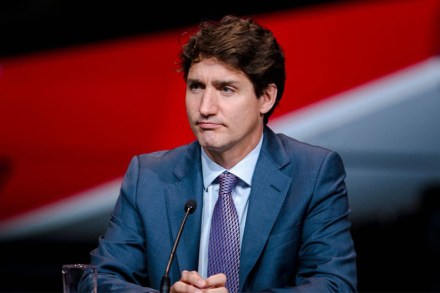
Justin Trudeau has attracted a certain amount of mockery by referring in a tweet to people who are 2SLGBTQQIA+. The Canadian Prime Minister was referring to people who are Two Spirit, lesbian, gay, bisexual, transgender, queer, questioning, intersex or asexual, plus anything else that might come to mind. The official website of the Canadian government only stretches to one Q and doesn’t bother with the A, but declares that ‘terminology is continuously evolving’. Continuous evolution means that yesterday’s approved term is today’s hate speech. The Canadian government website says that ‘the term homosexual has fallen out of favour, as it is associated with the historic medical understanding of same-sex attraction as a mental illness’.

How to spot a terf

At dinner the other night I was wedged between two friends of my husband’s, with another facing me. They had made their living as university academics and were, frankly, old men. None of them, I was surprised to find, knew what a terf was, despite its frequent discussion in The Spectator. Feminists of my acquaintance believe that everyone in the world knows what a terf is. In the past five years, terf wars has turned from a joky headline into a standard reference to permanent hostilities. Since I wrote about terf here in 2018, the Oxford English Dictionary has given it an entry, and its earliest citation for the word is from 2008. This is its definition: ‘A feminist whose advocacy of women’s rights excludes (or is thought to exclude) the rights of transgender women.

Where was the original kangaroo court?

‘Their purpose from the beginning has been to find me guilty, regardless of the facts. This is the very definition of a kangaroo court.’ So said Boris Johnson, in announcing his departure from parliament, with reference to the Commons Privileges Committee. What have kangaroos got to do with it? Perhaps a kangaroo court’s essence is not in fact that of finding the accused guilty. That is the work of a show trial: ‘A judicial trial held in public with the intention of influencing or satisfying public opinion, and typically having a predetermined verdict,’ as the Oxford English Dictionary defines it.

Is This Morning really ‘toxic’?

‘I know the antidote to toxicity,’ my husband shouted, waving a copy of Pliny the Elder’s Natural History, even though there was nobody to shout down. Toxicity has become a fashionable word, particularly since the resignation of Boris Johnson as Prime Minister. Toxic is to poisonous what erotic is to sexual: an elevated term. Over the past fortnight it has been deployed in that storm in a television set: the fall of Phillip Schofield. Someone called Dr Ranj Singh declared that the culture at This Morning – the ITV programme that is generally on when one is waiting at an airport – had ‘become toxic’.

The Viking roots of ‘Thirlby’

Last month hundreds of Westminster street signs were auctioned off. Their design with san-serif capital letters was the work of Sir Misha Black in 1967. One for Thirleby Road went for £240. It is not a famous street but my husband and I know people who live there, though they were not the lucky bidders. I had never got a satisfactory answer from our friends about how the street is pronounced. They do not know. I find this odd. How do they get home by taxi? The crux is whether it is two syllables or three. By chance, a trip with my husband to North Yorkshire last week resolved the question. Four miles or so from Thirsk is the village of Thirlby (with no E). ‘Why should Thirleby Road in Westminster be named after a Yorkshire village and be spelt in a different way?’ asked my husband.

What does ‘macabre’ have to do with the Bible?

When The Spectator took the pulse of Paris in 1897, it reported: ‘Macabre pictures, Macabre poems, and Macabre music are all the fashion. We hear of cafés where the tables are shaped like coffins.’ Macabre was a new word in English, and this was its sole 1890s Spectator appearance. Its connections are indicated by a phrase in a song by that uneven chansonnier Georges Brassens: croque-macchabée. It means ‘undertaker’, macchabée being ‘a corpse’. The French slang macchabée and the English macabre both originate in the Danse Macabre. There was a 14th-century French book called La Danse Macabré, with an accent, and Macabré seems to be an alteration of the Old French Macabé, a version of the biblical name Maccabaeus.

There’s ‘the rub’ – but where did it come from?

‘So, are the Tories going to win the election?’ asked my husband after listening to the engaging psephologist Sir John Curtice. I’d been paying attention, but was distracted by Sir John’s phrase ‘the rub in the ointment’. Typical of extempore speech, this a metaphorical mixture of the fly in the ointment and the rub. Ointment might suggest a rub like Vicks VapoRub, which originated in America in 1905. The Oxford English Dictionary says such a rub is likely to be a liniment, though I can’t quite see the difference. I do remember Sloan’s Liniment, its label bearing an engraved portrait of the thick-moustached inventor, Dr Earl Sloan (another American, a doctor by courtesy). How much a fly spoils your metaphorical ointment is not clear.

How ‘hour’ ticked into our language

‘Why is there water all over the bathroom floor?’ asked my husband, without doing anything about it. It was my fault. During a bank holiday soak, I heard the Radio 4 book serialisation of Hands of Time by Rebecca Struthers say that ‘the origin of the modern word hour’ is the Egyptian god Horus. I rocketed up a few inches, like a surprised killer whale, then flopped back down, displacing a few cubic inches of water each side. It’s funny how ordinary words attract erroneous stories. Hour does not, of course, come from Horus. Few English words come from ancient Egyptian; pharaoh and oasis are exceptions. Hour derives from Norman French houre, from Latin hora, itself from Greek hōra, going back to an Indo-European root signifying ‘season’, giving us year and the Germans Jahr.

Is oat milk really ‘divisive’?

The Cenotaph was called contentious in a secret Metropolitan Police report, exposed by Policy Exchange, on memorials that were open to attack for their links to war, imperialism or slavery. In reality, of course, the Cenotaph brings the nation together each Remembrance Sunday to honour our dead. In the same way, people are called divisive when others loudly take issue with something they say. J.K. Rowling’s ‘views on gender have proved divisive’, said someone in the Daily Mail, as though the plain truth that there are such things as women were controversial, rather than her opponents’ dogma that one may change gender by declaration.

Why is ‘NPC’ an insult?

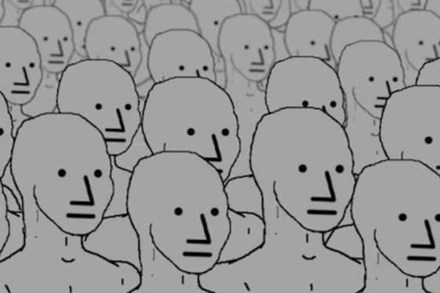
An 11-year-old boy is doing well after being stabbed at a Dollar Tree store in Mill Creek, Washington State. Dollar Tree is like a pound store and attracts poor folk. According to court documents the insult ‘NPC’ had been shouted at a man who has now been charged. My husband didn’t even say ‘What?’ when I told him, so for information I resorted to Veronica, who not so long ago counted as a young person. I was little the wiser to learn that NPC stood for non-playable character (or non-player character). The reference is to computer games, in which NPCs are, as it were, extras not controlled by the players. The connotation is that the character has preset behaviour and dialogue. One game has an NPC called Griniblix the Spectator.

The peculiar history of a mistranscribed book 

‘Hang on,’ said my husband. ‘That’s not right. I’ve read that book.’ He had too, the book being The Hooligan Nights. It purported to be an account of a young hooligan from Lambeth called Alf, and was published in 1899, a year after the feared and anathematised youths came to prominence in the press. The frontispiece was a drawing by William Nicholson showing the type: long-headed with a forelock over the low brow; wearing the check muffler fashionable among the gangs. The Daily Telegraph reported in August 1898 that the hooligan’s ‘crop-and-fly-flap’ haircut cost sixpence, when an ordinary haircut was only twopence.

What’s the difference between ‘tax evasion’ and ‘tax avoidance’?

I used to avoid paying tax. I opened an Isa for my pitiful savings, for example, to avoid tax on the interest. But now I daren’t say I avoid tax because HMRC is encouraging people to report me for it. ‘Report tax fraud or avoidance,’ is the headline on a public-service government website. ‘Report a person or business you think is not paying enough tax or is committing another type of fraud,’ it urges. In the past, it seemed clear. The Oxford English Dictionary says: ‘tax avoidance n. the arrangement of financial affairs so as to reduce tax liability within the law. tax evasion n. the reduction of tax payments by misstatement of income or other illegal means.

The problem with ‘lived experience’

The Chinese emporium where I buy balloons for my husband thinks I am a laughing-gas addict, I buy so many. My husband blows a few up and pops one each time he hears a chosen phrase on the radio. This week it is lived experience. From the kitchen, his explosions sound like a shooting party. He thinks it’s funny. I am his only audience. I’ve found a written source to draw on without any balloon popping. It is from Inclusive Minds, which is credited with helping the publishers of Roald Dahl, who have been rewriting his children’s books. It has a ‘network of Inclusion Ambassadors’ – ‘young people with many different lived experiences who are willing to share their insight’. ‘They are not sensitivity readers.’ No.

What’s the difference between rocks and stones?

‘You rocks, you stones, you worse than senseless things,’ exclaimed my husband, misquoting Shakespeare as though it were an improvement. In English a rock is different from a stone and it can be annoying when news reports, especially on radio and television, speak of crowds throwing rocks. This Americanism has not yet ousted stones in British English. ‘It is one of the peculiarities of the dialect of the people in the westernmost states, to call small stones rocks,’ wrote the Revd Samuel Parker in his Journal of an Exploring Tour Beyond the Rocky Mountains (1838). My husband had been set off by a report from France. During the disorder there, the offices in Nice of the leader of the Républicains, Eric Ciotti, were attacked.

Can you read Charles Dickens’s handwriting?

‘Can you read Dickens’s handwriting?’ asked a blogger. Underneath was a picture of his manuscript for chapter 23 of Oliver Twist. It looked easy enough to read: ‘If the village had been beautiful at first it was now in the full slow and luxuriance of its richness.’  No, slow couldn’t be right. Must be flow. But no. The published text tells me it is ‘full glow and luxuriance’. I should have seen it the first time, for even in one paragraph of Dickens’s writing, it is obvious that he made his gs like a descending s or a barless f. When a g was joined to the preceding letter, he would carry the stroke up and into a tight anticlockwise loop, then plunge down to make the tail.

The curious pronunciation of ‘East Palestine’

‘The Royal Pavilion in Brighton is a palace on a Steine,’ said my husband in a dislocated response to learning that East Palestine, Ohio, is pronounced ‘palace-steen’. We’d never heard of the place, pop. 4,761, before a train crashed there, letting out fumes. Its name sounded like a claim to be further east than the original Palestine, but it turns out that when the village changed its name from Mechanicsburg in 1875, the post office added the label East to distinguish it from an existing Palestine in Ohio (pop. today 180).

Which ‘holdall words’ pack the most meaning?

Listeners to Today last week were fascinated by an item about foreign words with no equivalent in English that must be translated by a whole sentence. If brunch is an example of a portmanteau word, these are, I think, examples of holdall words, packed full of meaning. Merriam-Webster, the dictionary people, had asked for examples and hundreds came in. One mentioned last week by Susie Dent, for 30 years the denizen of Dictionary Corner on Countdown, was ranço, from Brazilian Portuguese, with the apparent meaning ‘an irrational dislike of someone innocuous’. But, Brazilian or not, ranço means ‘rancidity’. It comes from Latin rancidus, which already meant ‘offensive’ in addition to the literally rancid. From the Latin rancor, ‘rancidity’, English derives rancour.

What do biscotti and macaroni have in common?

‘Only one biscotto!’ exclaimed my husband, grabbing a little packet labelled ‘Biscotti’ at the station coffee stall. It fell from his agitated fingers and broke into two. ‘There you are, darling, two biscotti,’ I said cheerfully, to his annoyance. But singulars and plurals for foodstuffs are seldom simple. Take macaroni. It is an obsolete form of maccheroni in Italian, ‘tubular pasta’. But Italians hardly think of talking of one maccherone. It’s a funny word anyway. An origin is seriously proposed in the Greek makarios, ‘blessed’, and aionios, ‘eternal’, which together named a funeral chant. I suppose macaroni was consumed after the funeral, as we do ham sandwiches.

The spread of ‘slather’

‘Slither, slather, sliver, slaver, slabber, slobber,’ chanted my husband from the armchair beside his glass of whisky, to a little tune he had composed all by himself. The occasion for this outburst was a seventh item of slip-slop vocabulary: a newspaper reference to a slice of bread ‘lathered in mayonnaise’. I think it might just have been a misprint for slathered. Slather has been used for less than a century to mean ‘spread or splash liberally on’. The OED illustrates its fundamental meaning of ‘slip’ with a Kipling quotation: ‘I hate slathering through fluff.’ This is not very illuminating, since fluff is dry, not slippery. But the quotation comes from a story published in 1905, ‘With the Night Mail’, a futuristic tale of a transatlantic airship set in 2000.

The political history of ‘faggot’

‘What does it mean by faggot?’ asked my husband when I showed him a newspaper item headed ‘Champion faggot’. The cutting, from the Northern Daily Mail for 6 November 1897, was sent to me by the historian Andrew McCarthy who had found the headline when looking for something else, and had no idea what it meant either, until he sensibly looked it up in the Oxford English Dictionary. There it explains that (when votes depended on property), a faggot was ‘a vote for a particular candidate or party fraudulently contrived by nominally transferring sufficient property to a person who would not otherwise be qualified’.