Dot Wordsworth

Where does ‘knocked up’ come from?

Anthony Horowitz (Diary, 4 February) tells us he was advised by a ‘sensitivity reader’ to remove the word scalpel from a book with a Native American character lest it suggest scalps (though the words are unrelated). I’ve stumbled across the birth of a new forbidden phrase on Twitter, that social media swamp for the older swampster: knocked up. A California lawyer called Johnathan Perk declares in a tweet: ‘The phrase “knocked up”, referring to pregnancy, originated with US slavery. The Oxford English Dictionary traces the expression back to 1813. Back then the price of enslaved African women was “knocked up” by the auctioneer when she was pregnant – promoted as a deal for buyers.

The ins and outs of ‘outwith’

‘I don’t mind when a Scotsman says it,’ remarked my husband magnanimously. The ethnically sensitive word in question was outwith. The Stornoway Gazette announced in 1998: ‘On Christmas Day and outwith these hours, arrangements to have urgent prescriptions dispensed may be made by ’phoning 701472.’ I like the apostrophe in ’phoning. Short for telephoning, as ’bus is for omnibus. Good writers use outwith. ‘He’d wanted to buy a place there, but it had been too isolated for his wife – and outwith their means anyway,’ wrote Ian Rankin in Dead Souls (1999).

‘Super’ has become super-annoying

‘Claiming that I am a drag Queen or “performed” as a drag Queen is categorically false,’ tweeted the US Representative George Santos last week. ‘I will not be distracted nor fazed by this.’ ‘Wow, George Santos did something interesting!’ responded Stephen Colbert on the Late Show. ‘All his other lies are super-boring, like “I worked at a bank”.’ After yet another tennis match that went on into the early hours, Andy Murray’s brother Jamie said: ‘I’m sure you guys had to stay up super-late.’ Leicester is ‘one of two “super-diverse” cities in the UK’, wrote someone in the Guardian, while the Sun encouraged readers to ‘fill in the super-quick and straightforward three-step form’. Super is on everyone’s lips, and it’s annoying.

John Donne and the emergence of ‘emerging’

In 1625 John Donne said: ‘As Manna tasted to every man like that he liked best, so doe the Psalmes administer instruction, and satisfaction, to every man, in every emergency and occasion.’ I’m not sure where Donne got this idea about manna, but I wonder whether C.S. Lewis had it in mind when he wrote in The Lion, the Witch and the Wardrobe about Turkish delight that was enchanted, so ‘anyone who had once tasted it would want more and more of it, and would even, if they were allowed, go on eating it till they killed themselves’. Anyway, when Donne spoke of an emergency he did not mean something out of ER, but more a circumstance or juncture, indeed an occasion.

Where did Oil of Olay get its name?

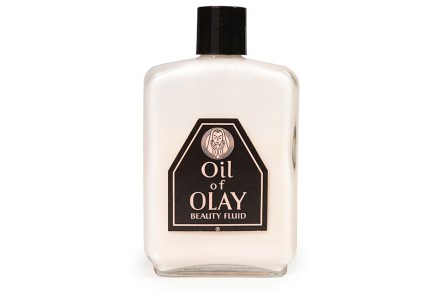
‘Is it sponsored by the oil people?’ my husband asked as we drove into London’s Ultra Low Emission Zone, past a sign: ‘ULEZ.’ Naturally his words reflected mental confusion, but I had some sympathy for his presumption that the acronym was pronounced to rhyme with the French verb culer, ‘make sternway’. By oil he was not referring to anything to do with engines but to what we both remember as Oil of Ulay. In different countries it was called Oil of Olay, Oil of Olaz or Oil of Olan. Suddenly, at the millennium it became Olay, just before Jif became Cif. Cif cleans the kitchen floor. Olay is for the skin and used to be advertised as producing ‘a younger-looking you’. It was invented by a South African chemist called Graham Wulff (1916-2008).

Bunch

‘It’s very annoying when someone pulls a grape or two off the bunch,’ said my husband, glowering at the ‘obscenely’ denuded pedicels. To him it is a crime not to break off a cluster or cut its peduncle with grape-scissors. For me a far more annoying trend is to use bunch in a strange new way. We are used to bunches of grapes with natural connections or bunches of radishes connected by being tied together. We have absorbed the application of bunch to socially connected groups, as in The Wild Bunch (film, 1969) or any old bunch of idiots. But now it is used as a synonym for lots. ‘You spend a bunch of money without getting the benefit,’ I read in the Guardian.

The worst words of 2022

‘Homer, the poet?’ asked my husband, puzzled, as he often is. He was responding to my scornful observation that the Cambridge Dictionary had chosen homer as its word of the year for 2022. The reason was merely that it had figured as the answer to a Wordle puzzle and many people did not know what it meant, so looked it up. The homer in question was presumed to be a home run in baseball. The poet would not qualify, being a proper name. He does however find a place in the Oxford English Dictionary under nod, since Homer nods became a proverb, taking its cue from the Ars Poetica of Horace: Indignor quandoque bonus dormitat Homerus; ‘I feel aggrieved when sometimes even excellent Homer falls asleep.

‘Quite’ has gone quite wrong

Something has gone wrong with the use of quite. Someone wrote in the Telegraph: ‘Beating Brazil at a World Cup? Quite the experience.’ Then I heard: ‘It’s been quite the dreich day.’ The annoying part is the the. An idiom does exist with quite the, but the meaning is different. If my husband displayed his portly figure in a snug piece of fashion, I might be tempted to say: ‘You’re quite the Beau Brummell this evening.’ But if the afternoon is sunny, then it’s ‘quite a sunny afternoon’. Quite, as an adverb, possesses two main contrasting senses: ‘completely’ or ‘comparatively’. Quite exhausted could mean ‘utterly exhausted’ or ‘fairly exhausted’.

When did oranges become ‘easy-peelers’?

‘Jersey Royals are easy-peelers and I don’t fancy one in my stocking,’ said my husband, lapsing into sense. I had been complaining about supermarkets labelling all little orange citrus fruits ‘easy-peelers’. We have called oranges oranges since the 14th century. The bitter orange became known as the Seville orange. Both Thomas Nashe and Shakespeare joked at the end of the 16th century about being civil like an orange. In contrast, the sweet kind was known as a China orange.

Should things still grow ‘like Topsy’?

I’ve heard two people in the past week make a jocular remark about things just growing ‘Like Topsy’. They were both life peers as it happens, Lady Altmann and Lord Norton of Louth. Is one still allowed to make this proverbial reference to Uncle Tom’s Cabin? In a way the simile is the same as saying something is like the curate’s egg meaning ‘good in parts’, even though the curate’s egg was nothing but bad. The orphan Topsy said she expects she just grow’d, though naturally she did once have a mother. Asked where she was born, Topsy insists: ‘Never was born!’ This reminds me of The Caretaker, where Aston asks the drifter Davies: ‘Where were you born then?’ To which he replies (darkly): ‘What do you mean?

What do Ukrainians mean when they say they’ve liberated a ‘settlement’? 

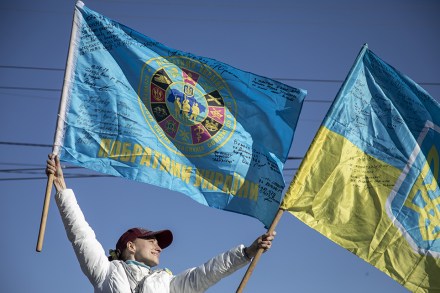
The Ukrainians have been giving numbers of ‘settlements’ that they have recovered. A friend asked whether the word used by English-speaking broadcasters was influenced by the Pale of Settlement of Czarist times. I was surprised and tried to find out. As a starting point, the Polish-Lithuanian Commonwealth established the Warsaw Confederation in 1573, giving religious liberty to Catholics, Protestants, Orthodox, Jews and Muslims. This developed after 1791 (when Russia took over Poland and Lithuania) into a system by which Jews, principally, could live under restrictions only in territory on the marches of Russia. The Pale of Settlement took in much of today’s Ukraine, with White Russia (Belarus), Lithuania and Bessarabia (part of Moldova).

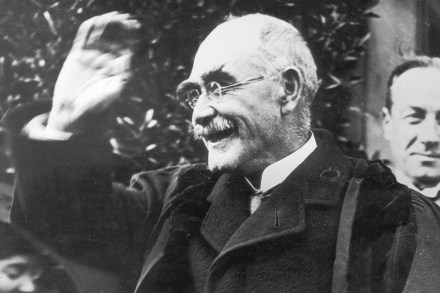
How Kipling invented ‘invasion of privacy’

Sir Keir Starmer told his party that Fritz Hippler (1909-2002), in his film Der ewige Jude (The Eternal Jew), released in 1940, juxtaposed footage of swarming rats and Jewish men hurrying through the ghetto of Lodz. In the same year, the Handbook of British Birds, edited by H.F. Witherby, noted the habitat of the slender-billed nutcracker ‘in its “invasions” of Europe’. In 2003, the Observer remarked that ‘the Australian swamp stonecrop, or New Zealand pygmyweed, is considered the most pernicious of the top 15 invasive plants’. What may be said of New Zealand pygmyweed without attracting criticism is not so easily said of people. Suella Braverman, the Home Secretary, was last week criticised for speaking of ‘the invasion of our southern coast’.

The many uses of ‘multiple’

I once failed to entertain the former Master of Balliol Sir Anthony Kenny by telling him about the inscription in the lift at the London Library, the gift of the Byzantinist Sir Steven Runciman. I suddenly forgot what it said. All I could think of was Inter medium montium pertransibunt aquae, ‘Between the midst of the hills the waters shall pass’. That wasn’t right. I felt like Alice trying to recite Isaac Watts’s ‘How doth the little busy bee/ Improve each shining hour’, but coming out with ‘How doth the little crocodile/ Improve his shining tail’. My failed quotation came from a Psalm, number 103 in the Vulgate numbering, number 104 in the Authorised Version. What I’d wanted was Daniel 12:4 Plurimi pertransibunt, et multiplex erit scientia.

Why ‘great’ should be used with great caution

Sir Keir Starmer told his party conference last month that a Labour government would within a year set up a publicly owned company to be called Great British Energy. Perhaps it was thought to have a ring of the popular Great British Bake Off. (The series is called The Great British Baking Show in America because a company running competitive bake-offs there since 1949 claimed commercial ownership of the term.) I’m not sure that all the echoes of Great British Energy are entirely positive. Great British Public has been in use, chiefly ironically, since 1833, when the popular novelist Catherine Gore, known simply as Mrs Gore, wrote in The Sketch Book of Fashion: ‘No man had ever greater cause than the ex-premier to loathe and despise the ingratitude of the Great British public.

What makes a ‘crisis’?

In his picture from 1932, ‘Derrière la gare Saint-Lazare’, Henri Cartier-Bresson caught the moment when a man in a hat launched himself forward from a ladder lying in some water, his leading heel not yet breaking the mirror-like surface, which reflected too a circus poster of a girl leaping. In 1952, when the photographer published his collection Images à la Sauvette, the title chosen for the English edition was The Decisive Moment, a phrase that Cartier-Bresson took from a sentence from Cardinal de Retz (1613-79), a statesman from a banking family: ‘Il n’y a rien dans ce monde qui n’ait un moment décisif’ (‘There is nothing in this world that does not have a decisive moment’).

The problem with Liz Truss’s ‘growth, growth, growth’ slogan

‘You’re easily pleased.’ said my husband when I told him how satisfying I found a chance discovery. It was about green grass growing, and I’m still pleased with it. Grow comes from an ancient Germanic root gro-. Green derives from the same source, and the greenery that grew was called grass, a third derivative from the root. Grass even shares an origin with the Latin gramen ‘grass’, which had an earlier form grasmen, the -men part being a suffix indicating a noun. My simple satisfaction at these etymological connections is countered by a discomfort at the way growth is used.

Why ‘pop’ is popping up everywhere

The Guardian kindly tells us that green is a colour whose time has come: ‘A blazer or a cotton shirt in Wimbledon grass-court green as a pop of saturated colour against white jeans and chunky flat boots is very Copenhagen Fashion Week.’ For the Express, it’s nails: ‘With polish costing from as little as £1, you can add a pop of colour to an outfit for next to nothing.’ This is the sassiest usage just at the moment of that vastly productive word pop. Yet in the papers, the predominant references by far are still to pop stars or (heaven help us) pop culture. That kind of pop simply comes from the abbreviated popular. Yet I suspect it props up etymologically unconnected uses of pop in, pop-up (restaurants), eye-popping or popping out.

What ‘Budget’ and ‘bilge’ have in common

The Budget (which the revolutionary fiscal act last week was technically not) is directly connected with bilge and with one of the circles of Dante’s Hell, the eighth, which houses the financial fraudsters, speculators, extortionists, counterfeiters and false forecasters. The circle is divided into the ten ditches of Malebolge. The Malebolge, singular bolgia, take their name from Latin malus (‘evil’) and bulga (‘bag’). The early commentator on Dante, Benvenuto da Imola, says that bolgia in Florentine speech means a concave and capacious ditch. In Dante’s Hell inside the Earth, the Malebolge are concentric. Budget also comes from the Latin bulga.

When did mourners stop crying and start ‘welling up’?

‘We got a gusher!’ exclaimed my husband in his idea of the accent of a Texan oil prospector. Normally, I’m not ashamed of his deranged behaviour, but now it seemed wrong. For we were watching the hypnotic livestream from Westminster Hall of people paying their respects at Queen Elizabeth’s coffin. There was many a tear in the eye, but the convention was not to blub openly. Every now and then, a loyal subject shed tears freely and my husband would croak out his cruel cry. Almost as annoying as his private discourtesy were self-deprecatory remarks by the mourning public that they were welling up. It is as if cry and weep did not exist. The shortest verse in the Bible would be a word longer in a future easy-language version as: ‘Jesus welled up.

The chronic misuse of ‘dire’

‘Dire?’ said my husband. ‘It’s something chronic.’ He was putting on his idea of an Estuary accent, in a manner that might soon be unacceptable. But it is true that everything has been called dire lately, and that’s no small claim. ‘Dreadful, dismal, mournful, horrible, terrible, evil in a great degree,’ was the semantic landscape sketched for the word by Samuel Johnson in his Dictionary. Johnson illustrated its usage by quoting Milton: ‘Hydras, and gorgons, and chimæras dire.’ As a matter of fact, in the first published edition of Paradise Lost, the line (Book II, line 628) is ‘Gorgons and Hydra’s, and Chimera’s dire’, with apostrophes that might put us in mind of a classical greengrocer.