Dot Wordsworth

Is orthogonal nonsensical?

Even with ruler and compasses I couldn’t make sense of a remark I found on Twitter or X, as we all pleonastically call it. Someone had posted this observation: ‘One’s bank balance and number of children are orthogonal to social media usage.’ I knew the prefix ortho- meant ‘straight, perpendicular, right’. So orthogonal meant ‘right-angled’. But how could children be at right angles to social media usage? I hadn’t cottoned on to the fashion for using orthogonal figuratively to mean ‘unrelated’, ‘irrelevant’. That is quite a stretch, for things at right angles are not unrelated. But there is no stopping orthogonal now, though the term seems unhelpful. It’s not even as though it were intended humorously, as happened to the learned term opisthognathous.

How useful is precarity? 

‘There’s no such word,’ said  my husband. Well, he has been wrong before.  For him precarity doesn’t exist; he admits precariousness. Yet precarity is now in vogue among campaigners. Precariousness is used by non-specialists. It is laughable to see how precarity has become grist for the academic mill. Among recent books on precarity are: Contesting Precarity in Japan (2020); Queer Precarities in and out of Higher Education (2020); In Pursuit of Revolutionary Love: Precarity, Power, Communities, (2022); Migrant Academics’ Narratives of Precarity and Resilience (2023); and last month Precarity in European Film. I like the niche appeal (‘in Japan’, ‘migrant academics’) combined with a universal application (‘in and out of higher education’).

Is loitering really so bad? 

E. Cobham Brewer seems, from his most famous work, the Dictionary of Phrase and Fable, published 1870, an agreeable old cove. But a biographical sketch by his grandson in the centenary edition praised his fearlessness in taking a stick to a ‘rough-looking man asleep in the stable’. He belaboured ‘the trespasser… exclaiming “Be off, you scoundrel!”’ This came to mind when I saw a sign prohibiting loitering. I wondered what exactly loitering was. The OED suggests as a meaning ‘to linger idly about a place’ and remarks that the verb appears ‘frequently in legal phrase to loiter with intent (to commit a felony)’. But now there are no felonies, only indictable offences.

Is it proper to ‘mull things’?

‘Rollicking time,’ sang my husband to the tune of ‘Mull of Kintyre’. He had been amused to hear of this misapprehension of the lyrics and smugly enjoyed it not being his mistake for a change. That kind of mull is a Gaelic word meaning ‘bare headland’. I think it is related to the Welsh word for a bare hill, moel, which Gerard Manley Hopkins used, with initial mutation, as voel in ‘The Wreck of the Deutschland’. That is all very well, but I have been annoyed recently by people saying that they want to mull things. I don’t mean wine, but possibilities. I would say ‘mull things over’. Why can’t everyone else? But the history of mull is fearfully complicated and obscure for such a little word.

Are we oversharing?

Someone on that old-fashioned online game called Twitter (renamed, but still not widely known as, X) told the world of the publication of his book in a post that began: ‘I’m thrilled to share that as of today…’ He probably thought of it not as publication day but the day on which the book was released (like a film or prisoner). But I was interested by the way that share had become just another synonym for ‘announce’. It has come a long way from West Frisia, where, the Oxford English Dictionary reminds us, cows entered a lot into ideas of sharing (although the island of Texel is today famed for its sheep). In West Frisian, skar is ‘part of a common pasture, part of a pasture sufficient for one cow, hay required to feed one cow, manure produced by one cow’.

What does it mean to be in dire straits?

A reader, Robert Andrews, heard Sir Ed Davey on Today say that the NHS was ‘in a dire strait’. Surely you can’t be in just one strait, dire or not, Mr Andrews suggested. Well, I know sorrows come not single spies but in battalions, but some straits are served one at a time. The Torres Strait is an example. In 2013, Australia found small boats crossing the 93 miles of its narrowest point, but detected only ten asylum-seekers. The deep water of the Lombok Strait off the coast of Bali separates two different systems of fauna: Bali has Asian creatures such as civets and woodpeckers; Lombok has Australian porcupines and white cockatoos. So it goes on: one strait at a time.

The problem with cutting to the quick

‘At least he didn’t say “Cut the cheese”,’ said my husband, suddenly making a barking noise like a seal, which is his attempt at laughter. He was commenting on a remark by Amol Rajan, the affable presenter on Today. An interviewee was invited to ‘cut to the quick’. Of course he meant ‘cut to the chase’, as he might have realised, without time to revisit the slip. The quick in cut to the quick does not mean something fast. It is the sentient flesh that might be nicked when you trim your nails. When I looked at the earliest quotation in the Oxford English Dictionary, I had a momentary vision of wounded giraffes and elephants: ‘Nor can the graffe joyn to its trunk unlesse the rinde be refreshed, and cut to the quick with the knife.

Why you can’t ‘treat’ yourself

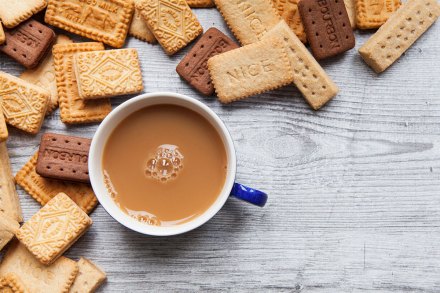
‘I hate sneak previews,’ said my husband. I think he was talking to the wireless, as he often does, not to me, since a broadcaster had just promised him a sneak preview. I agree that the terminology is annoying, as it is generally used as a ploy to pique interest in a subject, otherwise of no interest, by offering stolen pleasure. I am just as annoyed by an attempt to train our consumption as though we were pet dogs. On a train I was given a free shortbread biscuit, and on the wrapper it was labelled ‘Sweet treats’. Now, I regard shortbread as tolerable only if I am very hungry. But in the praxis of ‘healthy eating’, a treat is something you are allowed infrequently; otherwise, if it is a radish or some roasted chickpeas, it qualifies as a snack. Biscuits, crisps?

Where did ‘push-bike’ come from?

Books that one often used to see in secondhand bookshops, when there were such things, were the World’s Classics editions of the novels of Constance Holme. Humphrey Milford, publisher to the University of Oxford 1913-45, put all of them into the handy blue-bound format. The Spectator gave her second novel, The Lonely Plough (1914), a short but respectful review, declaring the book to be about Lancashire farmers, even though it repeatedly makes clear that the setting is Westmorland, the county where the author lived all her life. The anonymous reviewer also said that ‘she contrives to use admirable English’.

Why do we swipe left?

Beau Brummell, denouncing the fashion for a vegetable diet, was asked if he had never tried it himself: ‘Oh yes, I remember I once ate a pea.’ His remark sounded funnier then, because the normal way of talking about the little green spheres was as a collective, pease, as in pease pudding. Brummell was not the first to talk of one pea. Robert Boyle, the natural philosopher, wrote in 1666 of a bud the size of a pea. Alternatively a single example was called a pease. I mention peas because their harvesting was done in the 18th century with two implements: a pix (shaped like a pickaxe, I suppose) to pull the pea vine towards the harvester, so that with the right hand it might be cut with a swipe.

What’s the 411 on 101?

‘Don’t be daft,’ said my husband. It was a valid but unhelpful piece of advice in response to a question I’d asked him. The question was: ‘Have you read Wittgenstein’s Tractatus Logico-Philosophicus?’ I didn’t want him to explain it (which would indeed have been daft), merely to explain the numbering system of the text. ‘The decimal numbers of my remarks absolutely must be printed alongside them,’ the philosopher had demanded, ‘because they alone make the book perspicuous and clear: without the numbering it would be an incomprehensible jumble.’ I had thought they might be connected with the adjectival 101 (as in ‘art history 101’).

How weighing in became wading in 

The Sun reported that a woman sold a pair of rings which, if worn on two fingers, spelt out NTCU. Or they might be swapped round, with ruder consequences. When someone objected, the maker’s followers on TikTok apparently ‘flocked to the comments to weigh in on the situation’. In a report on some other matter, the BBC mentioned an Australian who ‘has form for wading into sporting rows’. So do people weigh in or wade in? Have they weighed in or waded in? The earliest citation given by the OED for wade in, meaning ‘intervene energetically’ is in a poem from 1863 called ‘How are you, Sanitary?’ The title is puzzling until one knows that, during the American Civil War, the wounded were cared for by the US Sanitary Commission.

The changing face of ‘values’

‘Don’t they know what prolific means?’ asked my husband, looking up in a bad-tempered way from a headline on the BBC website: ‘Lucy Letby: Investigating the UK’s most prolific child killer.’ Sky News, the Mail, Reuters and the CheshireLive website used the phrase too. Prolific comes from the Latin prolificus, meaning ‘producing or capable of producing offspring’. It can be used figuratively to mean ‘abundantly creative’ or just ‘productive’. A poet might deliberately use the phrase prolific child killer as a harsh oxymoron. For a journalist to use it in such a context is deplorable. A word far less easy to pin down is now widely used as a weapon: values.

The problem with ‘black market’

The term black market should be replaced with illegal market because it could suggest racial bias or discrimination, according to UK Finance, a trade body for British banking and financial services. I suppose it is asking for the black never to be used with negative connotations. That will be a black day for the language. Who ever thought that black market had anything to do with black people? It’s not as if black people are stereotyped as illicit money-changers. It cannot be long before Penzance changes the name of its principal street, Market Jew Street. The name has nothing to do with Jews but derives from the Cornish Marghas Yow, meaning Thursday Market. By contrast, Black Friday has been promoted in Britain to chivvy people into buying goods as they do in America.

How the Chancellor of the Exchequer created cancel culture

I used to worry on holiday about not having cancelled the milk, which would grow into a phalanx of doorstep bottles semaphoring an opportunity to burglars. Now whole classes of society are ostracised or cancelled for disagreeing with the declared ‘values’ of companies.  Sir Robert Goodwill, the chairman of the environment committee, told the Daily Telegraph last week that banks are trying to ‘cancel the countryside’ by closing the accounts of shooting businesses. Hunts had found the same thing. It’s funny that cancel culture and the Chancellor of the Exchequer share the same origin, linguistically. They go back to the latticework barriers marking off the judge’s space in an ancient basilica or court building. The Latin cancelli meant ‘bars of latticework’.

Is Nigel Farage really a grifter?

That Coutts dossier on Nigel Farage said in passing: ‘He is considered by many to be a disingenuous grifter.’ I didn’t quite know what grifter here meant. According to the Telegraph, a podcast host at Spotify called the Duke and Duchess of Sussex ‘grifters’. That does not limit the semantic field. It feels to me like a synonym for chancer, which in an 1889 dictionary of slang was defined as ‘one who attempts anything and is incompetent’.  Stephen Frears’s film The Grifters (1990), not to be recommended to anyone of a nervous disposition, deals with fixing racecourse odds, running confidence tricks, and even faking one’s own death.

The horror of being branded a PEP

When I asked my husband if he knew what PEP meant he said: ‘It’s an emergency combination of HIV drugs that can stop the virus if you’ve been putting your todger where you shouldn’t.’ Trust him to get hold of the wrong end of the stick. To him as a doctor, PEP meant Post-Exposure Prophylaxis. But I was talking about Politically Exposed Persons – a concept abused by banks to deny people accounts, as happened to Nigel Farage. Dominic Lawson, once editor of The Spectator, wrote in the Daily Mail about his wife being refused a bank account because her brother is a Viscount – but one without a seat in the Lords. The PEP has seeped into financial regulations, acquiring the status of the Black Spot.

A condensed history of ‘vape’

Last year, Oxford Languages’ word of the year was goblin mode. Apparently 300,000 voters decided upon it, but I haven’t heard anyone use it. It rocketed into view after someone posted online a fake headline about the break-up of Julia Fox and Kanye West after a month together. ‘He didn’t like when I went goblin mode,’ it read. Fox later made it clear she had said nothing of the kind. It means ‘self-indulgent, lazy, or greedy behaviour that rejects social norms’. I suspect goblin mode is a vogue term that will disperse like the morning mist. Talking of mist, vape has made another advance in establishing itself in the language. The Local Government Association has called for disposable vapes to be banned by next year.

What does Keir Starmer mean by ‘oracy’?

‘Is that something to do with oratory?’ asked my husband, looking up from the Guardian, which he only reads to annoy me, though it doesn’t. He was talking about the word oracy, which featured in Sir Keir Starmer’s speech last week about ‘smashing the class ceiling’. I think that, like my husband, most people assume it is a word that has been around from time immemorial, though not often used. In fact it was invented in 1965 by Andrew Wilkinson in a book called Spoken English: ‘The term we suggest for general ability in the oral skills is oracy; one who has those skills is orate, one without them inorate.’ The analogy was with literacy. The author explained a couple of years later that the term included listening.

Curiouser and curiouser: what does it mean to go ‘down the rabbit hole’?

Radio 4 has just run a series of programmes called Marianna in Conspiracyland made by its disinformation correspondent Marianna Spring. Prefatory remarks for one episode asked: ‘Do you know someone who’s fallen down the rabbit hole?’ I think this phrase has changed its connotations recently. The reference to Alice in Wonderland is evident. The podcast reinforced it by quoting a phrase from the book, ‘curiouser and curiouser’. In Wonderland, Alice had mixed feelings: ‘I almost wish I hadn’t gone down that rabbit hole – and yet – and yet – it’s rather curious, you know, this sort of life!’ The OED, finding a first usage for it from 1938, defines a figurative rabbit hole as a ‘passage into a strange, surreal, or nonsensical situation or environment’.