Dot Wordsworth

Is it proper to ‘mull things?’

From our US edition

"Rollicking time,” sang my husband to the tune of “Mull of Kintyre.” He had been amused to hear of this misapprehension of the lyrics and smugly enjoyed it not being his mistake for a change. That kind of mull is a Gaelic word meaning “bare headland.” I think it is related to the Welsh word for a bare hill, moel, which Gerard Manley Hopkins used, with initial mutation, as voel in “The Wreck of the Deutschland.” That is all very well, but I have been annoyed recently by people saying that they want to mull things. I don’t mean wine, but possibilities. I would say “mull things over.” Why can’t everyone else? But the history of mull is fearfully complicated and obscure for such a little word.

mull

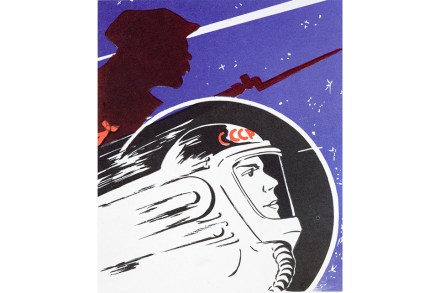
Are cosmonauts really Russian?

Oleg Kononenko has been in space since 15 September last year and has just broken the cumulative record for time in orbit of 879 days. Being Russian he is referred to as a cosmonaut. Americans are astronauts. It seems odd that Russians can decide what English-speakers call their spacemen. It seemed odder to me that, when the Soviet Union promoted atheism, it should focus on the orderly universe that cosmos suggests. Cosmos is an ancient Greek concept. Pythagoras was credited with seeing all things as an ordered cosmos. The meanings of cosmos in Greek included ordered troops in battle and the ornaments of a woman’s dress. The Latin equivalent of cosmos, mundus, could also mean ‘ornament’.

The unforeseen nature of consequences

In March 1847 the world first read of Mr Toots saying: ‘It’s of no consequence.’ He went on saying it for the next 13 months until the last number of Dickens’s Dombey and Son had been published. His embarrassed sallies into affairs of the heart had gained a catchphrase. Mr Toots’s remark meant ostensibly, ‘It doesn’t matter,’ but I was reminded of it by the warning that the United States issued after the killing of three of its service people in Jordan. It promised a ‘very consequential response’. To me consequential suggested a different knot of meanings, about causal effect. The insurance world thinks of consequential loss not as an immediate result but one further down the chain of causality.

Is retro-fitting really ‘retro? 

I read in the New Yorker about people who make sound effects ‘in a large, retrofitted barn, painted baby blue’. It made me wonder again how people imagine retrofitting works. It seems to be the work of time-travellers. Do they think that refitting a barn now implies that a photo taken of it 50 years ago would show the new fittings? Retro- signifies ‘backwards’. I am quite retro. I like looking at the past. My husband is almost entirely so. He lives in it. Six centuries ago a child of ten was expected to understand what the retrograde movement of a planet entailed. A planet such as Mars appears to pause in its motion eastwards and loop in a contrary direction before resuming its eastward course. Today we like to think the planets orbit the sun.

What’s in a place name?

There is a place in Westmorland called Wordsworth’s Well, but I must tell you that it is not named after me. A field in Westmorland is called Wordy Dolt, and I am glad to tell you that it is not named after me either. Here wordy (like -worthy elsewhere) means ‘enclosure’, not ‘voluble’ nor indeed ‘valuable’, and dolt means ‘share of the common field’, not ‘idiot’. I discovered this from the glorious English Place-Name Society. I call it glorious because it has been going for 100 years and is still pegging away at a survey recording and analysing historically all the place-names of England. So far 91 volumes have been published, yet some counties remain to be surveyed.

The genteel roots of dunking

When I was a girl, it was bad manners to dunk a biscuit. Then I went abroad and found that Italian biscotti could scarcely be consumed in any other way. Back home, dunking a ginger nut seemed less criminal. Now I hear people using dunk and dump indifferently. Can this be right? After all, words of similar pronunciation, such as bought and brought, are often misused, one for the other, though the meaning is very different. I’m not sure what word people used before dunk turned up, which was little more than 100 years ago. Did they say sod, seethe, soak? I was surprised to find that dunk is a borrowing from Pennsylvania German. This is often called Pennsylvania Dutch, but is a form of Palatine or southern German.

How do events become unrecognisable?

Sir Ed Davey, who leads the Lib Dems, declared last week: ‘Squatter Sunak is holed up in Downing Street, desperately clinging on to power.’ It was odd of him to remind voters of the origin of this little joke about squatting. On 8 May 2010, two days after Labour’s defeat in the general election, the Sun ran a big headline: ‘Squatter holed up in No. 10.’ A subheading read: ‘Man, 59, refuses to leave Downing Street.’ That was Gordon Brown, of course, but anyone who remembers those uncertain days will know that he was waiting to see whether the Tories and the Lib Dems would form a coalition or whether he had a chance with the Lib Dems himself.

How do events become unrecognisable?

I grabbed my husband by the lapel outside Waitrose and he leapt – if not like a young deer, then like a deer in retirement that had spent a long time grazing undisturbed in a bean field. ‘Sorry, darling,’ he exclaimed. ‘I didn’t recognise you.’ It was not as though I was wearing a balaclava. Recognition can say as much about the recogniser as the recognised. It’s particularly true of recognising a ‘characterisation’, a fancy word for a description. When the PM was asked in a Commons committee before Christmas whether he recognised the characterisation of ‘a Blob wandering down Whitehall thwarting the ambitions of ministers’, he replied ‘No.’ He’s not the only one.

Why are quotes so often misattributed? 

‘Macmillan,’ said my husband with rare succinctness. Someone on the wireless had just asked who it was who said: ‘Events, dear boy.’ I agreed with my husband, as in moments of weakness I do. But what is the source of the quotation? The first rule is that most common quotations were not said by the people to whom they are attributed. The second rule is like unto it: a few big names – Winston Churchill, Oscar Wilde – attract quotations as magnets attract iron-filings. So, talking of iron, Churchill’s phrase the iron curtain had been used before him. It secured attention, though, when he used it in a speech at Fulton, Missouri, in 1946: ‘From Stettin in the Baltic to Trieste in the Adriatic, an iron curtain has descended across the Continent.

How should you pronounce ‘mayoral’? 

The Prime Minister mentioned mayoral elections the other day and he pronounced them as though they were conducted by mouth in the month of May: May-oral. There is no doubt that this is an American pronunciation, though some Americans prefer MAY-uhr-uhl to may-OR-uhl. In British English it’s MAIR-uhl. The funny pronunciation has spread to electoral, which on both sides of the Atlantic was uh-LECK-tuh-ruhl. Now broadcasters sometimes say uh-leck-TOR-ruhl. It is as if the word were somehow difficult to pronounce and might be easier if it was more like the word tutorial. Unless everyone pulls themselves together, which is unlikely, it will be impossible to resist the slide. No one can tell such words’ pronunciation merely from their spelling.

Stockton, Cleverly and scatological etymology

There’s a street in the City of London called Sherborne Lane. In the Middle Ages it was known as Shitteborwelane [Shitborough Lane] or Shitheburnlane. We philologists are accustomed to discussing vocabulary that is taboo because of its sexual or scatological references, and this place name is not rare in depending on a word that ‘is not generally acceptable in more formal contexts’, according to the OED. The House of Commons is a context more formal than most. But last week James Cleverly, the Home Secretary, was accused of calling out, ‘Because it’s a shithole’ in answer to Alex Cunningham, the Labour MP for Stockton North, who had asked why 34 per cent of children in his constituency were living in poverty.

The appeal of apricity

‘She’ll be telling us next how lovely the word petrichor is,’ replied my husband. I had told him that the redoubtable word-collector Susie Dent had said: ‘Probably my favourite winter-word of all, apricity, is the warmth of the sun on a chilly day.’ She has been saying this every winter for years, and why not? But I agree with my husband that petrichor is overdone. It was invented in 1964 by two contributors to the science journal Nature, and signifies the smell from rain falling on dry ground. The trouble is that petr- reminds me of petrol, and ichor, the ethereal fluid supposed to flow in the veins of the gods, also means acrid discharge issuing from certain wounds.

Is orthogonal nonsensical?

Even with ruler and compasses I couldn’t make sense of a remark I found on Twitter or X, as we all pleonastically call it. Someone had posted this observation: ‘One’s bank balance and number of children are orthogonal to social media usage.’ I knew the prefix ortho- meant ‘straight, perpendicular, right’. So orthogonal meant ‘right-angled’. But how could children be at right angles to social media usage? I hadn’t cottoned on to the fashion for using orthogonal figuratively to mean ‘unrelated’, ‘irrelevant’. That is quite a stretch, for things at right angles are not unrelated. But there is no stopping orthogonal now, though the term seems unhelpful. It’s not even as though it were intended humorously, as happened to the learned term opisthognathous.

How useful is precarity? 

‘There’s no such word,’ said  my husband. Well, he has been wrong before.  For him precarity doesn’t exist; he admits precariousness. Yet precarity is now in vogue among campaigners. Precariousness is used by non-specialists. It is laughable to see how precarity has become grist for the academic mill. Among recent books on precarity are: Contesting Precarity in Japan (2020); Queer Precarities in and out of Higher Education (2020); In Pursuit of Revolutionary Love: Precarity, Power, Communities, (2022); Migrant Academics’ Narratives of Precarity and Resilience (2023); and last month Precarity in European Film. I like the niche appeal (‘in Japan’, ‘migrant academics’) combined with a universal application (‘in and out of higher education’).

Is loitering really so bad? 

E. Cobham Brewer seems, from his most famous work, the Dictionary of Phrase and Fable, published 1870, an agreeable old cove. But a biographical sketch by his grandson in the centenary edition praised his fearlessness in taking a stick to a ‘rough-looking man asleep in the stable’. He belaboured ‘the trespasser… exclaiming “Be off, you scoundrel!”’ This came to mind when I saw a sign prohibiting loitering. I wondered what exactly loitering was. The OED suggests as a meaning ‘to linger idly about a place’ and remarks that the verb appears ‘frequently in legal phrase to loiter with intent (to commit a felony)’. But now there are no felonies, only indictable offences.

Is it proper to ‘mull things’?

‘Rollicking time,’ sang my husband to the tune of ‘Mull of Kintyre’. He had been amused to hear of this misapprehension of the lyrics and smugly enjoyed it not being his mistake for a change. That kind of mull is a Gaelic word meaning ‘bare headland’. I think it is related to the Welsh word for a bare hill, moel, which Gerard Manley Hopkins used, with initial mutation, as voel in ‘The Wreck of the Deutschland’. That is all very well, but I have been annoyed recently by people saying that they want to mull things. I don’t mean wine, but possibilities. I would say ‘mull things over’. Why can’t everyone else? But the history of mull is fearfully complicated and obscure for such a little word.

Are we oversharing?

Someone on that old-fashioned online game called Twitter (renamed, but still not widely known as, X) told the world of the publication of his book in a post that began: ‘I’m thrilled to share that as of today…’ He probably thought of it not as publication day but the day on which the book was released (like a film or prisoner). But I was interested by the way that share had become just another synonym for ‘announce’. It has come a long way from West Frisia, where, the Oxford English Dictionary reminds us, cows entered a lot into ideas of sharing (although the island of Texel is today famed for its sheep). In West Frisian, skar is ‘part of a common pasture, part of a pasture sufficient for one cow, hay required to feed one cow, manure produced by one cow’.

What does it mean to be in dire straits?

A reader, Robert Andrews, heard Sir Ed Davey on Today say that the NHS was ‘in a dire strait’. Surely you can’t be in just one strait, dire or not, Mr Andrews suggested. Well, I know sorrows come not single spies but in battalions, but some straits are served one at a time. The Torres Strait is an example. In 2013, Australia found small boats crossing the 93 miles of its narrowest point, but detected only ten asylum-seekers. The deep water of the Lombok Strait off the coast of Bali separates two different systems of fauna: Bali has Asian creatures such as civets and woodpeckers; Lombok has Australian porcupines and white cockatoos. So it goes on: one strait at a time.

The problem with cutting to the quick

‘At least he didn’t say “Cut the cheese”,’ said my husband, suddenly making a barking noise like a seal, which is his attempt at laughter. He was commenting on a remark by Amol Rajan, the affable presenter on Today. An interviewee was invited to ‘cut to the quick’. Of course he meant ‘cut to the chase’, as he might have realised, without time to revisit the slip. The quick in cut to the quick does not mean something fast. It is the sentient flesh that might be nicked when you trim your nails. When I looked at the earliest quotation in the Oxford English Dictionary, I had a momentary vision of wounded giraffes and elephants: ‘Nor can the graffe joyn to its trunk unlesse the rinde be refreshed, and cut to the quick with the knife.

Why you can’t ‘treat’ yourself

‘I hate sneak previews,’ said my husband. I think he was talking to the wireless, as he often does, not to me, since a broadcaster had just promised him a sneak preview. I agree that the terminology is annoying, as it is generally used as a ploy to pique interest in a subject, otherwise of no interest, by offering stolen pleasure. I am just as annoyed by an attempt to train our consumption as though we were pet dogs. On a train I was given a free shortbread biscuit, and on the wrapper it was labelled ‘Sweet treats’. Now, I regard shortbread as tolerable only if I am very hungry. But in the praxis of ‘healthy eating’, a treat is something you are allowed infrequently; otherwise, if it is a radish or some roasted chickpeas, it qualifies as a snack. Biscuits, crisps?