Dot Wordsworth

The cereal ambiguity of ‘corn’

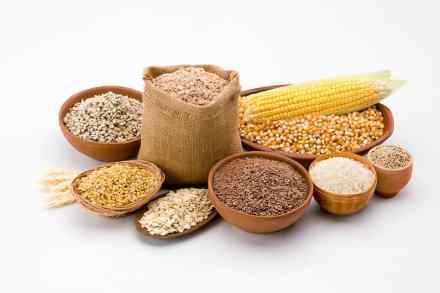
‘Wha, wha?’ said my husband in a slack-jawed way, throwing over a copy of the Guardian, as though it was my fault. ‘“Today,” it said, “just three crops – rice, wheat and corn – provide nearly half of the world’s calories.”’ I saw the problem. It was obvious, from a process of elimination, that by corn it meant ‘maize’. Elsewhere ambiguities abound. Since the Ukraine war began, discussion of wheat and maize has increased no end, but it is often impossible to tell whether wheat or maize is meant by corn. I thought we had agreed to differ with America on this.

The changing language of ‘mental health’

It is easy to laugh at young people asking for sympathy because ‘I’ve got mental health’. I think I heard the journalist-turned-teacher Lucy Kellaway on the wireless recently noticing in a half-baffled way the tendency of pupils to call mental illness mental health. Mental health hasn’t quite achieved that meaning in standard speech, but it could. It is partly a matter of euphemism. Mad and madness are now hardly usable at all with reference to everyday circumstances, being reserved for different times and cultures, for King Nebuchadnezzar, King Lear or King George. A mental case is ‘increasingly avoided’, noted the Oxford English Dictionary in its 21st-century revision of entries that required no such cautions in its 1989 edition.

Why everyone is ‘struggling’

‘Quicksand!’ yelled my husband, flailing his arms wildly. Since he was sitting in his armchair, his dramatic representation of a scene from a western failed to convince, though it endangered the tumbler of whisky on the occasional table next to him. He’d been set off (not that it takes much) by my mentioning the ubiquity of struggling. Instead of the hard-working families that we were forever being told about, it is now struggling families, torn between having another pie for tea or turning on the heating in these sweltering days. Everyone is struggling. ‘Mateo Kovacic is struggling with knee problems,’ the Telegraph told me. Others are ‘struggling to care for dogs with health and behavioural problems’.

No, Boris Johnson isn’t ‘missing in action’

Someone in the Guardian wrote that Boris Johnson had his ‘out of office’ on, and the Chancellor was ‘missing in action’, but the Sun reported that ‘Downing Street denied Boris Johnson had been missing in action during the cost of living crisis’. Ed Miliband said: ‘The Tories are missing in action.’ A Liberal Democrat spokesperson called Christine Jardine said: ‘We have a zombie government and a Prime Minister missing in action.’ Dozens of people are using the phrase missing in action. What is the matter with them all? Don’t they realise it means ‘missing presumed dead’? Thomas Hood in his ‘Waterloo Ballad’ pictures a dying man on the battlefield found by his lady love.

Will ‘hosepipe ban’ make it into the dictionary?

‘Got any ’ose?’ asked my husband, falling into his Two Ronnies ‘Four Candles’ routine, in which he likes to play not only the shopkeeper but also the customer, with disastrous results. In both the pantyhose and the garden hose in the sketch, the hose was originally the same word. Hose meant the leggings or trousers our Germanic forefathers wore. In some contexts it long retained the archaic plural hosen. When Nebuchadnezzar in his rage commanded Shadrach, Meshach and Abednego to be thrown into the burning fiery furnace, they were bound ‘in their coats, their hosen, and their hats’, according to the translation of 1611.

What do ‘catcalls’ have to do with cats?

‘A law against catcalls?’ asked my husband sceptically. ‘What next, criminalising booing and hissing?’ He often gets the wrong end of the stick, but in this case I hardly blame him, for the press retailed widely Liz Truss’s resolve to make a law against catcalls and wolf-whistles. But to an older generation like my husband’s, catcalling is something to do with the theatre. In Practical Cats, T.S. Eliot assures us that Gus the Theatre Cat acted with Irving and Tree – Sir Henry Irving (1838-1905), who Shaw said revealed on stage ‘glimpses of a latent bestial dangerousness’, and Sir Herbert Beerbohm Tree (1852-1917), noted for histrionic versatility.

The etymological ingredients of ‘flageons’

‘Don’t you know the answer?’ asked my husband with mock surprise, throwing over to me from his armchair a copy of the Daily Telegraph. The question, from a reader on the Letters page, was what Mrs Beeton meant by flageons of veal. I had no idea and nor did the Oxford English Dictionary in 20 volumes. The recipe was for a sort of giant hamburger or hot meatloaf made from minced veal, suet, eggs and breadcrumbs. That gave no clues about its name. It could hardly have connections with flagons or flagellation. A day later another reader found in her edition of Mrs Beeton’s Book of Household Management from 1915 the recipe under the name fladeons. It looked as though later editions had misprinted the word. But fladeon wasn’t in the OED either.

The ever-shifting language of ‘culture wars’

‘Come on, old girl,’ said my husband as though encouraging a cow stuck in a ditch, ‘you must know.’ It was because I’d asked him in the far-off days of last week what woman meant, just after Rishi Sunak had said: ‘We must be able to call a mother a mother.’ Penny Mordaunt, Liz Truss and Kemi Badenoch then tussled in a hate-crime triangle on television over who said what, when about people self-identifying in a gender. Such matters are said to belong to culture wars, which we had thought an American phenomenon. Culture wars acquired their name only in the 1980s. Since then we have grown used to language (as part of their armaments) changing rapidly.

‘Our’ by ‘our’, Boris’s resignation speech

There was a word I didn’t understand in Boris Johnson’s resignation speech (in which he did not resign). He spoke of ‘our fantastic prop force detectives’. Prop? Prop forwards, clothes props, proprietors, propositions, propellers? Perhaps they are personal protection officers, though I don’t think those are detectives. Or it might be family slang made up by Wilfred, two: ‘Ook, Papa, prop-props…’ More cunningly deployed in the 900 words of the speech was our. Not just our props but ‘our police, our emergency services, and of course our fantastic NHS… our armed services and our agencies… our indefatigable Conservative party members… our democracy’.

‘Pinch’ has long packed a punch

Before pinch as a verb appears in any written sources, it already formed part of surnames. Hugo Pinch was walking, breathing and possibly pinching in 1190, and in 1220 in Oxfordshire Ralph Pinchehaste was repenting at leisure. When William Golding wrote the painful Pincher Martin, he knew that any sailor called Martin was nicknamed Pincher. A likely eponym is Admiral Sir William Martin, 4th baronet (1801-95), who headed a drive for discipline. In his biographer’s judgment, ‘his insistence on obedience was not always agreeable to captains and commanders, but if not loved, he was feared, and the work was done’. It seems to me that pinching was highly Victorian.

sibling

When did brothers and sisters become ‘siblings’?

From our US edition

I've never cared much for the word sibling, though I hardly knew why. The reason must be that it was introduced by a scientist, Karl Pearson, who in 1900 wrote of the “inconvenience of our language having preserved no word for either member of a pair of offspring of either or both sexes from the same parent.” So he reintroduced “a good Anglo-Saxon word,” and it stuck. It’s not quite that simple, for cultural anthropologists had, a decade earlier, adopted sib for a kindred group, apparently from the parallel German word Sippe. My aversion to sibling was merely its artificiality. We never used to use it in speech, but would say brother or sister.

Dominic Raab and the problem of ‘distraction’

Dominic Raab blamed distraction for Boris Johnson’s woes when the Tories failed in two by-elections last week. ‘He has track records as long as his arm of misinformation and propaganda and this is a distraction from the real issues.’ Oh, no, I beg your pardon, that was what Mr Raab said about Vladimir Putin in March. What he said about the by-elections was: ‘I think we’ve had distractions because of partygate, because of too much Westminster internal, if you like, focus.’ Mr Raab hates distractions. They seem to drive him to distraction. ‘It’s a big distraction from the bread and butter issues,’ he said of June’s party vote of confidence in Mr Johnson.

Does Meghan Markle know what ‘guttural’ means?

When the Duke of Sussex heard about the Supreme Court judgment revoking the ruling in Roe vs Wade, ‘His reaction last week was guttural, like mine,' said his wife Meghan Markle. ‘Men need to be vocal in this moment,’ she told Vogue magazine. If we are to take her at her word, the Duchess of Sussex was saying that Prince Harry vocalised his reaction by growling. This sounds quite unlikely. But she added that her reaction was the same. It is impossible not to wonder whether she meant that theirs was a gut reaction. Of course one can say gut reaction, but it is impossible to say a reaction is gut. You can say that it is gutsy, but that has a different meaning from ‘heart-felt immediacy’.

Lord Geidt’s ‘odious’ remark

Lord Geidt said in his resignation letter that he had been put in an odious position. He meant it was hateful, though it is impossible to forget the malapropism (avant la lettre) of Dogberry in Shakespeare’s Much Ado: ‘Comparisons are odorous.’ Lord Geidt’s adjective seemed to me old-fashioned and classically inspired. Odious would have been fashionable in the Regency period. Leigh Hunt remembered from the great actor Kemble examples of ‘vicious pronunciation’: odious, he complained, became ojus. Kipling went one better in the Just So Stories by making hideous an adverb pronounced in like manner: as the crocodile pulled, the ‘Elephant’s Child’s nose grew longer and longer—and it hurt him hijjus!

Have we made a hash of rehash?

My husband put one foot forward at an angle to the other and grasped his left hand with his right. ‘Occidit miseros crambe repetita magistros,’ he declaimed. He was quoting Juvenal, the seventh satire (‘rehashed cabbage is the death of wretched teachers’), though I don’t think he could manage much more from any Juvenal satire, except perhaps ‘bread and circuses’, panem et circenses, from the tenth. Boris Johnson was the object of his borrowed remark. Juvenal, speaking of the poor pay of literary men, came to the unprofitability of teaching rhetoric when pupils keep saying the same thing in the same words.

Why should Turkey be allowed to change its name?

Turkey has told the UN it wants to be called Türkiye. Even when it is written in capitals, it would still like the little dot over the i, thank you, as İ. Exports will now bear the label ‘Made in Türkiye’ instead of ‘Made in Turkey’. Turkey is of course a name for a delicious bird – at first labelled the guinea fowl, until the New World creature was discovered. But the country’s state broadcaster TRT World complains that dictionaries also define turkey as ‘something that fails badly’. There’s worse.

The not-so-sweet roots of ‘nice’

‘That’s nice,’ said my husband, taking a Nice biscuit with his coffee. It was his little joke. The biscuit is named after the French city, though no one knows why. Like the trainers, the city was named after the goddess Nike when it was founded by Greeks in the 4th century bc. Nice, as in ‘a nice cup of tea’, was a word loathed by my schoolmistresses, like got. Their cue may have been Jane Austen. ‘This is a very nice day,’ remarked Henry Tilney in Northanger Abbey, ‘and we are taking a very nice walk, and you are two very nice young ladies. Oh! It is a very nice word indeed! – it does for every thing.

The strangeness of station names

In Kyiv they have voted to change the names of some metro stations. Heroes of the Dnieper is to become Heroes of Ukraine. The station was named after the street outside, and there’s nothing wrong with the river Dnieper, which winds its S-shape through Ukraine like the Grand Canal through Venice. The trouble was that the counter-offensive in 1943 by the Soviet Union against the German invaders made much propaganda of a united effort by all nations under the Marxist flag, even though Stalin had not so long before presided over a famine that killed millions in Ukraine. Another Kyiv metro station is changing its name from Minsk to Warsaw. Again there is nothing wrong with Minsk. It was an ornament to the wireless tuner, along with Hilversum and other mysterious transmitting spots.

Why nothing ever comes ‘for free’

‘It’s not as nice as it looks,’ said my husband, not leaving time to look it in the mouth before wolfing down the lemon and sultana Danish that I had thoughtfully bought him, reduced on account of its age. ‘Every day in this store,’ the till at Marks & Spencer’s had told me in a tone indicating that I might be interested, ‘someone gets their shopping for free.’ Yes, I thought, it must be that bloke that exits pursued by the security man. I thought other things too, since I am afflicted by what the French call déformation professionnelle and tend to sub-edit other people’s utterances – those of machines with even less tolerance. For a start, we can’t allow for free.

Why disgraced MPs head for the Chiltern Hundreds

I saw in last week’s Spectator that the tractor MP had applied for the stewardship of the Manor of Northstead. After only a few days, the Chancellor of the Exchequer granted him this office of profit under the Crown, which disqualifies him from continuing as an MP. These days, when it is hard to book a doctor’s appointment and impossible to get most public corporations even to answer the telephone, it’s quick work on Rishi Sunak’s part. The Manor of Northstead is in Scarborough. The former manor house was reported in 1600 to have been used by a shepherd ‘until it fell down’. Previous stewards include David Cameron and Gerry Adams. The last one was Owen Paterson, but his tenure was terminated by the warrant granting the stewardship to the new holder.