Dot Wordsworth

Are we living in a new pornocracy?

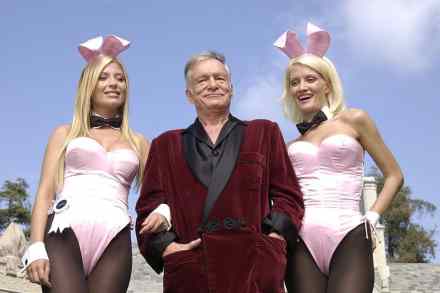
Are we living in a new pornocracy? The first one spanned six decades of the 10th century, during which there were 12 popes. Their elections were much influenced by Theodora, wife of the powerful consul Theophylact, and her daughter Marozia. The idea of loose women running the papacy so excited Edward Gibbon that in The Decline and Fall, he claimed ‘the bastard son, two grandsons, two great grandsons, and one great great grandson of Marozia – a rare genealogy – were seated in the Chair of St Peter.’ In his enthusiasm he mistook Theodora and Marozia for sisters, not mother and daughter.

The wonder of the Metaphor Map

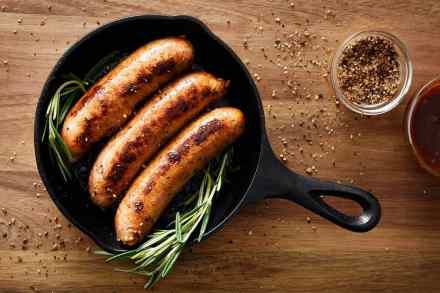
‘What’s that?’ asked my husband, looking at my laptop. ‘Fibonacci fossilised?’ His question made no sense, but I saw what he meant. I was looking at a diagram of ‘the fabulous semantic engine, a sort of virtual sausage machine’ that I mentioned last week. The diagram was circular, like a compass-rose with 37 points. Each point was connected to each of the others, like a church column to vaulting tracery. It is a metaphor map: the points represent categories for pigeonholing every word in English over the past 13 centuries. An underlying 415 semantic categories sort 793,742 word forms.

The linguistic ingredients of ‘salmagundi’

‘It makes me hungry,’ said my husband when I mentioned the word salmagundi. That is his reaction to many words. But he liked the sound of it. I think in its sound, suggestive of something impossible to pin down, it resembles serendipity. The obscure French original of salmagundi, a dish of chopped up meat and whatnot, must have become known in English through Rabelais’s gluttonous epic. Thomas Urquhart’s translation of 1653 speaks of the ‘Lairdship of Salmigondin’. Various rationalising respellings emerged, such as Sallad-Magundy (1710). Salad, by origin something salty, was not limited to raw greenery.

The Aesopian language of algospeak

To evade algorithms that hunt down forbidden words, users of platforms like TikTok employ cryptic synonyms. So dead becomes unalive, and the pandemic becomes panini or Panda Express. A technology journalist in her mid-thirties, Taylor Lorenz, drew attention to the trend last week in the Washington Post, calling the vocabulary ‘algospeak’. But why should anyone be banned for using the word dead? Because young people in chatrooms online discuss suicide, and since this is thought to encourage it, online proprietors try to weed out messages with giveaway words. Their algorithms penetrate chatrooms like those metal jellyfish in the Matrix films attacking the spaceship. (My husband, rather worryingly, knows that they are called Sentinels.

What’s the right way to pronounce ‘gif’?

The man who invented gifs, Stephen Wilhite, has died, aged 74. Controversy survives him – over how to pronounce the thing. A gif was a format that, from 1987, allowed graphics to be shared by otherwise incompatible computers. The name came from the initials of Graphics Interchange Format. That was not decisive, for the word could be pronounced as jif if it followed common words like gin, or as gif like gig. There’s no way of telling the pronunciation of an unfamiliar word beginning gi-. There are, it is true, six or seven words gig, all pronounced with a hard g.

When did brothers and sisters become ‘siblings’?

I never cared much for the word sibling, though I hardly knew why. The reason must be that it was introduced by a scientist, Karl Pearson, who in 1900 wrote of the ‘inconvenience of our language having preserved no word for either member of a pair of offspring of either or both sexes from the same parent’. So he reintroduced ‘a good Anglo-Saxon word’, and it stuck. It’s not quite that simple, for cultural anthropologists had, a decade earlier, adopted sib for a kindred group, apparently from the parallel German word Sippe. My aversion to sibling was merely its artificiality. We never used to use it in speech, but would say brother or sister.

How do you pronounce ‘Cirencester’ and ‘Marylebone’?

‘Half! Half! Half!’ exclaimed my husband like a performing sea lion. Not that sea lions perform any more, but you get the simile. He was emphasising the pronunciation of the first syllable of Hertford, which, as he rightly said, has no T sound. He had worked himself up because on Twitter there was a froth about the way to pronounce some place-names: Hawarden as Harden, Wemyss as Weems, Marylebone as Marrabun and Cirencester as Sissister. I agreed about Marylebone, though in 1909 the philologist Otto Jespersen noted that ‘now the l is often sounded’. In 1981, Klaus Forster in his Pronouncing Dictionary of English Place-Names gave 11 pronunciations of Marylebone with the l sounded and five without.

The ancient origins of ‘doomscrolling’

In 2019, Boris Johnson hit out at ‘the doomsters and the gloomsters’. I was surprised then to find that the doublet doom and gloom dated only from 1947, in the play Finian’s Rainbow. Three years after the 2016 referendum, Project Fear was still being applied to Brexit. Since then, to buy time in combating coronavirus, another project was launched to instil fear in the population. So, if they could, they stayed at home, petrified of Covid-19, and it proved hard to tempt them out again. Now Brexit and the pandemic are dwarfed by the Russian invasion of Ukraine.

Why does everything ‘embolden’ Putin?

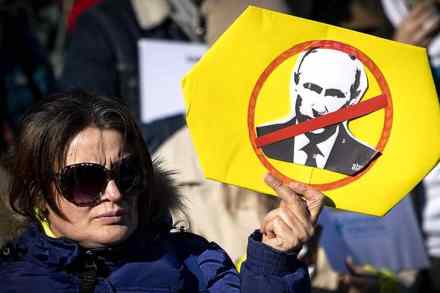
The most emboldened man on earth must be Vladimir Putin. Everything seems to embolden him. Treating Russia as a pariah state could embolden him, wrote someone in the Telegraph, but Barack Obama’s previous attempts to engage with him had just emboldened him, wrote someone else. Liz Truss on a visit to Kiev last month, insisted the West should strengthen relations with Ukraine. ‘If we hang back, that would only embolden the bullies,’ she said. Nato’s humiliation in Afghanistan helped embolden Putin, wrote Colonel Richard Kemp; sanctions hitting the population can embolden him too, wrote Tobias Ellwood. As Julian or Sandy, on the BBC Light Programme in the early 1960s, might have remarked of Kenneth Horne: ‘Oooh, innee bold?

The complicated business of swearing in Ukrainian

‘This will interest you,’ said my husband, looking up from the smeared screen of his telephone. For once he was right. It was a Twitter post about a memorable remark during the invasion of Ukraine. Snake Island is a small, bare outpost in the Black Sea near the Danube Delta. When a Russian cruiser invited the Ukrainian soldiers stationed there to surrender, they replied, ‘Йди на хуй’, transliterated as ‘Idi na khuy’. The point of the tweet was that their remark had been translated in a rather American way as ‘Go fuck yourself’, and a more idiomatic version in British English would be ‘Fuck off’. I agree, though it is not that simple.

How ‘like’ lost its way

A strange crisis has befallen like. It had long been an object of obloquy and vilification in two functions. The first was as a filler, of the same kind as you know: ‘He was, like, my favourite guy.’ Then it evolved into a formula for reporting; so, in place of ‘I was surprised’, we find: ‘I was like, “That’s amazing!”’ Naturally, we sensitive speakers of English do not fall into such annoying habits. But I have recently seen examples of a baffling construction that substitutes similar to for like in a way that can surely never have tempted any of us. For example, the Sun recently asked ‘Who is Jennifer Carnahan?

Where’s the ‘mystery’ in mystery plays?

In The Archers, Ambridge put on its own set of mystery plays dramatising the Nativity and Passion. BBC Radio 4 broadcast them separately from the soap opera, in which the village policeman has been driven to conversion by playing Jesus. My husband, commenting on all this, said that ‘of course’ the word mystery meant a trade or craft, as the medieval plays were performed by companies of trade guilds. He might have been reading the website of the Chester Mystery Plays, due for their five-yearly performance in 2023: ‘The word mystery comes from the French mystère meaning “craft”, and apprentices joined the guilds to learn their mystery or craft. When the guildsmen began dramatising the Bible stories, their plays thus became known as Mysteries.

When did ‘pikey’ become offensive?

A policeman sent a colleague who was house-sitting for him a WhatsApp message: ‘Keep the pikeys out.’ He was sacked and last month failed in his appeal. A reader wrote to me saying he came across the word pikeys in the 1970s in Oxfordshire and ‘understood it to mean dishonest low-life characters, though not necessarily of a specific group like gypsy or other travellers’. He also remembered as a teenager in Cheshire coming across a hayfork being called a pikel, and wonders if the terms are related. They are, but not straightforwardly. Pikey dates from the second third of the 19th century as pikey-man, meaning a traveller who has come into the locality on the pike or turnpike road.

What does ice cream have to do with ‘late capitalism’?

‘More to my taste is Trockenbeerenkapitalismus,’ said my husband with an intonation that indicated a joke. The joke was a play on the German Spätkapitalismus, ‘late capitalism’. There is also a German wine category called Spätlese, ‘late harvest’, and another, when the grapes are exposed to noble rot and allowed to wither on the vine, called Trockenbeerenauslese. Hence the joke. I do not encourage this sort of thing. But late capitalism deserves no encouragement either. It is generally used to mean anything thought unpleasant about life in western society.

What’s so funny about ‘helpmeet’?

‘What’s so funny?’ asked my husband, accusingly, as I made an amused noise while relaxing with a copy of the Summa Theologiae. There aren’t all that many jokes in Thomas Aquinas’s survey for beginners in the field of theology. As it’s such a large field, his summary runs to 1,800,000 words. (Incidentally, just as Dan Brown went wrong in his book title by referring to Leonardo as ‘Da Vinci’, so it would be against preferred usage to call the theologian ‘Aquinas’ rather than Thomas.) Anyway, it always makes me smile to think of Thomas’s exasperation with a 13th-century university teacher, David of Dinant, who stultissime posuit Deum esse materiam primam, ‘most stupidly made out God to be prime matter’.

The French have made a hash of the hashtag

From our US edition

"So my poor wife rose by five o’clock in the morning, before day, and went to market and bought fowls and many other things for dinner, with which I was highly pleased,” wrote Samuel Pepys on January 13, 1667. They were eight. “I had for them, after oysters, at first course, a hash of rabbits, a lamb and a rare chine of beef. Next a great dish of roasted fowl, cost me about 30 shillings, and a tart, and then fruit and cheese. My dinner was noble and enough.” My husband said he liked the sound of this and asked if I might manage something similar out of doors, for six, duly distanced. I noticed he had doodled in the margin of his Times #rabbits. Hash sign shares an origin with rabbit hash, both being related to the French hacher, “cut in pieces.

hash

Is the Duke of York’s title really ‘untenable’?

‘Nurse! The tenaculum!’ exclaimed my husband in the manner of James Robertson Justice playing the surgeon Sir Lancelot Spratt. I’m not sure I should describe the work of the tenaculum, in case you’re having breakfast, but be sure it holds as fast as a Staffordshire terrier. The motive for my husband’s outburst was the declaration by yet another politician that Boris Johnson’s position was untenable. Yet there seems to be no end of people who keep hold of a position declared by others to be untenable. The other day, Rachael Maskell, the Labour MP for York, tweeted: ‘It’s untenable for the Duke of York to cling on to his title another day longer.’ Anybody would think he was Perkin Warbeck.

The elementary misuse of ‘alumni’

My husband is forever being sent magazines from his Oxford college inviting him to give it money. I suggest he should ask it to give us money, since it has much more than we do. But the clever men at Oxford, as Mr Toad called them in his song, seem to have lost the use of their wits. The rot became apparent in 1988, with the publication of the university magazine: ‘This is the first appearance of the university alumni magazine, Oxford Today.’ What did they mean by alumni magazine? Of course they knew that alumni is the plural of alumnus. But why tack a plural noun on to magazine? If it had been a student or graduate magazine, the noun used attributively (student, graduate) would remain in the singular. That is how English works.

The mechanics of ‘backlash’

‘Lashings of ginger beer?’ asked my husband when I mentioned backlash. He thought the phrase came from Enid Blyton, though it occurred only in the television parody Five Go Mad in Dorset, first shown in 1982 — 40 years ago, for heaven’s sake. Backlash, now in vogue, is often misused. The Guardian wrote about ‘the mass protests in the light of the George Floyd murder and the backlash to this movement’. That usage seems correct. But when it said that Chanel ‘recently faced a backlash online for the contents of their Christmas advent calendar’, backlash was the wrong word. The metaphor backlash comes from mechanics. It is pretty much a dead metaphor, since some who use it think it has to do with lashing a back.

The language of the victimhood war

From our US edition

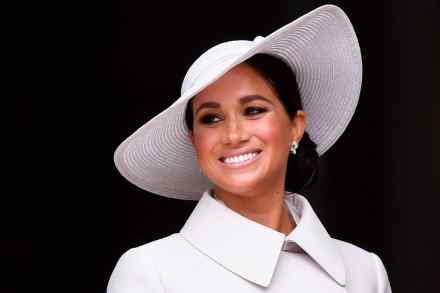
Language is used in a weird way in the victimhood war, where those who see themselves without agency bravely speak their truth to power. Their truth cannot be negated merely by examining the evidence, for it derives from lived experience. The powerful are axiomatically guilty, and must be called out for their behavior, or behaviors, as the new usage puts it. They must then own or take ownership of the issue. The Duke and Duchess of Sussex found themselves victims without agency in the racist world of the royal family. During their interview with Oprah Winfrey, they spoke of conversations between the Duke and a member of the family about their unborn son Archie and what color his skin might be.

own