Daniel Korski

A victory for the Libyan rebellion, and for NATO

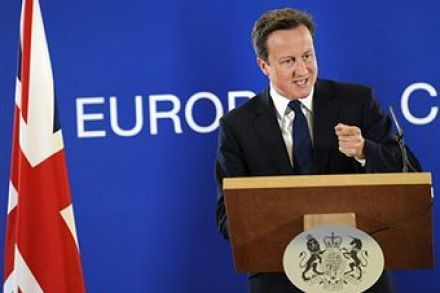
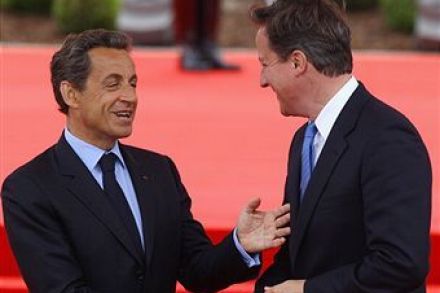
The regime of Colonel Gaddafi appears to be over. In a matter of hours, we hope, the Libyan dictator will be located and captured, assuming he does not flee Libya. Finally, after 42 of evil rule, the Libyans can build a free nation. The tumultuous events of recent days are, first of all, a victory for the brave Libyan rebels who took arms against Gaddafi. They defied the odds, underwent setbacks but carried on. But, secondly, today's events are a vindication for David Cameron and Nicolas Sarkozy. Keen to learn the lessons of Bosnia, Kosovo and Rwanda, they saved Benghazi from a massacre and helped to build up the Transitional National Council. In the process, they suffered the opprobrium of realists, armchair generals and so-called "experts".
An Israeli Spring?

Israeli politicians have been worrying that the Palestinians would join the protests sweeping the Middle East. So far, this has not happened. But now the Israeli leadership is facing something it probably never expected: an Israeli Spring.   Tens of thousands of Israelis took to the streets last weekend to protest against the high cost of living and demand that Prime Minister Benjamin Netanyahu conduct extensive economic reforms. Over 150,000 people are thought to have demonstrated in Tel Aviv, Haifa, Jerusalem, Beersheba and six other cities in left-wing protests against housing policy, but which seem to be morphing into a broader political movement.

Massacre in Hama hastens the need to tackle Assad

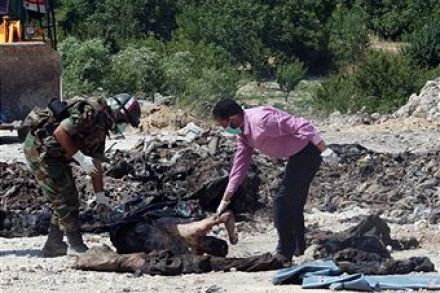
Syrian President Bashar Al Assad has praised his troops for ‘foiling the enemies’ of his country. Some enemies. 140 civilians are said to have died in a pre-Ramadan crackdown on protesters, adding to the toll of 1,600 civilians who have been killed since anti-government demonstrations began in mid-March. Details of the events in Hama are unclear because journalists have been kept out of Syria. But the pattern of events is familiar: protests against the Assad regime emerge; the army moves in to kill demonstrators; more protests then take place, which leads to more killings. Meanwhile, the international community stands by.

The revolution remains on track

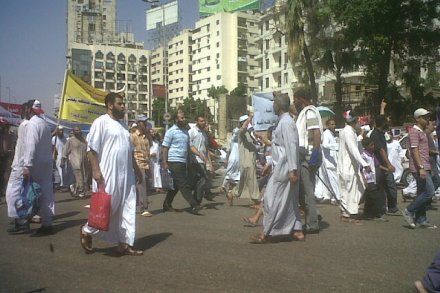
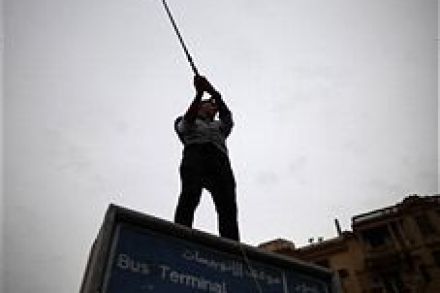
The Egyptian revolution has pulled itself back from the brink in a quite an extraordinary way. Everyone feared a clash in Tahrir Square today but, so far, a deal struck between the Muslim Brotherhood, the Salafists, the pro-democracy activists and the military is holding. Tahrir Square is teeming with white-clad Hajis. But everything is calm. The military gave into to a number of key demands from the protesters, including making some changes in the newly-promulgated electoral law. The Muslim Brotherhood feared being blamed by the military for a confrontation and being seen as too close to the Salafists. And the Facebook liberals wanted to keep the revolution united for now.

The threat to the Egyptian revolution

The Egyptian revolution may be in for its greatest challenge yet. Last weekend saw clashes between different groups of protesters, as one group sought to march on the Supreme Military Council. Now Salafists have promised to occupy Tahrir Square on Friday, seeking to turf out the broad-based group of revolutionaries that have occupied the square for a number of weeks. Many people fear a bloodbath. The military, meanwhile, is benefitting from a fracturing of the revolution. Some even see an explicit (if short-term) agreement between the military and the Muslim Brotherhood and the Salafists which will allow the military to push against the liberal Tahrir Square activists.

Busting myths about Coulson’s security vetting

A recent turn in "Hackgate" has focused on the level of security clearance given to Andy Coulson. The insinuation is that Number 10 knew that Coulson would not be able to pass the so-called Developed Vetting level (DV) and therefore gave him a lower level. I have no idea what happened in No 10, or whether the allegations made against Coulson automatically disqualified him from obtaining DV level. But having been vetted several times, I can’t help but disagree with the way the story has been covered by some organisations. First, Coulson was, as far as I can gather, vetted to the Security Check (SC) level. That is not ‘the basic level of security vetting,’ as David Cameron and the Guardian have claimed. The basic level is called CTC or Counter Terrorist Check.

Llewellyn is more than a friend to Cameron

Edward Llewellyn has been making headlines and there was speculation about his future. Many a right-wing MP rubbed their hands with glee, seeing Llewellyn as a ‘wet’ impediment to a tougher European policy. But, Number 10 came out strongly in support of the PM’s aide. Some people huffed, whispering that loyalty to friends like Llewellyn means more to Cameron than the health of the party. But this is a blinkered reading. First of all, John Yates himself said he thought Llewellyn had acted properly.

Some good news for Cameron?

In the midst of the fall-out from the phone hacking scandal comes some positive news for David Cameron: it appears that the Libyan rebels have won control of Brega, as most pro-Gaddafi troops retreated westward leaving around 150-200 loyalist fighters pinned down inside the town. If true, this is an important step towards the end of the Gaddafi regime: control of the oil-rich town is decisive for the Transitional National Council in Benghazi. It gives the rebels control over Libya's eastern oil network, with access to more than 2m barrels of stored crude.

Multi-speed Europe

Britons are becoming increasingly eurosceptic, according to YouGov. I have previously predicted that could leave the union; but there is another option. Following the eventual resolution of the euro crisis, the EU may evolve into a much more asymmetric arrangement, with a small group of European states integrating in some areas, while other states remain outside. On the surface, this does not look like anything new. The EU already has many different levels of integration. The Schengen agreement and the euro are examples of this and the Lisbon Treaty holds out the idea of more such multi-speed arrangements. However, after the euro crisis, these will be different from those that have gone before.

Will the defence budget rise, fall or stay constant post-2015?

As British helicopters pound away at Libyan targets, another battle is being waged inside the Ministry of Defence’s fortress-like building. The fight is over the post-2015 budget, and it is an arduous one. After the uniform-creasing settlement the MoD got in the Spending Review last year, the Prime Minister said in the House of Commons on 19th Oct 2010 that while the precise budgets beyond 2015 would be agreed in future reviews, his “own strong view” was that the MoD would see “year-on-year real-term growth in the defence budget in the years beyond 2015.” So far so good — the MoD budget may have to fall now, in line with other departments, but at least it will increase post-2015. Or will it?

The euro’s death rattle

The end might be nigh for the euro. The currency has hit an all-time low against the Swiss franc, as individual eurozone government bond yields vaulted higher due to mounting concerns about the region's debt crisis. To spell out what this means: in Spain, 12 billion euros of interest payments will accrue for every 100 point bond rise in Germany. That is more than Spain's annual public investment in infrastructure (8.6 billion) and its entire defence budget (7.6 billion). At the same time, Greece is heading towards disorderly default or some form of devaluation. Or both. And now Italy looks vulnerable.

Karzai’s brother shot dead

The half-brother of Afghan President Hamid Karzai has just been murdered outside his fortified compound in Kandahar. Ahmed Wali Karzai was the political kingpin in Kandahar province, formally serving as head of the provincial council. I am told by officials that he was killed by one of his bodyguards at a checkpoint; the killer was then shot dead by other bodyguards. A senior FCO official has said that David Cameron would want to give his condolences on a “personal basis” to President Karzai for his loss. That said, many people in the British government will not be all that unhappy with the demise of Wali Karzai – or “AWK”, as he was known. AWK was certainly a controversial figure.

Where next for the US and Pakistan?

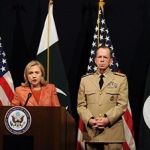
The US-Pakistani relationship is fast deteriorating. In May, I argued that unless President Asif Ali Zardari took decisive action against the ISI, the country's military would continue to undermine relations with the West. Last week, the New York Times reached the same conclusion, calling for the removal of Lieutenant-General Ahmed Shuja Pasha. As President Zardari did nothing — probably fearing a military coup if he did act — the situation has merely been aggravated. What's more, Secretary of State Hillary Clinton has warned that the US could suspend military aid to Pakistan unless it took unspecified steps to help find and fight terrorists. And the White House has since confirmed that it is doing just that.

The military’s ECHR concerns

Earlier this week, there was a European Court of Human Rights ruling that is worth dwelling on. To summarise: the Court held that the UK's human rights obligations apply to its acts in Iraq, and that the UK had violated the European Convention on Human Rights in its failure to adequately investigate the killing of five Iraqi civilians by its forces there. The judgment overturns a House of Lords majority ruling four years ago that there was no UK human rights jurisdiction regarding the deaths. The obligation on soldiers to protect the vulnerable during military operations is not, of course, new. It underlies the Geneva Conventions of 1949 (as well as their predecessors and Additional Protocols of 1977). Thus, soldiers have had a duty to protect civilians for years.

Don’t be so Moody

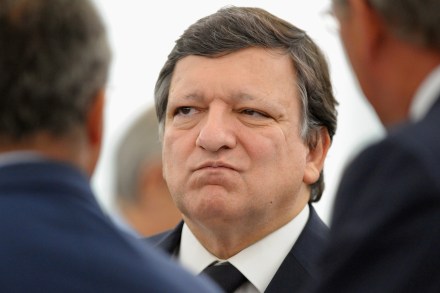
In the minds of many pro-European left-wingers, a new ogre is taking the place of old pones: the credit rating agencies. James Carville famously said that he wanted come back as the bond markets in a next life; coming back as a credit rating agency might be the next best thing. The agencies are blamed by many on the Continent for being too tough on a range of assets and too American to understand Europe. And EU Commission President Jose Manuel Barrosso has talked about a "bias" against European assets. Worldwide, there are about 150 credit rating agencies. But many of them are only regional, while three U.S. companies dominate the market: Standard & Poor’s, Moody’s and Fitch.

Coffee House Interview: Andrew Mitchell

The government has stuck to its guns on overseas aid, promising to donate 0.7 per cent of our national income to other countries. In the Chancellor’s words, the government will not balance the books on backs of the world’s poorest people. In fact, as the criticism of the policy was at its highest the Prime Minster hosted a development summit in London and pledged £814m to help vaccinate children around the world against preventable diseases like pneumonia. On this issue, David Cameron does not seem for turning — however many letters he receives from the Defence Secretary.   But Liam Fox is not alone. A slew of recent polls show that Britons have mixed feelings about the utility of overseas aid.

Stopping Syria

Syria is still ablaze and the West seems unable to do douse the flames. And the risk of the Assad regime committing even greater violence will increase when the world's media moves on. The reasons for Western impotence are manifold. First, for a long time Western leaders thought they could reason with Assad and therefore shied away from direct pressure. When they decided to act, they discovered that Assad is immune to European pressure because Syria does little trade with Europe. But, crucially, many Syrians are either loyal to the regime or fear triggering disintegration of the sort they have seen in neighbouring Lebanon and Iran. Finally, unlike Libya, the Syrian regime is not hated by fellow Arab states.

Will Britain recognise Palestine?

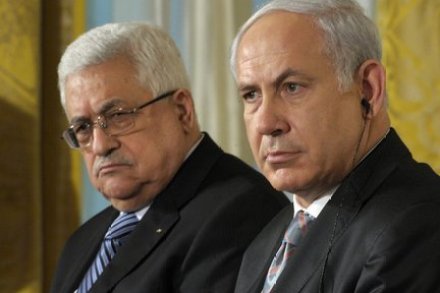
Will Britain recognise Palestine as a state if, as planned, the matter comes to a vote at the UN General Assembly in September? Right now, the government says it has not decided. But if France were to push, the likelihood is that William Hague will order British diplomats either to accept or abstain from the vote. The strategic rationale for a Yes vote is obvious: at a time when Britain is waging war in Libya and rallying support against Syria and Iran, it would be disadvantageous to be seen by Middle Easterners as blocking Palestinian aspirations. And having accepted the case for Palestinian statehood in principle why not support it in practice?

Can Cameronism be Europeanised?

In 1997 New Labour was not just a domestic programme; it was a foreign policy too. Known as the "Neue Mitte" in Germany, Blair's Third Way soon attracted such converts as the German chancellor, the French prime minister and the Danish leader. In the end, it produced few results for Britain, failing – much as Harold Wilson did in the 1970s – to curry favour for the UK through party political links with other leaders. But for a few years, much as New Labour looked across the Atlantic to the Democratic Party, so Europe's Social Democrats looked across The Channel. International recognition for his deficit reduction plan notwithstanding, David Cameron has no such effect so far. But some have been swayed by his domestic agenda.

Egypt votes – on Facebook

While analysts and diplomats are wondering who will win the forthcoming Egyptian presidential election, the military junta (the Supreme Council for the Armed Forces, or SCAF) that runs the country has organised a poll on their Facebook page. More than 200,000 people seem to have taken part. And even accounting for the obvious deficiencies (e.g. the bias towards an unrepresentative, internet-savvy, and liberal electorate) and bearing in mind the near-certainty of fraud given that the SCAF’s FB site is run by military intelligence, the results are interesting nonetheless. Topping the poll is, not unexpectedly, Mohammed El Baradei, the former head of the IAEA, whose internet-connected supporters have put him on 31 percent.