Daniel Korski

Unseating Gaddafi

The pressure is being turned up on Colonel Gaddafi, but it may still take a while to have an effect. The Libyan dictator retains some form of power and has told the only person who has been granted access to see him, South Africa's Jacob Zuma, that he intends to stay on in Libya. He wants a ceasefire before anything else is discussed. The rebels in Benghazi, meanwhile, want him to go before anything else is discussed. And so the bombing goes on. At the UN, people talk of negotiated settlement, fearing that chaos would follow Gaddafi's killing. That may be true, but there has been little evidence so far that the colonel is willing to negotiate in anything approaching good faith.

Egypt’s revolution – six months on

I'm back in Cairo to find out where the revolution of 25 January has got to. Nearly six months after Hosni Mubarak's downfall, the transition from authoritarianism is well under way. There is one immediate difference from my last visit: the absence of army check-points. Police officers in new white suits stand on street corners but the heavy military presence from before has gone. The Cairo police, who were absent after the revolution, have returned in new white uniforms. However, the military – or SCAF, as it styles itself – is very much still in charge, dictating how the democratic process will continue.

President Lagarde?

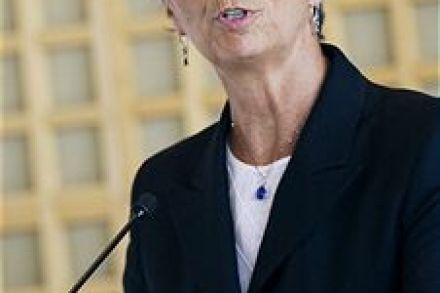
When President Nicolas Sarkozy dispatched Dominque Strauss-Kahn to the IMF in 2007, he did it to remove a potential competitor. Now, however, the French president may be trying to do the opposite: use the IMF post to create an heir and successor in finance minister Christine Lagarde. Lagarde was on Today this morning, explaining why she was ideal for the job: "Firstly, because I want it... Second, because I can do it.... Number three, because I would be extremely proud to do it." If she lands the IMF job, which seems likely, she will be well placed, as DSK was, to make a run for the Elysee in 2017, whether Sarkozy wins in 2012 or not.

A joyous day in the Balkans

The day started out looking bad for the Balkans, with the Serbian president boycotting a meeting with Barack Obama in Poland because the Kosovo president was attending. But things look rather better now. After a decade-long man-hunt, Serbian police arrested Ratko Mladic in northern Serbia. He was living under the name Milorad Komadic and had grown a beard like his former boss, Radovan Karadzic. A plane carrying Mladic is said to have left for The Hague, where he will soon be arraigned before the International Criminal Tribunal for the Former Yugoslavia. Foreign Secretary William Hague has rightly called the arrest a "historic moment" for the western Balkans.

Yemen implodes

Sometimes you wait and wait for an event, and nothing ever happens. Pakistan is always said to be teetering on the brink of collapse but never quite edges over the precipice. The same used to be the case with Yemen. In fact, Coffee House predicted that Yemen would implode last year, but Yemeni President Ali Abdullah Saleh managed to hold the country together in the face of terrorism, irredentist movements, insurgency and, recently, pro-democracy protesters demanding his resignation.   Now, however, the wily leader may finally have run out of road. Heavy clashes have erupted in the capital Sanaa, a day after Saleh again refused to sign a Gulf-brokered power-transition.

Grading Obama’s visit

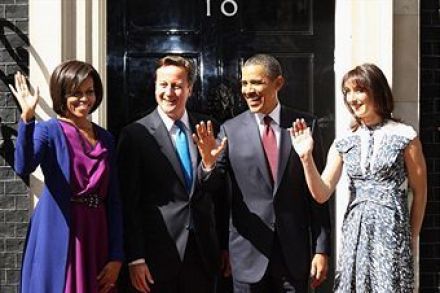
It was a good state visit. Actually, it has been an excellent visit. Much better than George W Bush's and even Barack Obama's 2009 trip to London. The US president got his photo with Wills 'n' Kate. The Prime Minister got his presidential high-fives. There were some odd points. The personal chemistry between David Cameron and Barack Obama made the ping-pong match better than it would naturally have been. For, let's be honest, table tennis is not a natural US-UK sport. There were policy differences between the two leaders too, for example on Libya and deficit reduction. In the end, though, the way to judge visits is not to think about Evening Standard covers or how much of the Today programme was devoted to the US president, but to look at strategic issues.

The Wei forward for the Big Society

The Big Society was dealt another blow with the resignation of Lord Wei yesterday. Sceptics will see this as a vindication of the concept's problems. Most people, however, won't notice that he has gone. The debate about the Big Society has long since become an elite sport, a jousting match between a determined promoter — the Prime Minister — and equally determined detractors in the media. Most people don't care, and it won't help or hurt the Tories at the next election. That's a shame. For the Tories could use a positive post-Thatcher narrative about their administration. They may not need it if the country returns to economic growth. But they might. However, the Big Society never worked for a number of reasons.

The X Factor

They say power is shifting from the United States, but I'm standing outside of Westminster Abbey having joined an enthusiastic surge of people keen to see the US president. People of all ages have snuck out of their offices to catch  a glipse of Barack Obama. And here he comes: 30-odd cars, with his big-windowed limousine in front, zip pass the Speccie offices and we get a wave from the President and the First Lady. I never see the Chinese president getting this kind of rock star treatment. In fact, I don't see many people getting kind of reception, except the Queen and maybe Justin Bieber. This matters. The US may be indebted, overstretched and led by a man whose leadership is less sure-footed than his public personality. But its leader draws an impromptu crowd of well-wishers.

Stop Gordon Brown

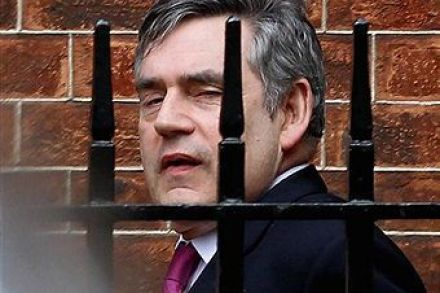
Gordon Brown's friends have launched a shameless effort to compel the government into nominating him for the IMF post. The government would be mad if they did. Mad. This is not about petty score-settling, as yesterday's Evening Standard would have it. This is about qualifications to lead, and the former Prime Minister, despite his intellect, does not have those skills. He led the country to ruin and remains in denial about it: he saved the world, don't cha know. The UK should be smarter about using talent from across the House, but there are limits. And it is a bit rich for the ex-PM's friends to argue that David Cameron should back him. This is the man who gave lukewarm support to Paddy Ashdown's candidacy to run the UN in Kabul back in 2008.

Cathy Ashton beats UK ministers to Bengazi

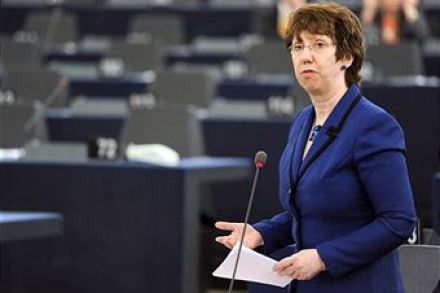
EU foreign policy Tsar Catherine Ashton has come under a lot of criticism, much of it unfair and/or put forward by those who want the EU to supplant the member-states. In this piece, I have tried to defend her. I argue that her realistic take on the EU’s role is in the UK’s interest: the last thing London needs is someone who ignores member-states to build an independent foreign policy. And she has managed to get Europe’s SAHEL policy in a better shape, worked closely with William Hague and Guido Westerwelle to coax Serbia into negotiations with Kosovo and helped to solve, at least for the moment, a crisis in Bosnia. For these reasons, she retains the support of David Cameron and William Hague.

Will Britain leave the EU in 2025?

Britain is going to stay in the EU for the next ten years at least. Of that I'm sure. But after that, when David Cameron's retired, William Hague has taken to writing books, George Osborne's had his chance and the 2010 intake run the party, the Tories are going to be more openly hostile to the EU. Labour will too; it has a larger reservoir of pro-EU sentiment among its ranks, but one that is shallower than it was. Focusing on the Tories, it is worth noting that nearly all of the names being bandied about as future Tory leaders have a visceral dislike of the EU. By and large they will, by then reflect popular opinion (if they don't already): as veteran EU watcher Charles Grant notes, there is a limit to how long an elite can cross the population.

Keeping the States interested

David Cameron has a good relationship with Barack Obama, which will be on display when the US president visits Britain shortly. They speak regularly and frankly and their senior advisers are in near-constant contact. The idea that the Lib Dems would foist a more "Love Actually" policy onto the coalition has come to naught. Yet Britain's influence in Washington has waned. This is no fault of the Prime Minister. In fact, his personal diplomacy has probably slowed-down the process. Instead it has to do with structural changes in the US: the coming to power of a "pacific" President, the importance of US-China ties, the emergence of the Tea Party.

Fox letter: storm in a fair trade, biodegradable cup

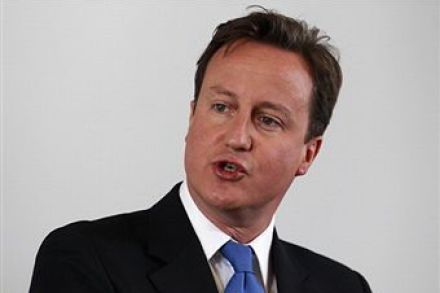
David Cameron probably let out a sigh when he was informed that yet another letter from Liam Fox had been leaked to the press. And when the Defence Secretary called No 10, as he undoubtedly did, to do his now-familiar Captain Renault routine, the Prime Minister can be excused for feeling a little frustrated. For the debates that have occurred in consequence miss a number of key points. The PM believes in overseas development – believes it is right, believes it is useful. No doubt he may find it useful to “decontaminate” the Tories but would not have been willing to spend 0.7 percent of GDP for something he did not believe in.

The Law vs Gaddafi

Luis Moreno-Ocampo of the International Criminal Court has said that Colonel Gaddafi, Saif al-Islam Gaddafi and spy chief Abdullah al-Sanussi have the greatest responsibility for the "widespread and systematic attacks" on civilians in Libya. The prosecutor has therefore asked the ICC to issue warrants for their arrest. The move comes as rebels claim they now have full control of Misrata and scored victories in Zintan, south-east of Tripoli. A senior officer told me he thought Colonel Gaddafi would be toppled in less than six months. But if he does not fall, the ICC move may become problematic. For if  warrants are issued, the Libyan dictator has little way out but to fight to the very end.

Could a Briton run the IMF?

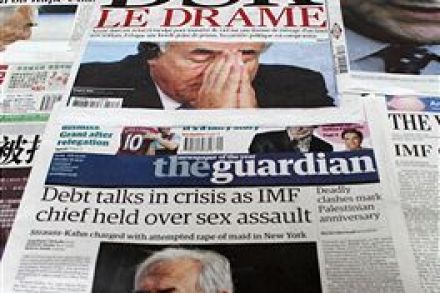
With Dominique Strauss-Kahn, known as DSK, undertaking scientific and forensic tests to determine if he sexually assaulted a hotel maid, the International Monetary Fund will be run by its No. 2 official, John Lipsky. A former banker, Lipsky was appointed “first” deputy managing director in 2006, and was expected to step down later in the year. But the change at the top will bring the former Permanent Secretary of the Department for International Development, Minouche Shafik, into the limelight.

The ISI chief must be sacked

The US-Pakistani relationship has always been fraught, but it is particularly fractious right now. It is highly likely that the US will conduct more Abbottabad-type raids following the killing of Osama Bin Laden. According to sources in the US government, several locations were under surveillance alongside Bin Laden's compound. And that was before the CIA snatched the "motherlode" of information from the Bin Laden raid, which will give hundreds of new leads. People like Ayman al Zawahiri, Abu Yahya al Libi, and Saif al Adel will be sleeping a little less soundly these days. Regrettably, the Pakistani government has done little to prepare its population for the likelihood of new raids, preferring to blow off steam over the US violation of Pakistani sovereignty.

The Arab Spring stalls in Syria

With more than 800 people thought to have died in Syria, the situation is getting more and more serious. President Bashar al-Assad has clearly decided he cannot allow any challenge to his regime and has rejected even the advice of friends like Turkey and Qatar to step back from the brink. The military — principally the loyalist 4th and 5th divisions — has now perfected their anti-protest tactics. People in Hama and Homs are fearing that what was visited upon Deera — where the regime cut off water, electricity and telephones before assaulting the city — will happen to them. Yet, for all this, it would be wrong to think that Syria is on the edge of an all-out uprising against the regime, for a number of reasons.

Baleful Bosnia

Bosnia has been getting more attention recently, as analysts predict gridlock (or worse) in the coming weeks. The reason is a move by the country's Bosnian Serb leader, Milorad Dodik, to challenge parts of the Dayton Peace Agreement, which ended the hard-fought war in 1995. Few people outside Bosnia know who Dodik is. Those who knew him during the Bosnian War or immediately afterwards saw him as a moderate businessman-turned-politician. But since then, Dodik has either changed or shed his cover. Now he wants to hold a vote next month on whether to reject Bosnia's federal institutions, especially the war crimes court. He has accused the court of bias. A Berlusconi-style attack on the court is probably related to ongoing investigations into his business dealings.

Garnering third party support

Third party support is an important political asset. Nobody trusts politicians any longer (when did they ever?) and so it’s useful to draft in supposedly apolitical backers to support your plans. Yesterday’s PMQs was a case in point, with David Cameron and Ed Miliband competing for support from GPs. As Jim Pickard writes over on the FT blog, having 42 GPs on side is a little less impressive than having support from the Royal College of GPs, which has 42,000 members. So the PM is seen to have emerged from the exchange as the loser. Therein lies a problem for the government. Since the general election, the Tories seem to have become decidedly worse at garnering third party support for their policies. Before the poll they did excellently.

Libya: Bombing does not preclude preparing a Plan B

The PM is looking to intensify the military campaign in Libya. Losing is not an option. Just think about it. The US gets its man; Britain gets angry, bombs a bit and then goes home. The dictator lives on in infamy: very Clintonesque. To avoid such an ignominious end, a delegation from Benghazi has been called to London in order to hatch a plan with Britain and her allies. But at the same time it may be prudent for someone in government – quietly and out of sight, of course – to look at a Plan B. Not for execution now, but ready in case the time comes. Why a Plan B? While the mission has protected Benghazi and is helping the rebels, questions are emerging about how long the UK can go on for? The operation has already cost close to half a billion pounds.