Daniel Korski

A belaboured EU position

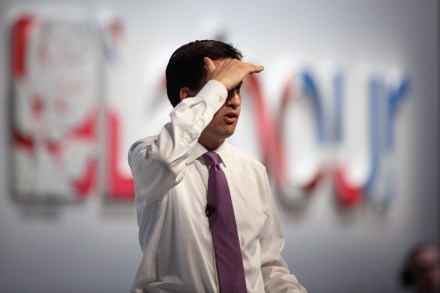
While the Coalition is split over Europe, Labour does not look like they are in a much better position. Ed Miliband told the BBC that he was in favour of the Euro; Ed Balls would presumably tackle anyone to avoid that becoming the party's policy. Meanwhile Douglas Alexander, Labour's brainy Shadow Foreign Secretary, has yet to make a game-changing intervention. Their predicament is obvious. Should Labour accept the narrative of renegotiation but opt for different areas to opt out of than those favoured by the Tories? Or should they, like William Borroughs, stand astride history and scream "stop", arguing for a pro-European position? Seemingly caught between the two views, the party's criticism of the government is like those two old-age pensioners in Woody Allen's joke.
The paradoxes of renegotiation

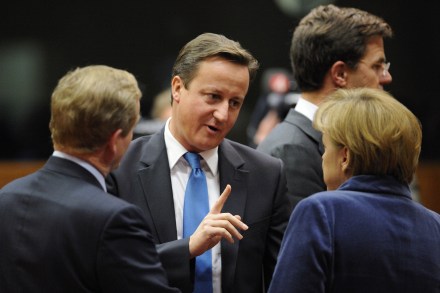
David Rennie (aka The Economist's Bagehot) has an excellent column in this week's issue about the difficulties that Britain will face if she tries to repatriate powers from the EU. His main argument, having spoken to a number of senior German politicians and officials, is that if Britain holds up any treaty revisions in the hope of extracting concessions in return, then the other EU states will organise themselves without the UK. The Economist's former Brussels correspondent also makes the key point that the 10 countries that are outside of the euro are not natural allies for the UK – some, like Denmark, do not want to join the euro, but others such as Poland are keen.

Palestine presses on in the UN

While the Palestinian bid for membership at the United Nations moved closer to rejection, it turned out that Palestine has a veto over which UN agencies the United States funds. For after Palestine gained admission to UNESCO, the US administration followed through on its threats and cut the organisation's funding. As UNESCO is based on assessed contributions from member-states, others cannot make up the short-fall. The Palestinian Authority is now considering making applications to the WHO, WIPO and the International Telecommunications Union – technocratic bodies that actually play a large in role. For example, the WHO is crucial for dealing with global pandemics like SARS and Swine Flue.

Envoy for repatriation

A few days ago Douglas Carswell laid out a way for the Prime Minister to regain the eurosceptics' trust. One of his ideas was to replace the UK's new chief diplomat in Brussels with someone directly accountable to Parliament. This idea has a snowball's chance in hell of succeeding. First, the PM has resisted all sorts of political appointments – he's even limited the number of Special Advisers – and I don't think he's about to start. Second, doing so would upend a constitutional principle: that officials report to the government, not the legislature. For this reason even generals are not approved by Parliament, as they are in the United States.

An assault on humour

On Tuesday night the French satirical newspaper Charlie Hebdo was firebombed, presumably by Islamic terrorists, for naming the Prophet Mohammed its editor-in-chief. Nobody was hurt in the attack but the newspaper's offices have been destroyed. They still managed to see the light side, running a commentary saying "After Greece, save Charlie". The left-wing paper has never been as popular as its main rival Le Canard Enchaine but its outrageous cartoons and caricatures are a staple of French kiosk fronts. Naming Mohammed editor may be one of the more tame things the newspaper has done. But whether it is tasteless or not, the magazine's right to publish, insult and ridicule is fundamental to democracy. What's so amazing is how limited the reaction has been outside of France.

Do Muslims vote Islamic?

The electoral success of Tunisia's Islamist Ennahda party and the likelihood that the Muslim Brotherhood will do well in Egypt's forthcoming elections has heightened fears in many quarters. Will Islamic parties always dominate such contests in the Middle East? The electoral success of the Islamic Salvation Front in Algeria, the Justice and Development Party in Turkey and Hamas in Palestine suggest the answer is yes. But looking at a broader data set – that is, the entire range of elections in which Islamic parties have taken part – reveals a different picture. Islamic parties have stood for elections in more than 90 elections in more than 20 countries. But as scholars Charles Kurzman and Ijlal Naqvi argue in a fascinating study entitled "Do Muslims Vote Islamic?

A Damoclean sword hovers above Papandreou

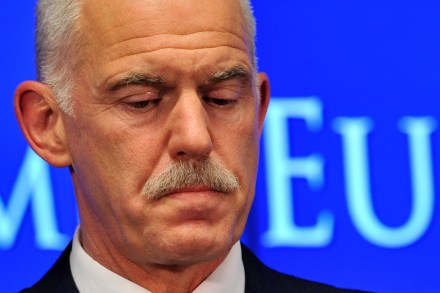
This is not Greek tragedy, it is a farce. Prime Minister George Papandreou's idea to hold a referendum on the Greek deal has done the exact opposite of what he must have intended. Instead of giving him a new mandate, it seems it will take the existing one away from him. Several MPs and PASOK officials have called for his resignation or for the formation of a National Unity Government. Some have even resigned, reducing the government's majority in parliament. European reaction has arranged from studied politesse to outrage. Ireland's Europe minister has called the referendum idea a "grenade". Privately, European politicians are seething. The Greek PM must know he has stepped in it, as his closest allies are busy briefing the press about his decision.

American isolationism and its consequences

I've spent the last couple of days in the United States, far away from the brouhaha in Europe. What has struck me most during meetings with US officials is how low down their list of priorities Europe — and indeed Britain — comes. This is an Asian Century, and the US means to focus inwards and eastwards but not elsewhere. As an official put it to me, "we see Britain moving away from Europe and being distant to us." There is even talk of closing down US European Command. This new focus will have a number of consequences. Take Libya, for instance. The UK and France could have fought the war, and won, without the US, but American involvement allowed casualties and collateral damage to be minimised.

The Colonel’s end

After more than 40 years of murderous rule and months fighting his own people, Colonel Muammar Gaddafi has finally been caught, and killed, in his hometown of Sirte. This marks the end of the formal struggle against the Colonel's regime, and, as such, is a great event for all Libyans. But Col Gaddafi's death does create some complications for the new Libyan authorities. They have avoided a drawn-out judicial drama — like Slobodan Milosevic's — which could have rallied people in the ex-dictator's support. But his death also robs the new Libyan government of an opportunity to show that they are better than he was, by allowing a process of justice to take place.

Hamas splashes out

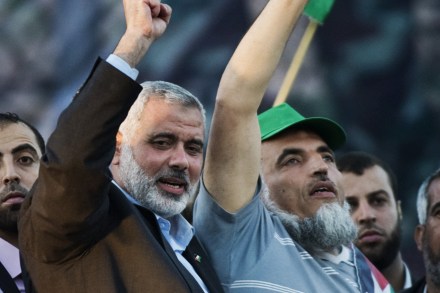
There are many questions arising from the prisoner swap between Israel and Hamas, not least whether it opens the door to a more lasting deal in future. But one question that deserves more attention than it will get, and ought to concern European policymakers, is where international aid is going. Take this little snippet from Reuters: "Palestinians freed by Israel in a trade for soldier Gilad Shalit took their morning exercise on Wednesday around a luxury swimming pool overlooking the Mediterranean, instead of circling the prison yard as they have done for long years inside. There was none of the usual breakfast-room free-for-all at Gaza's 4-star Al-Mashtal beach front hotel.

MoD to-do list

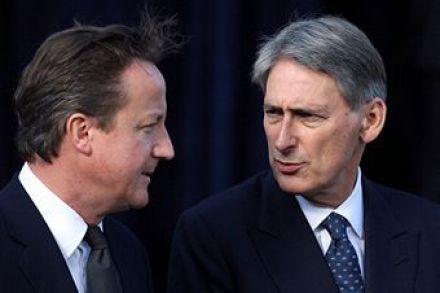
A day into his new job, Phillip Hammond would be excused for sitting back and wondering what he has let himself in for. The job of defence secretary is every Tory's dream, and the businessman-turned-politician is well-placed to excel in it. But the armed forces and the Ministry of Defence face a number of challenges that would test even history's greatest defence and war secretaries. Six challenges stand out: 1) To reshape the military's structures, systems and capabilities. This should be done according to the decisions taken in the SDSR to place defence on a surer financial footing.

Overreacting to Werritty

The Werritty case has made everyone who believes that government is controlled by lobbyists and tycoons slaver. The Guardian screams that Ministers held more than 1,500 meetings with corporate representatives in the first 10 months of the coalition, which presumably the newspapers’ readers know to disapprove of. But how many unionists did Labour meet after a year in office — and how many corporations? The party that declared itself "relaxed" about profit-making presumably met one or two profit-makers. Or did Ed Balls, when he was City minister, stay away from the Square Mile?

This will Occupy Boris

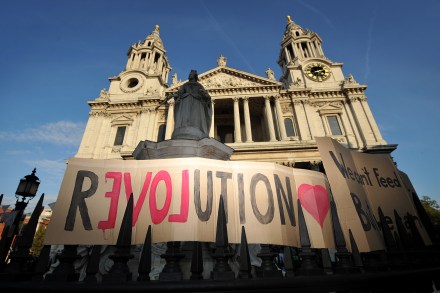
A few months ago I hosted a debate at my think tank with one of the key Tahrir Square leaders. After his talk about Egypt, he warned the audience: the protests that toppled Hosni Mubarak were not just an Egyptian or Middle Eastern phenomena; it could – and, he said, would – spread to the West. For the youth of today, he argued, feel disempowered, empoverished and betrayed. As protests spread from New York to London and other European capitals, it seems that Egyptian protester may have been right. Today's efforts to occupy the London stock exchange failed but protesters remain on the grounds of St Paul's Cathedral. Whatever happens in the next days, protests like these are likely to appear, disappear and appear again.

Coffee House interview: Kostyantyn Gryshchenko

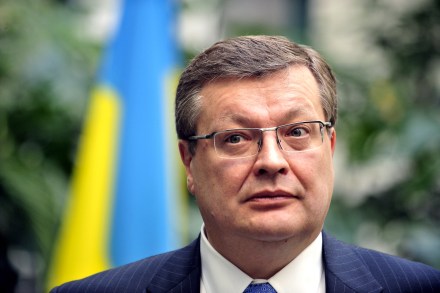
Kostyantyn Gryshchenko, Ukraine’s foreign minister, clearly has his work cut out for him. The conviction of former prime minister Yulia Tymoshenko by a Pechersk court to a seven year prison sentence has been seen, almost universally, as a piece of bully-boy politics, which will set back Ukraine’s links with the EU. NATO has made clear it is "disappointed" by the sentence handed down while several European foreign ministers, including Foreign Secretary William Hague, have expressed their concern. I fielded these questions to Ukraine’s foreign minister via email. Daniel Korski: The conviction of Yulia Tymoshenko is clearly a foreign policy mess for Ukraine, giving that it will most likely set back EU-Ukraine relations.

Ministers need their Werrittys

I've never met Adam Werritty and hadn't even heard of him before a few weeks ago. I'm also of the belief that financial wrongdoing should not be the only test used to judge Liam Fox's suitability for ministerial office. And I don't think the fact that a previous government changed ministers too often is a reason to overlook inappropriate ministerial behaviour. Whether the Defence Secretary, in fact, behaved inappropriately remains to be seen. But the signs are not, at this stage, good – even if the airwaves are now dominated by "Foxies": the Defence Secretary's friend and allies. That said, I think the self-styled advisor is getting an unfair wrap, at least based on the information available to the public.

What is Labour’s foreign policy these days?

As William Hague found before last year’s election, getting your voice heard on foreign policy is difficult for an Opposition. You are, at best, reduced to providing commentary to on-going events, vying not with the government for access to the media but with an array of better-informed foreign policy experts. Having a distinctive take on the changes in the world and practical ideas for how to affect change is harder still. You don’t have a 1,500-person strong Foreign Office.   For Labour, there is a different set of problems. Does the party opt for Blairite interventionism, tempered by the fiscal and political realities? If so, what’s the difference to what David Cameron is doing?

Saudi and Iran at each others’ throats

Yesterday — as Pete pointed out earlier — the Obama administration filed criminal charges against two individuals, Manssor Arbabsiar and Gholam Shakuri, claiming that they worked with Mexican criminals and for the Iranian government on orders to assassinate the Saudi ambassador to the United States. The plot has met with denials from Tehran, which “categorically and in the strongest terms condemn this shameful allegation.”     But, if true, the plot would only be the latest in a long-standing feud between Iran and Saudi Arabia. The struggle between Riyadh and Tehran has become the Middle East’s central conflict, overshadowing even the Israeli-Palestinian conflict.

Slovakia says “nie” to the euro bailout

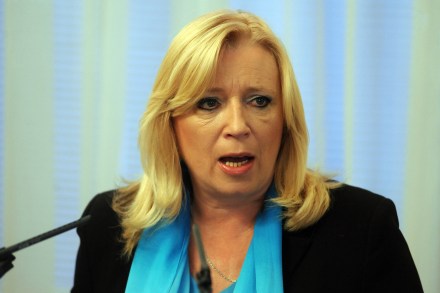
Slovakia is a small country that most people might confuse for Slovenia at a Pub Quiz. It has been a member of the eurozone for less than three years and represents less than 0.5 per cent of Europe's GDP. But it is now also one of the greatest problems for the euro, after the country's parliament voted tonight to reject an expansion of the European financial stability facility (EFSF). The vote would have allowed the EFSF to lend £385 billion, funds needed to tie Greece over. But little Slovakia said "no" to the EFSF expansion: the only country in the eurozone to do so. The Freedom and Solidarity party (SaS), a part of the governing coalition, refuses to support the bail-out fund.

A counterweight to France-German power

It was only a matter of time before the Franco-German drive to reshape Europe's "economic governance" met with a counter-proposal. In international politics, a powerful state or group of states tends to lead others to band together in or order to provide some form of balance. This is now happening in Europe. David Owen and David Marsh are proposing the creation of a "Non-Eurogroup" (NEG), corralling the 10 EU countries outside the Eurozone into a group. Writing for the Financial Times, they argue that such an NEG would bring many benefits. They say: "Setting up the NEG would establish rights and responsibilities for non-eurozone members, ending the long-held European position that non-membership of the euro represents a form of second-class EU citizenship.

Sarko’s dour challenger

One of France's dullest politicians is now odds-on to take up residence in the Élysée Palace next year. François Hollande, the former leader of the French Socialists, has emerged on top in a competition to take on Nicolas Sarkozy for the presidency. Six contestants vied for the Socialist nomination, including Ségolène Royal, Hollande's former partner who lost to Sarkozy in 2007. In the first round of the primaries yesterday, Hollande finished first ahead of current Socialist leader Martine Aubry. Here are the results based on 82 per cent of the votes cast:  The two will now face each other in a second round on Sunday, with Hollande the clear favourite. Policy-wise, the differences between Hollande and Aubry seem small.