Daniel Korski

Fox would lead anti-coalition Tories

So far, the Prime Minister seems to be playing down any potential fallout from the crisis dogging Liam Fox. No 10 seems to be saying "if the Defence Secretary goes, it won’t be such a big issue". Much remains to be seen about the Defence Secretary’s career – and he may survive the crisis that is currently engulfing him. But it looks increasingly hard for him. Evidence is emerging daily that Adam Werritty was somehow a member of the Defence Secretary’s team, closer to Fox even than junior ministers. And there may be more trips to be uncovered and more meetings that he joined. He was, for example, spotted at the Tory conference last week. To survive the next 48 hours, Fox will need to show enormous contrition at the despatch box.
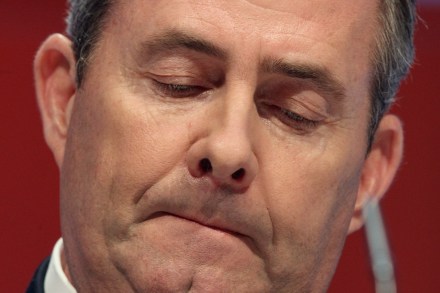
How safe is Fox?

This weekend's gossip is all about Liam Fox and his ministerial future. Ministers and journalists are calling each other, weighing the evidence, trying to find out the latest gossip. Nobody should underestimate the Defence Secretary's fight — he is an alumni of the school of hard knocks. But two things go against him. First, having annoyed many colleagues — not least in No 10 — not everyone is rushing to his defence, as they did during the suspicions that dogged William Hague. No.10 has now given him its "full backing," but, as history shows, that can mean anything from support to sayonara. David Cameron would prefer not to reshuffle his Cabinet, that's clear.

The problem with using soldiers to advance women’s rights

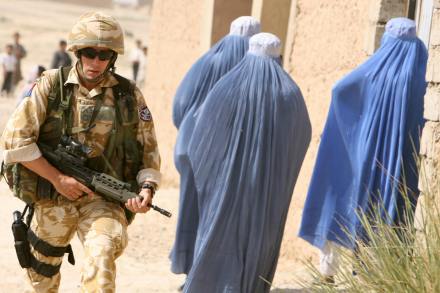
Mariella Frostrup, fresh from interviewing Nick Clegg in Cheltenham, writes about women's rights in Afghanistan in The Times (£). Her pithily-titled piece — "Women's rights in, before troops out" — makes the case that British forces cannot withdraw from, and the government should give no development assistance to, a country where the plight of women is so terrible and declining. It is hard not to sympathise with Frostrup's point. During my own time in Kabul I witnessed plenty of examples of female subjugation, and was glad the West was present to help address some of these problems. Western policymakers were, at the time, eager to portray the entire mission as a morally good, progress-guaranteeing task.

Commercial quandary

Britain's diplomacy needs to help British business. The Prime Minister made this clear soon after the coalition was formed and William Hague has followed up, reorganising the Foreign Office and putting commercial diplomacy at the top of the agenda. To some, this risked making diplomats into salesmen and there was even dark talk of "mercantilism". Both criticisms were far off the mark – there is nothing mercantilist in trying to help British businesses. A year in, however, the policy is facing a number of other, more fundamental challenges.

Tsar Putin III defines himself

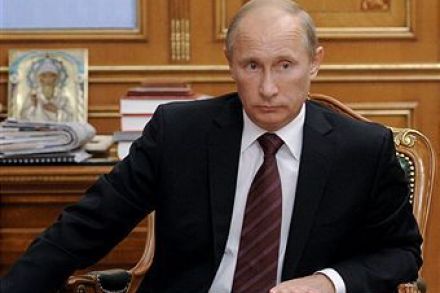
Vladimir Putin, in the manner of a modern day Tsar, has launched a series of initiatives to mark his march back to the Kremlin. His most eye-catching proposal is to form a Eurasian Union, a Moscow-controlled EU for the post-Soviet space. Writing in Today’s Times (£), Russia’s strongman explains the benefits: a union would aid greater economic integration in the region and it would place a regional bloc on the other side of the negotiating table from the European Union. But, what are Putin’s real aims, beyond laying out an agenda for his presidential term? Steps could be taken to integrate the post-Soviet region; but, without domestic reforms in Russia, Ukraine, Kazakhstan and so on, the benefits of further economic integration will probably be minor.

Hague’s European dilemma

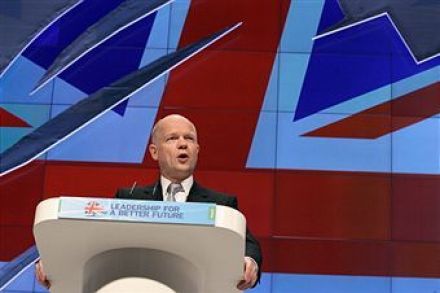
William Hague’s conference speech caps a revival in his political fortunes, and it also showed how far the government has come since the pre-election period, when Tory foreign policy was indistinct. After one year in office, the government’s roster of foreign policy achievements is noteworthy. The coalition has overseen institutional innovations in the form of the National Security Council and organisational improvements at the Foreign Office. Embassies are opening, not closing. Diplomats are again being taught traditional skills, not trying to follow the latest foreign policy fad. Cooperation between DfiD and the Foreign Office is also much better than it was under Labour, with Andrew Mitchell and William Hague conferring regularly on key issues.

Texting times

After the education email furore earlier this week, discussions are underway in ministerial offices about private emails: are they subject to the freedom of information act? The answer is probably yes, which may not be what the government wants to hear. But the problems that this will cause are nothing compared to what might happen next, when attention moves on to text messages. Whitehall buzzes with texts: Ministers text SpAds; SpAds text journalists; journalists text ministers, and so on. Often the messages are short and inconsequential, but not always. There is the potential for even greater embarrassment than exists with emails.

The new Israel and Palestine question

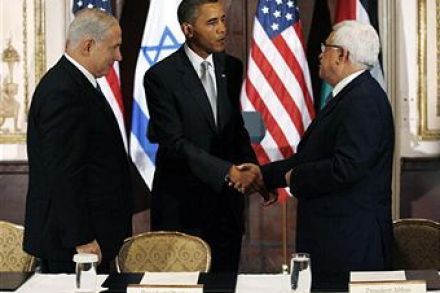
The halls of the UN are packed with presidents and foreign ministers. But for all the thousands of subjects under discussion, this year's General Assembly will be remembered for one issue only: the Palestinian statehood application. Mahmoud Abbas has made clear he wants to proceed, despite the reality of a US veto. In the end, it may not come down a showdown. If an application is made to the UN Security Council, the issue will likely go to a sub-committee of the full UNSC and take quite some time before it comes to a vote, whatever the Palestinians may want. That is why the US prefers the option to a vote in the General Assembly, which would probably take place and pass immediately.

The Israel Palestine question

After a hiatus, the Middle East Peace Process is about to return to the international stage. The Palestinians are pushing at the UN for recognition. Nobody knows yet what they will actually ask for: full statehood or just upgrading their UN status to "non-member". But, whatever the language of the resolution, the issue will be contentious. By some estimates, 126 states are poised to back the Palestinian request, including France, India, Brazil, Spain. The US will not support a Palestinian move, nor is Germany likely to. Britain remains undecided, hoping to help the Palestinians draft a resolution that other Europeans can sign up to. It’s not clear what Britain and European governments should do.

Cameron’s Libyan gamble

It is conventional wisdom that David Cameron won't get much of an electoral bounce from the Libya intervention, despite emerging as a bold and competent interventionist. People, the argument goes, are tired of warfare. A senior figure in Tony Blair’s No 10 told me yesterday that he did not think the PM would earn a lot of kudos, because with all the problems at home there is less tolerance for overseas adventurism. But this narrative overlooks a number of key points. First, the success of the operation has dealt with the charge that the government is less competent than it pretended to be. This was a serious charge, as the Prime Minister (and by extension the Conservative party) cannot withstand being called incompetent.

Where does the Arab Spring leave Israel?

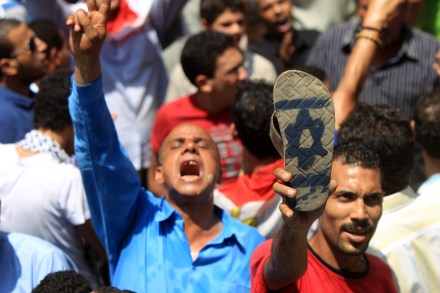
After decades where Arab politicians kept the truth of their constructive relations with Israel hidden from their publics and stoked anti-Semitism and anti-Israel sentiment for domestic purposes, it is no wonder that Israel remains the focus of anger across the Middle East, even after the Arab spring turned attention elsewhere. Last night in Cairo anti-Israeli protests went further than anything seen before, as frustrations with the slowness of the democratic transition and misperceptions about the Egypt-Israeli relationship led demonstrators to attack and torch the Israeli embassy. There will be those who see in Cairo proof that the Arab Spring will unleash nothing but turmoil and conflict. I think it is too early to tell.

Newsflash: Americans and Europeans like each other

A decade has passed since the attacks of 9/11 and so much water has flown under the proverbial bridge. Today, ordinary Americans don't want to have a leadership role in the world, and Europeans aren't too keen on it either. And having dithered over what to do about Guantanamo Bay, most people in the US and Europe don't trust President Obama's counter-terrorist policies. Right? No, actually wrong. According to the tenth-annual public opinion survey of the general public in the United States, Turkey, and 12 European Union member states – the Transatlantic Trends – 54 per cent of respondents from European countries surveyed want the United States to show strong leadership in world affairs. That’s a switch from the Bush years.

Facebook diplomacy

William Hague is an unlikely sort of technophile. Truth be told, for all his strengths he simply does not look like a signed-up member of the Twitterati. His history-dripping, gold-covered office in King Charles Street is about as far away from the internet-enabled Google office as you can get. But the Foreign Secretary has just opened a Facebook profile – and garnered a thousand friends or so in a few days. Ironically, none of his staff can see his family snapshots, his "likes" or who he chooses to poke – as access to Facebook is limited on the Foreign Office IT network. How this foray onto Facebook will end up remains to be seen. Ed Miliband's Twitter experience was famously ill-fated.

I spy a BBC bias

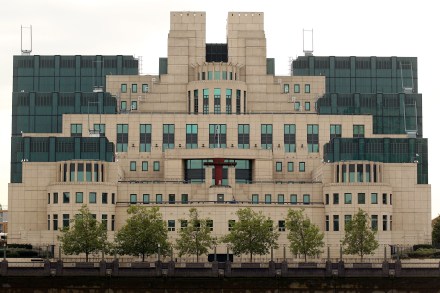
With Colonel Gaddafi's compound lying in ruins and every self-respecting reporter combing through the wreckage, it was only a matter of time before documents of a dictatorship became public. Most explosively, the BBC's Jeremy Bowen has found letters to and from the Secret Intelligence Service which suggest complicity in extraordinary rendition and, as was suggested on the Today Programme yesterday, an unseemly chuminess with Libya's spies. If any part of the British state took part in illegal acts – which extraordinary rendition is – then this is a very serious matter. But it should be said no evidence has hitherto been found of this by any number of inquiries.

Philistines for Free Palestine

This summer I had the pleasure of listening to the Belgrade Philharmonic Orchestra performing in the once-ravaged Croatian coastal town of Dubrovnik. The concert, conducted by the Indian maestro Zubin Mehta, was beautiful and moving. A particularly memorable moment came when a Croatian tenor sang a duet with a Serbian soprano. Under the Dalmatian sky, music served as a vehicle for human understanding and reconciliation. How different the audience - and Zubin Mehta - must have felt when the performance of the Israel Philharmonic Orchestra in the Royal Albert Hall was disrupted by pro-Palestinian hoodlums, who brought the Promenade Concerts to a halt for the first time since 1895.

Relations between Turkey and Israel deteriorate

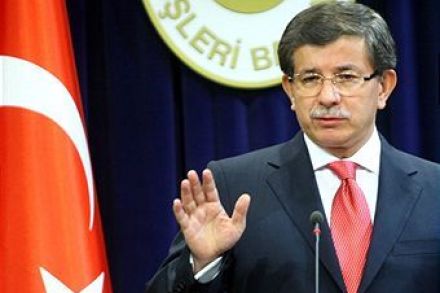
Last summer, I spoke to Turkey’s foreign minister, Ahmet Davutoglu, about the Mavi Marmara row. Davatoglu was not only animated, but clear on what he thought. Unless Israel apologised, he said, the “relationship would change”. Now, Turkey has reacted to the publication of a UN report (which insists that Israel's naval blockade of Gaza was legal but that Israeli soldiers used unreasonable force) by following through on some of Davutoglu's threats. Many military agreements between Turkey and Israel have been suspended and the Israeli ambassador has been expelled. The Turkish Prime Minister, Recep Erdogan, has also warned that relations will disintegrate further unless Israel offers an apology, pays compensation and removes the embargo against the Gaza Strip.

Eurosis

Most of Europe takes all of August off for summer. Paris is empty, Brussels eerie and nobody works in Madrid. But as politicians and officials come back from their holidays, they are finding that the problems of the euro have not gone away. Quite the contrary. No less a supporter than former EU Commission president Jacques Delors believes that the European currency is still “on the edge of the precipice”. It is easy to see why the European grandee feels as he does. The euro eased against the dollar today, taking a cue from lower stocks; the euro was down 0.6 per cent. The losses came on top of data from the European Commission, which showed economic sentiment inside the Eurozone plunged to 98.3 in August from 103 in July, its weakest level in more than a year.

Duncan of Benghazi

Junior ministers rarely get to influence high-level policy or be seen publicly to have done so. So Development Minister Alan Duncan must feel particularly pleased that his brainchild, the so-called "Libya oil cell", was set up to block fuel supplies to Tripoli; and that its work – as well as the Tory MP’s role – has now become public. On the day that David Cameron jets off to the Paris Conference no less. The BBC reports that a six person team was set, taking in people from the Cabinet Office and the MoD, but working out of the Foreign Office. The team focused on depriving Gaddafi’s regime of oil by cutting off smuggling routes and operations in order to cripple the Libyan military machine and create popular pressure on the government.

What kind of Libyan justice?

Tory MP Dominic Raab has a piece in The Times today (£) about the need for Libyans to rely on the International Criminal Court in the Hague, rather than seek retribution and revenge against Colonel Gaddafi and his loyalists in Libya. A former Foreign Office lawyer, Raab knows his subject well. But I can’t help but quibble with a few of his points. For the history of the International Criminal Tribunal in Yugoslavia, a precursor to the ICC, raises questions about how societies can best deal with such crimes. The ICTY allowed space for the post-conflict consolidation to take place before indicting criminals. In contrast, the ICC issued an indictment against Gaddafi very quickly, which left the Libyan dictator little room for manoeuvre.

Gaddafi in Tripoli as the <em>entente cordiale </em>flourishes

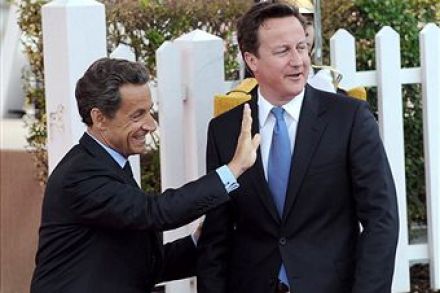
The imminent success of the Libya intervention was, to a remarkable degree, down to Anglo-French cooperation. Though the media has been keen to play up, and even conjure up, rifts and disagreements between Paris and London — and the hyper-active Nicolas Sarkozy can't help but act first and coordinate later — the fact is that the two states worked closer and better together than they have done for years. Probably not since the Suez operation have the British and French militaries cooperated so closely. But the intervention, even if it is coming to a (deadly and protracted) end did show up a number of deficiencies in materiel and command and control arrangements, as well as problems of political coordination.