Daniel Korski

The danger of unbalanced trade with China

The Chinese premier seems to like cars; the Chinese in general seem to like cars. China has bought MG in Britain and Volvo in Sweden, to which it has just added Saab. If the Chinese can make European car companies viable, then what's the problem? Theoretically nothing: trade will help the Chinese and Europeans alike. But, as Robert Peston made clear in his questioning of Wen Jiabao, trade remains unbalanced. For example, European companies are excluded from public procurement contracts in China. It is also worth noting that China’s purchase of Spanish and Greek bonds over the past year, coupled with their promise to buy from Hungary, have made it a bilateral lender of last resort for politicians in indebted countries.

Looking behind the negative aid polls

There are, as the old adage goes, "lies, damned lies and statistics". I'm beginning to think the same about polls. Take the polls that Britons are not as keen on overseas aid as the Prime Minister. Some of the headlines attached to them are prone to exaggeration. For example, on the back of the poll, the Mail claimed that "one in four people say they will no longer give money to charities such as Oxfam and Save the Children." People may say that but they don't seem to mean it. For it turns out that the British public has actually increased its giving to Save the Children by nearly 10 per cent in the last year. And earlier this year, the public gave over £100 million to the Comic Relief Red Nose Day appeal – the largest sum raised to date.

In the firing line | 26 June 2011

Talk about an own goal. Whatever Air Chief Marshall Sir Simon Bryant thought he was achieving when he told MPs that the RAF were "running hot" because of the Libya intervention, the result has been to fuel the debate about the appropriate role of military officers in the public debate – and, in the latest instalment of the debate, if the current military leadership is actually up to the job. It is an important question – nothing should be taboo in a democracy and since Britain has none of the parliamentary oversight that the US congress has over military leaders, this debate is an important form of scrutiny. In my experience in Basra and Kabul, many of our military leaders must take part of the blame for Britain’s failure.

How many refugees are actually coming to Europe?

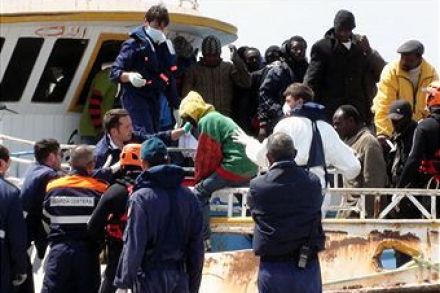
A human wave of refugees is supposedly setting off for Europe from North Africa. But what are the real figures? The first thing to note that refugees from North Africa come at a time when there has been a sharp decrease in the number of asylum applicants in the 27 EU member-states. Eurostat says that in 1992 there were 670,000 applications in the EU-15 and in 2001 there were 424,500 applications in the expanded EU-27. But according to the UN, the 27 EU member-states registered only 247,300 asylum claims in 2009 and 235,900 in 2010, a 5 per cent annual decrease.

Apparently, Britain is less stable than a country in danger of collapse

If there is one global index it is best not to be on, it is the Fund for Peace's annual Failed States Index. It ranks 177 countries using 12 social, economic, and political indicators of pressure on the state. This year, the FSI ranked Somalia as number one for the fourth consecutive year, citing widespread lawlessness, ineffective government, terrorism, conflict, crime, and pirate attacks against commercial vessels as reasons for the country's billing. Finland, on the other hand, has displaced Norway at the bottom of the index. "Slight fluctuations in demographic and economic indicators, though minimal, lowered Norway’s scores, allowing Finland, with its continued stability, to slip in front of its Nordic neighbour.

Euro-bondage

At a time when the Euro is looking so weak, it is a wonder that so many countries are still queuing up to join. Estonia has recently joined, while Hungary and Bulgaria are keen as mustard to join as well. Make no mistake, these countries want to join. They go to lengths to stay for two years in the European Exchange Rate Mechanism, while keeping inflation inline with the EU average. At a meeting this morning, the Hungarian foreign minister capped off his country¹s EU Presidency by declaring that Hungary is still focused on joining. But, even if these countries did not want to join the Euro, or felt perhaps that the Greek crisis was a reason to postpone membership, they would have no choice.

The trouble with Ban Ki-moon

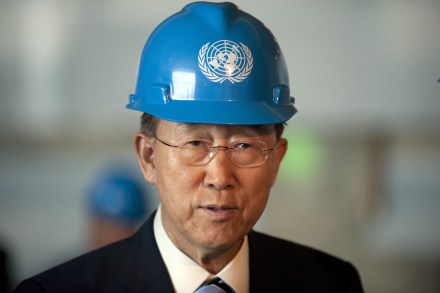
In the little compound known as “Bantanamo,” located outside the UN headquarters in New York, a small sigh of relief was probably breathed last week. For, inside, UN Secretary-General Ban Ki-moon had just been told of the UN Security Council’s unanimous decision recommending that he be elected for a second term. Gabon's UN ambassador Nelson Messone made the announcement to the press after the 15-nation council met behind closed doors. The UN General Assembly will probably vote this week, confirming that Ban will run the organisation until the end of 2016.

How the IMF might save Afghanistan from its leaders

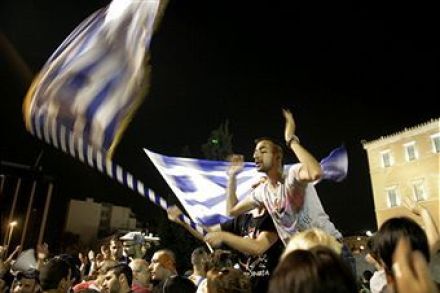
The International Monetary Fund used to be hated, blamed for the privatisation programmes it imposed across the world in exchange for loans. Then it spent a decade in relative obscurity. Now, as countries like Greece are forced to beg for loans, the Bretton Woods institution has again become a popular bogeyman. Every Greek protester thinks that all would be well if only their government had a Love, Actually moment and told the IMF where to go. But the IMF — with its hard-nosed, unsentimental policies — is often what is needed to save governments from themselves. Take Afghanistan. As The Guardian reported yesterday, the Afghan government will struggle to pay its bills "within a month," after the IMF rejected proposals for resolving the Kabul Bank scandal.

Cameron vs Kirchner

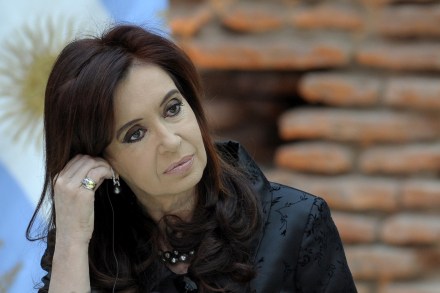
After stating the obvious at PMQs this week — that the Falklands would remain sovereign British territory as long as they want to be — David Cameron has come under heavy fire from the Argentine President, Cristina Kirchner. As today's papers report, she yesterday described our PM as "arrogant," and said his comments were an "expression of mediocrity and almost of stupidity". But there is nothing new in the British position, which has always been that there can be no negotiations over sovereignty unless and until such a time as the Falkland Islanders so wish.

Danny’s maths

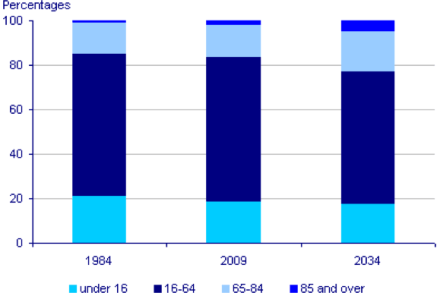
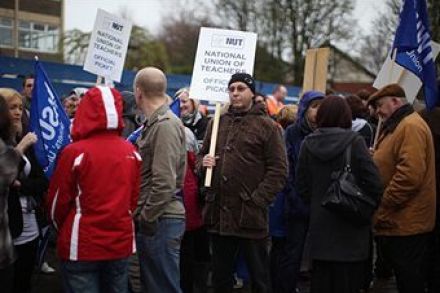
And so Danny Alexander has further angered unions by making it clear that "painful decisions" are needed to reform public-sector pensions, including raising the retirement age. But his proposals should no come as a surprise. Rapid demographic transitions caused by rising life expectancy and declining fertility mean that the proportion of old to young is growing rapidly. But when the Lib Dem minister says that "people are living much longer now," he is in fact underplaying how dramatic the change has been in the last decade. According to the Office of National Statistics, the proportion of people in Britain aged 65-and-over increased from 15 per cent in 1984 to 16 per cent in 2009, an increase of 1.7 million people.

General outspokenness 

Recent wars have given rise to an unusual phenomenon in British civil-military relations: frequent, and often high-profile interventions, by serving or recently retired senior military officers in public debates. The latest has been the intervention of Britain's chief naval officer, Admiral Sir Mark Stanhope, who questioned the Navy’s ability to sustain the Libya campaign. Different prime ministers have dealt with this kind of outspokenness in different ways. Tony Blair was too weak to rein in Army chief Sir General Richard Dannatt, while Gordon Brown did not have the credibility, vis-à-vis the military, to do so either. David Cameron is different. He is at the height of his powers and determined that he, not the military leadership, should exercise command.

Bring on the strikes

An old boss of mine once said to me: when you start a new assignment, seek out a fight — and win it. The same advice should be given to incoming Prime Ministers. U-turns, as Mrs Thatcher knew, just create demand for more U-turns. If the government is willing to revise its NHS plans, then why not reopen the Defence Review, or alter the pledge to spend 0.7 of our national income on overseas aid (or at least abandon the questionable idea of legislating for it)? But seeking out and winning battles, while avoiding too many retreats, is not enough. To be great, a Prime Minister needs good enemies. Mrs Thatcher had great enemies in Michael Foot and Neil Kinnock. Tony Blair did too.

Erdogan’s immediate dilemma

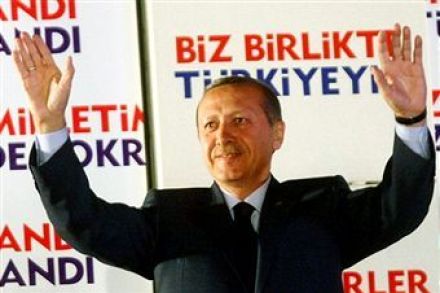
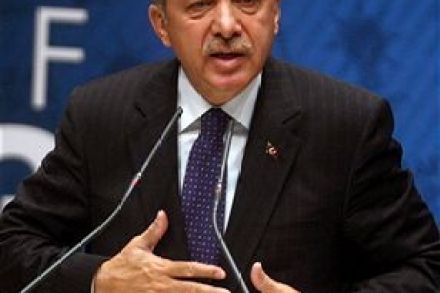
It seems that everyone won the election that was held in Turkey this weekend. Prime Minister Erdogan's Justice and Development Party (AKP) officially won, taking some 50 per cent of the vote, which is enough to secure him a third term in office, but not sufficient to enable his party to make changes to the constitution. As the BBC's Gavin Hewitt notes, ‘Prime Minister Recep Tayyip Erdogan of Turkey stands out. He is genuinely popular. He is socially conservative, but he has tapped into the aspirational mood of Turkey’s middle class.’ But although the opposition party, Republican People's Party (CHP), lost the election they actually polled about a quarter of the votes, the best result it has had for three decades.

Gates’ flawed valedictory

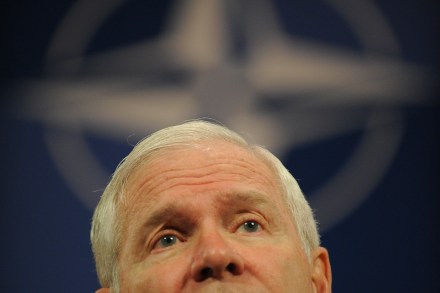
Robert Gates may be one of the best defence secretaries the United States has had in modern times. But in slamming European allies, like he did in Brussels on Friday, he was wrong. I have since long upbraided Europeans for under-investment in defence capabilities and making the wrong kind of investments. And defence expert Tomas Valasek published a fine pamphlet a few weeks ago, showing how European governments could do more for less, including by cooperating better. But they chose not to. This is not only foolish — as we live in an uncertain world where the ability to defend territory, trade, principles and people is paramount — but it also puts at risk Europe's greatest defence mechanism: the goodwill and cooperation of the United States.

The end of Assad

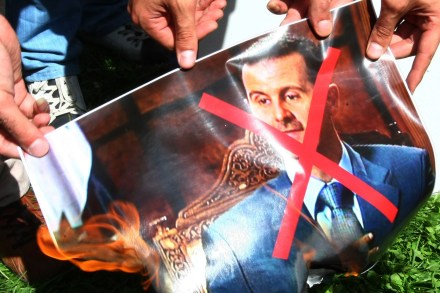
After weeks of violence, the end of the Assad regime is now inevitable. It may take weeks, months or years, but the kind of damage that President Assad has inflicted on his domestic credibility and international standing cannot be repaired. The country's two most populous cities, Aleppo and the capital Damascus have remained calm, but now protesters are defying the army. More than 300 members of the governing party have resigned and publicly condemned the crackdown. Crucially, the army's loyalty is now in doubt. It is said some military units have refused to quell the protesters in Damascus.

Who is the coalition’s tough guy?

Next week the Prime Minister will make his much-awaited law-and-order speech. This should, under normal circumstances, be the third or fourth such speech by a Tory leader who's been in government for more than a year. Normally, it would be an occasion to score easy points from centre-right voters. But these are not normal times. The PM has rebranded the party to such a degree that it has nearly lost its law-and-order credentials. In addition, the U-turn over sentencing policy now needs to be explained. So this is a claw-back kind of speech, where the PM has to restore trust and win friends anew. The real problem is, of course, policy. But more superficially, the government has a problem of voice.

Sanctioning Gaddafi

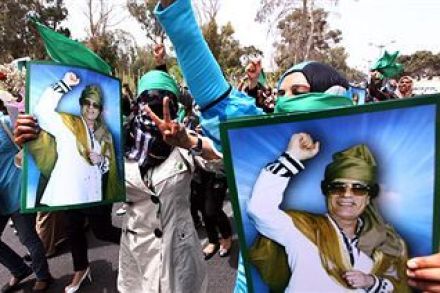
Yesterday, Foreign Office minister Alistair Burt went to Chatham House to explain the UK's Libya policy. It was a mildly painful experience. A particular gem: "Where we will end up nobody quite knows." Well-spoken Lindsey Hilsum easily skewered UK policy, talking of the "indecent haste" of the ICC investigation and raising the ICC's proposal to focus on a political deal. Sir Richard Dalton, an ex-mandarin, remarked that the "tone of optimism of the minister needs to be questioned further." Burt got a lot better during the Q&A, but the event did not make for a particularly compelling argument for what the UK is doing, which is a shame, not least because Alistair Burt can do better. More so as Libya policy may be in better shape now than it has been for weeks.

The mystery of modern Turkey

What does Turkey actually think? That's an issue that has been occupying many Europeans, as the vital NATO ally heads to the polls. On the one hand Turkey has in the last 10 years become more like the West: globalised, economically liberal and democratic. Turkey’s economy is now the world’s 16thlargest, the sixth largest in Europe. But, at the same time, questions arise about its recent policies: will it consolidate its democratic achievements, or is it threatened by a populist tyranny or even authoritarian rule? Certainly, many fear that Prime Minister Recyp Erdogan's behaviour is moving Turkey away from the West, both in terms of internal policy and external alignmen.

Preparing for a post-Gaddafi Libya

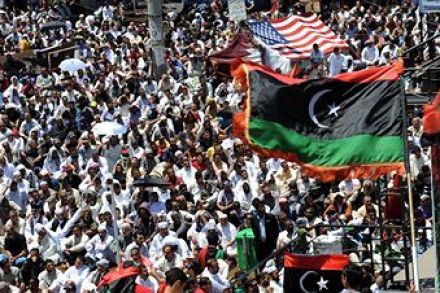
The Libya intervention has been in operation for a few months and the rebels have been making gains, most recently in Yafran. But progress remains slow and perhaps it is time to look again at how the lessons of Bosnia, Iraq and Afghanistan might have a bearing on Libya. The first lesson is simple: assume the worst. If you think that a regime will collapse quickly, plan for it to last a long time. If you expect a peaceful transition, plan for a violent one. And if you hope that unarmed monitors will be enough once hostilities are over, prepare for a well-armed peacekeeping force to be deployed. Optimistic predictions of the post-Saddam Iraq encumbered the planning process and meant the US-led coalition was unprepared for the contingencies that arose.

Trouble in Golan

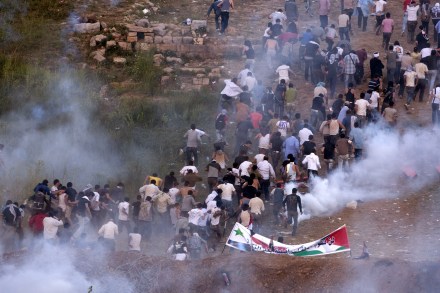
In a clear move to distract attention from his own problems, Syrian president Bashir Assad has allowed people to march from the Syrian border toward the Israeli-controlled Golan Heights, in the hope it will lead to a violent reaction from the Israelis. It did. Israeli forces opened fire on the people, wounding several. There are reports of at least four people killed and 13 wounded but these have not been verified. There can be no doubt that the incursion is part of a Syrian plan. The protests coincide with the 44th anniversary of the Six-Day War, when Israel captured the Golan from Syria, as well as the West Bank and Gaza Strip. The border area is a military zone and people will have been bussed or waved through Syrian checkpoints 50 kilometres before they reached the border.