Daniel Korski

Egypt may have voted, but don’t celebrate just yet

Many thought the day would never come. Even as recently as yesterday, some doubted it would happen. But today Egyptians went to the polls in the country's first parliamentary elections since Hosni Mubarak's fall, hoping to take a first step toward democracy. Under a complex electoral system, voters picked both party lists and individual candidates. The final results are due by 13 January 2012. As it stands, the Muslim Brotherhood, Egypt's largest and best organised group, along with Salafists, are expected to do well in the vote — after all, Islamists did prosper in the elections in Morocco and Tunisia. But it is not assured.

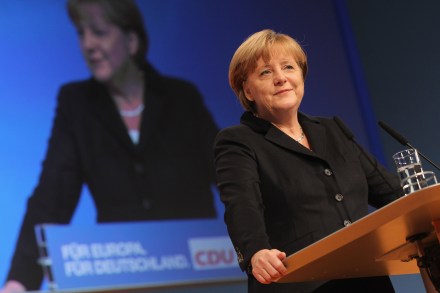
The reasons for Angela Merkel’s popularity

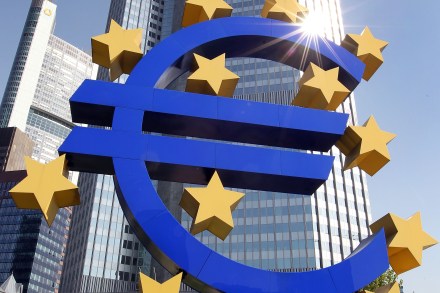
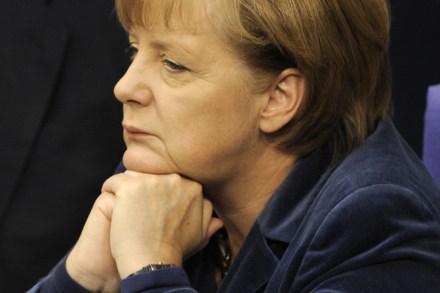
The British government is becoming ever more gloomy about the prospects for the euro, believing that Angela Merkel will not do what she has to if the single currency is to survive: namely, let the ECB intervene massively in the markets. Whether it's because of Germany’s inflation-scarred history, or the hope that market pressure will force reforms in many European states, the Chancellor is holding back. And, it seems, she is getting more and more popular by sticking to her policy.   Mrs Merkel’s popularity is, indeed, related to her handling of the Eurocrisis. In Germany she is seen as having shown the kind of leadership people want, and the recent CDU party conference cemented her status.  But there is more the Merkel's bounce than that.

Tobin tactics

The biggest bone of contention between the UK and its EU allies these days is the ‘Tobin tax’, the idea of levying a tax on financial transactions. To the UK this is folly. Unless it is levied globally, a tax will force business to move elsewhere. And there is a greater chance of Silvio Berlusconi being elected ECB chief than the Tobin tax being levied globally.   Based on the experiences of Sweden in the 1990s, the tax will achieve none of what its proponents believe it will — and at a considerable cost to Britain's and Europe's economy, as companies look to list elsewhere to avoid it. As Ryan Bourne from CPS points out, even the European Commission found that the tax may hurt the economy. The EC thought it could reduce Europe's GDP by up to 1.

How can Cameron protect our interests in Europe in the short term?

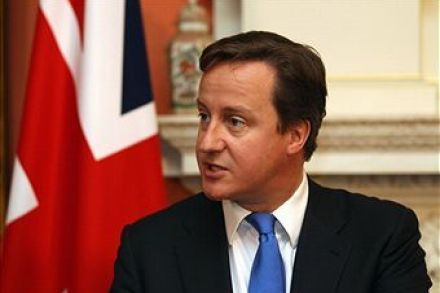
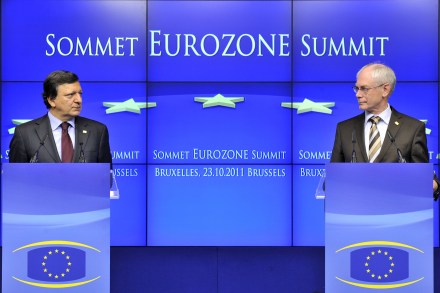
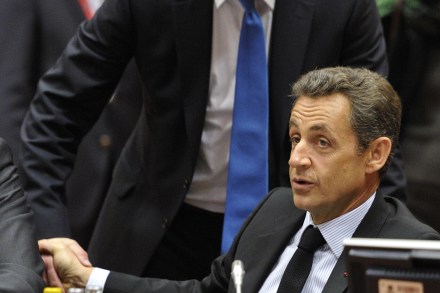
Chatting to people in Brussels last week, I couldn't help feeling that David Cameron's EU problem is one of timing. The PM will probably be able to piece together a repatriation package that includes measures such as a withdrawal from the over-implemented Working Time Directive and a reduction in the EU budget. But none of this is likely to be enough for his party. Indeed, I suspect the budget won't be finalised until two minutes to midnight during the Lithuanian EU Presidency in 2013. Add to this the Tobin Tax, where there seems to be little leeway for the British government. Barosso, Merkel and Sarkozy are determined to introduce it, and even a Eurozone-only tax will harm the City.

What kind of Europe?

A couple of weeks ago I tried to lay out what the future of Europe could look like, given that some member states want to create an ever-closer Union while others prefer to remain in a looser kind of club. I wrote that the EU might end up evolving into a much more asymmetric arrangement, with a small group of European states integrating in some areas, while other states remain outside. Later I called this new arrangement the trade the 'EF', the European Framework, as opposed to the more integrative EU of today.   Now others have begun offering their ideas.

Paying for justice

To British ministers, the role that the International Criminal Court played over Libya was key – it made clear that Colonel Gaddafi's actions were unacceptable and would be subject to international law. Tory MP Dominic Raab even wrote a piece in The Times about the need for Libyans to rely on the ICC in The Hague, rather than seek retribution and revenge against Gaddafi and his loyalists. And it wasn't only the British government. German Chancellor Angela Merkel stated that the Libyan leader Muammar Gaddafi should be tried by the ICC: 'Gaddafi should have a trial according to the law, something he never did with his opponents,' Merkel said when asked by the weekly Bild am Sonntag whether she was in favour of such a trial.

Opening Europe

It is an article of British faith that further liberalisation of Europe's market is a worthwhile goal. But few people realise the boost the UK economy would actually get from the finalisation of the EU's internal market – especially implementation of the Services Directive, creating an integrated market for energy, modernising public procurement rules and liberalising the digital market. Implementation of the Services Directive alone would add 1.5 per cent of GDP to the EU as a whole in the next nine years, according to European Commission calculations. As the UK has one of the strongest services sectors, this will have direct benefits here.

Mubarakism after Mubarak

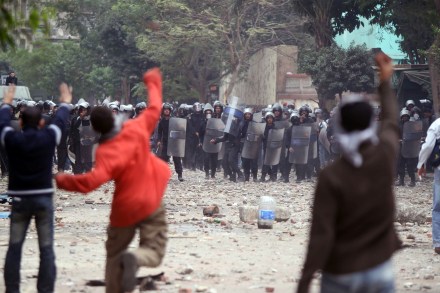
The future of Egypt has been hanging in the balance since Hosni Mubarak was toppled. Now there is real cause for concern, as scores of protesters clash with state security forces. The problem, above all, is military overreach. Stuck in a 1960s view of itself, and keen to preserve their money, status and power, the military has been thwarting the process of change. Since Mubarak's fall they have continued behaving how they always have and worse — arresting protesters, muttering about US-led conspiracies, demanding extra-constitutional rights and clamping down on dissent. Worst of all, the West has been all to willing to take them at their word.

Are the Lib Dems pro-EU?

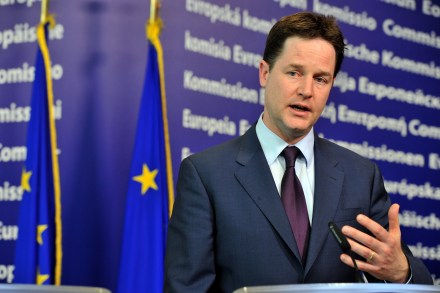
This might seem a very odd question. A pro-EU position is part of the party's internationalist DNA. Listen to any EU-related speech by the likes of Nick Clegg or Paddy Ashdown and heartfelt support for the European project is apparent. The Liberal Democrats have also made a virtue of reining in Tory euroscepticism, for example rejecting a call for repatriation of powers in the Coalition Agreement. The Deputy Prime Minister remains, in private and public, pro-EU. And to many activists and MPs, the party's European stance is what makes it different to the Tories – and is the reason why they are Lib Dems. They see in Tory euroscepticism a boorish Little Englanderness they abhor and find out of synch with the way of the modern world.

In defence of technocrats

Is Mario Monti's administration in Italy democratic? Is Greece's new government? To some, especially in the blogosphere, it is the exact opposite: a technocratic and undemocratic government foisted upon Italy and Greece by (circle as appropriate) Angela Merkel/Nicolas Sarkozy, the Bilderberg Group/EUSSR, etc. But nobody forced Silvio Berlusconi to resign. Nobody sacked him. Under pressure by the markets, he chose to resign. He could have stayed and nobody denied that he had a constitutional right to do so. It would have cost Italy dear, but he could have stayed.

Renegotiation reality

Governing is about choices. That goes for Europe too. The government says it can get everything it wants – that's politics – but the reality is different. It actually faces a number of trade-offs, the biggest being a choice between staying in an EU that reforms but not as quickly or as dramatically as parts of the Tory party wants; or to pull out entirely from the EU.  In his speech at the Lord Mayor's Banquet, the Prime Minister argued that he could both change Britain's relationship with the EU but remain inside the 27-member bloc. But I can find no serious EU expert or mandarin who believes this is actually possible. The most the PM can probably get is an opt-out from judicial cooperation.

How do you leave the euro?

A few weeks ago, Lord Wolfson announced a £250,000 prize for the person who could figure out how a country could leave the eurozone. Given what is happening to the euro, it seemed an awful lot of money to spend on a sub-section of the real question: namely, how Europe can maintain monetary stability and promote growth. The euro, as Gideon Rachman pointed out in the FT last week, is a means to an end, not an end in itself.  It seems Lord Wolfson agrees that he asked too narrow a question and has reformulated the task. The winner will now have to answer what will be the best way of ejection from the Euro ‘to be managed to provide the soundest foundation for the future growth and prosperity of the current membership?’ Much better.

Can Italy rebound?

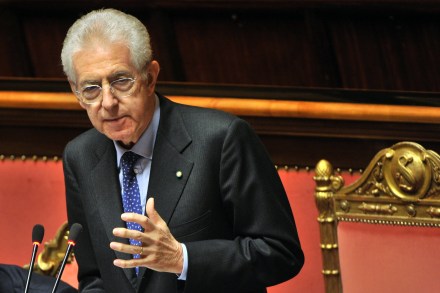
I'm in Italy watching the bonfire of Silvio Berlusconi's vanities first hand. From the ashes, most Italians hope a stronger nation will emerge. And for this reason, faith in former EU Commissioner Mario Monti, who gave his first statement to the nation last night, seems high. Italy is not a nation on its knees, and despite the travails and troubles of the last decade, there is a sense of hope here. People want Italy to succeed and seem willing, for now, to pull together. They also have a foundation upon which to build: brands, low private debt, and a solid banking system. Crucially, President Giorgo Napolitano has also indicated that a Monti administration will have at least until April 2012, and possibly longer, to introduce reforms.

The spectre of populism

Across Europe, the bien pensant are worried. They fear that the Eurocrisis could lead to the rise of populism — whatever that means — and even extremism. The spectre of the 1930s stalks a lot of discussions, as the FT's Gideon Rachman found out at a lunch with a hedge fund manager who thought the break-up of the Euro would lead to “the next Great Depression and a resurgence of Nazism”. But is there real cause for fear or is this a matter of people projecting a particular history onto the future? Economic dislocation has in the past led to populism but not uniformly, or at least not in numbers that have made a historical difference. It was not the case in the United States in the 1930s or, more recently, during Japan's ‘Lost Decade’.

Who speaks for the euro?

That's a more relevant question that you might think. Despite European leaders talking for ages about the nonsensical notion of the EU 'speaking with one voice' after the Lisbon Treaty, the situation is much more confused today ever. No fewer than six people purport to speak officially for the Euro, while people actually tend to listen to two different leaders altogether. There is ECB chief Mario Draghi, but also Jose Manuel Barrosso, the Commission President; his colleague Oli Rehn, the Commissioner for Monetary Affairs; Jean-Claude Juncker, the head of the Eurogroup; Klaus Regling, head of the EFSF; and finally Herman Van Rompuy.

Britain: a European pariah?

The British government has worked hard to counteract any perception that it is being marginalised in Europe. Before the election, the Tory party went around to different capitals to assuage any fears that may have existed. The message: despite the Conservative departure from the EPP, and their anti-Lisbon Treaty remonstrations, they would not be a problem. They would be businesslike. Once in power, David Cameron unleashed his charm, showcased his polyglot Deputy Prime Minister and sent William Hague out to make everyone feel that they had a partner not a pariah in London. Further, the energetic and amiable David Lidington replaced the combative Mark Francois as Europe Minister.

The new German Question

The Eurocrisis has put Germany in a twofold position that it abhors. First, it has forced Germany into a much closer relationship with France than is comfortable. For German policymakers, the great thing about the post-enlargement EU, of 27 countries, was that they and France could not rule supreme — they needed to bring other states on board. Germany prefers it this way, as it dilutes France's dirigiste instincts. But recent events have reshaped Europe's decision-making system, recreating the pre-1973 model in which Paris and Berlin reigned. The second thing Berlin abhors is to dictate things to others. The catastrophes of the 20th Century forced Germany to remake itself. It is a million miles away from the helmet-wearing caricature.

Going soft

One of the greatest threats to British security is not whether the government opts for Tornadoes over Harriers, but whether we have credible, militarily-capable allies. So the fact that so many European countries have lost the will to fight — cutting defence budgets while the popular backing for ‘hard,’ as opposed to ‘soft,’ power declines — is a problem. To address this, Europeans need first and foremost to redevelop a narrative of power. In a new pamphlet, former MoD official Nick Witney tries to lay out the required narrative. He argues that Europe’s future security and prosperity now depends on success in a global competition.

After the EU

If the EU comes crashing down as a result of the Euro crisis, one thing is certain: the UK will be at the forefront of re-creating the bloc. Not exactly the way it is now, but not a totally different entity either. The reasons for this are three-fold, simple and are about Britain's interests. First, Britain derives benefits from being part of, and determining the rules for, the world's largest market. When the world is entering a "no-Doha" future, where pressure for protectionism will rise, there is no substitute for access to a relatively open market of some 400 million people. Neither transatlantic trade, commerce with the Commonwealth or links with the BRICS can substitute for it. Check the figures.

Crisis a la Milanese

If Italy's a country on the brink, it doesn't show it. At least not in Milan. Along the city's rainswept streets, thousand of designer-clad people hit the shops this weekend, unperturbed at the prospect of the government's likely collapse and the risk of a financial meltdown. At a small deli called Pack overpriced but delicious pieces of Bresaola and Parmegiano are sold in green-and-gold Harrods-like wrapping. La Rinascente, the city's upmarket department store, is packed with high-rolling shoppers and the nightclub under the main Armani store is heaving with models and their male accoutrements. Here life remains dolce. Of course Milan is not Italy – it is the country's commercial heartland, a little Germany south of the Dolomites.