Daniel Korski

Goading in the Gulf

The year has begun with Iran and the United States circling each other in the Straits of Hormuz; like two boxers before a bout, seeing who will strike first and working out where a blow could land. The immediate cause has been Iranian manoeuvres in the Arabian Gulf, and a visit to the area by the American aircraft carrier USS John C Stennis. Iran's army chief has said that his country will take action if a US aircraft carrier returns to the Gulf. Oil prices have shot up as a result. This could be the worst time to goad a Democratic president facing pressure from those Republicans currently trying ‘out hard’ each other in Iowa. Barack Obama has, throughout his tenure, tended to ignore bullyboy behaviour.

Will Israel bomb a near-nuclear Iran in 2012?

An Israeli strike on Iran has to be the most over-predicted event of recent years. It was meant to happen last year. And the year before that. But now there are reasons why 2012 could, indeed, be the year when Israel will find it propitious to take overt military action against Iran's nuclear programme. (Everyone assumes that a range of covert activities, from assassinations to cyber attacks, are already ongoing). The Iranian government is moving closer to having the requisite capabilities, and can reasonably be expected to take the final steps towards nuclearisation.

Person of the year: The Islamist?

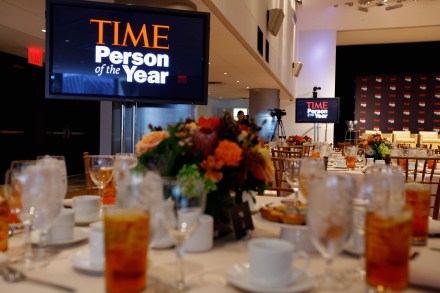
Last week, Time Magazine named ‘The Protestor’ as its Person of the Year. Myself, I'd be tempted to bestow the honorific upon ‘The Islamist’. For, in the spirit of the Time award, it is the Islamists, rather than the revolutionaries, who are now in the ascendancy in the Middle East. Governments in Morocco, Tunisia, Libya and Egypt are all now partly ruled by democratically-elected, if relatively moderate, Islamists. Next year will be about how they manage their newfound power. It will be not about ‘political Islam’, but ‘governmental Islam’. Many wonder if there is such a thing as moderate Islam, and whether all Islamist governments tend towards theocratic rule. Now we are in a position where time will tell.

Turkish anger, French parochialism, British benefit

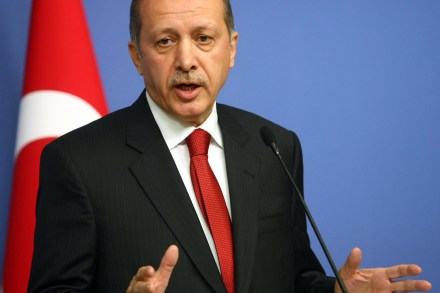
The relationship between Turkey and France — which started with the alliance between Francis I and Suleiman the Magnificent — is in precarious territory following the French Parliament's decision to ban denial of the Armenian Genocide. Turkey's moderate Islamist government has taken as hard a line on the issue as previous Kemalist governments did, and has announced, in response to the French move, that Turkey would halt 'all political consultations, joint military activities and manoeuvres.' Not content with a formal rebuke, Turkish Prime Minister Recep Tayyip Erdogan has sought to make the conflict personal; claiming (falsely) that Sarkozy's father served in Algeria in the 1940s and would have direct knowledge of 'massacres' committed there by French troops.

What didn’t happen in 2011

In the run-up to every New Year, newspapers and the blogosphere are full of articles about what happened in the year just gone. 2011 was a particularly eventful year so there will be much to pick from. But what about the things that did not happen, though they were widely expected? Here are five things that did not take place — though, as the year unfolded, many people would have bet on their occurrence: 1) Algeria's revolution. As one North African dictator after another fell to pro-democracy protesters, everyone expected Algeria to be next. But it wasn't.

Stopping Maliki’s coup

The year is ending not with a successful US withdrawal from Iraq — as President Barack Obama claims — but with what amounts to a coup d'etat by the country's Shiite prime minister (and former ally of the US) Nouri al-Maliki. Less than 24 hours after the last US soldier left Iraq, the country's Sunni vice-president Tareq al-Hashemi was wanted on charges that he led death squads, in a case most observers think could reignite the sectarian slaughter of 2006-07. Violence in Iraq has subsided since 2006-07, when Sunni insurgents and Shiite militiamen killed thousands of civilians each month — but, without U.S. troops to act as a buffer, many Iraqis now fear a return to those days.

Fog around the Falklands

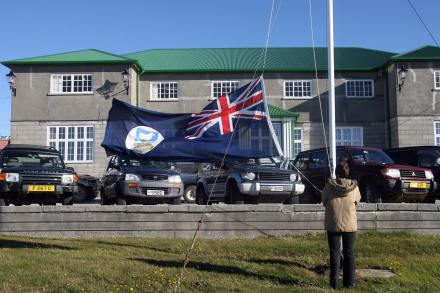
For the populist president of Argentina, Cristina Kirchner, the ban on Falklands-flagged ships agreed by the Mercosur summit in Montevideo is a diplomatic triumph. It comes after a string of similar moves throughout the region aimed at tightening the noose around the Falklands. For example, HMS Gloucester was denied access to Montevideo in 2010 and, in an effort to strengthen Brazilian-Argentinian ties, Brazil did the same when HMS Clyde sought to dock in Rio de Janeiro. In reality, ships from the Falklands can switch flags before they enter any regional ports, but Argentina’s intent is to isolate the islands — and bring fellow South American nations along with them in the process. In which case, the default British response of talking war is beside the point.

Who is the British foreign secretary?

Officially, of course, the answer to that question is William Hague - who has put in some decent work since assuming office, particularly during the Arab Spring. But, still, I ask it because, following the European Council, Nick Clegg seems to have usurped the Foreign Secretary's role in a number of key areas. It was the Deputy Prime Minister who engaged the newly-elected Spanish leader, for example. It was also Clegg, not Hague, who was instrumental in bringing German foreign minister Guido Westerwelle to Britain on a 'we still love you' visit yesterday. And when it comes to phoning European leaders to press a UK position, it is the Deputy Prime Minister who is asked to put in the hours, not the veto-wielding Prime Minister or Britain's chief diplomat.

Whither North Korea after Kim Jong-il’s death?

The photographs and video footage show North Koreans weeping in their hundreds at the news of Kim Jong-il's death. But the departed leader, immortalised by Team America as a song-prone loner, remained a mystery to both his people and outsiders alike.   He came to power after his father, North Korea's founder Kim il Sung, died in 1994. Reliable biographical information about him is scarce. He rarely appeared in public and his voice was seldom broadcast. What's certain is that he spent lavishly on both luxuries and a nuclear programme, while millions of North Koreans starved. Kim Jong-il's death comes at an awkward moment.

Was the PM reasonable?

As the effects of last week's European Council become clear, debate about the rights and wrongs of David Cameron's diplomacy hinge on one question: were his demands ‘reasonable and modestly expressed’, as a source in No 10 put it to me? Everyone knows that there were chronic failures in the run-up to the meeting itself. I laid a few of them out in an earlier post, but, basically, they amount to a failure of prioritisation: the UK eroded the goodwill it needed by fighting tooth-and-nail on every issue beforehand, thereby blocking things that other EU states care about but which are not important, except symbolically, to the British. International — and especially European — cooperation is about give-and-take. It cannot just be take.

The government’s Sarkozy problem (and other euro dilemmas)

This week’s European Council meeting has been analysed by diplomats and commentators alike, but a number of issues have not been brought out as clearly as they need to be. The first is that Britain will now achieve political advantage, at the cost of economic setback, if the euro collapses. Although the government insists both that it is still wedded to the success of the euro and that it will not be isolated in Europe now or in the future, the simple fact is that eurofailure will ensure that efforts to organise among the 26, rather than the full 27, will finish. The economic costs would be considerable — possibly 10 percent of Britain’s GDP — but it would help Britain back into the centre of European decision-making.

What Cameron can do next

What now? That’s the question. This morning it looks not like 17 versus 10, but like 1 versus 26, which is a cold and lonely place for Britain to be. But it is also the right place to be. David Cameron asked for a little and got less. He had to act as he did and will reap the benefit electorally and among his MPs. Labour’s position is not just politically weak, but also unrealistic: it has been clear for weeks it was not possible to run a ‘periphery strategy’ as the 10 states outside the Euro have different incentives to Britain and different long-term aims. And the idea that the last Labour government had better links to the continent is laughable.

What could Cameron have done differently?

It is hard not to see the results of last night’s European meeting as the first step towards a fundamentally different — and much looser — relationship between Britain and the EU. The UK, which for centuries has fought to keep any one power from dominating the continent, and for decades has sought to prevent a two-speed Europe from emerging, is now going to have to accept both. It also seems that it will have to protect itself from some form of fiscally-shaped missile against the City.   The irony is that the PM did not apparently push for any UK-only protection of the City, but a broader protocol such as the one championed here — which Nicolas Sarkozy and Angela Merkel then rejected.

Cameron’s Europlan comes together

The Tory party may not like it, but David Cameron is now finally following a sensible EU policy. As today's summit in Brussels starts, the Prime Minister appears to have decided what really matters to the UK, and realised that he needs to play nice with the Germans and French. At the top of the PM's priority list — a priority voiced by Michael Howard on the Today Programme earlier — is avoiding the collapse of the euro. The consequences of a collapse on Britain's economy are incalculable, but everyone knows they would be profound. Second comes the protection of the City. A Euroland tax on financial transactions would damage the City and thus Britain (as well as the EU) — avoiding it is key.

Russia’s Tahrir?

Just a couple of days after Vladimir Putin's electoral setback, Russian police have arrested a number of protesters, including veteran liberal politician Boris Nemtsov and the popular blogger Alexei Navalny. This is the umpteenth time that Nemtsov, the former deputy prime minister of Russia, has been manhandled by the Russian state. He also spent some time in jail at the beginning of 2011 and was subjected to strenuous treatment. But, it is unusual for Navalny to have been pulled in. He is an activist who's gained prominence among Russian bloggers and reformers. He is not "Russia's Erin Brockovich", as hailed by Time Magazine, and many of his recent remarks contain more than a dollop of Russian xenophobia.

Learning to live with Islamists

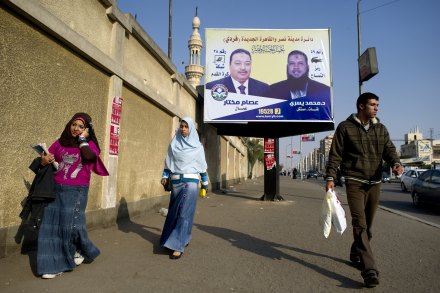
Islamists have won a landslide in Egypt, with the Muslim Brotherhood and the ultra-Conservative Al Nour party winning some 60 per cent of the votes cast. Future rounds of elections may benefit them further, as they take pace in more rural and conservative areas. Their success should be a surprise to nobody. Egypt is a conservative Muslim society. Islamists have been far better organised than the ragtag revolutionaries that ousted Hosni Mubarak, having run million-person charities for decades. They also benefit from being seen as un-corrupt and having been opposed to Mubarak for years. Further, they have been able to run on a simple slogan ‘Islam is the Solution’ without having to demonstrate why.

Behold post-Putin Russia

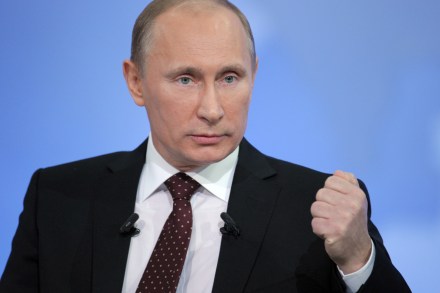
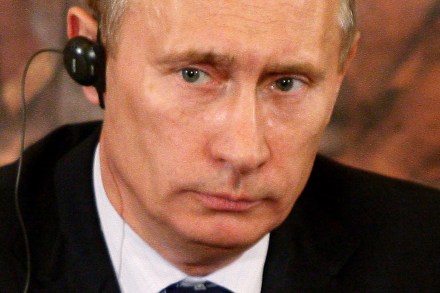
Sunday's parliamentary elections in Russia marked the beginning of the end of the Putin era. It won't feel like it for another few years, as the Russian strongman ascends to the nation's Presidency again and bestrides the international stage. But when future historians come to examine post-Putin Russia, the end of 2011 will be seen as the point at which the transition began. Exit polls showed Prime Minister Vladimir Putin’s United Russia party with less than 50 per cent of the vote. United Russia held a two-thirds majority in the outgoing State Duma.

Sarko’s renaissance

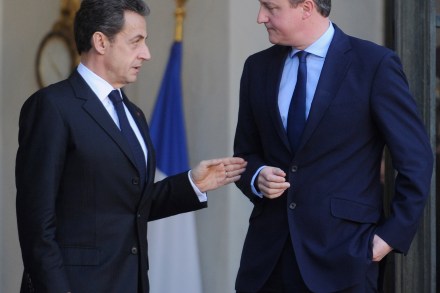
When David Cameron sits down for lunch with Nicolas Sarkozy today, he is bound to ask his host how the presidential election is going. In response, President Sarkozy is likely to break into one his wide-faced smiles, and begin moving about energetically, as he tends to do when he is excited. Forget the polls that put Francois Hollande ahead in a two-way race. It is too early to tell what people really think and, crucially, it won't be a two-person race. It is a five-person, two-round election. And so far, Sarkozy is doing very well. Besides Sarkozy and Hollande, four other candidates could make a difference to the outcome: Marine Le Pen, François Bayrou, Eva Joly and Jean-Luc Mélenchon.

Iran lashes out

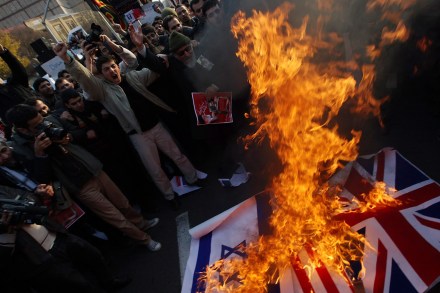
The pressure is piling up on Iran – from below, as people demand greater freedoms; from the region, where Iran is about to lose its one ally, Syria, to a popular revolt; and from the international community, which is tightening the economic sanctions in response to Tehran's illegal nuclear programme. So Iran is hitting out the only way it knows how – through the use of state-sanctioned and illegal violence. They hope to divert attention from the country's problems and internecine struggles, reheating old tropes about Britain as the 'Little Satan' and maintaining the decades-old decolonialisation rhetoric that all the problems of the region can be explained by outside interference.

Meanwhile, in Europe…

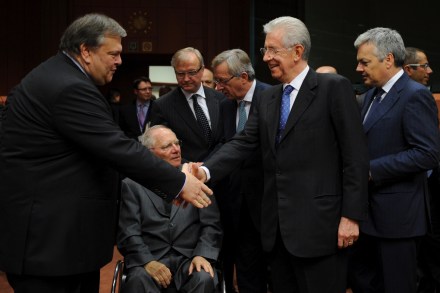
There probably hasn't been a meeting of European finance ministers as important as the one tonight. The euro is still at risk; with new governments in Spain, Italy, and Greece incapable of calming the markets, and Angela Merkel unwilling to let the ECB act. In a speech in Berlin, Polish foreign minister Radek Sikorski put it clearly: ‘I fear German power less than I am beginning to fear German inactivity.’ It is a fear shared in London and Paris as well. The 17 finance ministers will discuss the range of options on the table: from setting up an EU Treasury to the possibility of eurobonds or establishing a supra-national process to monitor national budgets.