Daniel Korski

Gaddafi’s refugee army

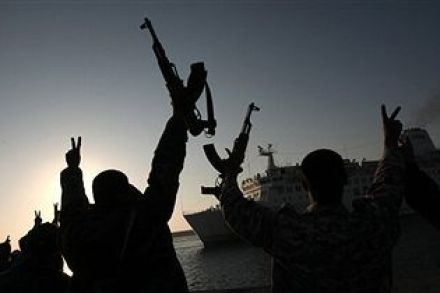
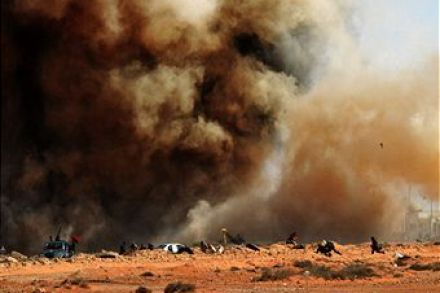
There is one particular question swirling around when it comes to Libya: how brittle is the regime and its military arm? An answer is now slowly emerging, and one that looks like good news for the rebels - if also yet more proof of Gaddafi's depravity. Reuters is running a story about refugees inside Libya, predominantly from sub-Sahara, being detained, beaten and robbed of their identity papers by Libyan soldiers only to be offered money to take up arms against the rebels. Fergo Fevomoye, a 23-year-old refugee who crossed the Libyan-Tunisian border, told Reuters: "They will give you a gun and train you like a soldier. Then you fight the war of Libya. As I am talking to you now there is many blacks in training who say they are going to fight this war.

Goldstone recants

Judge Richard Goldstone has changed his mind. Writing in the Washington Post, he admits that his "fact-finding mission had no evidence" for key allegations made in the UN report into the Gaza war that bears his name, including the claim that Israel intentionally targeted civilians "as a matter of policy." Wow! That's the only possible reaction. The Goldstone report, released on September 15, 2009, concluded that both Israel and Hamas had committed war crimes by intentionally targeting civilians. The committee did not receive information from Israel that would have contradicted these conclusions because the Israeli government refused to cooperate with members of the fact-finding mission.

Lords: government not championing European single market “strongly”

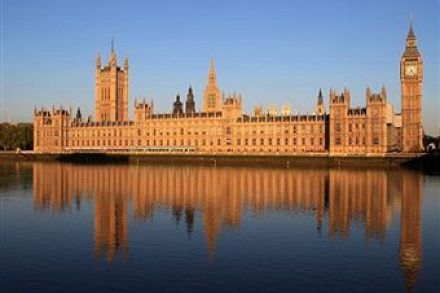
Tucked away in an old building, where few people knows of its existence, lives one of the most important parliamentary creatures - the House of Lords European Union Committee. Often ignored because it applies analysis to a debate where loudness is the main currency, it has produced a new report on the Single Market. The government would do well to read it. For pushing the Single Market should be what animates the Europe Directorate in the Foreign Office. The Single Market is the main reason for British membership of the EU and the committee implies that successive governments, including the Cameron administration, have dropped the ball in this area. As their report puts it, the UK should 'return to its position of strongly championing the Single Market.

Is al Qaeda in Libya?

This is one of the key questions about the Libya intervention. The Libyan Fighting Islamic Group was once one of the largest jihadist groups in the world and many Libyans fought in Iraq. So the fear of al Qaeda's presence in Libya is well-founded. The terrorist network certainly appears to be trying to associate itself with the rebellion, much as the Muslim Brotherhood tried to exploit events at Tahrir Square. But there is very little evidence to fuel concern about Al Qaeda, except for a quote from Admiral James Stavridis, who said that there had been "flickers in the intelligence of potential al Qaeda" and "Hizbollah" involvement. Notice the word "potential".

The pressing need to oust Gaddafi

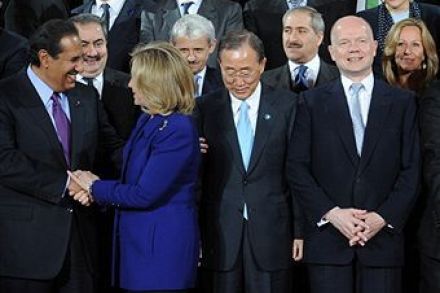
The op-ed by David Cameron and his Qatari counterpart Hamed Bin Jassem in the run-up to the London conference received very little play in the UK media. That's a shame because it set out, anew, the reasons for the Libyan intervention, which are already at risk of being lost in the debate about ways, means and exits. 'Yesterday, reports reached us of fresh attacks on the people of Misurata. Snipers are gunning people down in the street. Food, water and electricity supplies have been cut off. Ghaddafi and his regime are continuing to carry out acts of appalling brutality and cruelty, in clear and flagrant breach of the UN Resolution. That is why we must continue to implement those Resolutions for as long as they are necessary to protect the Libyan people from danger.

How to help the rebels

The lack of weaponry is not the only problem plaguing the Libyan rebel forces. Their disordered retreat reveals that they need training, better organisation and in-theatre liaison and support. From what I saw, the Transitional Council is very well organised politically, but there is a general lack of military cohesion. Youthful volunteers and self-armed families are fighting alongside ex-loyalists. (There also seems to be a significant Muslim Brotherhood/Islamist presence, though the Council has detained a number of Al Qaeda associates.) Communications are poor because the rebels rely on mobile phones, which rarely work on the front. NATO has now taken over the air and naval mission, but it will struggle to be as effective as it was before.

Cairo Diary: The Brotherhood

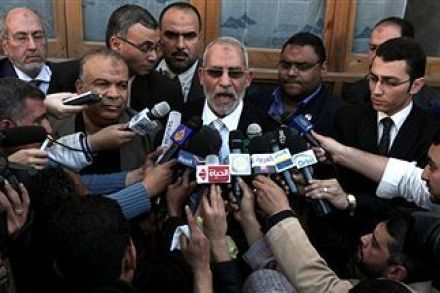
Back in Cairo, I try to find answers to what everyone wants to know. Who are the Muslim Brotherhood? What role will the Muslim Brotherhood play in the future? Even to seasoned observers it seems hard to divine. Their support in the country has never been tested and the constitutional referendum, where the brotherhood was on the winning side, is a poor proxy. What is clear, however, is that they have the organisational muscle the post-Tahrir Square parties lack. And that they are willing to play a long game, rejecting a shot at the presidency for example for fear of a backlash against them. Though some members talk of Turkey's AKP as a model for the brotherhood, they are desperate to avoid the fate of Algeria's Islamists who won an election in the 1990s that was annulled.

Libya diary: Tobruk

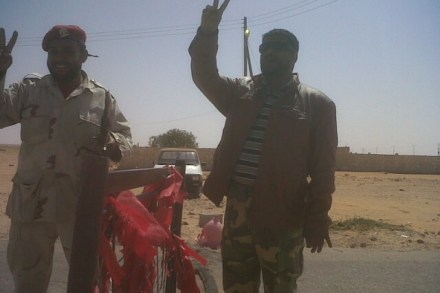
Twelve different checks later and I'm in Free Libya, hurling down the road to Tobruk at 100 mph, with Arabic music blasting away. This place is firmly held rebel territory and most journalists have moved towards the battlefields further west. A pair of beautiful American relief workers tell me just to keep going "to see real action". They've just from Benghazi and are headed back to Egypt. They grab my driver. Tobruk, though, has plenty of action for me; and I need to get back to my programme in Cairo. After all, I'm a think-tanker, not a war correspondent. I stop by the oil refinery which is beginning to run again, as is the pipeline. Next week exports will begin.

Cairo Diary: Libyan transit

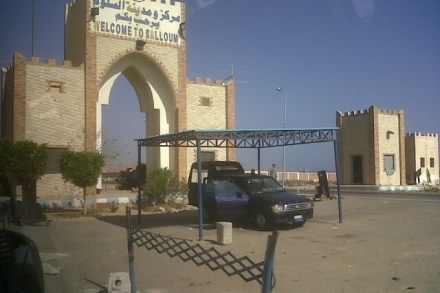
The road from Cairo to Salloum, Egypt's Wild West town on the border with Libya, stretches out into the desert until the patched-up, grey and black cement blurs into the yellow dunes. Throughout the journey, well-kept electricity pylons line the road, while the occasional shepherd looks out from a desolate shed-like house. Otherwise there is nothing to see.  This is the road to war, or away from it. I expected to see more people fleeing the conflict; but at the last roadside café, life seems to be following its normal routine. Bedouin waiters mingle quietly with smugglers, relief workers and the occasional journalist. In the background, President Obama's speech is on TV but only one person is watching. Fava beans with fried liver is the best choice for breakfast.

Cairo Diary: it’s the economy, stupid

Whether revolutions devour their own children often depends on the ability of a post-revolutionary government to deliver political freedom, jobs and services. Egypt is no different. If the economy opens up, then the country's transition to democracy is likely to continue. If not, then anything can happen. So, which will it be? The stock exchange has reopened and is doing better than many expected. The government is bullish about growth, but it is hard to see where it will come from. Tourists, who account for a major part of the economy, are staying at home. Hotels are empty and BA is cancelling flights due to lack of passengers. The uncertainty about Egypt's future economic path is also deterring investors.

Cairo Diary: will Egypt help in Libya?

Nothing would help the international campaign against Colonel Gaddafi as much as the Egyptian military — and therefore Egypt — swinging in behind the UN-authorised effort. It would be one of the few things that would make the Libyan dictator worry and could push fence-sitting loyalists towards the rebel cause. Materially, it could also be important; with the Libyan resistance reluctant to receive Nato help, Egypt could be very helpful as a conduit for weapons, intelligence and even on-the-ground military support. A post-combat mission would also be greatly aided by Egyptian involvement or leadership.

Cairo Diary: curfew

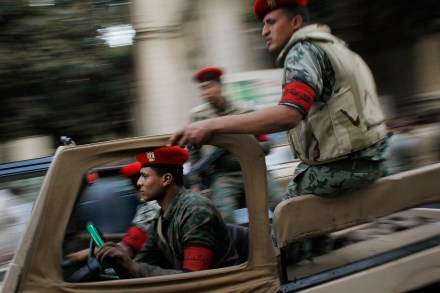
Driving through post-revolution Cairo at night is eerie. The normally busy streets are deserted, most of the city's  squares and roads are blocked by military checkpoints, and dark clad figures slip in and out of the shadows. Breaking the curfew may result in a six month sentence, or worse. Come dawn, however, the city springs to life, looking like it has done for millennia — busy, noisy, lively. This tale of two cities — one cowered, quiet and run by the military, and another that is lively, chaotic and civilian — is perhaps a tale not only of Cairo, but of Egypt in the midst of an ongoing transition. For though Hosni Mubarak has gone, the military underpinnings of his 30-odd year regime are more powerful than ever before.

The government should acknowledge Israeli restraint

With NATO planes circling above Libya, Saudi troops quashing protests in Bahrain, and troops killing civilians in Syria and Yemen, there has been little attention paid to Israel. But Israel has recently been the victim of a series of violent attacks. More than 30 people were injured in a bombing in Jerusalem, and Islamic Jihad's military wing, the Al-Quds Brigade, has fired mortars and rockets into Israel for days on end. The attacks suggest that Hamas is, once again, struggling to rein in other terrorist groups like Islamic Jihad. Some IDF commanders fear a descent into chaos in Gaza. In the face of the onslaught, however, the Israeli government has shown amazing restraint.

The Libyan resistance is on the front foot

The fight between Colonel Gaddafi's forces and the resistance to his rule will clearly take some time, but the rebels have had a good 24 hours.  In Brega, Gaddafi's forces deserted in large numbers, handing 10 vehicles over to rebels. A loyalist brigadier was killed and in Ajdabiya government forces withdrew overnight, while rebels also made progress in Zintan.   The RAF made a key a contribution: its aggressive supported the rebels holding out in Misrata, taking out a number of APCs and a loyalist tank.  Best of all, however, is the news that a Brazilian plastic surgeon has told Gulf News how he took fat out of Colonel Gaddafi's bottom in 1995 to smooth wrinkles in his face, and gave him hair plugs.

Libya has shown the government the virtue of a multilateral approach

The Libya intervention has already turned the international kaleidoscope, showing new and remarkable patterns. It has seen China acquiesce to a no-fly zone, and the West in alliance with the Arab League. Nobody thought that was likely 6 months ago. It has also changed reputations. Nicolas Sarkozy may win re-election on the back of the war. William Hague, who had a bad revolution, is having a good war.   The government has become more multilateralist, as opposed to the kind of bilateralism it espoused when it took office. Nearly a year ago, it sent a clear message to the FCO — bilateral ties would matter, multilateral ties less so.

Libya: next steps

The Libya intervention goes on, with as many question marks hanging over the operation as airplanes in the sky. What is the aim? Who will run it? Can the United States, Britain and France keep allies such as Turkey on board? Behind the scenes, officials are said to be looking at various options, including if and how to support the rebels. But the hand-wringing is now even audible across St James Park. Realistically, the UK should in the first instance work towards establishing a stalemate between loyalists and rebels. From such a stalemate a political process can then begin, which, though it may take many years and continue during the fighting, can help create the foundations for a new Libya.

Ending Cameron’s War

The coalition is now in danger of coming unstuck — not because of failure, but because of its success. It needs to urgently decide how to run itself and what its aims are. Before it runs out of targets. Neither is easy to do. The US may want to handover control of the mission but there is not really anyone they can transfer authority to. NATO is being blocked from assuming control, the EU does not have the wherewithal — its naval mission off Somalia's coast is already run out of Permanent Joint Headquarters in north London — and the UK and France would struggle to run the mission, either jointly or individually.

War aims

A few days into the no-fly zone and the initial aim of the intervention has been achieved: Colonel Ghaddafi no longer controls his own airspace and cannot use airpower for close-air support, intimidation or murder. But success has bred a new problem - what now? Should the coalition turn itself into the airborne wing of the resistance, providing support to a rebel advance on Tripoli? Or should it just continue patrolling the skies above Libya as the rebels fight on? If so, how should the coalition react when the rebels face military set-backs? Should they stand back or prevent Libyan forces from taking advantage of their tactical victories and just have DfiD deliver humanitarian assistance?

Moussa’s mess

Just as the world thought the Arab League had entered adulthood its Secretary-General, Amr Moussa, threw a teenage tantrum, voicing concern that the coalition bombing of Libya went beyond a no-fly zone. He had wanted the protection of civilians, he said, not the bombardment of more civilians. But it is hard to see what Moussa had in mind. Did he want to micromanage operations from his desk, picking targets as Lyndon Johnson did during the Vietnam War? Or is the temptation to play to the Arab gallery too much? Could it be that Moussa's presidential ambitions in Egypt are better served by not being too close to the West? Either way, his behaviour is disappointing.

Come on, NATO, get a move on

NATO's top decision-making body is meeting in emergency session to review military plans for a no-fly zone over Libya. The alliance is expected to issue the order to launch the operation. But the action now is taking place not inside NATO, but in a coalition-of-the-willing led by France and Britain. Germany and Turkey are said to be blocking swift action. For NATO Secretary-General Rasmussen, this should be disconcerting. Only a few months ago, NATO celebrated the agreement of a new strategic blueprint which said: 'NATO has a unique and robust set of political and military capabilities to address the full spectrum of crises  – before, during and after conflicts.