Daniel Korski

Sarko’s bloody Sunday

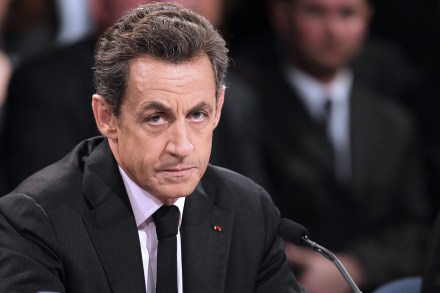
President Nicolas Sarkozy has struck again, forcing the resignation of his dictator-friendly and gaffe-prone foreign minister, Michèle Alliot-Marie, in the hope of shoring up the French government after a terrible couple of weeks. She will be replaced by Defence Minister Alain Juppé, a heavyweight conservative who was prime minister in the 1990s. Speaking to the nation on Sunday, Sarkozy suggested re-launching the Mediterranean Union and called for a meeting of the European Council to discuss Europe's response to the Arab revolutions. Getting European leaders together is a good idea. The scramble by each European country to get their citizens out of Libya could probably have done with a little more coordination.
Keep calm and carry on

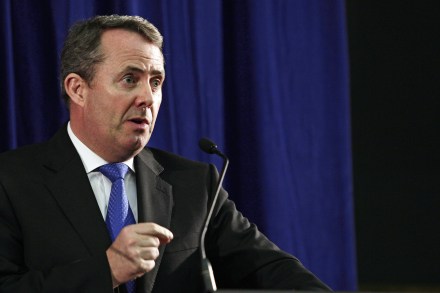
The Libya crisis looked like it would prove the critics of the government's Strategic Defence and Security Review right. Was it not the case that the HMS Cumberland, now seen as crucial for the evacuation of British nationals, would soon be decommissioned. And would the Harriers not prove useful in a potential intervention? Coupled with criticism that the government struggled to handle the evacuation of British nationals, it looked like the makings of a credibility-destroying theme: strategic misjudgement and tactical incompetence. But a week into the crisis, the government's handling of the evacuation – and response to the Libyan crisis overall – looks increasingly surefooted.

The view from the Middle East

I'm in the Middle East, albeit in a revolution-free corner. And from the Royal Meridien hotel in Abu Dhabi it is hard to know what the region is going through. But a number of points have already come through from my conversations. First, there is an obsession about US power. The government-controlled media are busy saying that US influence is waning but every conversation focuses on what the US will or will not do. The US is clearly present ­ and although its power may be changing, it is doing so more slowly than the newspaper headlines would have you believe. The second thing is this: the Middle East will never be the same again. Even if the revolutions fail, or falter, the region is being transformed and no corner, however rich, is immune.

Going for growth

The government says it has a growth strategy. Speaking to the Confederation of British Industry's annual conference last October, the prime minister said his government would adopt a "forensic, relentless focus on growth" in the coming years. The strategy has three elements: creating a framework for enterprise and business investment; directing resources into areas where Britain has a competitive advantage – such as wind technology; and making it easier for new companies and innovations to flourish. But for all this and the denunciation of Gordon Brown's legacy, the coalition still seems to be reading from a core part of Labour's pre-crisis script: businesses are spoken of primarily as agents for social work.

How young Arabs saved the old West

Three months ago the future looked bleak for the West. The countries that once dominated the world, invented capitalism, articulated mankind's universal desire for freedom and defended it against all enemies looked destined for an impoverished future squeezed by the authoritarian capitalists of the East and unsure about the righteousness of its ideological foundation. Even one-time liberals, whose life has been shaped in a struggle for human rights embraced China and its state-backed progress. Now, thanks to the pro-democracy protesters in the Middle East, the West is back. Not that it backed the democratic movements and now stands to reap the benefits.

Why a major reshuffle is unlikely

The clamour for a reshuffle is getting louder. Caroline Spelman is said to be a leading candidate for ejection, following her awful performance over the forestry sell-off. Many also want Ken Clarke's scalp. Party chairman Baroness Warsi has already been the target of gossip, while dissatisfaction with Chief Whip Patrick McLoughlin is palpable. Then there is the desire by Nick Clegg to bring back David Laws, if he is cleared of financial malfeasance.   However, most of the talk of a reshuffle is fuelled by self-serving backbench MPs who lost out of jobs in the coalition negotiations. Those from the 2005 intake feel the 2010 intake breathing down their necks, while older MPs hiss about the "cult of youth".

The Bahraini challenge

The debacle in Bahrain cuts close to the British bone. The Ministry of Defence has helped train at least 100 Bahraini officers and supplied a range of equipment to the Gulf state. Egypt was important because of its regional role and ties to the United States. But there was no link to London, anymore than there was one to Paris or Berlin. Bahrain is different. Only a few months ago, British officials were applauding the Khalifa dynasty for taking steps towards democracy. But the fact is simple: the steps were insufficient – not by British standards, but by Bahraini ones. It should serve as a wake-up call to the Foreign Office and those in government with close ties to Bahrain.

Pillars of Sand

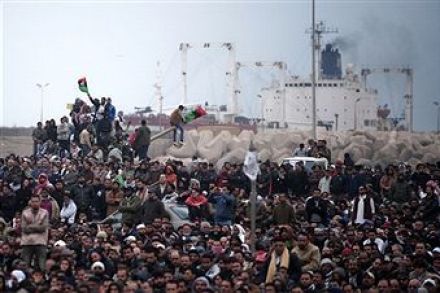
The Middle East is set for renewed displays of public anger towards the region's governments. Events in Bahrain are particularly worrying. Troops took control of the capital, killing at least four protesters in the worst violence in the Gulf kingdom in decades. The trouble in Bahrain, which houses the U.S. Navy's 5th fleet and is home to a large U.S. military base, illustrates a point Ben Judah and I make in a new article: that the three pillars of US post-World War II power in the Middle East - commercial ties, military bases and client states - are crumbling: "A new Middle East is taking shape, buffeted by Pacific trade winds and owing allegiance to more than one power.

It’s time for Britain to go cold turkey

There's a simple truth underlying opposition to spending cuts: the country is drugged up to the eyeballs in entitlements. Today, IDS, Nick Clegg and David Cameron renewed their assault on welfare dependency - the most obvious and damaging of Britain's addictions. The Labour party is broadly supportive, but the coalition's plans were still be met by the predictable criticism that they are regressive. These arguments miss the point. Work is of value; even in good times it must be made to pay. Even if the public finances were in order, reform would be necessary; now that they have collapsed, reform is imperative. Britain cannot afford all those expensive welfare schemes, the purpose of which is to avoid uncomfortable reforms.

Hopeless Harriet

Last night, Harriet Harman launched a pre-emptive attack on the coalition's failure to give 0.7 percent of GNI to overseas aid. Pre-emptive because the government has made no such U-turn - nor is it like to. Much as Tony Blair spoke law-and-order like the Tories, the coalition speaks aid like New Labour - just better. As a result, Labour has nowhere to turn except to warn against "strong voices" in the Tory party who would like to cut DfiD from the Budget. Next Labour will launch a protest against what a mind-reader has told them Tory politicians secretly think. Seriously, though, of course there are such sceptical voices - many of whom are heard here on Coffee House. But these discombobulated voices are equally present among Labour ranks and no more influential.

That Petraeus story

Rumours abound that General David Petraeus will leave his post as commander of NATO forces in Afghanistan. Early editions of The Times quoted Pentagon press secretary Geoff Morrell saying that “General Petraeus is doing a brilliant job but he’s been going virtually non-stop since 9/11 [and] he can’t do it forever”. According to The Times, President Barack Obama and Defense Secretary Robert Gates are searching for a replacement. And, says the newspaper, there has apparently even been talk of Petraeus succeeding Gates as Defense Secretary. Really?

Iran’s turn

Revolutions are exciting when they happen to other leaders. When they target the government you lead, then they become decidedly less appealing. That seems to be Mahmoud Ahmadinejad's view. Only last week the Iranian President told the Egyptian protesters that they had the right to express their own opinions. The Iranian regime's short-sighted glee, however, has quickly turned to fear. And it shows: the regime has unleashed the police onto protesting crowds in Iran, killing one and wounding several. Unlike Hosni Mubarak, Iran's leaders know what it is like to be a revolutionary movement - and they have used their inside knowledge to lethal effect. Like Lenin and Stalin, they have taken revolutionary paranoia into government.

Coffee House interview: Mark Sedwill

Diplomats are often seen as stuffy characters from a different century, men who often appear lost in today’s chaotic world. Nobody could be further from that caricature than Mark Sedwill, the former British ambassador in Kabul and outgoing NATO Senior Civilian Representative to Afghanistan. For more than a year, Sedwill has been, first, General Stanley McChrystal’s right-hand and, more recently, the civilian counterpart to General David Petraeus. Since he took up his ambassadorial post in Kabul, after a stint as Deputy High Commissioner in Pakistan, few Britons have had as much influence on NATO’s strategy as him.

Aid to India to be replaced with pro-growth help

How to manage Britain's aid to India? The fast-rising country has a space programme, costing nearly the same as Britain gives in annual aid. To many people, that is reason enough to cut all aid. Yet, at the same time, India is one of the world's poorest countries. 456 million people live on less than $1.25 per day. Annual income per person is only $1,180, compared to $3,650 in China and $41,370 in the UK. That means there are 20 percent more poor people in India than in sub-Saharan Africa. But India receives only $1.50 in aid per person, compared to $28 for Sub-Saharan Africa. A good example of India's plight is Bihar province, which has population the size of Germany’s.

The World’s Egyptian dilemma

In a few weeks, the World Bank will issue its Development Report, a document of canonical importance to the DfiDs of the world. But the recent events in Egypt will make it useful reading for laymen too. The reason: it shows empirically - having looked at hundreds conflicts in hundred of countries - that young democracies are much more vulnerable to conflict than either mature democracies or authoritarian states. This means that when fostering transition, the international community encounters faces a dilemma: do we push for stability, or do we push for democracy? We may not be able to get both, in the short term. In the long term, democracy is more stable than authoritarian rule. But in the short term, there are sharp trade-offs that have to be confronted.

Egypt becomes freer

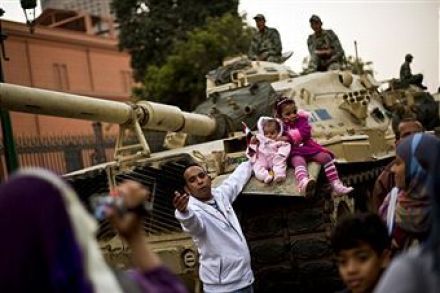
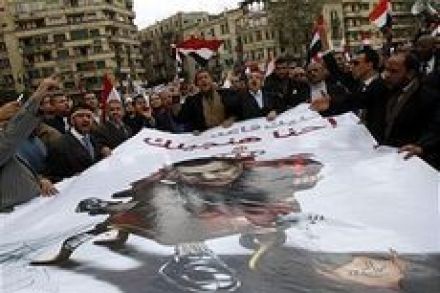
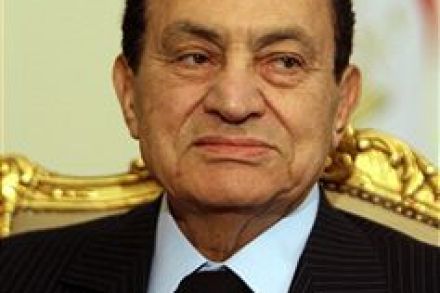
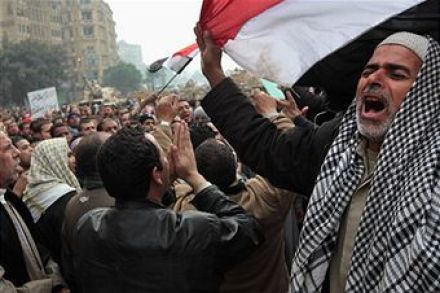
The world does really end with a whimper, not a bang, as T.S. Eliot said. After 31 years in power, seventeen days of protests, more than 300 dead and a shouting match between the US administration and its one-time Egyptian ally, it looks as if Hosni Mubarak will be leaving office tonight. Twitter is atwitter with news that the Egyptian strongman will soon make a TV appearance during which he is expected to hand power to newly-anointed Vice-President Omar Suleiman. Expect Tahrir Square to erupt in a festival of freedom, as the heroic, web-enabled protesters savour their unlikely but amazing victory. But while Egypt’s revolution has been more successful than many in the US and British believed it could be, it is not yet the time to celebrate.

A legion of attacks

Some attacks hurt more than others. And the attack launched by Chris Simpkins, the director-general of the Royal British Legion, on the government's approach to the military covenant will be particularly painful. For it comes after a Defence Review that left few happy, and when the nation is engaged in a war from which many feel the Prime Minister is a bit too keen to withdraw. Speaking to The Times, the Royal Legion chief said plans set out in the Armed Forces Bill requiring the Ministry of Defence to publish an annual report on the unwritten pact between society and the military were not the same as writing it into legislation - something he said the government pledged to do last June.

Hague joins Middle East protests…well, as good as

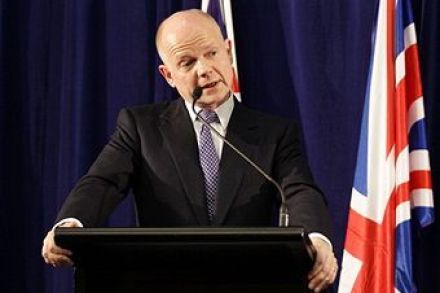
Foreign Secretary William Hague has arrived in Tunisia in order to support to the pro-democracy movement. Unlike his previous visit to Syria, which I think was poorly timed, this one is perfectly-timed. It could even end up looking like George Bush Snr’s visit to Poland in July 1989 when the US president publicly backed the revolutions sweeping across the European continent at the time and gave succour to the pro-democracy movements. Visits like this are so important to help the direction of travel. What people forget now is that in the Eastern Europe of 1989, the history of democracy was as limited as it is today in the Middle East. None of Poland, Romania, Bulgaria or Hungary had any experience of democracy.

Irish to block EU integration

In continental lore, it is Britain that is often seen as the greatest impediment to EU integration. The government's EU Bill initially caused horror in the rest of Europe. Would Britain have to vote for each treaty change, even those needed to enlarge the Union? Before the text of the bill became clear, every self-respecting eurocrat spat the name 'Britain' over their lait russe. Even now, they are not best pleased. But in future it may not be Britain, but Ireland that will block any further EU integration. For Ireland is turning a lot more eurosceptic. The role of the euro in Ireland's decline remains a subject of debate. In eurosceptic circles, there is wilful ignorance of the role played by Ireland's politicians. Much better, it seems, to blame the euro alone.

Democracy is now Halal

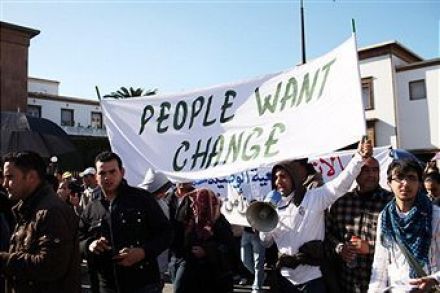
The popular uprisings in Egypt and Tunisia have exposed as nonsense the notion, held in many quarters, that Middle Easterners - be they Arabs, Persians, Muslims and Christians - are uncommonly uninterested in democracy. But as former CIA agent and Middle East expert Reuel Marc Gerecht writes in the New York Times: 'A revulsion against the Iraq war and a distaste for President Bush helped to blind people to the spread of democratic sentiments in the region. It blinded them to the fact that among Middle Easterners, democracy, not dictatorship, was now seen as a better vehicle for economic growth and social justice. Most important, Mr. Bush's distastefulness helped to blind Westerners to the momentous marriage of Islamism and democratic ideas.