Daniel Korski

The winners and losers

In English we have an odd expression: “to have a good war”. The phrase was originally used to describe someone who was decorated or otherwise distinguished themselves, usually during WW II. Allan Massie, for example, wrote that author William Golding “had a good war, first as an ordinary seaman, then as an officer in command of a Landing Craft Tank (Rocket) on D-Day”. Today, newspapers and blogs have been quick to use the phrase for politicians. So David Cameron and Nicolas Sarkozy are said to have had a “good war” over Libya, so far at least, with Barack Obama faring differently. Organisations also have good and bad wars - with their experience either confirming their stature or predicting their demise.

The way to cease fire

Colonel Ghadaffi wants a cease fire. Fine, but Western governments should insist that the no-fly zone still comes into force; that a new UN resolution is drafted to specify cantoment areas for his forces; and that a UN-mandated Arab Leage but NATO-enabled interpositional force is deployed to ensure the ceasefire holds, perhaps with an Egyptian officer as the head working in tandem with the UN and EU envoys to kickstart a political process. Finally, the West should lend massive support to the "free republic" of Benghazi - economic, military and so on. That is the kind of ceasefire the West can accept. Not a ploy that aims to pick the weakest link of the coalition, the United States, away from the policy, but robust action that sees David Cameron's strategy through to the end.

Learning from recent history

With a UN resolution now passed, Prime Minister David Cameron has displayed diplomatic skills his critics believed he did not possess. As NATO is planning to enforce an expansive no-fly zone over Libya, it is worth pausing for a moment to consider such a mission's aims and to learn the lessons from recent wars. The strategic aim of the mission cannot only be to protect Libyan civilians. Framed in this way, the international community will face the same problems it did Bosnia: for instance, the Srebrenica massacre happened while a no-fly zone was already in place. A no-fly zone will not force Colonel Ghadaffi from power.

If we don’t help the Libyan rebels, then the extremists might

The West's indifference towards Libya may create the very conditions for extremism that we normally seek to avoid. In today's Times, the war correspondent Anthony Loyd writes (£) from Benghazi about the dangers of an extremist backlash as the pro-democracy forces become disillusioned with the West: "The growing suspicion and anger towards the West offers an unsettling glimpse of the direction that the country's revolution may take." This has several potential implications inside and outside Libya.

How to deal with Bahrain

If you find yourself on the same side of an issue as Iran, it is wise to think carefully what path you have chosen to walk. Today, an Iranian Foreign Ministry spokesman condemned the foreign military intervention in Bahrain to confront the protests as "unacceptable." To my dismay, I agree with what Tehran says; but, I suspect (and hope), for very different reasons. The grievances driving the Bahraini protests stem from years of discrimination by the Sunni elite of the Shia majority. Evidence of the problem is well-documented. Last year, Amnesty said that the Bahraini authorities had “failed to investigate alleged torture of detainees”.

Meltdown danger

The situation in Japan is deteriorating further. In the early hours of this morning, the last workers are said to have left the Fukushima Daiichi Nuclear Power Plant as the danger of a nuclear meltdown grew. There have been explosions in three of the plant's reactors and a fourth one is on fire. Everyone within a 30 kilometre radius has been told to stay indoors, and the U.S. Navy's 7th Fleet, stationed more than 100 miles away to help earthquake victims, sailed farther away from the stricken plant after detecting unusual levels of radioactivity in the air. The Japanese Prime Minister, Naoto Kan, has confirmed that, "substantial amounts of radiation are leaking in the area".

The coming war with Libya

If the West is not ready to intervene decisively against Colonel Ghadaffi, it needs to get ready for a post-revolutionary Libya, where the dictator and his bloodthirsty family seek revenge on pro-democracy activists and countries like Britain. Think of Ghadaffi's previous record: the Lockerbie bombing, targeted assassinations like in the 1970s, and attacks on US soldiers in Germany. Libya could in future represent a threat to Britain akin to al Qaeda. So, the British government needs to think how it will deal with Ghadaffi MK II. Its policy should draw on past examples of containment and isolation. Libya's neighbours will have to be incentivised to bolster European - and especially Italian - attitudes.

What the Libya crisis means long-term

The multiple crises in North Africa, from the revolution in Tunisia, through the protests in Egypt and to the conflict in Libya, has reinvigorated British foreign policy. In the last couple of years classic international issues have been pushed to the side by a need to focus on economic statecraft. Foreign ministers became less important as finance ministers gained prominence. This will now change, as leaders shift their focus onto the Libya crisis. The UN is again in focus, not the G20. The second change may be on East/West dynamics.

Liberal hawks

From the moment David Cameron started agitating for a no fly-zone, he's been looking for allies. France and Denmark look like they will support him, with Russia and India opposed and China perhaps willing to abstain at the United Nations. But what about closer to home, inside the coalition? Since the formation of the coalition, every policy has been tested by what will it do for relations between the parties? Oddly, however, there has been no such test about Libyan policy. Newspapers have not been writing about splits, differences and agreements. That may be because Lord Ashdown went on the Today Programme and voiced conditional support for a no-fly zone. But the Lib Dem peer has always been a hawk.

The forgotten war

There is a war on. Not in Libya but in Helmand, where nearly 9,000 British troops are fighting. Last year was in fact the deadliest of more than nine years of war for Afghan civilians, the United Nations has just reported. You would not know it, though. For the events in North Africa have almost removed the issue entirely from the newspapers. When Hamid Karzai came through London recently, his visit barely registered. What a change from only half a year ago when every one of his idiosyncratic utterances would be replayed and over-analysed.   This may not be an altogether bad thing. Too much 24-hour coverage can make it a lot harder for people to get on with their jobs. When I was in Iraq, I remember people talking about "Washington time" and "Baghdad time".

Libya has not been Cameron’s finest hour, but it’s not been a disaster

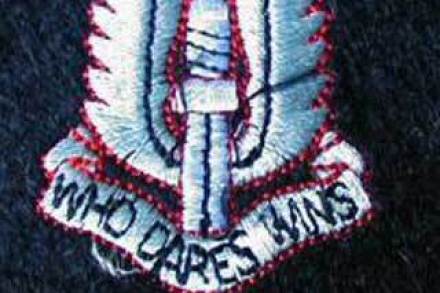
The government has been damaged by its response to the Libyan crisis and the SAS incident in particular. William Hague has been branded a 'serial bungler', and the FCO’s response was condemned as slow and ill-prepared. The consensus is that heads should roll at King Charles Street. Many commentators have also argued that the Prime Minister was too quick to call for a no-fly zone over Libya. Nobody, not even government loyalists, could argue that the last few weeks have been David Cameron’s finest.   However, one can be too critical. Let’s start with the SAS mission. Something obviously went wrong, but it is hard to believe that ministers could have done anything differently. Their job is to set direction, not to micromanage operations.

What were the SAS doing in the eastern desert?

When the official files are opened in 30 years time, we will see what series of decisions led the government to send a helicopter-born SAS team into eastern Libya when they could have sailed in on HMS Cumberland, disguised themselves as reporters or rung up Mustafa Abdel Jalil, Libya’s ex-justice minister who is said to head the “Transitional Government”. But it is easy to see how it happened. The perfectly sensible idea of sending a British emissary to Benghazi to make contacts must have clashed with bureaucratic protocol and the FCO’s duty of care arrangements. “What?” You can just imagine the officials exclaiming to the ministers. “You intend to send a single person to Libya. But what if he got killed? Or hurt?

How to build democracies

Following the events in the Middle East, I have proposed a democracy review of UK bilateral relations and former Europe minister Denis MacShane has suggested that David Cameron set up a Foundation for Democracy Development in the Middle East and North Africa to "provide an all-party source of income, travel grants, and overseas seminars" It would make sense, I think, to do both in succession, starting with the review and then creating a new body that can undertake the work. However, instead of creating a UK-only organisation, the government should build on the links established with Turkey's government and set up a joint endeavour, chaired by William Hague and Ahmet Davatoglu, the Foreign Secretary's counterpart.

A post-Tunisian Foreign Office

The Foreign Office has come in for a lot of criticism lately, following delays in getting Britons out Libya. Some argue that it is all William Hague's fault. Others that the department is unfit for purpose. Both of these views seem a bit unfair. The FCO managed to help Britons in Tunisia and Egypt, and only came up short when the company they had used failed to take off for Libya. True, there should have been a better contract in place – which would give the FCO alternatives – but that hardly translates into systemic failure. True, ministerial divisions between Jeremy Browne, in charge of consular affairs, and Alistair Burt, who runs Middle East policy, did not help. But that's probably inevitable.

Obama backs Cameron on no-fly zone

Everyone knows that a media narrative is a difficult thing to change. So No.10 must be annoyed that so many newspapers, from the Telegraph to the Independent, are suggesting that David Cameron’s response to the Libya crisis has been “embarrassing,” and rejected by the US. But the Prime Minister would do well to stay the course and ignore the media for a number of reasons. First, just because US Defence Secretary Robert Gates is sceptical about a policy does not mean it is wrong. Somehow, the US Defence Secretary’s words are now taken as gospel in the British media and the PM is meant to repent immediately. Why? So what if the Pentagon chief has a view? While Robert Gates is rightly respected, he is not infallible.

Harriet ‘shambolic’ Harman

I've spent ten minutes reading the same passage and still don't understand what it means. It comes from Harriet Harman, quoted in the Independent, criticising the government's Libya strategy: "The response to the terrible events in Libya has been a shambles. The key to their shambolic response lies in their ideology. If your perspective is that government is a bad thing and you want less of it, you're not going to be on the front foot when the power of government is exactly what is needed." Do you get it? Is the Labour MP saying that her party would have harnessed the power of the state, principally the military, and ordered the bombing of Libya?

New World temporarily postponed

We are meant to be living in a multi-polar world, one where US power is waning, and where countries reject the prying interference of the West. Except, erm, we aren't. Today's world looks exactly as it did yesterday. First, many of the 20th century issues people thought would disappear – dictators, repression and democracy – remain as prevalent now as then. The Iraq War has tempered people's appetite for humanitarian interventions without extinguishing it. The key difference seems to be that support is now minimal on the Left and still strong on the neo-con Right. Everyone is also still focused on what the US will or will not do, even in Britain.

Labour shuns aid choices

Government is about choices. In opposition you can like anything, support any measure, back any proposal. But when in office you either make choices or invite dismissal. So when International Development Secretary Andrew Mitchell looked at Britain's development spending he was determined to make choices. Now that he has, some people don't like it. Not one bit. They like choices in general, much as they accept a theoretical form of cuts; but they recoil from real ones. Former Europe Minister Denis MacShane is one of the choice-avoiders. Writing in the New Statesman, he rails about cutting funds to the International Labour Organisation, seeing a Tory plot to undermine trade unionism.

Lessons from wars gone by

As the situation deteriorates in Libya and the international community begins to look at various options, including military ones, policymakers would do well to remember a number of key lessons from the last 15 years of warfare. Like all history, they don't provide a guide to the future, but can be a warning nonetheless. The Bosnian experience of the mid '90s contains four key lessons. The first is that international handwringing costs lives. Many lives. (The same lesson emerges from the post-Gulf War I slaughter of the Kurds and Shia by Saddam Hussein). Wait, and the situation usually gets worse not better. The second lesson is that however great the humanitarian need may be, any military mission must not be framed as a humanitarian one.

British foreign policy needs to promote democracy

After a week of hesitation and well-publicised problems evacuating British citizens from Libya, the government has led the international community's response to the crisis. The decision to move HMS Cumberland into position was astute, as was the authorisation to rescue the people stranded in the dessert. At the UN, British diplomats have been drafting most of the key resolutions and now David Cameron has out-hawked everyone by saying he'd be willing to contemplate a no-fly zone. US lawmakers have asked the Obama administration why they have not been as swift as the UK. As a Bosnian-born friend of mine said last night: "If only David Cameron and William Hague were around in 1992, so many of my friends would have been alive today!