Culture

Culture

The good, the bad and the ugly in books, exhibitions, cinema, TV, dance, music, podcasts and theatre.

When Mr and Mrs Clever-Nasty-and-Rich met Mr and Mrs Thick-Sweet-and-Poor

Theatre

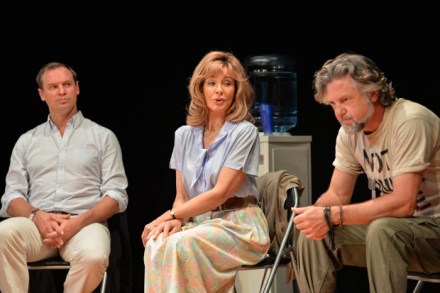
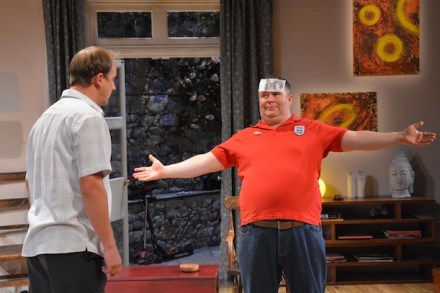
Torben Betts, head boy at Alan Ayckbourn’s unofficial school of apprentices, has written at least a dozen plays I’ve never seen. Invincible, my first encounter with the heir apparent, is a sitcom that pitches London snobs against northern slobs. The script is fascinating because it demonstrates, in concentrated form, the limitations of the Ayckbourn method and the narrowness of his psychological palette. The characters are emanations of tribal prejudices rather than flesh-and-blood human beings. The plot begins with two earnest Islington prigs moving ‘up north’ after losing money in the recession. Where exactly ‘up north’ is unclear but the accents suggest Blackburn. The pair could win prizes for ghastliness. He’s a stammering emotional eunuch.

Richard Bean doesn’t believe in humans – just weasels, snakes, rats and vultures

Theatre

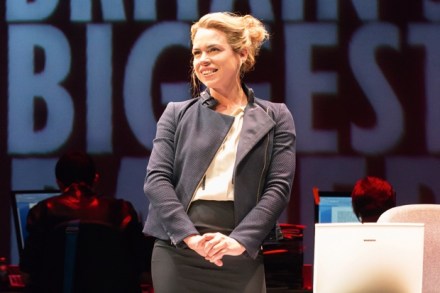
Mr Bean, one of our greatest comic exports, has an alter ego. The second Mr Bean, forename Richard, is the author of One Man, Two Guvnors, which thrilled audiences on both sides of the Atlantic. His latest play, Great Britain, dissects the corruption of power in parliament and beyond. The inevitable comparisons with The Duck House, which mocked the expenses scandal, are a little unfair, since the temperament and the intention of the two shows are vastly different. The Duck House was a delicious slice of theatrical levity about a Home Counties couple drawn into criminality by the culture of parliament. And being a family comedy, it had reserves of emotional warmth that Mr Bean’s scabrous blast of satire entirely lacks.

The sweating, dust-glazed saints at the Hampstead Theatre tells us nothing new about the miners’ strike

Theatre

Hampstead’s new play about the 1984 miners’ strike was nearly defeated by technical glitches. Centre stage in Ed Hall’s production there’s a clanking great iron chute that stubbornly refused to go up and down when ordered. A bit like the miners. The writer, Beth Steel, is a collier’s daughter and she romanticises the pit workers to the point where they seem like an exotic species of humming bird. Brave, high-minded and selfless, these noble sons of toil go marching off to the pithead every day to hack and burrow their way through the depths of hell. Into the elevator they trudge, their shovels resting on their shoulders, their voices uplifted in song.

Fashion Victim – the Musical!: daft camp with a warm heart

Theatre

Fashion Victim — the Musical!. There’s a title that’s been waiting to be used for ages. The Cinema Museum is a frumpy warehouse, tucked away in a Kennington backwater, crammed with big-screen memorabilia. A cobwebby salon fitted with a catwalk serves as the theatre. Charmingly camp Carl Mullaney kicks things off by introducing the cast as if they’re already Hollywood legends. Which they are. In their heads. The storyline is eccentric and a little out of step with the world it seeks to mock. A Canadian wannabe, Mimi Steel, descends on London determined to become a superstar. She seduces a Parisian hunk, Cedric Chevalier, whose list of contacts is sufficiently high-powered to confer success on anyone.

Mark Benton’s Hobson spares us nothing in his journey from rooftop to gutter

Theatre

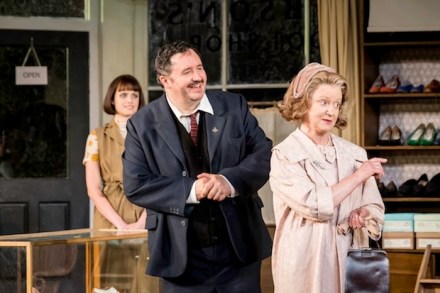
Nice one, Roy. Across the West End secret toasts are being drunk to the England supremo for his exquisitely crafted belly flop in Brazil. A decent run by our boys in the World Cup has the potential to put a nasty dent in the box-office takings. As a welcome home present the lads deserve free tickets to Hobson’s Choice at the Open Air Theatre. The play is one of those dependable classics that directors don’t entirely trust. Few can resist the temptation to give it a tweak or stick it in a time machine. The storyline has the simplicity and boldness of a fairy tale. Hobson, a despotic widower, forces his three daughters to toil in his shoe shop for no wages. His eldest girl, Maggie, persuades a spineless underling, Willie Mossop, to marry her.

Did Turgenev foresee Russia’s Stalinist future?

Theatre

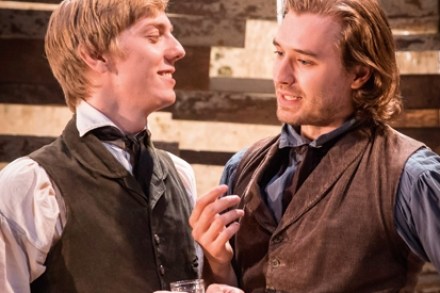
Fans of Chekhov have to endure both feast and famine. Feast because his works are revived everywhere. Famine because he concentrated all his riches in just four great plays that grow stale with repetition. For fresh nourishment we turn to Brian Friel, whose stage adaptations of the short stories go some way to appease our hunger. In 1987, Friel applied his skills to Fathers and Sons, by Turgenev, which is now revived at the Donmar. The magical charm of a Russian estate is superbly conjured by Rob Howell’s set. Slatted timbers and peeling paintwork. Golden shafts of sunlight falling on crimson rugs and scattered wicker baskets.

The Globe’s larf-a-minute Antony and Cleopatra

Theatre

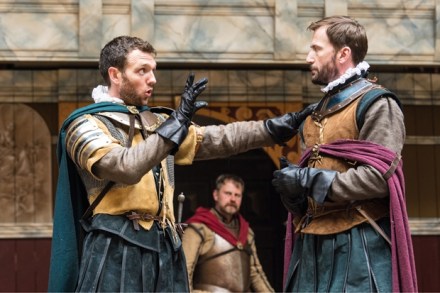
It’s hilarious. It’s also annoying that it’s so hilarious. Jonathan Munby’s earthy and glamorous production of Antony and Cleopatra goes almost too far to please the Globe’s fidgety, giggly crowds. The Egyptian queen is often treated as a female Lear, a trophy role, a lap of honour for a transatlantic facelift as she enters her bus-pass years. But Eve Best is the same age, around 40, as the real thing, and she invests the character with a fine mixture of romanticism, majesty and erotic guile. She also has a strong Home Counties branding. Slender-limbed and deeply tanned, she drifts around her palace in a range of floaty white linen dresses. Her dark-brown hair extensions wouldn’t disgrace a Clairol advert.

When the big-boobed whisky monster met the upper-class snoot

Theatre

Lionel is a king of the New York art scene. An internationally renowned connoisseur, he travels the world creating and destroying fortunes. He anoints a masterpiece, here. He defenestrates a forgery, there. He visits the Californian city of Bakersfield (code in America for Nowheresville) to determine the authenticity of a Jackson Pollock bought for three bucks in a garage sale by an unemployed drunk named Maude. This is a great set-up. Power meets destitution. Sophistication frowns at simplicity. Wealth hits the dirt-heap. It’s enormous fun, too. As the impeccably tailored Lionel walks into Maude’s cluttered hovel, he’s attacked by two ravening Alsatians. She offers him a whisky ‘to take the edge off’. ‘I’d rather keep the edge on.

Joan Littlewood has a lot to answer for – but Fings Ain’t With They Used T’Be’ makes up for it

Theatre

Joan Littlewood’s greatest disservice to the theatre was to champion ‘the right to fail’, which encouraged writers and directors to inflict a thousand shades of bilge on play-goers for many decades. But she deserves a place in the pantheon for an inspired decision taken in 1959. Offered a new play about Soho’s underworld, written by the ex-con Frank Norman, she invited a young pop composer to turn it into a larky musical. Fings Ain’t Wot They Used T’Be opened at Littlewood’s East End lair and transferred to the Garrick where it ran for nearly 900 performances. The young composer was Lionel Bart.

Memo to Nick Payne: filling your plays with cosmic chit-chat doesn’t make you intelligent

Theatre

How do you write a play? Here’s one theory. Put a guy up a tree, throw rocks at him, get him down again. It’s a good working template. Nick Payne’s latest script, Incognito, uses a different scheme. You put 21 guys up a tree, set them jabbering for 90 minutes and then go home. This cumbersome structure is greatly damaged by the decision to hire just four actors to play all 21 characters. And the locations, covering six decades, leap so often between Britain and America as to induce dizziness and possibly vomiting. There are no changes of costume, or set, to indicate where you are. You just have to guess. One storyline involves a camp young Brit with chronic amnesia. Another traces a Scottish physicist who is turning, rather grandly, into a lesbian.

The Silver Tassie: a lavish, experimental muddle that slithers into a coma

Theatre

The Silver Tassie is the major opening at the Lyttelton this spring. Sean O’Casey’s rarely staged play introduces us to a group of Dublin sportsmen, and their womenfolk, as they prepare to volunteer for service on the Western Front. They parade the ‘silver tassie’, a newly won football trophy, mistakenly believing it to presage victory and good fortune. O’Casey’s characterisation is a little perfunctory. The men are boastful studs, quailing dolts, blarneying drunks or violent despots. The women aren’t much better: a weeping mum, a caustic shrew, a battered martyr, a snooty beauty. It may sound colourful but the storyline develops at the pace of tree rings.

Everyone should see this pious anti-war monologue – seriously

Theatre

Off to the Gate for a special treat: a pious anti-war monologue from the prize-winning American George Brant. Curtain up. And within seconds all my preachy prejudices have fallen apart. The speaker is a female pilot in a jump suit sealed within a see-through cage. Slaying men is her vocation. Interesting! The story moves with amazing deftness and clarity. She flies missions over Iraq. Loves it. The speed, the jeopardy, the power, the solitude. ‘The blue’ is her term for her intoxicating and deadly haven in the skies. Home on leave, she hits the bars. A one-night stand. She likes the guy. Back in Iraq, she’s pregnant. Skypes him. He weeps with joy. She’s honourably discharged. Back home, they marry. A daughter arrives. She’s settled and fulfilled.

The Guardian didn’t much like Noel Coward’s Relative Values – but you will

Theatre

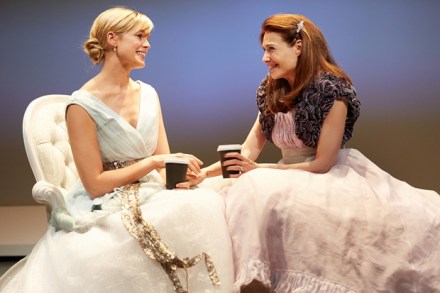
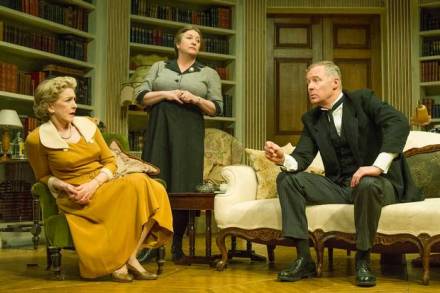
Cripes. How did I get that one wrong? A few issues back I blithely predicted that Harry Hill’s musical I Can’t Sing would run for three years. It closes this month, so I’m a little reluctant to praise another glittering comedy, Relative Values by Noël Coward, which, like Hill’s stricken satire, has received a few snubs from the critics. In his early dramas, Coward portrayed servants as amiable bunglers or bossy cynics and he rarely gave them more than one wisecrack per act. In Hay Fever, for example, the leading lady can’t even recall the housekeeper’s name, and her forgetfulness is supposed to be funny and attractive. Relative Values dates from 1951, when domestic service was in decline and social divisions were being steam-rollered flat.

The real original kitchen-sink drama

Theatre

Rewrite the history books! Tradition tells us that kitchen-sink drama began in 1956 with Look Back in Anger. A season of lost classics at the White Bear Theatre has unearthed a gritty below-stairs play that predates John Osborne’s breakthrough by five years. Women of Twilight by Sylvia Rayman (which has transferred to the Pleasance) was a thumping West End hit in the early 1950s. It spawned several touring productions, one of which featured the young June Whitfield. When the script was filmed in 1952 it became the first British feature to attract the enticing ‘X’ certificate (over 18s only). The setting is a lodging house in Hampstead where unmarried mothers are crammed together, three to a room.

Another Country could almost be a YouTube advert for Eton

Theatre

Another Country was an instant response to Anthony Blunt’s exposure in 1979 as a Marxist spy. Julian Mitchell set out to explain how gay public-school toffs, reared in a system of hypocrisy and backstabbing, could betray their country. At a time when Soviet communism was a potent and growing menace, this issue grabbed play-goers by the throat. Today’s audiences will find different sources of topicality. The school system itself seems rather admirable and idyllic, if a little rough around the edges. The play could almost be a YouTube advert for Eton. All that’s missing is the ethnic kaleidoscope. There are no Indian or Chinese pupils, no Sikh bodyguards patrolling the grounds, no Filipino food-tasters tentatively sipping the turtle broth of a Saudi dauphin.

Beware of Banksy: his art can make you homeless

Theatre

You may not have heard of Goldie. He’s an actor and singer whose name refers to the bullion with which a cosmetic mason has decorated his incisors. A recent James Bond also featured a glimpse of the Fort Knox gnashers, and they’re currently on display at Stratford East in Roy Williams’s new drama Kingston 14. Goldie, and his high-value gob, plays a Jamaican gangster named Joker suspected of murdering a British businessman. Curtain up and a small riot is in progress inside the cop shop as Joker gets hauled in for questioning by a gang of jumpy detectives. A great deal of comic kerfuffle ensues. A British detective arrives from London to help with the investigation.

Simon Cowell’s latest attempt at global domination

Theatre

I Can’t Sing! is a parody of The X Factor, which already parodies itself at every turn. Quite a tough call. The heroine is an oppressed no-hoper stuck in a tiny caravan under the Westway with her crippled dad who lives in an iron lung. She longs for a chance to win stardom and wealth on a TV talent show. So this is the Cinderella story with a lot of grotesque and absurd modern detailing. Is it good? No. It’s spectacularly brilliant. A hit musical needs to get everything right and this one does just that. The sets are lavish and sumptuous. The costumes are razor-sharp parodies of underclass loser-wear. The title song has a soaring climax that tugs at the heart-strings and fills the spirit with strange and unexpected yearnings. Some reviewers have found the show cruel.

Where’s a goofy, flat-chested shrew when you need one?

Theatre

Ray Cooney, the master of farce, is back. These days he’s in the modest Menier rather than the wonderful West End. His 1984 caper, Two Into One, opens with Richard, a starchy Tory minister, plotting an affair with a sexy blonde researcher, Jennifer. Richard decides to attempt a daring double bluff by booking Jennifer into a hotel in Westminster where his gullible wife Pamela is already installed for the weekend. Pamela meanwhile starts an indiscretion with Richard’s bungling junior, George, but their dalliance is compromised when Jennifer’s husband Ted turns up and is mistaken for George’s ‘boyfriend’, whom George has invented to conceal his affair with Pamela. Improbable? You bet.

A gaggle of husbands and a pair of piglets

Theatre

Here’s a great idea for a play. Turn the polygamy principle upside-down and you get a female egoist presiding over a harem of warring husbands. Sharmila Chauhan’s drama, The Husbands, introduces us to a pioneering sex maniac, Aya, who founds a commune in India where women take as many spouses as they fancy. Aya herself has three blokes on the go and is about to get married again.  Curtain up and we meet her pre-existing husbands, Sem and Omar, who get along together very nicely. Both are childishly besotted with Aya. Which is also nice. Anticipating the arrival of husband number three, the hubbies quietly vacate the bedroom and start preparing a wedding feast. Lovely. For the characters, at least.

If you’re going to adapt a bestseller, don’t choose the A-Z

Theatre

What’s the quickest way to create a hit musical? Base it on a bestselling book. The writers of The A-Z of Mrs P have done just that. But they’ve chosen the wrong book. You twits. You need to pick a popular novel, not the London street directory. The main character, Phyllis Pearsall, spent years trudging the pavements of the capital creating her catalogue of 23,000 streets. In this show, the character of Mrs P, a posh and self-contained bumpkin, proves dramatically inert. The writers seem to have twigged that she’s a dud, so they’ve turned their attention to her uppity Hungarian father and his sozzled Irish wife. But these two yield no rewards either. He’s a shouty nuisance and she’s a whimpering wreck.

Rape, porn and Cheesy Wotsits

Theatre

Interesting times at Soho Theatre. One of its outstanding shows of last year, Fleabag, was an offbeat Gothic love story written by and starring Phoebe Waller-Bridge. The director of Fleabag, Vicky Jones, has penned another offbeat Gothic love story. And it stars Waller-Bridge. The action plunges us into the weird, manipulative love life of beautiful Jo and her slick older lover Harry. Up goes the curtain and they’re copulating to porn while sharing a bag of Cheesy Wotsits. Harry’s old flame Kerry bursts in and announces that she’s been raped. Harry and Jo console her, rather perfunctorily, and then use her distress to start swapping cynical, sneering accusations about their own relationship. Already, the audience is gripped.

Superior Donuts – a very irritating success

Theatre

Tracy Letts, of the Chicago company Steppenwolf, has written one of the best plays of the past ten years. August: Osage County is an exhilarating, multilayered family drama whose sweep and power amazed everyone who saw it on stage. His 2008 play, Superior Donuts, has a smaller, cosier canvas. We’re on the north side of Chicago in a doughnut bar run by an ageing hippie named Arthur. Yes, doughnuts. In a world seized with dietary paranoia, this long-haired old dreamer is trying to peddle wheat-based, starch-ridden, gluten-crammed, sugar-encrusted spheres of death. That’s Arthur in shorthand, stodgy and moribund. His donkeyish life is perked up by the arrival of Franco, a chatty young black dude, who needs a job and a publisher for his novel.

Brave Tommies and dim earls — Oh What a Lovely War is hoity-toity reductionism

Theatre

Here it is. Fifty years late. Oh What a Lovely War was originally staged at Stratford East in 1964. It returns to its birthplace to cash in on this year’s anniversary of the Great War. Sorry, I meant commemorate. The title is so familiar that one overlooks its callow, misanthropic glibness. Does anyone think war ‘lovely’? The show’s narrator sprints through the causes of the conflict, and its chief battles, without offering any historical insight. Music-hall songs and comedy stereotypes trundle past on a conveyor belt of laughter and slaughter. The show was inspired by angry dogmatist Joan Littlewood, who wanted to sock it to R.C. Sherriff for writing a hit play, Journey’s End, that overlooked working-class infantrymen.

Putin: ‘Oi, Europe, you’re a bunch of poofs’

Theatre

Sochi 2014 is the least wintry Winter Olympics ever. Yes, there’s a bit of downhill shimmying going on in the slalom. And a few figure skaters are pirouetting around the rink. Midair daredevils, with their feet lashed to planks of bendy plastic, are performing spectacular twirls and somersaults and crashes. And there are speed freaks on tea trays racing down ice-packed gulleys in tribute to the Hadron Collider. But the real action is off-piste and off-chute. It’s a political grudge match. Two implacable foes are angrily denouncing each other as shameful and perverted barbarians. The Hope Theatre’s verbatim drama, Sochi 2014, taps into this febrile mood with a documentary history of gay Russia since the collapse of the Soviet empire. At first all was rosy.

A World Elsewhere hints it’s about Bill Clinton. But it’s about Al Gore

Theatre

Why, oh why, the producers ask, are the national press so reluctant to cover the London fringe? The snag is that a national paper has to justify a report about a play produced in a Deptford yoga studio, or in a Wandsworth priest hole, to readers living in Liskeard, Inverness, Great Yarmouth and Carlisle. Rather than changing the habits of the newspapers, the producers might change the way they select plays. A few years ago, a modest little venue in Hoxton mounted a satire called The Death of Margaret Thatcher. The national papers dispatched their finest critics and they were joined by political commentators from around the world. The play was rubbish, alas, but as a piece of publicity it remains unsurpassed. Theatre 503 in Battersea seeks to emulate this ploy.

Sam Mendes’s King Lear is a must-see for masochists

Theatre

Directors appear to have two design options when approaching a Shakespeare tragedy. Woodstock or jackboot. Woodstock means papal robes, shoulder-length hair and silver Excaliburs gleaming from jewelled belts. Jackboot means pistols, berets, holsters and submachine-guns. Sam Mendes sticks the jackboot into King Lear in an attempt to find ‘a modern understanding of the story’, as he puts it. What this ‘modern understanding’ reveals is that Shakespeare’s opening scene allows the dramatic focus to move between the personal and the political with invisible fluency. Mendes destroys this asset by laying on a televised show trial. Lear’s daughters, surrounded by scowling commandos, are arraigned at miked-up tables as if accused of treason.

If you can figure out the mind-boggling plot of Ciphers — join Mensa

Theatre

Here’s a heartwarming tale from the London fringe. A company named Above the Stag was merrily plying its trade at a small pub attic in Victoria. Then in March 2012 a bulldozer squashed the pub flat. In its place rose a glittering steel tower full of geeks, screens, beeps and loot. Undeterred by demolition trucks and by dollar-gobbling speculators, Above the Stag began searching for a new arena. After a difficult year cadging empty spaces from nearby theatres, the company has now found a permanent home beneath a Vauxhall archway. Good news: London’s theatreland is expanding even when freeholders are literally whipping the land from under its feet.

The Thomas Cromwell plays would be stronger if they made him weaker 

Theatre

Three things you might not expect of the RSC’s adaptation of Hilary Mantel’s Tudor novels. First, Mike Poulton’s plays have some great jokes. Laugh-your-head-off funny, you might say. Second, although Tom, Dick and Mary tell me they found Mantel’s Bring Up the Bodies a more enjoyable read, Wolf Hall is the better play. Finally, the reinvention of the brutal Thomas Cromwell as someone you would have liked is, in the plays, a source of weakness as much as strength. Not that these are weak plays: six hours is a long time to spend on a theatre seat, yet I would happily see these plays back-to-back again tomorrow.

The play to watch if your country is breaking up

Theatre

Of all the West End’s unloved venues the loveliest is the Arts Theatre. It specialises in creaky off-beat plays like Only Our Own by Ann Henning Jocelyn. We’re in Connemara, in the west of Ireland, in the early 1990s. A family of Anglo–Irish toffs are struggling to cope with their status as universal pariahs. Wherever they go they’re out of place. Catholic Ireland resents them. In England, their spiritual home, they feel like aliens. Titania, a narky teenager, is baffled by her parents’ religious prejudices and she merrily announces her involvement with a boozy local bumpkin. He’s Catholic, naturally. This prompts a bombshell of a speech from Titania’s grandmother, Lady Eliza, who witnessed a village insurrection in 1922 when she was just 11.