Culture

Culture

The good, the bad and the ugly in books, exhibitions, cinema, TV, dance, music, podcasts and theatre.

The Duck House is the best show in the West End

Theatre

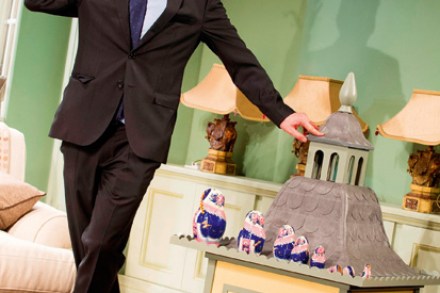
It’s taken me a few months to catch up with the political farce The Duck House. Then again, it’s taken The Duck House a few years to catch up with the expenses scandal that it mocks. The story is set in the half-forgotten era of 2009. Robert Houston, a glib New Labour high-flier, is planning to defect to the Conservatives on the eve of the general election. His scheme, which is a little hard to decipher, is to stand for the Tories in his safe Labour seat and to persuade his Labour supporters to join him in a mass conversion to Conservatism. Having pulled off this piece of electoral magic, he expects to land a plum job in the cabinet as soon as Cameron is returned to power.

Get tickets for Emil and the Detectives, and opera glasses — some of the child actors are tiny

Theatre

It starts with a brilliant joke. We’re in the Weimar Republic in 1929. Little Emil Tischbein is listening to his mother and a moaning neighbour, Mrs Wirth, lamenting Germany’s loss of moral fibre. Mrs Wirth cites a recent gangster film whose depravity shocked her to the core. ‘We saw it three times,’ she adds.  Forewarned about thieves and hoodlums, Emil travels to Berlin carrying a precious cargo of 140 marks. A sinister stranger robs him on the train and he befriends a gang of Berlin school-kids who set off to retrieve his cash. Erich Kästner’s classic is directed with great style by Bijan Sheibani, who captures much of the book’s verve and atmosphere.

Jude Law’s Henry V is a buccaneer leading a stag-night raid across the continent — but he’d be a great Macbeth

Theatre

Henry V is the final show in Michael Grandage’s first West End season. The theatre was full to bursting on press night. Jude Law, in the title role, had attracted a crowd of autograph hunters, who shivered outside the stage door. One was a tall, chubby young man in loose grey clothes wearing a bobble hat and a very kindly grin. His flies were undone. The play itself is a disjointed, rambling affair. Poorly shaped, and even a little artless, it’s crowded with fights, bloodshed and laddish humour. The scenes of brutality are offset by soaring passages of patriotic verse that have been quoted into overfamiliarity. There was much coughing and guttural distraction throughout the performance. Grandage aims for handsome, elegant informality and here he scores full marks.

How to get your child hooked on theatre (hint: don’t rule out Peppa Pig)

Theatre

I remember my first trip to the theatre. I was about eight, and I got hit in the face by a finger of fudge thrown from the stage by a particularly overzealous am-dram Widow Twankey. It was an inauspicious start to what would become a lifelong passion. Despite the confectionary-based assault, I’m now a theatre writer; and, fortunately, my wife is a theatre lover, too. When we had our son, we agreed that it was important he should experience the theatre from early on, and I began mentally planning his first visit, determined for it to be more enjoyable than mine. But when would be the right time to take him? And what sort of production should we take him to?

You can’t have Mojo and your money back

Theatre

In 1992 Quentin Tarentino gave us Reservoir Dogs. At a stroke he reinvented the gangster genre and turned it into a comedy of manners with a deadly undertow. This new mutation looked as if it might be easy to copy. Many tried. Among them was Jez Butterworth, whose 1995 play Mojo takes Tarantino’s zany-macabre format and moves it to Soho in the 1950s. Butterworth also leans heavily on Pinter. The play opens in the back-office of a nightclub. Two pilled-up criminals are exchanging streams of lairy London chit-chat. Their boss, Ezra, has discovered a teenage heart-throb named Silver Johnny but rival gangsters are keen to muscle in and grab a piece of the star’s income. The details are hard to follow because the jabbering thugs leap so fast from one topic to the next.

Ben Miller interview: ‘Everyone was doing alternative comedy. I thought I’d distinguish myself by just telling jokes’

Theatre

Ben Miller is wolfing down a pizza. I meet the comedian in a Cambridge restaurant where he demolishes a Margherita shortly before racing off to appear on stage in The Duck House, a new farce about corrupt MPs. The show is set in 2009. Miller stars as a Labour backbencher who wants to jump ship and join the Conservatives. But first he has to convince a Tory bigwig that his expenses claims are entirely legitimate. He’s not helped by his dim-witted wife, his corrupt Russian cleaner, and his anarchist son, Seb, who has sublet the family flat in Kensington to a suicidal Goth. The writers Dan Patterson and Colin Swash wanted to stage the play just before the 2010 election. Miller believes this would have been premature.

Martin Shaw’s flaws make him perfect for Twelve Angry Men

Theatre

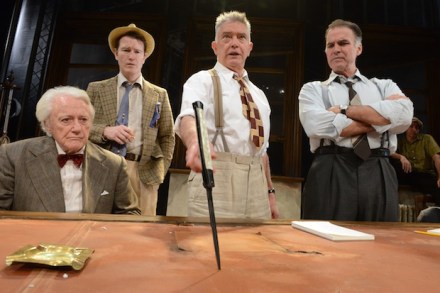
Strange actor, Martin Shaw. He’s got all the right equipment for major stardom: a handsome and complicated face, a languid sexiness, a decent physique and a magnificent throbbing voice. He sounds like a lion feeling peckish in mid-afternoon. At top volume, his growl could dislodge chimney pots. And yet he’s just a steady-eddy TV performer who does the odd stint in the West End. Why isn’t he Patrick Stewart or Anthony Hopkins? Perhaps his rhythm is too slow. Certainly, he lacks pep or sparkle, or a sense of mystery. You know what he’s going to do next because he’s just done it. And even then it wasn’t much. Warmth, innocence and fun are outside his range but these defects make him a great choice to play the central role in Twelve Angry Men.

Finally — a play about insomnia that cures insomnia

Theatre

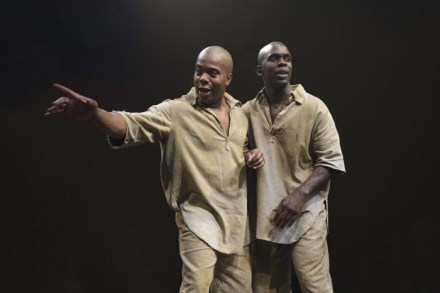
Athol Fugard is regarded as a theatrical titan but I usually need a microscope to find any trace of greatness in his work. The Island is set in a South African prison camp in the 1960s. Two banged-up lags, John and Winston, are toiling in the noonday heat. The governor torments them with a Kafka-esque prank. They’re placed at opposite ends of a sandpit and given shovels and wheelbarrows. Each must amass a dune of gravel, which his colleague is forced to deplete. This backbreaking futility is supposed to grind their spirits into nothing. It fails. Released from punishment at sundown, they retreat to their cells where they express themselves with abandon. They amuse each other with frolicsome monologues. They swap reminiscences about good old chums from home.

The sickeningly talented Johnny Flynn

Theatre

‘I am walking in some mountains’. That’s the out-of-office that pops up when I email Johnny Flynn to request an interview. The folk star and West End actor is on holiday. But he’s not doing the Three Peaks Challenge. No, he’s tracing St Paul’s third missionary journey across southern Turkey, a 30th birthday present from Bea, his wife and teenage sweetheart. ‘I’m obsessed with pilgrimages,’ Flynn says. He’s also done the Way of St James, which finishes in Santiago de Compostela. ‘I love following old routes, imagining the consciousness of those who walked them.’ When he’s come down from the mountains we sit down to talk about the recent release of his third album, Country Mile.

‘Keeler’ is not just about Tory bigwigs chasing nymphettes around the pool

Theatre

It’s an unlovely venue, for sure. Charing Cross Theatre, underneath the arches, likes to welcome vagrant plays that can’t find a home elsewhere. The dripping exterior, opposite a gay love-hub named Heaven, feels as if it’s paved with tears. The foyer is scented with mildewed chip fat and the ink-black auditorium looks like a closed-down fleapit from the 1950s. Perhaps this air of neglect explains why few of its productions win rave reviews. Keeler, starring Paul Nicholas, got an unfair monstering. The play is an absorbing docudrama, which explores the relationship between Stephen Ward and his protégée Christine Keeler. Their flatshare was a complex and unusual set-up. Ward was multitalented, socially ambitious, intelligent, charming and articulate.

British empire? What British empire?

Theatre

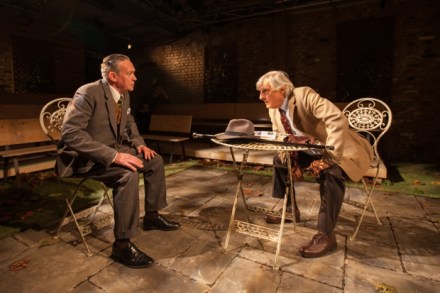
Here’s a tip for play-goers. When the curtain goes up on a garden, prepare for some feeble plotting. The glory of gardens, for the playwright, is that the characters can enter and leave without reason. The rites of welcome and valediction, the physical opening and shutting of doors, the declaration of motive are all abandoned. Anyone can wander in and out of a backyard. But that freedom of action is denied to a character who enters, say, a palace or a travel agents or a bedroom. Shaw is fond of gardens. Ayckbourn quite likes them too. Shakespeare used them more than once (but he’s forgiven) and David Storey sets his 1970 classic Home in a garden where two elderly bores bump into each other on a warm autumn day. They seem to be acquainted.

David Tennant plays Richard II like a casual hippie

Theatre

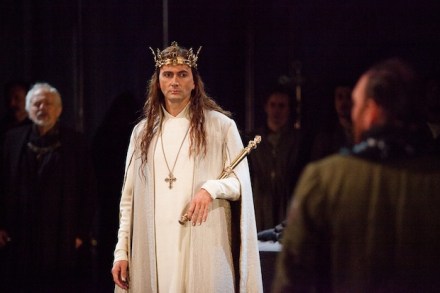
Gregory Doran, now in command at Stratford in succession to Sir Michael Boyd, launches his regime with Richard II, intending to stage the complete Shakespearean canon over the next six years, ‘making every play an event’. What’s really good is that the plays will also be seen on tour, in London, online and ‘live on screen in cinemas and classrooms nationwide’. It’s taken too long for the publically funded RSC to put live ‘streaming’ in place; Richard II, broadcast on 13 November, will be the first play so honoured. With David Tennant in the title role this may already be a sell-out, but encore screenings are already planned in many cinemas.

Toffs rule! 

Theatre

This is a strange one. Simon Paisley Day’s new play feels like a conventional comedy of manners. Three couples pitch up at a Welsh cottage for a relaxing weekend away from the kiddies. Trouble erupts instantly. Keith and Briony bicker over the milk that the swollen-breasted Briony has to express into plastic bottles. Keith secretly craves his wife’s ‘liquid love’ and he tiptoes around the cottage trying to glug it back without being spotted by the others. Ross and Rosy arrive. They’re an achingly smug yuppie twosome. They finish each other’s sentences. They tee up each other’s anecdotes. They stand in the kitchen entwined in each other’s arms and gaze out at their friends like kittens on a Christmas card.

The Light Princess badly needs a mission

Theatre

There are many pleasures in The Light Princess, a new musical by Tori Amos. George MacDonald’s fairy story introduces us to a beautiful red-haired royal, Althea (Rosalie Craig), who has a mysterious resistance to gravity. After various tribulations she abandons life on dry land and becomes a mermaid. The show meets these technical challenges with some brilliance. Althea seems to float mysteriously across the stage in midair while being supported on the limbs of black-clad gymnasts. Later she moves to a lake, which is suggested by intricate layers of shimmering blue cloth. But despite the sumptuous and ingenious special effects, the show hasn’t a powerful enough storyline or sufficient character interest to become a hit. The engine-room is absent.

Did gay Conservatives have it easier in the past? Tory Boyz makes me think they did

Theatre

Bang! The race is on. James Graham is the celebrated author of This House, a superb examination of Labour’s administrative bellyflops during the 1970s, which premièred at the National last year. Some time ago, Graham was asked to update his 2008 play, Tory Boyz, about homosexuality in the Conservative party. Over the same period, the Tories have been furiously updating themselves. Who will embrace the future first? Graham’s play is a blend of then and now. He imagines an openly gay youngster working in the Tory policy unit, and he compares his experience with Ted Heath’s career in the 1950s. (That Heath was gay is taken for granted.) But the sprint is over before it’s even begun.

An audience with the Queen and Mrs Thatcher

Theatre

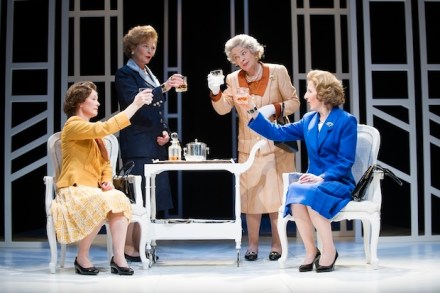
A feast of pleasures, and some annoyances, at the Trike. Handbagged, by Moira Buffini, is a fictional account of the weekly audiences between Mrs Thatcher and the Queen. The staging is extremely odd. Buffini gives monarch and prime minister two impersonators each. This enables us to trace the minor developments in hair colour and frock choice between 1979 and 1990. But also encourages the pairs of actors to outdo each other. Here are the results. Marion Bailey plays the older Queen as an unbudgeable human lighthouse. The facial gestures are beautifully done and Bailey gets that stoical out-thrust lip pout that has become the Queen’s signature grimace in recent years.

The peril with Brecht is that he will always be Brecht

Theatre

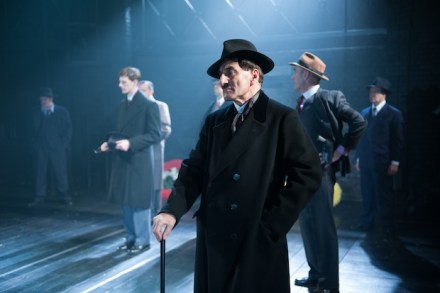
Brecht in the West End? Quite a rarity. Jonathan Church’s zippy and stylish version of The Resistible Rise of Arturo Ui arrives from the Chichester Festival garlanded with plaudits. Brecht’s wartime allegory was intended as a warning to America that its idolisation of gangsters made it vulnerable to a fascist takeover. Ui begins as a petty criminal mocked by Chicago’s established hoodlums. To revive his fortunes, he orders his thugs to vandalise grocery shops and to extract protection money from their owners. This brings him into conflict with Chicago’s mighty Cauliflower Trust. A huge warehouse belonging to a leading merchant is burned to the ground and Ui orchestrates a show trial that enables him to abolish the civil authority and seize control of the city.

Barking in Essex: a hit with hen-night hysterics

Theatre

How appropriate. Barking in Essex, a farce about gangsters, has been dishonestly billed as ‘a new comedy’. The script was written in 2005 by Clive Exton (1930–2007), who pre-dates Woody Allen by half a decade. The storyline — thieves quarrel over stolen loot — is a trusty antique featured in ‘The Pardoner’s Tale’ and in Tarantino’s Reservoir Dogs. The plot moves fast. We open in a monstrously tacky mansion where a criminal matriarch, Emmie Packer, is in a flap. She’s just informed her son Darnley, and his wife, Chrissie, that she’s blown three million quid from a bank heist and the robber is on his way to claim the loot. Run for it! A pretty young lawyer, Allegra, arrives.

Hysteria is a pile-up of unmotivated absurdities

Theatre

Terry Johnson’s acclaimed farce Hysteria opens in Sigmund Freud’s Hampstead home in 1938. The godfather of psychobabble is ambushed by a beautiful maniac named Jessica, who forces him to analyse her, and then hides in his closet and strips naked. Along comes Freud’s old chum Yahuda, a bumbling twerp who doubles as the farce’s authority figure. His presence forces Freud to improvise countless daft wheezes in order to prevent Jessica from being discovered. You may wonder if Freud is the best candidate to star in this kind of sex caper. And you’d be right. He is, in fact, the worst candidate.

Mark Ravenhill’s take on Voltaire’s Candide

Theatre

Ah yes, Candide, the adventures of an innocent abroad in ‘the best of all possible worlds’, as philosophers of the 18th century liked to insist. Voltaire’s satirical demolition of the higher nonsense of his age, and of the powers of Church and state who propped themselves up with it. A novel of 1759 written, at least in part, as an outraged response to those who’d insisted that the earthquake that had razed Lisbon to the ground four years earlier was all part of God’s plan for the good of mankind. Two centuries later, a brilliant musical by Leonard Bernstein. And now, a new play by Mark Ravenhill, mitigating the theft of the title by adding ‘inspired by Voltaire’. ‘Inspired’ turns out to be the right word.

Theatre review: Fleabag’s scandalous success

Theatre

Suddenly they’re all at it. Actors, that is, writing plays. David Haig, Rory Kinnear and Simon Paisley Day are all poised to offer new dramas to the public. But someone else has got there first. You may have spotted Phoebe Waller-Bridge playing a secretarial cameo in The Iron Lady. She’s a rangy Home Countries brunette with rosy lips, large inviting eyes and an angular, forthright face that suggests intelligence, amusement and a hint of subversive sexual power. Her immaculate skin is as white as a snowdrop. All in all, she’s perfectly set up for a steady career in frocks and pearls playing Downton gold-diggers and hyperventilating Jane Austen virgins. But she seems to want more, something wilder, something weirder, from her profession.

Blue Stockings defames women in order to defame men; Thark succeeds thanks to a trio of great perfomances

Theatre

More un-Shakespearean drama at London’s leading Shakespeare venue. The Globe has pushed the Bard off stage to make way for Blue Stockings, by Jessica Swale, which portrays the lives of female students at Girton College, Cambridge, in the 1890s. The script, which veers between weepy romcom and manipulative satire, sets out to elicit a collective gasp of outrage at the sexist piggery of the last century but one. To achieve this Swale has to rely on several fabrications. First, that intelligent women are rare. (Really?) Second, that men seldom meet intelligent women. (Surely they mingle all the time.) Third, that men find intelligent women threatening, tricky and outlandish. (In fact, men find them attractive, stimulating and fun.

Chimerica is a triumph

Theatre

Chimerica. The weird title of Lucy Kirkwood’s hit play conjoins the names of the eastern and western superpowers and promises to offer a snapshot of both nations just as the baton of economic primacy passes from America’s wizened youth to China’s reborn antiquity. The script has an unusually complex set of creative ambitions. It takes the formula of the romantic comedy, gives it a bittersweet twist, and plants it in the arid terrain of international politics. And it starts as a whodunnit. Joe Schofield, a fêted American photo-journalist, was in Tiananmen Square in 1989 when he shot a few frames of the unknown citizen who halted a Chinese tank in its tracks. Scroll forward 23 years and Joe believes Tank Man is living undercover in America.

Henry Goodman interview: How to make Brecht fun

Theatre

The face is unlined. The tan is as deep as Brazilian hardwood. The thatch of grey hair looks like a gift from God rather than the achievement of surgical intervention. At 63, the actor Henry Goodman keeps himself in excellent trim. He exudes energy and concentration, and in the hour we spend together, he relates every aspect of our talk straight back to the show he’s promoting, The Resistible Rise of Arturo Ui. Brecht’s political allegory uses imaginary figures from Chicago’s underworld to satirise Hitler’s assumption of power in Germany during the 1930s. The script was written in just three weeks, in 1941, while Brecht was in exile in Helsinki awaiting his visa for America. ‘Brecht wrote this to warn the Americans: fascism could happen in your country.

Completely Gar-Gar

Theatre

Irish playwright Brian Friel has built a formidable reputation out of very slender materials. A couple of international hits and a handful of Chekhov translations have won him a mountain of trophies. He’s still best known for his 1990 turbo-weepy Dancing at Lughnasa, which featured five mad Irish birds stuck in the bog with no hope of escape. His breakthrough play, Philadelphia, Here I Come, written in 1964, tackled the same themes of frustration and longing but in a brighter, lighter tone. Our hero is Gar and we meet him during his last night in Ballybeg (a cobbling-together of the Irish words for ‘small’ and ‘town’), just before he heads off for a new life in the city of brotherly love.

The best satire at the Edinburgh Festival Fringe

Theatre

Politics is everywhere in Edinburgh. It’s embedded in the architecture of the streets. The New Town, built in the latter half of the 18th century, is a granite endorsement of the Act of Union, a stone pledge of loyalty to Britain’s new Germanic monarchy in London. The layout forms an oblong grid. The horizontals of George Street, Princes Street and Queen Street intersect at right angles with Charlotte Street and Hanover Street. This makes the approximate proportions of a flag. There are rumours that a scheme was proposed to dig two diagonal avenues, meeting in a central X, which would have turned the New Town into a colour-free Union Jack. My hunch is that this is a fantasy dreamed up retrospectively by ingenious nationalists.

Crash-for-cash scam at the Donmar

Theatre

High summer and it’s blockbuster time. The Donmar’s latest show is by the acclaimed Nick Payne, whose play about string theory, Constellations, wowed the West End last year. Constellations niftily incorporated its subject matter into its formal structure. What does that mean? It means the storylines multiplied like an exploding atom until an infinite number of possible endings came crashing through the space-time continuum and collided with the viewer’s patience, bundling it down a black hole. It was very clever and very boring but theatre-goers were so chuffed with themselves for understanding the physics that they kept quiet about the ‘boring’ bit. Payne returns with a sitcom.

A mega-musical that’s like watching the Downton cast crammed into a telephone kiosk

Theatre

Hats off for theatrical recklessness. The producer Danielle Tarento has taken a $10-million Broadway mega-musical and staged it in the 240-seat Southwark Playhouse. Titanic, by Peter Stone and Maury Yeston, opened in 1997 to howls of critical derision that it merrily ignored. The run lasted for two years. The writers take a comprehensive approach. All the passengers, from first class to steerage, are represented. There are smut-smeared boilermen and bustling waiters. Salts of various ranks are shown alongside the designer, the builder, the financiers, the lot. It’s like watching the Downton cast crammed into a telephone kiosk. This method leaves no room for a catchy storyline to appear. Quite deliberately.

Thwarted love between geriatrics

Theatre

This is brilliant. The new play by Oliver Cotton, a 69-year-old actor, is set in New York in 1986. An ageing couple, Joe and Ellie, are practising their ballroom dancing when Joe’s maverick brother Billy comes crashing through the front door. The cops are after him. He was holed up in a Florida hotel when he spotted the Nazi brute who tortured them all at a death-camp during the war. He shot the bastard dead and left him floating in a swimming pool in front of hundreds of gawping witnesses. Then he ran for it. He’s not even sorry. He’s pleased he did it. This is gripping stuff. What next? A hundred options blaze through the mind, not least the possibility that Billy has mistakenly slotted an innocent lookalike. But Cotton fails to elaborate on his marvellous opening.