Culture

Culture

The good, the bad and the ugly in books, exhibitions, cinema, TV, dance, music, podcasts and theatre.

The price of success

Theatre

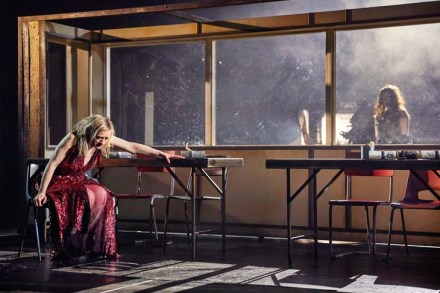
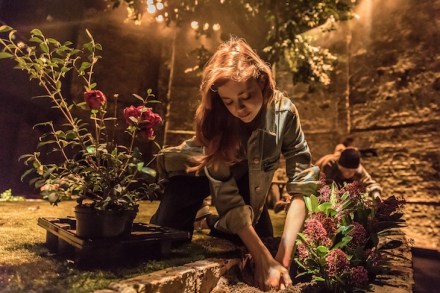
A pattern emerges. A hot American playwright, dripping with prestigious awards, is honoured in London with a transfer of their best-known work. And it turns out to be all right. Not bad. Nothing special. The latest wunderkind to wow London is Amy Herzog (five plays performed, six awards received), whose marital bust-up drama Belleville is set in a glamorously derelict corner of Paris. Abby and Zack, both 28, are newlywed Americans trying to shore up the wreckage of their European gap year. Abby wanted to learn French but has stopped attending classes. Instead, she’s studying yoga although the lessons are regularly cancelled. And her acting career seems to have stalled.

Lost in space | 11 January 2018

Theatre

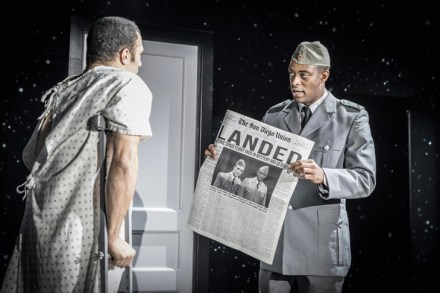
The Twilight Zone, an American TV show from the early 1960s, reinvented the ghost story for the age of space exploration. Director Richard Jones has collaborated with Anne Washburn to turn several TV episodes into a single play. Eight episodes in all. Way too many. The structure is designed to bamboozle us from the start. Some of the storylines have been broken up and are placed episodically throughout the piece, while others are preserved as units and delivered whole. Even the most keen-eyed viewer gets flummoxed by this mystery.

Faking history

Theatre

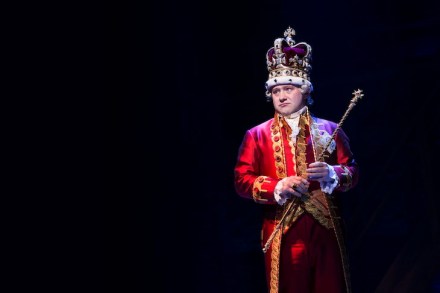
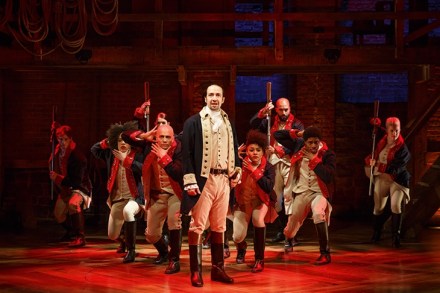
It’s all about the rhythm. Hamilton is a musical that tells the story of America’s foundation through the medium of rap. It sounds crazy but it works because the show’s arsenal of effects is simply overwhelming. The lyrics drive the narrative, the rap gives energy to the lyrics, and the dancers double the effect by adding a visual complement to the pulsing soundscape. Dramatic lighting, synchronised with the music, provides a final sensory flourish. It’s like being softly slapped across the face with a beautiful velvet glove. The set is a luxuriantly solid affair, like a five-star hotel inspired by Wild West themes. Two wooden staircases soar up towards a raised gallery draped with thick lassos.

Burning questions

Theatre

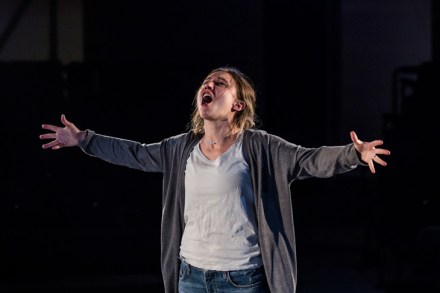
A new play at the Bush with a catchy political title. Parliament Square introduces us to Kat, a young Scots mum, who abandons her baby girl and her devoted husband and commutes to London to kill herself. She doesn’t want to die but shrill voices in her head are urging her to turn her body into a human fireball on College Green, opposite parliament. Her political cause is unclear. Her personal hopes are plainly set out: death and posthumous fame. Everything is ready. Kat douses herself in unleaded petrol (it’s not a carbon-neutral protest), and as the flames engulf her flesh she emits a blood-curdler from her solar plexus. ‘The worst scream we’ve ever heard,’ says the stage direction, an aim that the production achieves with more success than one might wish.

Festive feast

Theatre

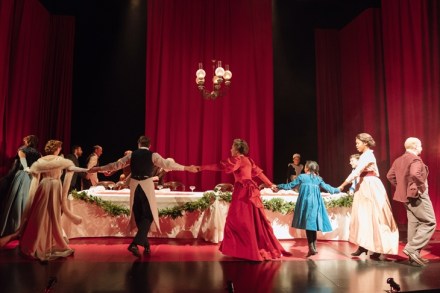
Maximum Victoriana at the Old Vic for Matthew Warchus’s A Christmas Carol. Even before we reach our seats we’re accosted by bonneted wenches handing out mince pies. Merchants in top hats roam the aisles proffering satsumas, which they call, with accurate Victorian incorrectness, ‘oranges’. The guts of the theatre have been ripped out for this show. A slender catwalk stretches 40 yards from the rear of the stage to the farthest wall of the auditorium, with the seats gathered around this runway in odd little clumps. The narrow performing area leaves no room for scenery, so Dickens’s London is suggested by dozens of oblong lanterns dangling overhead, like mini-Tardises, all glowing amber, as if recently nuked. Then a soapy blizzard starts.

Dancing queen

Theatre

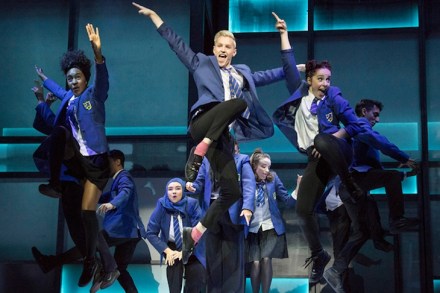
Everybody’s Talking About Jamie opened at the Sheffield Crucible in February for a standard three-week run. The show is based on a BBC documentary, Jamie: Drag Queen at 16, about a working-class lad who attended his school prom in a scarlet frock. Director Jonathan Butterell saw the potential to create a replica Billy Elliot and he brought in two co-writers to turn the material into a comic musical. Word of mouth was excellent and the show received immediate offers for a West End transfer. The action starts in a Sheffield comp where a class of 16-year-olds are being given career advice by a computer. Blond misfit Jamie is encouraged to train as a forklift-truck driver. But he has other ideas. With his mum’s help he sets off in search of his inner self as a gender-fluid diva.

Net effect | 23 November 2017

Theatre

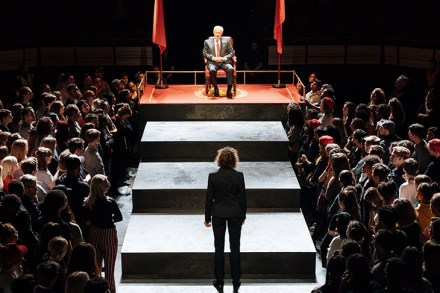
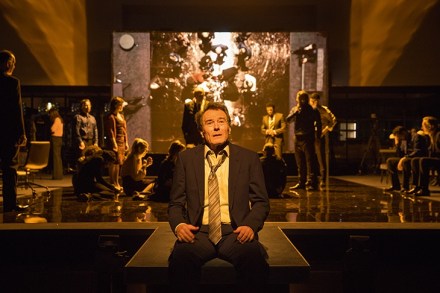
The inexplicable popularity of Ivo Van Hove continues. The director’s latest visit to the fairies involves an updated version of Network, a creaky and over-rated news satire from 1976. Van Hove appears to be unconstrained by thrift or self-discipline and he fills the Lyttelton stage with expensive clobber. It’s like a hangar full of half-tested prototypes. Centre, a TV studio featuring three cameras and an anchor man’s desk the size of a lifeboat. Behind it, a controller’s gallery with lots of TV monitors shielded by wobbly glass. Stage-rear, a vast flat-screen telly that relays the action as it happens but with an irritating quarter-second delay.

Faking it | 16 November 2017

Theatre

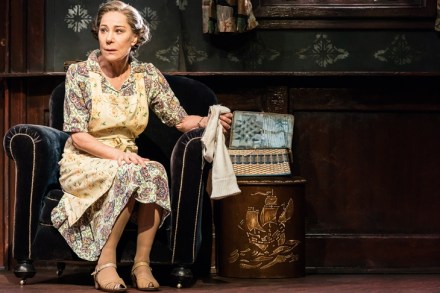
David Mamet’s plays are tough to pull off because his dialogue lacks the predictable shapeliness of traditional dramatic speech. He prefers the sort of meandering, oblique, backtracking and self-deluding conversation you might overhear in a hotel dining-room. Glengarry Glen Ross opens in a restaurant, where a handful of realtors are discussing the perils and joys of their craft. The scene culminates in one of the landmarks of American drama. Top salesman Ricky approaches a potential customer in disguise and delivers a sales pitch that sounds like a poetic meditation on destiny and existence. It’s impossible to say what darkness this little masterpiece emerged from but Christian Slater (Ricky) captures all of it, abruptly and shockingly, with laser-like precision.

Country music | 9 November 2017

Theatre

Americans may be able to draw on only 250 years of history, but they’re not shy of making a song and dance of it. In early December, Hamilton, Lin-Manuel Miranda’s $1 billion-grossing, hip-hop and show-tune extravaganza about one of the country’s founding fathers will finally open to sold-out crowds in London. It joins the Menier Chocolate Factory’s sold-out revival of Sondheim’s Assassins, the Tony Award-winning musical about the cranks and misfits who have, to paraphrase its opening number, exercised their right to follow their dreams by attempting to assassinate US presidents from Roosevelt to Reagan (but not, yet, Trump).

To hell and back

Theatre

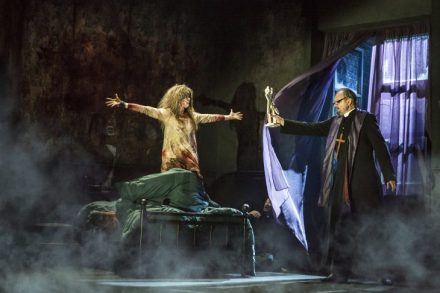
The Exorcist opened in 1973 accompanied by much hoo-ha in the press. Scenes of panic, nausea and fainting were recorded at every performance. Movie-goers showed up to witness mass hysteria rather than to enjoy a scary movie. This revival, produced by Bill Kenwright, targets the early 1970s demographic. At press night, the stalls were thronged with pensioners eager to relive a lurid evening from their adolescence. As one who dislikes shocks of any kind, I sat through this ordeal with my eyes bent towards the floor and my fingers wedged so firmly in my ears that their tips turned crimson. The show opened with a CRUMP loud enough to shake the theatre to its foundations. Everybody screamed. Then they all giggled. This pattern of shrieking followed by feathery tittering continued throughout.

Not with a bang but with a whimper

Theatre

Bang! A brand new theatre has opened on the South Bank managed by the two Nicks, Hytner and Starr, who ran the National for more than a decade. Located near a river crossing, their venture bears the unexciting name ‘Bridge’. If these two adopted a child, they’d call it ‘Orphanage’. Visitors approach along the Thames embankment and arrive at a soaring cliff of glass whose revolving doors usher them into a large anonymous foyer. It feels like a student union bar or a bit of an airport. Dangling from the ceiling are dozens of light bulbs, their radiance muted with tea-stained shades that cast an absolving glow over facelifts, hairpieces and liver spots.

Family planning

Theatre

Beginning starts at the end. A Crouch End party has just finished and the sitting room is a waste tip of punctured beer cans, tortured napkins and crushed nibbles. Wine bottles lie scattered across the carpet like fallen ninepins. Hostess Laura invites her last guest, Danny, for a final glass of Chardonnay. Twitchy conversation ensues. Then she tells him point-blank that she’s fallen in love with him, even though they’ve only just met. He rejects her weird come-ons (‘Kiss me, you lemon’) with evasive hyperactivity. He dashes about the room filling a bin-liner with defunct wine bottles and pulverised cheesy Wotsits. She forces him to sit next to her on the sofa, where he squirms and flips like a beached haddock. What’s wrong with him?

The bad sex award

Theatre

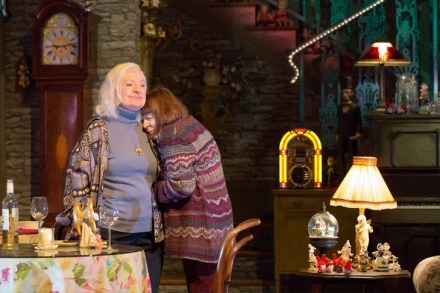
Simon Stephens gives his plays misleading titles. Nuclear War, Pornography and Punk Rock contained little trace of their advertised ingredients. Heisenberg: The Uncertainty Principle includes no information about the German physicist or his theories. This is a sentimental romcom starring Anne-Marie Duff as a giggling airhead who stalks a grunting Cockney shopkeeper played by Kenneth Cranham. He’s 75 years old and though she’s in her mid-forties she has the skittish desperation of a gold-digging pensioner trying to act the nubile bimbo. Both characters are bored loners adrift in London. And because they’re solidly working class (she’s a receptionist, he’s a butcher), they excite our curiosity as lesser beings far removed from our own social milieu.

Perishable goods

Theatre

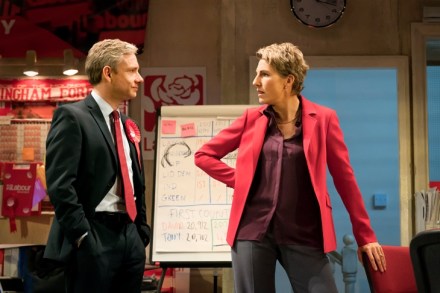
  Labour of Love is the new play by James Graham, the poet laureate of politics. We’re in a derelict colliery town in the East Midlands where the new MP is a malleable Blairite greaser, David Lyons. He arrives to find the office in crisis. The constituency agent, Jean, has handed in her notice but David is smitten by her acerbic tongue and her brisk management style so he asks her to stay. She agrees, reluctantly, and they settle into a bickering rivalry underpinned by affection. But is there more? Possibly, yes, but both are held back by their natural reticence and by fate. Secret declarations of love go astray. One letter is sent to the wrong person and another, written in code, makes sense only when read backwards. These contrivances aren’t entirely satisfying.

Verbal diarrhoea

Theatre

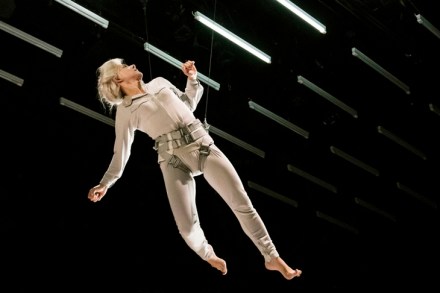
In Beckett’s Happy Days a prattling Irish granny is buried waist-deep, and later neck-deep, in a refuse tip whose detritus inspires a rambling 90-minute monologue. ‘An avalanche of tosh’ was the Daily Mail’s succinct summary. Wings is similar but worse. Mrs Stilson (Juliet Stevenson), an American pensioner sheathed in white, hovers over the stage on ropes and talks non-stop gibberish. ‘Three times happened maybe globbidged, rubbidged uff to nothing there try again window up!’ Thus begins her battle with intelligibility. ‘And vinkled I,’ she goes on, ‘commenshed to uh-oh where’s it gone to somewhere flubbished what?

Bloody minded

Theatre

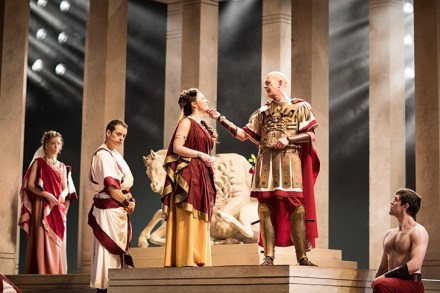
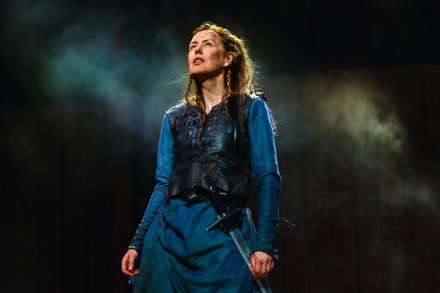
Tristan Bernays loves Hollywood blockbusters. His new play, Boudica, is an attempt to put the blood-and-guts vibe of the action flick on the Globe’s stage. The pacy plotting works well. Boudica revolts against the Romans who have stolen her kingdom. The queen is imprisoned and flogged while her two maiden daughters are savagely violated. Vowing revenge, she allies herself with the reluctant Belgics and they attack and destroy Camulodunum (Colchester). The first half is a rip-roaring crowd-pleaser. After the interval, an anticlimax. London is sacked but the Romans cling to power and when Boudica dies, her bickering daughters fight rather tediously over the succession. What counts here are the externals: the costumes, the accents, the fights, the stunts.

Speech therapy

Theatre

Oslo opened in the spring of 2016 at a modest venue in New York. It moved to Broadway and this imported version has arrived at the National on its way to a prebooked run at the Harold Pinter Theatre. It’s bound to be a hit because it’s good fun, it gives a knotty political theme a thorough examination, and it’s aimed squarely at the ignorant. In the early 1990s Norwegian diplomats set up ‘back-channel’ talks between the PLO and Israel. The play follows that process and it treats geopolitics like a flat-share comedy. The bickering partners are hauled in by the lordly Norwegians and forced to hammer out their differences around the table. Play-goers need have no prior knowledge of Israel and its fraught relationship with the Palestinians.

Age concern | 14 September 2017

Theatre

Stephen Sondheim’s Follies takes a huge leap into the past. It’s 1971 and we meet two middle-aged couples who knew each other three decades earlier at a New York music hall. The building faces demolition and the owner is throwing a party for his old dancing-girls. Dominic Cooke’s lavish production of this vintage musical boasts 58 performers, 160 costumes and 200 production staff. Yet it’s a curiously small show that could be performed, with a few cuts, in a pub theatre. There are four main characters and a smattering of cameos. Phyllis and Ben are rich New York grandees, unhappily married. Their chums Bud and Sally are also wealthy and disappointed with life.

Keeping it in the family

Theatre

A new orthodoxy governs the casting process in Hollywood. An actor’s ethnicity must match the character’s. If you extend this decree to Shakespeare, you need Macbeth to be played by a Highlander, Shylock by a Venetian Jew, Richard III by an English hunchback and Cleopatra by an Egyptian who has slept with her brother. As for Hamlet, the play can only be entrusted to a family of incestuous Scandinavians. Gyles Brandreth (whose name means ‘firebrand’ or ‘sword’ in old Norse) has anticipated the trend by staging a production alongside his son and his daughter-in-law. Benet Brandreth plays the Dane while his wife, Kosha, plays Ophelia, Gertrude, Rosencrantz, Laertes and Horatio. Brandreth Snr takes the older roles.

Animal or vegetable?

Theatre

Against by Christopher Shinn sets out to unlock the secrets of America’s spiritual malaise. Two main settings represent the wealthy and the dispossessed. At a university campus, an inquisitive Jesus-freak named Luke interrogates people about their experiences of violence. At an online retailer, oppressed wage slaves toil for hours and mate fleetingly during their tea breaks. Shinn’s characters also fall into two categories. The rich are eloquent, idealistic and disingenuous. The poor are earthy, impulsive and honest. The play is built around a series of formalised conversations, recorded interviews, writing tutorials, a Q&A session at a town hall, a stilted reunion between two old school-friends, and so on.

The many sides of satire

Theatre

Brexit the Musical is a peppy satire written by Chris Bryant (not the MP, he’s a lawyer). Musically the show is excellent and the impressions of Boris and Dave are amusing enough, but the storyline doesn’t work and the script moves in for the kill with blunted weapons. Everyone is forgiven as soon as they enter. Boris swans around Bunterishly, Dave oozes charm, Theresa May frowns and pouts in her leather trousers, and nice Michael Gove tries terribly hard to be terribly friendly. Andrea Leadsom, known to the public as a furtive and calculating blonde, is played by a sensational actress who belts out soul numbers while tap-dancing in high heels and a pencil skirt. Was there ever a kinder portrait of a cabinet minister?

Starting block

Theatre

Conor McPherson’s new play is set in dust-bowl Minnesota in 1934. We’re in a fly-blown boarding house owned by skint, kindly Nick who has designs on a sexy widow with a big inheritance coming. Good opening. Roll the story. But there’s more. Nick’s useless son is a depressed novelist entangled with a beautiful governess betrothed to a rich man she doesn’t love. An even better opening. Roll the story. But wait. Nick has a black maid called Marianne whom he rescued as a baby and raised as one of the family. An interesting complication. Roll the story. No wait. Marianne claims to be pregnant but declines to reveal whether the father is a rapist or an honourable suitor. And local gossips whisper that her baby bump is fictional. Fascinating.

Heavy-handed

Theatre

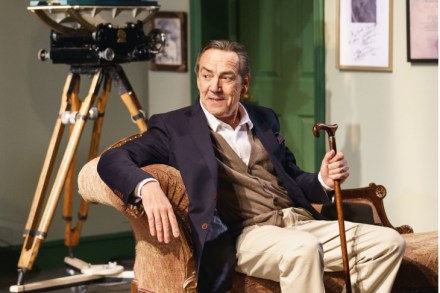
Oliver Cotton is an RSC stalwart who looks like a man born to greatness. Google him. He has the fearless jawline of Napoleon, the diabolical stare of Heathcliff, the tumultuous eyebrows of Michelangelo and the streamlined quiff of Liberace. And there’s something richly corny about his appearance too, as if he were Bill Nighy done up as a 1970s porn baron. When he isn’t treading the boards, Cotton writes contemporary thrillers and his latest effort, Dessert, is directed by Trevor Nunn. We’re in a London mansion where smug billionaire Hugh Fennell and his gem-encrusted wife are showing off their latest toy, a Renaissance oil painting, to a pair of rich American idlers. A gunman bursts in and takes all four of them hostage.

Out of sorts at the RSC

Theatre

The RSC’s summer blockbuster is about Queen Anne. It’s called Queen Anne. It opens at the Inns of Court where drunken wags are satirising the royals with a naughty sketch about boobs and beer guts. Everyone on stage pretended this was hilarious. A few audience members did too, out of politeness. The principal characters arrive with their dramatic goals on display. Queen Anne wants to rule wisely. Her general, Marlborough, wants to conquer widely. His wife, Sarah, wants to help her monarch to rule wisely and her husband to conquer widely. And Sarah’s scheming cousin, Abigail, wants to befriend the Queen so that she can marry a steady salary. These characters are neither very admirable nor very wicked and their objectives don’t cohere into a single narrative.

The good Palestinian

Theatre

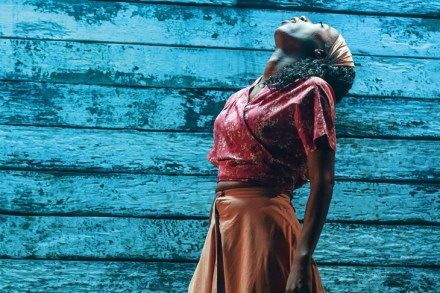
Shubbak, meaning ‘window’ in Arabic, is a biennial festival taking place in various venues across London. The brochure reads like an A to Z of human misery. All the tired phrases from the Middle East’s history lurch up and poke the onlooker in the eye: ‘revolution’, ‘dystopia’, ‘cries of pain’, ‘ruins’, ‘waking nightmare’. The agony is leavened with slivers of earnest pretention. Corbeaux is a ballet designed for Marrakesh railway station by dancers who ‘take possession of public spaces’. Ten women with hankies over their hairdos move in ‘geometric alchemical arrangements’ making ‘piercing sounds and extraordinary cries’.

Animal crackers | 6 July 2017

Theatre

The Vaults at Waterloo are gallantly trying to pose as the party spot for hipsters in the world’s coolest city. Brickwork alone may frustrate this goal. The venue is half-buried in a warren of arches beneath the western approaches to the terminus. The foyer is scruffy, poorly lit, and its dank air is scented with mildewed plaster and decaying concrete. It stinks, to be blunt, of tuberculosis. The auditorium features balding velvet pews salvaged from a condemned Odeon. Each seat receives its burden with a groan of reluctance. Every few minutes a train passing overhead rattles out a tom-tom beat. This is the unpromising location for King Kong (A Comedy), which turns the 1933 horror flick into a satirical cartoon.

James Graham’s Ink is riveting and, if they cut it by 30 minutes, even Sun readers might be tempted to pop along

Theatre

It was most odd. Four decades after I’d walked into the Sun to start my first shift as a news sub editor, I was sitting in a small theatre in the heart of La La Labour-land (the Almeida in Corbyn’s Islington) watching a play where I knew all the characters, as I both worked with them and worshipped them. There was Rupert Murdoch. There was Sun editor Larry Lamb, his deputy Bernard Shrimsley, Page Three photographer Beverley Goodway, and even production supremo Ray Mills who, due to his northern background, was known as Biffo — Big Ignorant Fucker From Oldham. How much would that acronym be worth at an employment tribunal today?

Hyped to death

Theatre

Hand it to the Americans. They know how to hype a young talent to death. The latest to be asphyxiated by the literary establishment is Branden Jacobs-Jenkins. He’s written six off-Broadway plays (one adapted from a script by Boucicault), and won a ton of awards and prize money. Most of the English ‘critics’, if one can call them that, have meekly regurgitated the American propaganda. Gloria, which was nominated for the Pulitzer, now arrives at Hampstead. The setting is a snobbish New York magazine, which is absolutely and emphatically not the New Yorker, according to Jacobs-Jenkins. (Before turning to drama, he worked at the New Yorker for three years.

Hymn to self-slaughter

Theatre

Anatomy of a Suicide looks at three generations of women in various phases of mental collapse. They line up on a stage that resembles a grey dungeon while sad events unfold around them. The first woman gets pregnant. The second takes heroin. The third argues with a lesbian about a fish. Their lives span several decades but their stories are presented simultaneously, and this tripartite method conceals the plain fact that the events dramatised are too flimsy to merit theatrical portrayal. A soap opera would baulk at such scenes: a druggie teenager bores a cameraman with a list of gloomy soundbites; a female wedding guest is partially seduced by a giggling gatecrasher; a patient in a hospital invites a nurse to eat some haddock.