Culture

Culture

The good, the bad and the ugly in books, exhibitions, cinema, TV, dance, music, podcasts and theatre.

Angry bird

Theatre

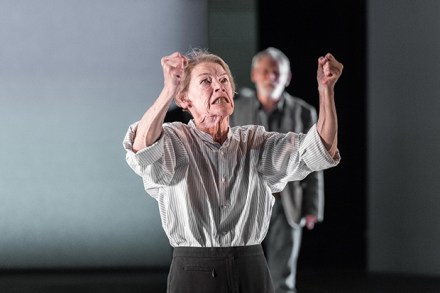
Dynastic affairs and international relations were once a seamless continuum. Royal weddings accompanied peace treaties. An heirless realm was vulnerable to invasion. Botched successions led to war. This is the political context of King Lear but Deborah Warner sets the play in modern times, which muddles everything. Britain in the Dark Ages is represented by a scout hut or a therapy suite. Plain walls, bleached flooring, a semi-circle of blue plastic chairs. Enter the king’s court led by a crownless Glenda Jackson (Lear), sporting a black ensemble topped by a chic scarlet cardigan. Is this a brutal tyrant on the brink of a psychotic meltdown? Nope. It looks like Granny wearing ‘something special’ for her 80th at the care home.

Just kidding

Theatre

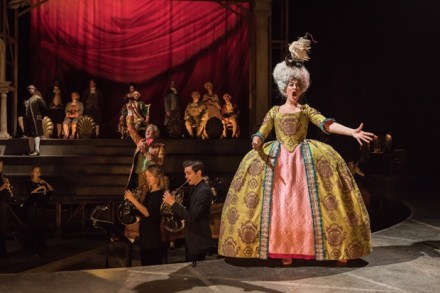
Amadeus by Peter Shaffer is haunted by its own antecedents. Viewers are apt to feel that a new production lacks the beauties they’ve seen, or believe they’ve seen, in previous versions. Director Michael Longhurst opens with a fusion of time zones. The courtiers are attired in silk curtains like proper 18th-century toffs, while the musicians on stage wear the baggy subfusc of a contemporary orchestra. Electronic cries of ‘Salieri, Salieri’ are broadcast through a Tannoy as if the tardy Kapellmeister were being chivvied from his dressing-room by an irate stage hand. Early on we get the famous ‘voice of an obscene child’ speech, which is perhaps the most sublime piece of English prose ever written on the subject of music.

Sweet and sour | 27 October 2016

Theatre

Great subject, terminal illness. Popular dramas like Love Story, Terms of Endearment and My Night With Reg handle the issue with tact and artistry by presenting us with a single victim and a narrative focus that reveals as much about the survivors as about the patient. Crucially, the disease is omitted from the title for fear of discouraging the punters from mentioning the work in conversation. A Pacifist’s Guide to the War on Cancer violates all these strictures. Half a dozen characters seated in a hospital ward shout at us about their failing health. These disjointed gobbets of testimony are interspersed with repetitive zombie dances and noisy songs with lyrics like ‘fuck cancer’. Snatches of insulting dialogue reinforce the mood of chippy sourness.

Ziggurat of bilge

Theatre

Ella Hickson’s new play analyses our relationship with oil using the sketch format. First, there’s a candlelit soap opera set in Cornwall, in 1889, with a lot of ooh-arr bumpkins firing witless insults at each other. Next, a bizarre Persian scene, set in 1908, where a Scottish footman (who uses the celebrated Edwardian colloquialism ‘OK’) rescues a ditzy waitress from a sex-maniac serving in the British army. Then we move to Hampstead, in 1970, where a female oil magnate is visited by a Libyan diplomat seeking to nationalise her wells by waving documents at her, in her kitchen, while teenage kids pop in and out performing oral sex on each other. (This is one of the most disorganised pieces of stage writing I’ve ever witnessed.

Box of tricks

Theatre

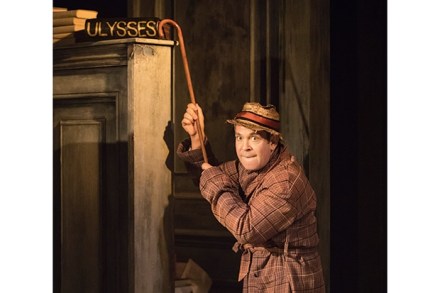
Travesties is a multi-layered confection of art, song, literature and pastiche. Tiny snippets of it are true. In Zurich, in 1917, James Joyce directed a production of The Importance of Being Earnest featuring a British diplomat, Henry Carr, in the role of Algy. Joyce and Carr fell out over the costume budget and became embroiled in a brief legal wrangle. That’s the starting-point for Tom Stoppard’s dazzling intellectual pantomime which features cameos from Lenin and Tristan Tzara, both residents of Zurich at the time. Tzara was an experimental vandal whose penchant for slicing sonnets into pieces was taken up by copycats and flowered, or degenerated, into the Dada movement.

Top of the Pops with silk tights

Theatre

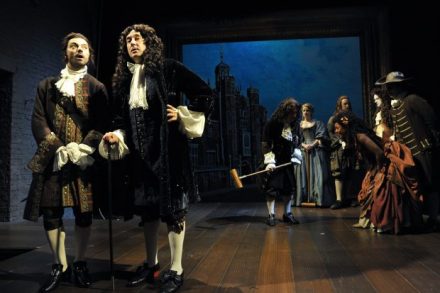
Here are three roles all actors love to play. The drunk (no need to learn your lines), the dementia victim (ditto) and the aristocratic roister-doisterer humping his way through the brothels of restoration London. Nothing quite beats the 17th century. Great costumes, stylish language, shoes that add three inches to your height, and a parallel universe of moral licentiousness where every cleavage is there be ogled and every passing bottom pinched. It’s Top of the Pops with silk tights. Into this land of platitudes walks Dominic Cooper, a super-smooth baddie, who has very little warmth or humour about him, and not a trace of vulnerability.

Hilarious, puzzling, boring

Theatre

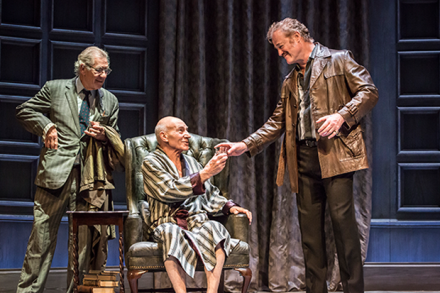
No Man’s Land isn’t quite as great as its classic status suggests. At first sight the script is a bit of a head-scrambler because Pinter’s characters are obscure to the point of incoherence. A demented alcoholic, Hirst, is cared for in his Hampstead mansion by two mysterious thugs, or servants, who may be emeritus rent boys and who are, or perhaps were, romantically linked to one another. Into this mysterious triptych comes Spooner, a simple and fascinating creation, a washed-up Oxford poet of high intelligence and low achievement who lives by cadging favours from kindly Hampstead folk. He wheedles his way into Hirst’s affections in the hope of gaining employment as a secretary, companion, literary consultant, cleaner, house-pianist, or anything.

In a league of her own

Theatre

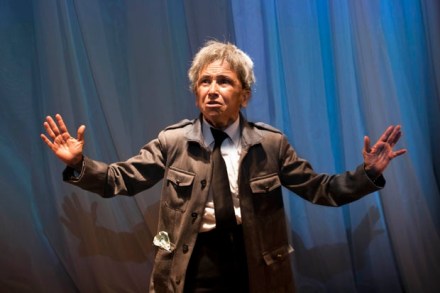
The Emperor seems like a worthy lesson in Ethiopian history. Haile Selassie’s final days are recounted by a retinue of devoted flunkies. He had valets, chauffeurs, zoo-keepers and door-openers to perform every conceivable chore. Each morning a butler proffered a silver dish loaded with meat from which the emperor fed his exotic pets. A clock-watcher, ‘the Cuckoo’, performed a coded bow during meetings to inform His Majesty that new suppliants awaited him. A royal bursar helped him hand envelopes of cash to petitioners who discovered, always too late, that the donation was barely a fraction of the sum expected. A cushion-handler ensured that his titchy legs were never seen to dangle in mid-air when he took his seat on one of his many thrones.

Sense of humour failure

Theatre

Coleridge deemed the narrative structure of The Alchemist perfect. But, I wonder. A landowner quits plague-ridden London and his cunning servants pose as learned sages in order to defraud affluent locals. Ben Jonson’s plotting is certainly adroit. The action takes place in a single location within the span of an afternoon, and this concentration of forces may have appealed to Coleridge’s idea of classical purity. What Jonson’s narrative doesn’t explain is why so many dim-witted toffs are kicking around in a city abandoned by all but its poorest inhabitants. His characters’ names crassly signal their roles: Surly, Dapper, Lovewit, Sir Epicure Mammon.

Brackish as old Brylcream

Theatre

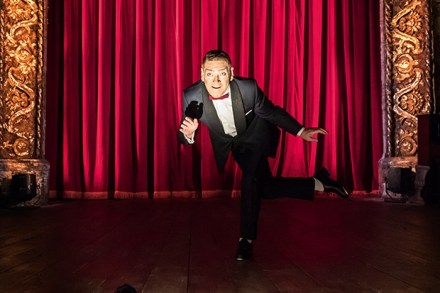
Kenneth Branagh’s obsession with Larry Olivier’s career is becoming such a bizarre act of theatrical necromancy that it deserves to be turned into a drama. Sir Ken and Lord Olivier could be played by the same actor. The Entertainer, written for Larry in 1956 by John Osborne, presents us with a washed-up music-hall star, Archie Rice, who is supposed to symbolise Britain’s post-colonial decline. This version, directed by Rob Ashford, opens with a tap-dancing routine so ponderously executed that it leaves one wondering if Branagh is a lousy hoofer trying too hard, or a master of the art impersonating a lesser practitioner. This difficulty permeates the piece. By making the central character a useless comic, Osborne has sabotaged the play as an act of entertainment.

First aid

Theatre

In the 1980s, supermarkets stocked a fruit juice named ‘Um Bongo’ with the strapline ‘They drink it in the Congo!’. This is the starting point for Adam Brace’s examination of Britain’s relationship with the Congolese (whose word ‘mbongo’ means money). A group of do-gooding Londoners host a festival to celebrate the Congo’s culture and history but they rapidly become mired in controversies about age-old injustices and white-to-black ratios on steering committees. The Congolese party includes a few rogue terrorists whose death threats the British publicists find rather glamorous and titillating. The characters rarely reach beyond the obvious. The Londoners are bloodless yuppie go-getters.

Doctor Death

Theatre

‘European premiere of classic American musical’ is a phrase that deeply alarms the experienced playgoer. As I tootled along to Southwark Playhouse I asked myself why this Rodgers and Hammerstein masterpiece had taken so long to plough its way across the ocean. In 1947 the Broadway prodigies decided to follow up their first two hits, Oklahoma! and Carousel, with a brand new storyline drawn entirely from their imaginations. The plan was to extoll the life of the ordinary Midwest Joe and they created a figure (Joe Jr, after his dad), living in a backwater in the early years of the 20th century. The script doggedly stalks Joe Jr through every phase of his morally exemplary and supremely tedious existence.

Words of wisdom

Theatre

Dominic Frisby is an actor best known for voicing the booking.com adverts (‘Booking dot com, booking dot yeah’). Voiceover specialists can earn large fees for a morning’s work and they have endless time in which to ponder where their money ends up. Frisby is irked by the UK tax regime, whose code-book is four times longer than Chilcot. He argues persuasively that our sprawling system should be replaced with a land value tax. Set at the right level this would ensure the abolition of all other duties, and those of us who don’t own property would pay no council tax, no income tax, no VAT, and no duty on fuel, alcohol or inheritance. Ever again. An attractive scheme laid out in a funny, absorbing show full of historical insights.

Losing the plot | 4 August 2016

Theatre

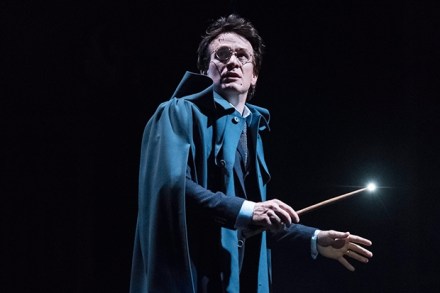
Consider it commercially. So powerful is the pull of the Potter franchise that the characters could simply re-enact the plot of ‘Incy-Wincy Spider’ and the fans would swoon with joy. The stage show has been written by a two-man committee, Jack Thorne and John Tiffany, with the help of billionaire equality campaigner J.K. Rowling. Harry is now 37 and working as a Whitehall clodhopper at the Ministry of Magic. He’s troubled by his stompy bed-wetter of a son, Albus, whose tantrums cause the middle-aged miracle-worker to suffer agonies of weepy self-doubt. Together they visit Hogwarts and the multifarious plotlines start to punch each other in the face.

Flawed genius

Theatre

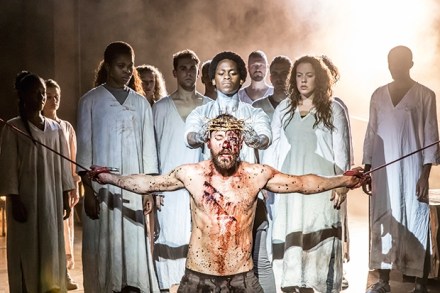
An inspired decision to stage Jesus Christ Superstar in a summer theatre in Regent’s Park. The action takes place outdoors, in balmy climes, so the atmosphere is ideal for Rice and Lloyd Webber’s finest show. The songbook bursts with melodic inventiveness, and the score blithely rips apart the conventions of musical theatre and remakes them afresh. Lloyd Webber finds two contemporary registers and switches between them constantly: first the eerie, unhinged menace of late-1960s heavy rock, and secondly the sweet, escapist loveliness of 1970s pop. The transitions from blunt savagery to pure sugar sometimes occur with gunshot abruptness, on a single note.

Power failure | 21 July 2016

Theatre

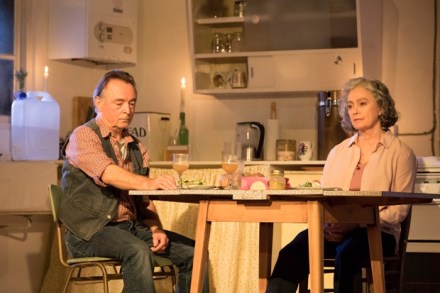
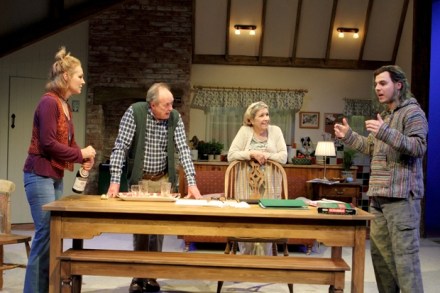
Fracking is a British tradition. Since 1969 more than 200 sites have used hydraulic fracturing ‘without environmental catastrophes’ according to Dick Selley, an emeritus professor of geology, writing in the programme notes to Fracked! by Alistair Beaton. The satire takes the opposite view and regards fracking as a wicked novelty inflicted on rustic innocents by Big Oil, which hopes to steep the country’s aquifers with radioactive water and massacre all its customers at the same time. That’s the business plan, apparently. We meet a pootling granny (Anne Reid), who reluctantly leads a campaign to stop Deerland Energy from plastering southern England with horrible drilling platforms.

My best fiend

Theatre

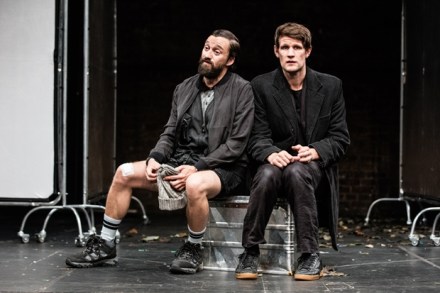
Anthony Neilson is an Arts Council favourite known for trivial but impenetrable plays with off-putting names like The Wonderful World of Dissocia. His latest effort has another hazard-warning instead of a title. Unreachable starts with an actress auditioning for a dystopian sci-fi movie set in a clichéd future. She lands the role and we cut to the film-lot where more clichés await. Pretentious director Max is furious because the sun won’t stay in one place and he decides to ditch his digital cameras and film instead on old-fashioned celluloid. The shoot is suspended while producers scrabble around for emergency funding. This self-involved storyline would be unbearable if it weren’t for the charming whimsicality of Matt Smith as Max.

Friel good factor

Theatre

Does anyone believe Brian Friel’s libellous blarney? He portrays Ireland in the 20th century as an economic basket case where the starving, the retarded, the crippled and the widowed offer up prayers to a heartless God who responds by heaping their burden ever higher. Friel is popular with British mainlanders who are tickled by the news that their Atlantic coastlines are peopled by picturesque barbarians and suicidal drunkards mired in exquisitely revolting dereliction. You’ll notice that aid agencies use the same technique, and for the same audience, when they portray Africa as a rough and ready paradise where life is organised around the latest borehole dug by a team of gap year Norwegian pole vault champions.

Tangled web | 30 June 2016

Theatre

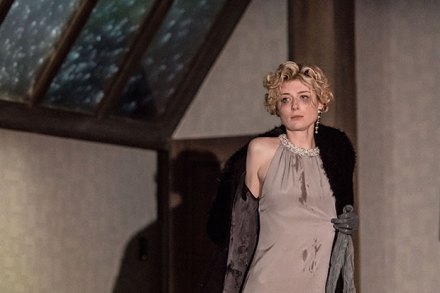
Mike Bartlett’s curious blank-verse drama Charles III became an international hit. His new effort examines the cut-throat world of dark-web espionage. An American traitor named Andrew (Edward Snowden presumably) is hiding out in a Moscow hotel. Enter a flirty, giggling Irishwoman played by Caoilfhionn Dunne, who claims to be British and who teases Andrew over his betrayal of his homeland’s secrets. She evinces an interest in Oscar Wilde and the pair lock horns over footling minutiae. Andrew points out that Barbie dolls are called Sindy in the UK and this seems to demonstrate his familiarity with Britain. But he fails to spot the false cadences of her accent and he doesn’t query her use of the strange term ‘British Metropolitan Police’.

Face value | 22 June 2016

Theatre

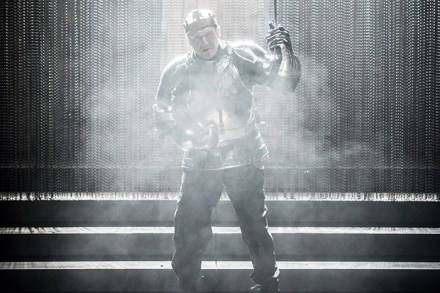
When Richard III’s bones were unearthed in a Leicester car park, Frankie Boyle suggested the headline ‘Bent royal found at dogging hotspot’. Rupert Goold opens his version of the play by restaging the 2012 excavation as if to inform us that the past and the future are held together by something called time. That glib gesture apart, this is a superb production whose modern-dress aesthetic works, just for once, extremely well. And it works because the costumes are dark, sober and unornamented and this visual restraint moves our attention upwards to the more fertile arena of the face. And what a face Ralph Fiennes has, all meat-cleaver and calculation: the haughty forehead, the deadened eyes, the mistrustful mouth petering out at the edges, the dominant, jeering brow.

I dream of Genie

Theatre

Gauche, perhaps, to complain about Aladdin but it slightly deserves it. The terrific Genie opens the show and then disappears for 45 minutes while the plot is explained. My squirmy ten-year-old kept whispering Aladdin-related trivia at me in order to occupy himself as the rags-to-riches storyline was laid out in far too much detail. Visually the show is impressive, despite minor flaws. The rangy architectural sets are intricate confections of teetering filigree but they look a little factory-fresh and unlived-in. Behind them the daylight skies are wrongly composed of a single hue (only the night sky has a single hue).

Profit and loss | 9 June 2016

Theatre

Bertolt Brecht took The Threepenny Opera  from an 18th-century script by John Gay and relocated it to Victorian London. This National Theatre version wants to straddle the contemporary and the antique. Mack the Knife, an Afghan war veteran who murders strangers, contracts a bigamous marriage with Polly Peachum, the daughter of a cross-dressing mastermind who runs begging gangs across east London. This laborious set-up takes an hour to establish and the drama gets started only when Polly’s mum vows to rub out Mack at a knocking-shop. A wise dramatist would have placed this threat in the opening scene. But Brecht isn’t a wise dramatist; he’s a preachy one and his purpose is to show that all human sin derives from the profit motive.

Wish upon a star

Theatre

Out come the stars in Kenneth Branagh’s Romeo and Juliet. He musters a well-drilled, celebrity-ridden crew but they can’t quite get the rocket off the launchpad. The stylish setting evokes Italy in the early 1950s. The girls wear New Look frocks and the boys sport tight slacks and shirtsleeves. Christopher Oram’s muted set has bland marble walls and tasteless squared-off pillars like a modern dictator’s palace on the Euphrates. A rare failure. Romeo is played by Game of Thrones inmate Richard Madden, who seems a handsome enough specimen, but Branagh might have asked him to act with his soul rather than his forearms. And he looks too mature.

Mind games

Theatre

Blue/Orange by Joe Penhall enjoys the dubious status of a modern classic. A black mental-health patient, Christopher, is about to be freed from a clinic but his cautious young shrink, Bruce, wants to keep him under observation. His senior colleague, Robert, thinks a dose of the big bad world will help to cure the nervy, delusional Christopher, who claims Idi Amin as his father and insists that all oranges are blue. He’s clearly unstable and though he’s highly irascible he hasn’t yet threatened himself, or anyone else, so he deserves his freedom. It’s the kind of knife-edge conundrum faced by clinicians every day. Then, a twist. Robert professes support for R.D.

Bard goes to Bollywood

Theatre

The Globe’s new chatelaine, Emma Rice, has certainly shaken the old place up. It’s almost unrecognisable. Huge white plastic orbs dangle overhead amid plunging green chutes like rainforest vines. The back wall is smothered in a blinding rampart of explosively coloured saffron petals. Up top, partially concealed by pillars, lurks a rock band togged up in a blend of Elizabethan casuals and modern gear. Presiding over everything is an Indian matriarch, seated in cross-legged solemnity, playing an electric sitar whose headstock (the bit with the tuning pegs) resembles a Fender bass. What are we supposed to make of this weird, druggy, space-age Bollywood mash-up? Nothing much. Except that Shakespeare belongs now, and then, and here and there, and everywhere.

Shaw thing

Theatre

T.E. Lawrence is like the gap-year student from hell. He visits a country full of exotic barbarians and after a busy few months rescuing them from their spiritual frailties, and helping them emulate their Western superiors, he returns home and never stops boring on about it. ‘How much I learned from them,’ he gushes, when what he means is, ‘How much they learned from me.’ That’s always been the view of Lawrence’s critics, among them fellow British army officers, who saw him as a reckless, attention-seeking fantasist. Howard Brenton’s new play offers a more charitable portrait of Lawrence as a brilliant, sensitive, rootless genius. The action opens with him newly enlisted as a flunkey in the RAF under the surname ‘Ross’.

Literary lap dance

Theatre

Great excitement for play-goers as a rare version of a theological masterpiece arrives in the West End. Doctor Faustus stars Kit Harington, a handsome, bearded bantamweight with round glasses and rock-star curls. We first meet him wearing a grey hoodie and lounging in a bedsit surrounded by cheap Catholic statuary. The druggy clothes and the religious iconography suggest a criminal Jesus-freak, possibly of Mexican origin, hiding out from cocaine dealers. Marlowe’s creation is somewhat different. Dr Faustus is a medieval potentate, a scholar of genius, a rich and celebrated German polymath admired by emperors and cardinals, who decides to exchange his earthly ambitions for the chance to wield supernatural powers for 24 years. But hell awaits him when the contract expires.

Polly’s pleb adventure

Theatre

Down and Out in Paris and London is a brilliant specimen from a disreputable branch of writing: the chav safari, the underclass minibreak, the sojourn on the scrapheap that inspires a literary monument. Orwell’s first book was turned down by Faber boss T.S. Eliot, who received the script under its original title, Confessions of a Dishwasher. New Diorama’s dramatisation brilliantly captures the raffish sleaziness of Paris in the 1920s. Orwell’s crew of thieves, parasites and drifters come across as comradely and charming in this magnificently squalid setting. The austere lighting and the ingenious stage effects are done with tremendous economy. There are flashes of bleak humour too.

The Jezza effect

Theatre

Corbyn the Musical feels like it comes from the heart. Did the writers live through the 1970s when the hard-left was full of hope and confidence? Socialists then genuinely believed they could see off capitalism (which seemed in its death throes anyway) and replace it with a happier and more equal world. The show takes that objective seriously and attacks it with style, wit and affection. Young Jezza is portrayed as a sweet-natured bumbler entranced by an ideology he barely understands. He expresses his political dreams in terms of manhole covers and allotment vegetables. With his racy girlfriend, Diane Abbott, he sets off on a motorbike tour of East Germany, which they both regard as a communist paradise.