Culture

Culture

The good, the bad and the ugly in books, exhibitions, cinema, TV, dance, music, podcasts and theatre.

God save us from the King

Theatre

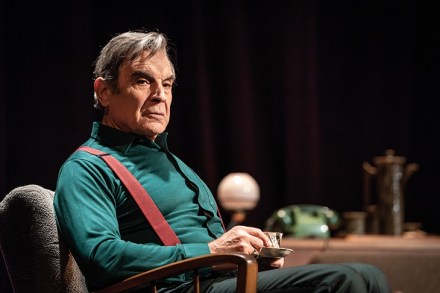
Gandalf, also known as Ian McKellen, has awarded himself another lap of honour by bringing King Lear back to London. Jonathan Munby directs. His eccentric decision to hire actors who don’t resemble their characters will baffle anyone who hasn’t studied the play in advance. The casting may be ‘colour-blind’, but the audience isn’t. Anita-Joy Uwajeh (Cordelia) evidently has no white ancestry and therefore cannot be Lear’s natural daughter. A newcomer might deduce that the king’s cruelty towards her stems from her second-class status as an adoptive child. And anyone trying to unravel that mystery will be equally baffled by Sinead Cusack’s Kent.

The NHS at 70 (plus)

Theatre

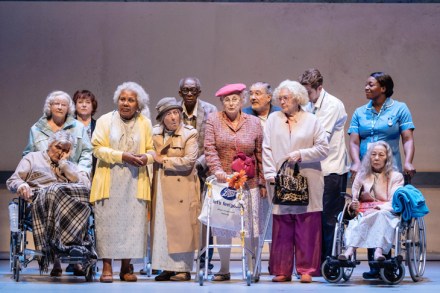
Alan Bennett’s new play, Allelujah!, is an NHS drama set in a friendly hospital in rural Yorkshire. Colin, an ambitious local boy turned metropolitan yuppie, has arrived from London to visit his sick father and he takes the opportunity to assess the efficiency of the hospital on behalf of his bosses at the health department in Whitehall. Meanwhile, a TV crew has found evidence that a staff member is murdering elderly patients to create vacant beds for new arrivals. Bennett’s sentimental adoration of the NHS leads him to misrepresent a couple of political issues. It’s false to suggest that any well-run hospital is bound to be flogged to the commercial sector. And although he laments ‘privatisation’, he neglects to mention that it was introduced by Labour.

Bank account

Theatre

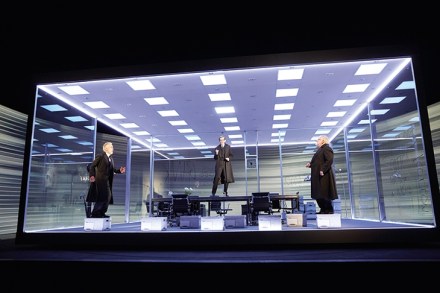
Stefano Massini’s play opens with a man in a frock-coat reaching New York after six weeks at sea. The year is 1844 and young Henry Lehman has just emigrated from Bavaria to make his fortune. He started modestly with a general store in Montgomery, Alabama, serving local farmers. When wildfires destroyed the cotton crop on which the community relied, Lehman’s business ought to have failed but he saw his opportunity. Whatever possessions the farmers had lost they would have to purchase again. From him. He was joined by his brothers, Manny and Mayer, and they invented the profession of brokerage, ‘middle-men’ they called themselves, buying raw cotton from farmers and selling it on to the clothing factories.

Dumb and dumber | 12 July 2018

Theatre

The Lieutenant of Inishmore is a knockabout farce set during the Troubles. Like Monty Python’s dead parrot sketch it uses the expiry of a pet to examine human obsessiveness and self-delusion. But it takes two hours rather than three minutes to make its point. We meet a handsome terrorist, Padraic (Aidan Turner), whose adoration of his black cat symbolises his crazed devotion to republicanism. The cat is accidentally run over by Davey, an amiable twerp on a bike, who must find a new cat or face reprisals from the insanely brutal Padraic. Donny, Padraic’s dad, offers to help Davey and they borrow a ginger cat, which they blacken with boot polish. That’s the level of narrative ingenuity here: children’s television.

Ask the audience

Theatre

Listen to the crowd. I often delay passing judgment on a show until the audience delivers its verdict. This is especially true of plays that appeal primarily to women. Genesis Inc. by Jemma Kennedy presents us with two infertile mums. Serena is a clingy worrier whose aloof boyfriend, Jeff, resents forking out thousands for IVF. Bridget, a cocky City power-dresser, is keen to get herself impregnated by her gay best friend. Serena and Bridget don’t meet until the final scene so the play feels like two separate dramas, poorly merged. The fertility clinic, Genesis Inc., is owned by the smarmy Dr Marshall (Harry Enfield). He wants the firm to go public so he hires one of his customers, cocky Bridget, to handle the flotation.

Promises, promises

Theatre

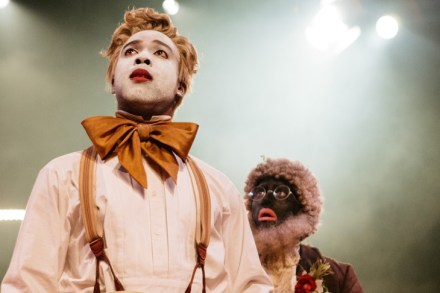
Intriguing word, ‘octoroon’. Does it mean an eight-sided almond-flavoured cakelet? No, it’s a person whose ancestry is one eighth black. New Yorker Branden Jacobs-Jenkins wants to explore this factoid in his farce An Octoroon, which opens with an angry African-American playwright delivering a comic monologue. He tells us a story about ‘my shrink’. Then he tells us that ‘my shrink’ doesn’t exist. Then he talks about ‘my shrink’ again. Right, so is ‘my shrink’ real or not? Obviously the writer doesn’t care. A second dramatist enters, an Irishman, in Victorian costume. This is Dion Boucicault, a 19th-century writer whose comedies were enormously popular in London and on Broadway.

Lost in transplantation

Theatre

Polly Stenham starts her overhaul of Strindberg’s Miss Julie with the title. She gives the ‘Miss’ a miss and calls it Julie. The wonder of Strindberg is that his characters speak to us with such force, knowingness and candour that they seem to belong to our own era. Modernising the setting destroys the wonder. This is a textbook lesson in how to kill by transplantation. We’re in a London mansion owned by an absent billionaire whose chauffeur, Jean, is casually seduced by a trustafarian coke fiend, Julie, on the night of her 33rd birthday. Julie’s motives are lust, boredom, a need for attention and a perfunctory desire to sabotage Jean’s forthcoming marriage to Kristina the cleaner, a bombshell from Brazil.

Darkness visible | 14 June 2018

Theatre

Oh, what a beautiful morning! In Jo Davies’s production of Oklahoma! the audience spends the overture staring at the side of a barn. Then, as birdsong rises from the orchestra, corrugated-iron doors slide open on a dustbowl farm of the 1930s. Aunt Eller (Claire Moore) is fixing a tractor, and a wind pump spins slowly against an orange dawn sky. It’s mildly surreal: the light falls as if in one of those New Deal-era western landscape paintings, with a jagged, David Smith-like sculpture of pitchforks and shovels serving as a tree. And then, with throwaway ease, Dex Lee as Curly launches into that greatest of all Broadway opening numbers. Davies catches Rodgers and Hammerstein’s surge of hope on the upswing, and rides it in a single sweep from beginning to end.

The Friel-bad factor

Theatre

The National has made its largest stage available to one of the nation’s smallest talents. If Brian Friel had been born in Dorset rather than in Co. Tyrone he’d have enjoyed an unremarkable career writing episodes of The Archers with the odd stint on Emmer-dale. He’s a champion witterer whose plays lack suspense, pace, depth or spectacle. His characters are constantly and infuriatingly nice to each other. Occasionally they rise to mild irascibility, or a spot of vituperative teasing, but that’s about it. When he needs a crisis he turns to external sources, to destiny or to happenstance, and his plays often end with dreadful sufferings being visited on russet-faced, cheeky-chappy Irish folk by crool, crool fate. Translations at the Olivier is set in Co.

Privates on parade | 7 June 2018

Theatre

Tracy Letts begins his trailer-trash comedy Killer Joe with the corniest of platitudes. A runaway druggie named Chris Smith needs $6,000 to stop ‘some guys’ from killing him. He asks his dad who declares himself skint but together they plot to bump off Mrs Smith, Chris’s mum, and collect her life insurance. Interesting idea. Luckily there’s a hitman available who works as a cop and goes by the sobriquet, ‘Killer Joe’. (Note to police forces everywhere: an officer whose nickname suggests a second career as an assassin may be worth investigating.) Joe wants payment up front and the penniless conspirators offer him Chris’s attractive sister, Dottie, as a ‘forward loan’.

Return to gender

Theatre

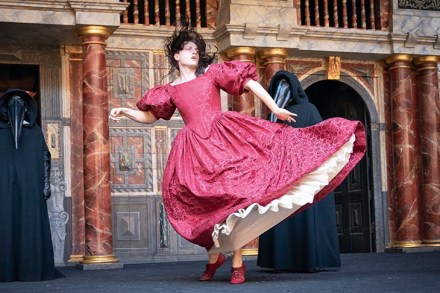
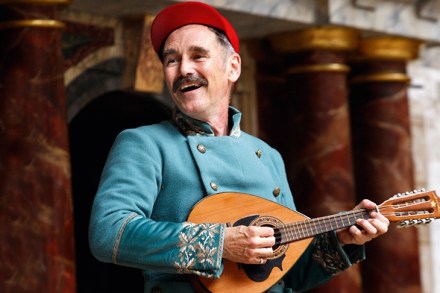
Regime change at the Globe. The new boss, Michelle Terry, wants a 50/50 ratio of males to females in each production. Rather eccentric. Why cast a drama to reflect the distribution of sexual organs across the general populace? Imagine hiring an orchestra to represent the ratio of citizens who can play an instrument. And didn’t the process of examining actor’s genitals at auditions land Harvey Weinstein in a spot of bother? Ms Terry’s gender fixation is called, curiously enough, ‘gender-blind casting’. She inaugurates her reign at the Globe by offering us a production of Hamlet in which, perhaps with a nod to gender-blind casting, she plays the lead. No one but Ms Terry would have hired Ms Terry for this role.

Art in the wrong tense

Theatre

The Bridge’s big summer show is Nightfall by prize-winning newcomer Barney Norris. Widowed Jenny wants her grown-up kids, Lou and Ryan, to help her run their farm in Hampshire following their dad’s death. But Lou’s boyfriend, Pete, has been offered work abroad. That’s the only major snag in this low-wattage rustic melodrama. The back story involves a secret abortion and a criminal assault for which the wrong person was imprisoned, but the plot centres on clingy Jenny’s desire to curb her nippers’ wanderlust. She’s a needy chatterbox who isn’t entirely without charm, and the same could be said of the other ho-hum characters who pass their time sprawling on a scruffy lawn, boozing and nattering.

Roll up, psychos

Theatre

Describe the Night opens in Poland in 1920 where two Russian soldiers, Isaac and Nikolai, discuss truth and falsehood. Next we’re in Smolensk, 2010, where some strangers scream at each other about a hire car. Next Moscow, 1931 (or 1937 — the surtitles are illegible), where Nikolai, now a top soldier, asks Isaac, now a successful screen-writer, to audition his wife for a movie. Isaac improvises a scene with the wife and then fondles her bottom as they perform a weirdly sexless dance that is supposed to symbolise something, but it’s unclear what because everything that preceded the dance was indecipherable. Then the interval. I looked for enlightenment in the programme notes and discovered what the play is supposed to be about. It’s fascinating stuff.

Death duties

Theatre

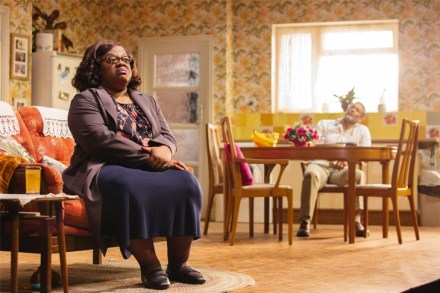
Nine Night refers to a Jamaican custom that obliges bereaved families to party non-stop for more than a week following the death of a parent. When Gloria expires her relatives arrive from all parts of London and the Caribbean to indulge in a boozy blow-out. Gloria’s daughter Lorraine tussles with her businessman brother, Robert, who wants to stave off bankruptcy by flogging the family home immediately. Their half-sister, Trudy, arrives from Jamaica and collapses in hysterics over her abandonment by Gloria in infancy. Everyone lives in fear of Auntie Maggie, a pious matriarch, who uses a walking stick and whose religious devotion conceals the heart of an emotional despot. Cecilia Noble (Maggie) delivers a tour de force as the nit-picking hypochondriac.

Artistic Munchausen’s

Theatre

Ella Hickson’s last play at the Almeida was a sketch show about oil. Her new effort uses the same episodic format ornamented with ‘meta-textual experimentation’ (i.e. plotless confusion). The central character is a brilliant young female writer who finds that all male theatre directors are boorish cynical greedy philistine racist sex pests. In Sketch One she meets a smarmy monster twice her age who tries to seduce her with the offer of a script commission. Sketch Two is a commentary on Sketch One, which turns out to have been a play within a play. Sketch Three shows the writer cohabiting with a loser who ‘sells football boots’. The loser has just bought a new sofa (with her money) and he baptises it with an enforced bout of loveless copulation.

Courting disaster

Theatre

‘Hunt the Flop’, the Royal Court’s bizarre quest for dud plays, has found a candidate for this year’s overall prize. Instructions for Correct Assembly by Thomas Eccleshare is a family satire set in the near future. Plot: suburban parents replace their missing son with a computerised cyborg which malfunctions. That’s it. Were this a pitch for a TV sketch show the producer would say, ‘OK, but then what?’ The answer here is virtually nothing. Early on, the cyborg makes embarrassing political statements and expresses support for Brexit. The parents hastily silence him using a hand-held device that returns him to their dead-safe Guardianista outlook.

Question time | 19 April 2018

Theatre

Quiz by James Graham looks at the failed attempt in 2001 to swindle a million quid from an ITV game show. Jackpot winner Major Charles Ingram was thought to have been helped by strategic coughs emanating from Tecwen Whittock, a fellow contestant on Who Wants to Be a Millionaire? Graham, best known for his gripping political dramas, can’t muster any passion for this story or his characters. Ingram is a posh, weepy lummox. His wife, Diana, comes across as a blur of aloofness, cunning and banality. Whittock, who claimed to suffer from a persistent throat condition, is a clueless hobbit with a wonky Welsh accent. And Diana’s brother, tangentially involvedin the drama, is an amiably bumbling spendthrift. The material has a built-in problem. Whose side are we on?

Politics at play

Theatre

David Haig’s play Pressure looks at the Scottish meteorologist, James Stagg, who advised Eisenhower about the weather in the week before D-Day. The play works by detaching us from our foreknowledge of events. We’re aware that the landings went off smoothly on 6 June in fine conditions. However, D-Day was originally scheduled for 5 June, and for the preceding month southern England had basked in a prolonged sunny spell. According to Eisenhower’s American meteorologist, this was set to continue. But Stagg believed a storm was about to engulf the channel. Eisenhower trusted Stagg and postponed D-Day. The storm arrived, albeit tardily, which vindicated Stagg who then foresaw a brief period of clear skies and low winds for the following day. Eisenhower trusted him again.

The killer instinct

Theatre

Ruthless! The Musical is a camp extravaganza about ambitious actors stranded in small-town America. Sylvia St Croix, a pushy agent, visits a super-talented 10-year-old, Tina, and persuades her to audition for Pippi Longstocking in a school play. Tina’s mother fears that stardom may spoil her little girl but Tina is finished with childhood. ‘Time to move on.’ The production feels like a zany Spike Milligan sketch with a garish set and over-the-top costumes. Sylvia is played by Justin Gardiner who swaggers about like a cross-dressing cowboy in a clingy frock and false breasts. The dialogue, which takes cheap shots at bourgeois morality, may not suit all tastes. Try this. Tina complains to Sylvia that she never sees her father.

Rising star

Theatre

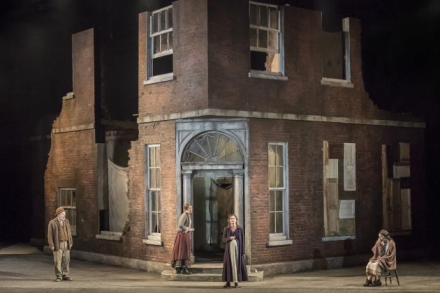
The Plough and the Stars by Sean O’Casey looks at the Irish nationalist movement during the events of Easter 1916. The setting is a Dublin tenement where the residents exchange gossip and insults and sometimes punches. What begins as an elevated soap opera develops into a tragedy of vast and harrowing proportions. Sean Holmes’s production was first seen at Dublin’s Abbey Theatre and it tells the historic tale with contemporary costumes and furnishings. These chronological confusions rarely work but the performers here have so much spirit, energy and truthfulness that the narrative feels immediate and topical. The set is spare, unlovely, brutal.

What’s the big idea?

Theatre

Summer and Smoke by Tennessee Williams dates from the late 1940s. He hadn’t quite reached the peaks of sentimental delicacy he found in his golden period but he was getting there. As a lesser-known curiosity, the script deserves a production that explains itself openly and plainly. Rebecca Frecknall has directed a beautiful and sometimes bizarre-looking show which is beset by ‘great ideas’. What a great idea to encircle the stage with upright pianos that the actors can cavort on, and whose exposed innards can twinkle with atmospheric lights at poignant moments. The pianos are an ingenious and handsome solo effort but they serve the designer’s ends and not the play’s. Another great idea was to include a booming soundtrack, often irrelevant, sometimes intrusive.

Seeing stars

Theatre

The Best Man by Gore Vidal is set during a fictional American election in 1960. Two gifted candidates seek their party’s nomination. Secretary Russell is a chilly but experienced political hack whose marriage is a sham. Senator Cantwell, a more attractive character, is an impulsive charmer married to a blonde bombshell who adores him. The show feels dated but the acting, the costumes and the set designs capture the period nicely. The plot is perhaps short of pace and density. Each character has an embarrassing secret to hide. Secretary Russell suffered a mental breakdown a few years ago. Senator Cantwell enjoyed a bisexual fling in the army. The action turns on their ability to keep these details hush-hush.

Save the children

Theatre

Fanny & Alexander opens like a Chekhov comedy and turns into an Ibsen tragedy. Ingmar Bergman’s movie script, adapted by Stephen Beresford, has been directed for the stage by Max Webster. The children, Fanny and Alexander, belong to the famous Ekdahl acting dynasty who live in Bohemian chaos. Their home is full of jokes and pranks and sophisticated merriment, and the family business is overseen by their grandmother (Penelope Wilton), who runs their theatrical affairs with a benignly imperious eye. Then disaster strikes. The kids’ father dies of a brain haemorrhage while rehearsing the Ghost in Hamlet. Their mother, Emilie, is comforted by the sinister Bishop Edvard who marries her and moves the children into his chilly episcopal palace.

Killer instinct

Theatre

Frozen starts with a shrink having a panic attack. She hyperventilates into her hand-bag and then gets drunk on an aeroplane where she yells out, ‘We’re all going to die.’ She’s a bit loopy, clearly, which is how lazy playwrights make psychologists interesting. The shrink’s task is to examine Ralph, a serial murderer of children, and to deliver a lecture on the cause of his malignity. We hear bits from the lecture, bits of confession from Ralph, and weepy bits from the mother of one of Ralph’s victims. The subject is punishingly gruesome but its dramatic power is non-existent because the writer Bryony Lavery hasn’t learned how to stimulate the viewer’s imagination.

House rules | 22 February 2018

Theatre

The Donmar’s new show, The York Realist, dates from 2001. The programme notes tell us that the playwright, Peter Gill, ‘is one of the most important and influential writers and directors of the past 30 years’. Who wrote that? Not Peter Gill, I hope. The play, directed by Robert Hastie, follows a gay affair between a strapping Yorkshire cowherd and a sensitive London artiste. They meet while rehearsing an am-dram production of a mystery play set in a ruined abbey. Gay men will enjoy this charmingly acted production but it’s apt to bore the general audience because the characters are trite, the gay theme feels antiquated and the storyline is as light as a Post-It note. It doesn’t help that Peter Gill writes like a newcomer at a creative writing weekend.

Torture in the stalls

Theatre

It’s considered the great masterpiece of 20th-century American drama. Oh, come off it. Long Day’s Journey into Night is a waffle-festival that descends into a torture session. Who would choose to spend time with the Tyrone family? Dad is a skinflint millionaire. Mum is a wittering smack addict. They’ve produced two layabout sons. One is a dipsomaniac with a moustache; the other has TB and a cough. These doomed narcissists chase each other around the family mansion in a spiral of vicious, self-regarding gossip. It’s like being trapped in a broken cable-car with four prattling drunks who hate each other. And I’m not convinced they drink that much. A bottle and a half of whisky, or a little over, is consumed in the course of a day.

Changing the bard

Theatre

Nicholas Hytner’s new show is a modern-dress Julius Caesar, heavily cut and played in the round. It runs for two hours, no interval. The action opens with the audience grouped around a central stage where a ramshackle rock gig descends into a riot. The play unfolds like an illegal rave at a warehouse. It’s bold, in its way, and some of it works. A couple of the Roman senators are played by actresses and the text has been bodged to suit the cult of gender neutrality. ‘Romans’ is substituted for ‘men’ in Mark Antony’s famous line, ‘so are they all, all honourable men’. This small change is curiously painful to hear. It turns the ominous finality of Shakespeare’s original into a tuneless clatter.

Drivel time

Theatre

The NT’s new production, John, is by a youngish American playwright, Annie Baker. We Brits tend to assume that ‘john’ is American for ‘toilet’ so perhaps lavatorial treats are in store. The setting is a provincial hotel run by a blithering old dear whose only guests are two grumbling yuppies with marriage problems. The plot of a play usually starts within ten minutes but not here: nothing happens. That’s the point. Instead of a story there’s a minor predicament and this, oddly enough, suits the show’s personalities. The yuppies, Elias and Jenny, are just about memorable enough to be human beings but they haven’t the substance or grit for dramatic characters. Their personalities lack density or appetite.

The Pinter conundrum

Theatre

The Birthday Party is among Pinter’s earliest and strangest works. It deconstructs the conventions of a repertory thriller but doesn’t bother to reassemble them. The setting is a derelict seaside town on the south coast. Petey, a thick deckchair attendant, runs a guest-house with his ageing wife, Meg. She’s a zero-IQ cook whose signature dish is a slice of white toast charred in fat. They have one resident, Stanley, a former pianist whom Meg cossets and mothers like a substitute son. Enter two London thugs, Goldberg and McCann, who invite Stanley to a party as a pretext to punish him for unknown misdemeanours. The whisky-soaked celebrations involve a game of blind man’s bluff during which Stanley’s glasses are smashed, rendering him sightless.