Culture

Culture

The good, the bad and the ugly in books, exhibitions, cinema, TV, dance, music, podcasts and theatre.

Delightful: Phoenix, at All Points East, reviewed

Pop

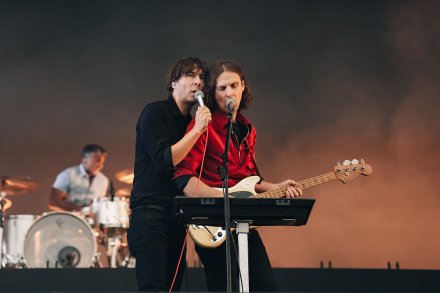
A few years ago, my nephew informed me that he and his friend were planning to come up to London for the weekend for the Wireless Festival. Did they need somewhere to stay? He looked at me like I was a mad old man. No, of course not. They were going to camp. In Finsbury Park. Because when you go to festivals, you camp. Thankfully, he didn’t turn up on the Victoria Line with his tent and then wonder why no one else was similarly equipped. Phoenix have the air of being as much a lifestyle choice as a pop group Inner-city festivals such as Wireless and All Points East are almost always a series of single-day events. APE is a ruthlessly programmed festival. Rather than try to be all things to all people, each day is targeted at some section of the festival-going population.

The Ava Gardner of the ketamine age: Lana Del Rey, at Leeds Festival, reviewed

Pop

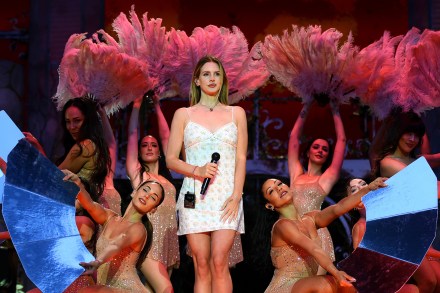
As the American superstar starts singing another slow, sad, rather beautiful song, my mind begins to drift. I’m thinking that our appreciation of music is so much about the who, the when and perhaps most crucially the where; the significance of place is an under-examined element in our relationship with what we’re hearing at any given moment. I’m also thinking that a massive over-reliance on concert revenue to sustain artists’ livelihoods means that nowadays bigger is almost always seen as better – even when ‘bigger’ comes at the obvious detriment of the music. And I’m thinking that an act’s popularity – and indeed their excellence – isn’t necessarily proportionate to their ability to successfully perform at the top end of the bill at a major music festival.

Triumphant: Big Thief, at Green Man, reviewed

Pop

One of the first things I learned after seeing Big Thief triumph at Green Man is that some long-time fans are worried about them. There’s an extra percussionist; the bassist has been replaced; and the singer is now front and centre. Have they just become a conventional rock band, people mutter. Have they lost the intimacy they once had? I’d never seen Big Thief before, which is something of an error on my part. Not least because I can’t answer those questions: I have nothing to compare Saturday night’s performance with. I can only say that without caring about what they were in the past, they are extraordinary in the present: both grand and welcoming.

Fun, frenetic and only a little gauche: Declan McKenna, at the Edinburgh Playhouse, reviewed

Pop

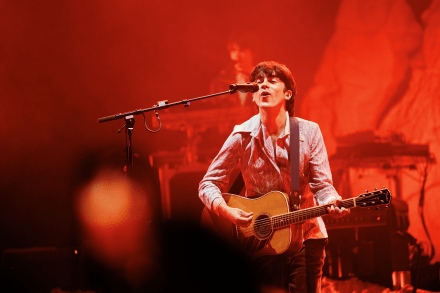
Towards the end of Declan McKenna’s snappy, enjoyable 90-minute set at the Edinburgh International Festival, something quite powerful occurs. The English singer-songwriter returns alone to the stage for the encore and proceeds to play a version of ABBA’s ‘Slipping Through My Fingers’ with only his electric guitar as accompaniment. It becomes a strange, emotionally layered moment. A young musician singing from the perspective of a parent ruefully reflecting on their child growing up, away and beyond reach; a predominantly teenage crowd singing those words back to him; and the older members of the audience, many attending with their own kids, staring blurrily into the middle distance.

Fantastic – and genuinely indie: Personal Trainer, at the Shacklewell Arms, reviewed

Pop

Remember when we all knew what indie meant? Indie was what John Peel played. It was music that was recorded, manufactured and distributed independent of the major labels. In practice, that tended to be music played by young white people, usually more in hope than expectation of either competence or success. As the years passed it came to be applied particularly to a kind of whey-faced, solipsistic music, played on guitars by people who were either too clever by half or too wimpy by half. By dusk, what had not long before looked like the seventh circle of hell had transformed These days, though, indie means whatever you want it to mean. Entirely mainstream soft pop acts with massive worldwide hits on major labels – such as Glass Animals – are classed as indie.

Jack White’s new album will be of close interest to Led Zeppelin’s legal team

Pop

The ploy of releasing an album without any advance warning comes into play when an artist feels they are being paid either too much or too little attention. The stealth arrival of Jack White’s new solo album falls firmly into the second category. Putting out music in this way ensures additional media coverage and a certain level of intrigue I didn’t love White’s old band, the White Stripes, back when they were a garage-rock/blues revival phenomenon in the early 2000s. Since their demise in 2011, the world seems to be coming around to this way of thinking. Their most successful albums, Elephant and White Blood Cells, hold little cultural currency these days.

Charismatic, powerful and raw: Patti Smith, at Somerset House, reviewed

Pop

There are certain long-established rules for describing Patti Smith. Google her name and the words ‘shaman’ and ‘priestess’ and you’ll see what I mean. For the best part of 50 years she’s been treated as though she’s a mystical object, a human convergence of ley lines, as much as a rock singer. In the courtyard at Somerset House, she didn’t exactly discourage the clichés. There was a long lecture on the power of the full ‘buck’ moon, which was hidden by clouds but still prompted the people in front of me to pull out their phones to check astronomy apps. There was a lengthy hymn to William Blake that concluded: ‘And then the children, the chimney sweeps, remembered him.

Hard to love – but Shirley Manson is terrific: Garbage, at Usher Hall, reviewed

Pop

There’s nothing quite like the drama of a prodigal’s return. ‘I’ve been singing in this venue since I was ten years old,’ announces Shirley Manson, staring down nearly half a century of personal history at Edinburgh’s ornate Usher Hall. The fact that Garbage’s lead singer made the United States her primary residence many years ago lends this homecoming concert added potency. There are shout-outs to her dad, a ‘Happy Birthday’ serenade for her sister and what looks like a tear or two at the start of the encore. A ‘badass’ attitude is so sleekly applied it seems like a Che Guevara T-shirt in the racks at M&S For all the sentiment, it was obvious that Manson was right to leave not just Edinburgh, but the UK.

Complain all you like but Glastonbury has delivered the goods again

Pop

There’s yet to be a Glastonbury line-up that hasn’t provoked a chorus of naysaying. Refrains like ‘looks rubbish. I wouldn’t go’ and ‘not like it used to be’ are de rigueur. Dismissing the headliners as ‘crap this year’ rivals football as the nation’s favourite sport. Yet there’s something to be said for trusting the Glastonbury bookers: check out, say, the lower-tier bands on the 1994 poster and see how many greats they discovered before they were famous – Radiohead, Pulp, Oasis... Nowhere else in the world could hand written signs for toilets induce a Proustian yearning to return Glastonbury’s prestige and legendary ‘vibe’ are now such that the festival is bigger than any of the artists playing there.

Camila Cabello’s new album presents an existential threat to songwriting

Pop

It is always interesting to observe the ways in which pop stars try to negotiate first growing up, and then growing old. From teen scream to respected mainstay to elder states(wo)man is not an easy path to walk without a few stumbles. At certain times, it requires making some blatantly strategic moves. Cabello wants so badly to grow up that she evolves from a past incarnation practically into thin air Few readers will remember that the first solo single George Michael released after dissolving Wham! was called ‘I Want Your Sex’, a forgettable bump-and-grind with a steamy video designed purely to shift audience expectations away from all things teenybopper and towards a more adult-orientated market. The song was banned by the BBC during daylight hours.

Teenage Swifties restored my faith in strangers

Pop

Taylor Swift is the last of the monocultural pop icons. Put it this way: I bet you’ve heard of her. Your parents have heard of her. Your children have heard of her – and so have your grandchildren. This used to be commonplace – but not now. She transcends pop music. This might be why so much of the discussion of the Swift phenomenon has been about the facts and figures: hers is the first tour to gross more than $1 billion, while global leaders have begged for her to visit their countries due to the financial boost she brings. Not to mention her tendency to pump out new editions of her albums every 20 minutes to keep her top of the charts as loyal fans loyally part with their cash.

Does it matter how posh pop stars are?

Pop

‘A working class hero is something to be.’ Rishi Sunak and Keir Starmer must have missed the conflicted, sardonic edge to John Lennon’s lyric, from his 1970 song ‘Working Class Hero’, given their rush to scrub away the whiff of privilege in the crudest manner imaginable. Sunak, desperately, by means of bemoaning a childhood forever blighted by lack of access to satellite TV; Starmer by dully hammering home that he is the son of a toolmaker. A country pile, a double-barrelled girlfriend and a mock-regal drawl were valued plunder in 1960s pop As in politics, so in music. In both fields, class anxiety has become inverted. The fear now is to appear too privileged. It wasn’t always thus.

‘Psychedelic folk that twists and leaps’: Beth Gibbons, at the Barbican, reviewed

Pop

A decade ago, a group of people who owned small music venues came to the conclusion that the kinds of places they ran were teetering on the brink of a catastrophic extinction event. And so they formed the Music Venue Trust, which has spent ten years kicking cans and shouting the odds about the need to preserve these places, about how they are the production lines from which the festival headliners of tomorrow come. A brilliant guitarist, a fascinating songwriter, St Vincent cycles sleekly through styles with utter assurance Quite right. Good, small venues are the best place to enjoy both live, loud, raucous music and intimate performances where the crowd’s hush is as deafening as any amp.

Nickelback may not be cool but they are very good at what they do

Pop

In May 2013, Rolling Stone polled its readers in an attempt to discover which band might be crowned the worst of the 1990s. The winners – or losers, depending on how you look at it – were Creed, trailed in second place by Nickelback. Eleven years on and Creed appear to have turned that status around, in America at least – Vanity Fair, Vice and Slate have noticed that they have, whisper it, become cool. And Nickelback? Well, no one’s claiming coolness for them: last year they released a documentary called Hate to Love: Nickelback, a recognition of the fact that, outside their fanbase, they are usually mentioned only as a punchline.

The weird, hypnotic world of Willie Nelson

Pop

Many years ago, I wrote a book about Willie Nelson. At its conclusion, I reached for an elegiac, valedictory tone. In 2006, when The Outlaw was published, Nelson was already 73, and it seemed plausible to suggest that one of the great American lives might be winding down. I pictured Nelson rolling off the road and into the sunset, his work on Earth more or less complete. Nelson embodies both sides of an increasingly divided nation; hippie and redneck, patriot and agitator Well, scratch that ending. Having recently turned 91, Nelson is still going strong.

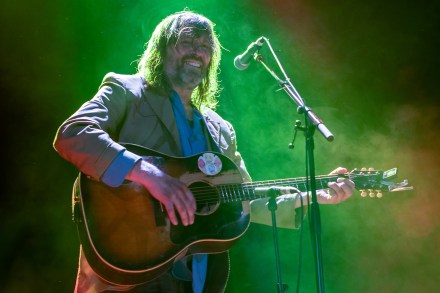
Lovely slice of Cosmic Scouse: Michael Head & the Red Elastic, at EartH, reviewed

Pop

One of the more bizarre but recurring tales about how the music of Liverpool has been shaped over these past 45 years concerns Courtney Love, the American musician famed, music aside, for being married to Kurt Cobain, and for being wildly unpredictable. This story claims the 17-year-old Love, who had travelled across the Atlantic to be near the bands she loved, introduced Liverpudlian musicians to LSD, setting in train a decades-long phenomenon known as ‘Cosmic Scouse’.

Dense, melancholic, hypnotic: Brighde Chaimbeul, at Summerhall, reviewed

Pop

The hip end of the folk spectrum is in rude health right now. Dublin’s mighty Lankum lead the way, but plenty of other interesting artists are following in their wake, Brighde Chaimbeul among them. If a Gaelic-speaking trad musician from Skye reinterpreting Philip Glass for the small pipes sounds like your thing – and why on earth wouldn’t it? – then Chaimbeul is worthy of exploration. At 17 she won the BBC Radio 2 Young Folk Award. Her 2019 debut, The Reeling, released via Rough Trade, cross-pollinated traditional with experimental electronic music. More recently, and still in her early twenties, she has collaborated with American avant-garde saxophonist Colin Stetson on the album Carry Them With Us.

Adrianne Lenker is a treasure for the ages 

Pop

You could very well sum up their differing approaches to American roots music from how they were dressed. Both wore cowboy hats and both wore trousers, but Adrianne Lenker’s were faded denim, while Lainey Wilson went with shiny brown leather. Lenker, looking austere and speaking and singing softly, played music plucked from eternity, demanding you concentrate on her stillness. Wilson, on the other hand, was here to make the crowd feel good; a little melancholy on the big ballads, sure, but she’s an entertainer in the grand tradition of country music.

Taylor Swift’s new album is exhausting

Pop

How to explain the supercharged star power of Taylor Swift? An undeniably gifted artist, Swift’s albums 1989, Folklore and Evermore, in particular, are excellent. She has written a battery of terrific pop songs. She is a generous and skilled performer. To suggest she is overrated is not an insult, therefore, but simply a comment on the absurd critical mass of her popularity, in which every lyric, scrap of artwork, cultural reference and personal tit-bit is weighted with a monumental significance which, it is becoming apparent, does her work few favours. Anybody listening to Swift’s new album without prior knowledge of the layers of gossipy context surrounding it might well wonder what all the fuss was about.

Why garage punk is plainly the apogee of human achievement

Pop

How is it that a group that sounds like the Hives are selling out the Apollo? In a world configured according to expectation, the highlight of their year would be an appearance at the Rebellion punk festival in Blackpool, probably high up the bill on the second stage. They’d headline their own shows at places like the Dome in Tufnell Park to an audience made up of three-quarters old blokes and a quarter skinny young kids, suited and booted like it’s 1966 and Antonioni’s about to shout ‘Action!’. Afterwards, a DJ would play the Sonics and the Electric Prunes and the Chocolate Watchband.

The mayhem ‘Born Slippy’ provoked felt both poignant and cathartic: Underworld, at Usher Hall, reviewed

Pop

On the same night Underworld played the second of two shows at the Usher Hall, next door at the Traverse Theatre, This is Memorial Device was midway through a short run. Seeing both within a matter of hours, I felt an exchange of currents, a renewed awareness of the short distance we travel between euphoria and sorrow when we start mixing music and memory. The short play, adapted and directed by Graham Eatough from the novel by David Keenan, concerns the brief, wayward life of a (fictional) 1980s cult band from Airdrie. We see how the group’s complicated yet charismatic personal dynamic, intense improvised music and quasi-occult power was once revered by a handful of diehards.

Never admit that your band is prog – it’s the kiss of death

Pop

Sensible prog-rock bands try to ensure no one ever realises they play prog. What happens when you are deemed a prog band is that you are condemned to the margins – little radio airtime, few TV appearances, barely any coverage in the mainstream press – because it has been decided you exist solely for the delectation of a tribe that baffles the rest of the world. Once non-proggers have decided you are prog, that’s it. There is no way back for you. Just collect your Campaign for Real Ale membership card, go home and practise your drum solos. Once non-proggers have decided you are prog, that’s it. There is no way back for you Hence Radiohead – absolutely, indubitably a prog band, right down to the tricksy time signatures – don’t bang on about Tales From Topographic Oceans.

The horror of London’s music venues

Pop

There were headlines last month about the plight of live music in Britain. More than a third of grassroots venues are making a loss; more than 100 of them are ceasing to put on live music or closing altogether. Cue the stories about how, if it wasn’t for these broom cupboards giving musicians the opportunity to learn their trade, you’d never have got all those acts you know and love. All true, of course. We need small venues, and not just for the health of the music industry but for the simple pleasure of sipping a pint watching a young band in a small room. What use is a venue when a couple of hundred people can’t even see the stage? But dear God, the bigger venues that accommodate graduates of the grassroots circuit need to up their game, too.

The Black Crowes’ latest album shows they truly are the American Oasis

Pop

Leonard Cohen used to speak self-deprecatingly about his sole ‘chop’ – that mesmeric, circular minor-key guitar pattern deployed on so many of his earliest and greatest songs. It was a classic Cohen humblebrag, the implication being that, in popular music, practical competence at just one thing was acceptable – but any artist with multiple ‘chops’ was to be viewed with great suspicion. The slightly strange notion that anyone peacocking their technical mastery is covering up for some other inadequacy – usually a lack of heart or, worse, of ‘authenticity’ – has found widespread acceptance in the field of music criticism over the years.

The joy of meat-and-potatoes rock

Pop

‘Meat-and-potatoes rock’ is the pejorative term critics use when describing groups of white men with guitars who play loud, uncomplicated music. Why would anyone enjoy such stuff, when there are the ceviches of hyperpop, the flavoured foams of experimental hip-hop, the chargrilled seasonal vegetables of jazz? Don’t they know the world has moved on? Unfortunately, the world has a habit of not listening to the critical consensus. The highest new entry in last week’s album chart came from the Snuts, a meat-and-potatoes guitar band. This week’s No. 1 album is all but guaranteed to be by Liam Gallagher and John Squire, the Toby Carvery of meat-and-potatoes rock.

Twisted, fuzzy, psychedelic pop: Slowdive, at the Liquid Room, reviewed

Pop

Rachel Goswell, one of Slowdive’s two singers, has cool hair. It is dyed half black and half white, and by the end of this show I had a feeling it might have been trying to tell us something. Slowdive broke up in 1995 having made three albums. They reunited in 2014 and have since made two more. Can we spot the join tonight between the two eras? I think we can. When they first arrived on an independent music scene still subordinate to the critical whims of Melody Maker and NME, Slowdive were not exactly beloved. Back in the early 1990s they were more or less the whipping boys and girls of what was known as ‘shoegaze’.

He barely knows what he’s doing: Oliver Anthony, at the O2 Shepherd’s Bush Empire, reviewed

Pop

What does a chubby, bearded American feller wearing a plaid shirt and singing about his dog and truck have in common with a chic, sonically adventurous Irish art-pop star? Both, last year, were inadvertently parachuted into the battlefields of the culture wars. Oliver Anthony recorded a song called ‘Rich Men North of Richmond’ – Virginia, not Surrey – that was picked up by MAGA-types from an obscure country music YouTube channel, became a talking point in the Republican presidential primary debates and ended up entering the Billboard Hot 100 at No. 1 last August. While the music is appealing enough, Anthony is an appalling lyricist.

Why I was wrong to think Idles obvious and depressing

Pop

I never had Idles down as a great Bristol band, I confess. In fact, I never had them down as very much of anything at all. Through occasional and accidental contact, I associated the quintet with a cadre of unlovely groups – Sleaford Mods, Shame, Soft Play (formerly Slaves), Viagra Boys – that emerged in the 2010s and made shouty, angry music which wanted to Say Something Important about our times, most of it pretty obvious and deeply depressing. Idles had a song called ‘I’m Scum’. It was a hard pass from me – more or less sight unseen. Turns out I got it wrong; or perhaps Idles got it wrong. In any case, we’ve both changed our tune.

Monumentally good: John Francis Flynn, at the Dome, reviewed

Pop

John Francis Flynn is monumentally good. He’s kick-yourself-for-missing-him good. He’s so good that when he spoke between songs in the upstairs ballroom of an old Irish pub in Tufnell Park, it was almost a disappointment: how could the man making this extraordinary music be so normal? Flynn is part of a cohort of Irish musicians revisiting traditional music. There’s the Mary Wallopers, in broad terms the most Pogues-ish. There’s Lankum, shortlisted for the Mercury Prize for their eyebrow-raising, droning experimentalism. There’s Lisa O’Neill, subdued and stern. And there’s Flynn, whose music dances from the unadornedly old-fashioned and Irish – the ‘Tralee Gaol’ played solo, on tin whistle – into something entirely different.