Culture

Culture

The good, the bad and the ugly in books, exhibitions, cinema, TV, dance, music, podcasts and theatre.

The disturbing ambient music of William Tyler

Pop

One could argue that all musical forms are essentially incomplete until the listener joins the party, but ambient music seems more needily co-dependent than most. Given that a typical sound bed is a blank canvas of amniotic electronica, much depends on the interpretation of whatever is laid over it: the drip and the drift; the scrape and the scratch; the arbitrary beauty of found sounds and field recordings. The meaning can be as banal or as profound as desired. Is that distant clanging the bells of mortal dread tolling for us all; or simply next door’s bin lid clattering on to the pavement?

Divorce are the best young British band I’ve seen in an age

Pop

Can we talk business for a moment? When reviewers like me go to big arenas, we get the best seats in the house, with fantastic sightlines and excellent sound (a PR who used to work for U2 told me she would routinely reassign press into even better seats than the already splendid ones they had originally been given; you do anything you can to get an extra 1 per cent more enthusiasm into the review). When we go to standing venues, though, we are as prone to the vagaries of geography as anyone else. And because we go to a lot of shows, we tend to arrive only five minutes before the turn we want to see goes on stage, which means we rarely find great positions.

Van Morrison is sounding better than ever

Pop

There is a website called setlist.fm which allows its users to vicariously attend pretty much any concert. Search the name of an artist and a comprehensive history of their live performances will appear, spanning decades long gone to the hour just past. Setlist.fm is both a useful resource and a massive spoiler-fest; the music equivalent of skipping to the last page of a book. Those planning to see a band can discover in advance most of the songs they are likely to hear. Those whose interest starts waning mid-gig can check to see how many songs are left. Those who stayed at home can soothe themselves with the thought that the artist failed to play all, or indeed any, of their favourite tracks.

Metal for people who don’t understand metal: The Darkness at Wembley reviewed

Pop

Midway through their thoroughly entertaining show at Wembley Arena, the Darkness played a song from a decade ago called ‘Barbarian’, about Ivar the Boneless and the Viking conquest of Britain. ‘Barbarian’ exists in a long tradition of men with long hair, tight trousers and loud guitars singing about our Danish friends. Led Zeppelin did it on ‘The Immigrant Song’: ‘The hammer of the gods/ Will drive our ships to new lands/ …Valhalla, I am coming!’ Iron Maiden did it on ‘Invaders’: ‘The smell of death and burning flesh, the battle-weary fight to the end/ The Saxons have been overpowered, victims of the mighty Norsemen.’ Scores of others you are less likely to be familiar with have, too. The Viking anthem is a rite of passage in hard rock.

Traditional music at its most graceful, ingenious and jaw-dropping 

Pop

I was talking recently to a rock guitarist about the amount of music an audience hears during a typical concert that is ‘on track’ – in other words, not played live in the moment but instead stored, supplied and sequenced via computer. They suggested that nowadays every artist, from pop starlets to indie rebels, relies on ‘track’ to a greater or lesser extent. Does it matter? Probably not, at least not much – although it’s one reason why so many acts now play the same songs the same way in the same order every night. Technology increasingly calls the shots. When a band’s set is entirely choreographed around the lighting cues – a scenario not uncommon in arena gigs – it seems a clear case of the tail wagging the dog.

The death of touring

Pop

Touring’s not what it used to be. When I were a lad, even big bands would do 30 or 40 shows around the UK to promote their new albums, stopping in places such as Chippenham Goldiggers, Hanley Victoria Hall, Ipswich Gaumont, Preston Lockley Grand Hall that would only see a major act today if they happened to need a local motorway services. Those days are gone. If you’re a superstar, you’ll do a handful of arenas in a few big cities. And if you are not a superstar, you might not even tour your new album at all, at least not in the old sense.

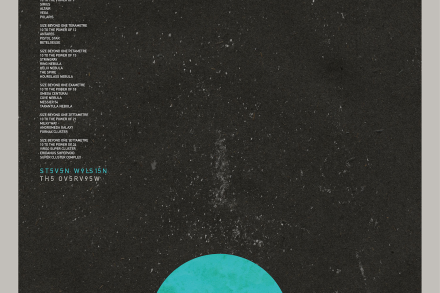
Silly, moving and imaginative: Steven Wilson’s The Overview reviewed

Pop

Progressive rock never died. Whenever some grizzled punk soldier next appears on a BBC4 documentary relaying their version of that beloved old fairytale, the Sex Pistols’s Slaying of the Dinosaurs, it’s worth remembering that nothing of the sort occurred. The big beasts of the 1970s – Pink Floyd, Genesis, Yes – thrived into the 1980s and beyond, albeit in somewhat sleeker form. In turn they begat the likes of Marillion, Ozric Tentacles, Dream Theater, Talk Talk, Muse, Radiohead and Lankum, all of whom had or have familial ties to prog. Porcupine Tree, the project founded by Steven Wilson in the late 1980s, is a case in point. Doggedly unfashionable, Porcupine Tree rose almost without a trace, establishing a vast audience outside of the mainstream critical caucus.

Finneas has little to offer without his sister Billie Eilish

Pop

No truth is more self-evident than that there are those whose best emerges only when they are paired with others: Lennon and McCartney, Morecambe and Wise, Clough and Taylor. And it’s perhaps even harder for a behind-the-scenes collaborator to step out in their own right. Jack Antonoff, for example, is one of the creative powerhouses of modern pop: he co-writes and produces songs for Taylor Swift, Lana Del Rey and Lorde, who plainly regard him as intrinsic to their success. His work probably reaches more ears than any other songwriter on Earth. But when he writes and produces those songs for himself? The magic vanishes. The band he fronts, Bleachers, are popular, but no more popular than any other indie rock band that listens to Springsteen.

Shades of Berlin Bowie and Ian Curtis: Hamish Hawk, at Usher Hall, reviewed

Pop

I am a regular attendee at the Usher Hall, Edinburgh’s most ornate and venerable concert venue. On more than one occasion recently I have seen Hamish Hawk here – albeit each time he was showing the audience to our seats. Hawk has graduated from Grand Circle stair duty to centre-stage spotlight, the kind of local-boy-made-good dramatic arc that positively begs for the Richard Curtis treatment. Making his debut headlining the 2,200-capacity venue, Hawk had the good grace to allude to his change in circumstances halfway through his set: ‘Please, be kind to the ushers…’ Everyone loves a hometown hero, but the pressure to deliver as a returning prodigal must be oppressive.

Lauren Mayberry is terrific – but it’s not music for middle-aged men

Pop

There are nights when one realises quite how much effort the business end of showbusiness must be. On a bitterly cold Monday night in Philadelphia, Lauren Mayberry – over from Glasgow, and halfway through a month of criss-crossing the USA – took to the stage to survey a crowd of maybe 500 people, in a venue that holds 1,200. A good proportion of those 500 people were just like me: middle-aged men. We have every right to be there, of course, and one suspects Mayberry was glad they bought tickets. But I bet she was disappointed some of the remaining 700 or so tickets had not been bought by young women, for this is who this show is for.

The art of the anti-love song

Pop

Tracey Thorn released an album in 2010 titled Love and Its Opposite. When it comes to songwriting, it’s the ‘opposite’ that tends to throw up the more compelling discourse. The anti-love song has been a staple in popular music since Elvis’s baby left him and he wandered off to ‘Heartbreak Hotel’. Presley is a useful weathervane: if asked to pick between the two, no sentient listener would choose the soppy slobbering of ‘(Let Me Be Your) Teddy Bear’ over the snarl and bite of ‘Hound Dog’. Pop is sunshine on the surface, but at heart it’s closer to Orwell’s Two Minutes Hate. As Tina Turner once pondered, quite loudly: ‘What’s Love Got To Do With It?’ The annual rigmarole of Valentine’s Day brings this truth into particularly sharp focus.

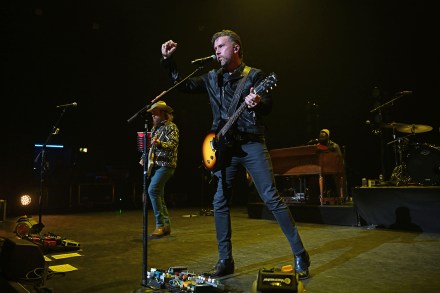
A cheaper, shinier, more processed Chris Stapleton: Brothers Osborne reviewed

Pop

If you were a frequent viewer of Top Gear in its Clarkson/Hammond/May era, there is a particular laugh you will be very familiar with: the combined hoot and exclamation that the three of them, and Clarkson especially, would engage in when driving a fast car around a bend. It was a sort of ‘WOOOOwraghhhahahaha’, designed to convey both sheer delight at being alive and a certain manly pride in being able to extract such a feeling from a motor vehicle. It was a performance.

The maudlin, magical world of Celtic Connections

Pop

Is it possible to find a common thread running through the finest Scottish music? If pushed, one might identify a quality of ecstatic melancholy, a rapturous yet fateful romanticism, in everything from the Incredible String Band to the Cocteau Twins, the Blue Nile to Frightened Rabbit, Simple Minds to Mogwai. The Jesus & Mary Chain have a song called ‘Happy When It Rains’, which seems about right. There were moments during the launch event for Celtic Connections, Glasgow’s annual and much-valued winter celebration of roots music from Scotland and far beyond, when this bittersweet admixture of moods was thrillingly conjured up. At other times, it simply felt a little contained, even now and again flirting with that lethal old enemy, the Scottish Cringe.

Like lying down in front of a bulldozer: the Jesus Lizard, at the Electric Ballroom, reviewed

Pop

Many indie types from the 1980s and 1990s were secretly metal fans. But it’s not something they ever really wanted to admit to in public. They’d talk a good game about the Stooges and the Velvet Underground but back home – as was the case with Leeds’s goth overlord Andrew Eldritch, of the Sisters of Mercy – their living rooms were full of AC/DC videotapes. In fact, I’d go further and say the most influential track in the history of alternative music might very well be ‘Kashmir’ by Led Zeppelin rather than one of the hipster-anointed underground classics. It sometimes feels as though every indie band with one foot in rock has to have their attempt at ‘Kashmir’, all jarring rhythms and slabs of guitar, faintly eastern, very grand.

A new solo album by a former Beatle that – astonishingly – demands repeated plays

Pop

For artists lacking any obvious feel for the style, ‘going country’, similar to mainstream white artists dabbling in reggae in the 1970s following the breakthrough of Bob Marley, tends to elicit the sour whiff of a morning after the last chance saloon. Particularly at a time when a slick multi-hyphenate brand of country music is the pop trend du jour, carpetbagging and bandwagonism abounds. The lyrics on Look Up are elementary to the point of banality, which is as it should be Ringo Starr needn’t worry. Starr is the cowboy Beatle. He has loved this music from a young age, which is a long time. The Beatles wisely facilitated his enthusiasm. Starr sang a Buck Owens cover on Help!

The problem with Paul McCartney is he wrote too many good songs

Pop

Don Bradman, the greatest cricketer of all time, was once asked if he reckoned he could have maintained his batting average of 99.94 against the fearsome West Indian bowling attack of the time. Oh no, he said. Not a chance. He’d probably be hitting in the 50s, like the very best batsmen of the time. But then again, he added, he was in his late 60s so it was unrealistic to expect better. Seeing the Stones is the only thing that compares to the human-jukebox effect of McCartney live That’s the position Paul McCartney occupies in the world of pop. No, at 82 years old he is not going to make a new Revolver or Abbey Road. And no, he can’t do the Little Richard scream like he used to 60 years ago. But he is still, as they say in sport, the Goat. The undisputed champion of the world.

Kneecap are basic but thrilling

Pop

It was Irish week in London, with one group from the north and one from the south. Guinness was sold in unusual amounts; green football shirts were plentiful; and so, at both shows, was a genuinesense of joyful triumph – these were the biggest London venues either group had headlined. The Irishness was much more visible onstage at Kneecap, not least because, as a proudly Republican group, they can’t really not make a big deal of being from west Belfast. Their statements have prompted the inevitable fury from some quarters: Kemi Badenoch (as business secretary) refused them a £15,000 grant to help them tour, on the grounds that the British state should not be aiding those who despise it.

What a remarkably bad electric guitar player Bob Dylan is

Pop

Finally, a taste of the authentic Bob Dylan live experience. On the two previous occasions that I’ve seen Dylan, in the early 2000s and again two years ago, he was disappointingly well-behaved for a man with a reputation for operating a scorched-earth policy towards his catalogue. Once upon a time, seeing Dylan live was a high-wire activity. Those days are long gone, but on the second night of two shows in Edinburgh, some little wildness crept back in. During the opening pair of songs, which were gradually revealed to be on nodding terms with ‘All Along the Watchtower’ and ‘It Ain’t Me, Babe’, it was like watching an old bar band warming up after a long break from the trenches. There were missed notes, dropped beats, rogue chords, halting rhythms.

Perfectly imperfect: Evan Dando, at Islington Assembly Hall, reviewed

Pop

‘Can I have a photo with you, please?’ It’s the most embarrassing question you can ask of someone you’re interviewing. But I had to. Not only because Evan Dando is one of my favourite songwriters. But also – vainly – because years of on-off drug addiction (mostly on) mean Dando is no longer quite the beautiful young man he was when he became famous in the early 1990s. Back then, I’d have looked like a troll standing next to him. Now, not so much. It was a night of beautiful imperfection – the kind that feels truer than a thousand arena shows He still, however, looks better than he has any right to, and in the evening he proved that he sounded better than I had dared to hope. Better still, he was fully present – not just physically, but mentally and emotionally.

Terrifically good value: Nick Cave & the Bad Seeds reviewed

Pop

A few years ago, I received an early morning phone call from Nick Cave’s former PR, berating me for not crediting his band the Bad Seeds in an album review. She was quite right. As Cave says, with a hint of paternal pride, during this powerhouse Glasgow show: ‘This band can do anything.’ It’s not just that the Bad Seeds’s task ranges from delicately enhancing the most nakedly exposed ballads to unleashing a raging firestorm of noise. It’s that supporting a performer as mercurial as Cave takes oodles of nous and empathy. He’s a wild thing, but they never once lose him.

Nick Cave’s right-hand man Warren Ellis on AI, Gorecki and staying young

Pop

In the next few days Nick Cave and the Bad Seeds play Leeds, Glasgow, Manchester and London. There are still some tickets left. The price is reasonable but the price doesn’t matter when the band are unequivocally one of the finest of live acts. By whatever means you can, go. When you get there, enjoy Nick Cave himself, of course. Prepare to be awed by ‘Tupelo’, converted by ‘Into My Arms’. Prepare to cry to ‘Girl in Amber’ and dance to ‘Stagger Lee’. Get ready to experience an assault on every one of your orifices by the impossibly loud and dark ‘Jubilee Street’. ‘I think you feel like you’re a young person until you accept that you’re old. And I don’t want to do that’ But also watch Warren Ellis.

The joy of Chris Stapleton

Pop

Chris Stapleton is a barrel-chested man of 46, who hides his face beneath a beard that must have taken years to grow, hair that tumbles down past his shoulders and a hat that could probably accommodate rather more than ten gallons. He sings songs about being imperfect, with a band behind him making a sound that one might have heard in 1972. He is so purely, absolutely and definitely American he might as well have petrol for blood and ‘The Star-Spangled Banner’ on a permanent loop in his head.

Chrissie Hynde remains outstanding: the Pretenders, at Usher Hall, reviewed

Pop

A few hours before the doors opened for the Pretenders’ Edinburgh concert, Chrissie Hynde posted a message on her social media channels. The gist being that, while she appreciated the support of the band’s most devoted fans – the ones who travel from city to city and country to country to attend multiple concerts – she was, to be frank, getting sick of seeing the usual suspects plonked six feet in front of her at every damn gig. She was therefore formally asking her hardy but apparently increasingly tiresome acolytes to cede the front row to ‘local faces’. This would, she said, help keep ‘it new’ for the band each night. Hynde has always been pretty punchy, but this seemed a bit much, even by her standards; not so much biting the hand that feeds as gnawing it clean off.

An uncompromising master: David Gilmour, at the Royal Albert Hall, reviewed

Pop

It doesn’t matter which dictionary you consult, they all agree on what a song is: words, set to music, that are sung. Yet it’s also an entirely inadequate description, since there are so many types of song. Take David Gilmour and Neil Finn, both men of passing years who like to switch between electric and acoustic guitars, both backed by plenty of singers and kindred instrumentation (though Finn didn’t have a pair of harps on stage with Crowded House), both playing music largely rooted in the late 1960s, both offering lightly mind-bending songs. Yet this misses something crucial.

I agree with pop’s war on iPhones – but King Canute might want a word

Pop

Before each show on the recent The The tour – reviewed in these pages last week – the pre-recorded voice of singer Matt Johnson politely asked the audience to refrain from using mobile phones when the band was performing. In Edinburgh, while Johnson was speaking, the chap next to me was preoccupied filming an empty stage. A sea of screens can be priceless in a genuine emergency but that’s about it As it happens, most of the crowd complied most of the time, but proscribing phone use at concerts is increasingly challenging. A few artists are up for the fight.

The world is on fire – yet navel-gazing still reigns in pop

Pop

There is no better cultural weather vane than pop. It’s not that pop singers possess incredible analytical skills – they don’t. It’s more that it’s in their interests to reflect some prevailing mood. And what people call a vibe shift can often be gleaned by comparing two artists. Take those featured this week: one very much au courant, the other regarded as a searing commentator on 1980s Britain. It’s a very good album, one for sitting down and listening to rather than standing in a vast shed to hear Over the past couple of years, Raye – a 26-year-old Londoner – has become rather a star. You may remember that she had a bunch of hit singles early on, but her label showed no interest in releasing an album.

The ethics of posthumous pop albums

Pop

‘At the record company meeting/ On their hands – at last! – a dead star!’ Back when Morrissey was more concerned with writing a decent lyric than sour internet tirades, ‘Paint a Vulgar Picture’ by the Smiths summed it all up rather neatly: a living pop star is all well and good, but a dead one is far less troublesome – and considerably more profitable. Some artists only really get going once they’re dead. Commercially speaking, Eva Cassidy’s entire career has been posthumous; the Van Gogh of the lustreless Radio 2 ballad. The motive feels pure: a family’s wish to keep their sibling alive through her art Death has been a boon to the pop industry since the year dot.

My night with the worst kind of nostalgia 

Pop

American Football are a band whose legend was formed by the internet: some Illinois college kids who made an album for a little label in 1999, went their separate ways, and in their absence found that a huge number of people had responded to their music. They duly reunited in 2014. They are often identified as emo, the most confounding of all genre names, given it means everything and nothing, but American Football are not of the eyeliner and dyed-hair variety exemplified by My Chemical Romance, nor the angsty pop-punk variant of Weezer or Jimmy Eat World, nor the shouty hardcore punk evolution of the genre’s founders in the 1980s.

Elvis Costello remains the most fascinating songwriter Britain has produced in the past 50 years

Pop

Song for song, line by line, blow for blow, Elvis Costello remains the most consistently fascinating songwriter Britain has produced in the past 50 years – an opinion which seems these days to be mostly confined to a smallish section of an ageing demographic. Certainly, Costello’s music has, as far as I can tell, proved largely resistant to TikTokification, even if Olivia Rodrigo did ‘pay homage’ (nicked, with the author’s approval) to the riff to ‘Pump It Up’ for her song ‘Brutal’.