Culture

Culture

The good, the bad and the ugly in books, exhibitions, cinema, TV, dance, music, podcasts and theatre.

No band should play Ally Pally

Pop

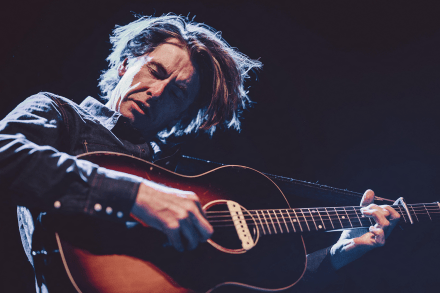
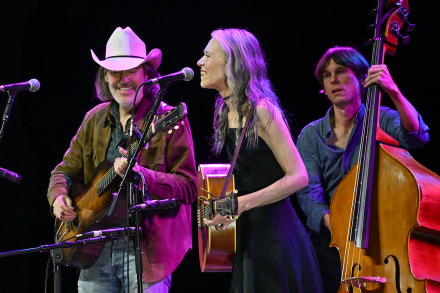
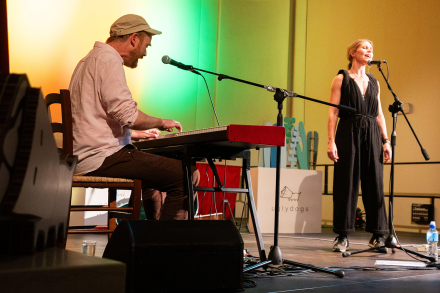
The last time Gillian Welch and David Rawlings played in London it was a different world: the world of David Cameron and Barack Obama and a Manchester United at the top of the Premier League. Welch and Rawlings have changed, too: Welch is silver rather than red, and Rawlings as grizzled as a bear. Welch was in brown floor-length dress and Rawlings in suede jacket and cowboy hat. With a rather younger upright-bass-player, Paul Kowert, the trio looked like farmers trying to save their land from The Man in some Taylor Sheridan TV series. And then they started singing. Welch and Rawlings have released records under their own names and as a pairing.

Fionn Regan has gone method Worzel Gummidge

Pop

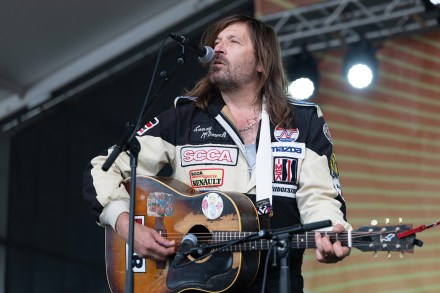
Watching the Mercury Music Prize on television last week, I remembered that Fionn Regan’s debut album, The End Of History, was nominated for the award back in 2007. Proof were it needed that the prize is rarely a shortcut to superstardom for most of those it spotlights. The Irish singer-songwriter has never quite replicated the mainstream acclaim he gained for his debut – when, for a solid five minutes, he was the latest in a long line of ‘new Bob Dylans’. He has, however, carved out an interesting and worthwhile career across five further albums, expanding his core skill set of folk guitar and knottily poetic wordplay with experimental touches of electronica and orchestration.

In defence of Mick Hucknall

Pop

Before Simply Red came on stage at the Greenwich peninsula’s enormodome, the screens showed a clip of a very young Mick Hucknall being interviewed. What he wanted, he said, was to be a great singer. Usually, that’s the cue for a gag about fate having other plans. Not this time. He’s 65 now, and he truly is a great singer as he showed for the best part of two hours. He knows it, too. A couple of songs in, he benignly told his audience at the first of two nights at the O2 that he liked it when they sang along with the choruses, but maybe leave the verses to him. The person next to you, he explained, had come to hear him sing, not you. But not just hear – Hucknall is worth watching as well. Seeing him was like witnessing one of the great standards singers of the 1950s.

Has Taylor Swift been reading The Spectator?

Pop

The Last Dinner Party received quite the critical backlash when they arrived amid much fanfare in 2023. Posh, precocious and theatrical, armed with lofty ideas that matched their station as four young women who had benefited from very expensive educations, the band encountered widespread suspicion that they were industry ‘plants’, or had somehow bought their way to instant recognition. Happily, their debut album, Prelude To Ecstasy, proved sufficiently accomplished to repel these waves of hostility (strange how the success of privileged young women tends to attract far greater opprobrium than that of privileged young men). In any case, the excellence of the follow-up should settle the matter.

Like Gabor Mate set to club beats: Lady Gaga, at the O2, reviewed

Pop

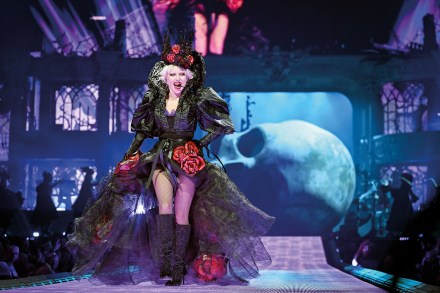
Lady Gaga’s show was to begin at 7.30  prompt, we were told. No opening act. And at 7.30 something did happen: the big screen over the stage started showing a film of Ms Gaga, clad in scarlet finery, writing on a scroll with a peacock-feather quill, while the PA played opera’s greatest hits. For more than an hour the film ran, an impassive Gaga doing nothing but writing. An hour. It was nearly as dull as a Paul Thomas Anderson film, and it’s a miracle it took 45 minutes for the handclaps to start ringing around the arena. Was she about to do a Madonna – who had to keep cutting short her O2 shows because she was about to break their curfew? In the end, no. Gaga just managed to end in time, but it was tight. And she won back her crowd.

Uplift from an odd couple: James Yorkston & Nina Persson reviewed

Pop

Let’s hear it for the odd couples of popular music: Bowie and Bing. Shaggy and Sting. Metallica and Lou Reed. Nick Cave and Kylie. U2 and Pavarotti. The ongoing collaboration between James Yorkston and Nina Persson isn’t quite so wildly unlikely as any of these but still seems intrinsically counter-intuitive; until, that is, the realisation dawns that each has a stakehold in the other’s natural territory. Yorkston is a fifty-something Scottish folkie with the honed melodic instincts of a pop aficionada. Persson is a former rock star from Sweden whose voice has the controlled command found in the best traditional singers. Which perhaps explains why a pairing that makes little sense on paper makes perfectly imperfect sense in the flesh.

Suede turn their fine new record to mush at the Southbank

Pop

I think a lot about Wishbone Ash. A disproportionate amount. Partly because I have had to listen to them for around ten hours while researching a book. Partly because when I was a kid, I always found it curious that Wishbone Ash were advertised in the weekly music press but never reviewed. Back then, broadsheets barely covered rock, so there was no room for their gigs and albums there. But they were never on Top of the Pops or The Tube or even Whistle Test  either. Perhaps Tommy Vance occasionally gave them a spin on the Friday Rock Show, but other than that they were not on Radio 1. They existed entirely outside of what I perceived of as the world of rock. At that point Wishbone Ash were 15 years on from their first album. Suede are 32 years on from theirs.

The problem with Chappell Roan

Pop

There is a downside to being fast-tracked into the position of this season’s newest pop sensation, and it became more and more obvious the longer Chappell Roan’s self-proclaimed ‘biggest ever show’ went on. A freshly risen pop star promoting their debut album should, by law, be performing a 40-minute hit-and-run set in a sweaty club, showcasing the absolute cream of their catalogue. Bang, bang, bang. Over and out. But the fast-track these days moves at positively breakneck speed. Barely a year after her first hit, Roan found herself playing to an audience of some 100,000 fans, convening over two nights on an ugly plot of land adjacent to an airport as part of the Edinburgh Summer Sessions series, whose fervour demanded the full event experience.

Britain’s loveliest, most thoughtful festival

Pop

The last weekend of August is my favourite of the year. That’s when I pootle down to Cranborne Chase to the loveliest, most thoughtful festival in the UK. End of the Road is a festival for those who look at TV coverage of Glastonbury and see only the size and the heaving crowds and come out in a cold sweat. It’s lovely because it’s small – around 15,000 people. You can walk from the furthest campsite to the furthest part of the festival area in 25 minutes or so. If you’re not enjoying what you’re watching, you’ll be able to find something else within five minutes’ walk, via an array of bars without punishing queues.

Shambolic, spontaneously chaotic and combustible: the Lemonheads at SWG3 Galvanizers reviewed

Pop

I enjoyed watching the Lemonheads fall apart on stage more than perhaps I should have Nowadays, when the default setting for live music is ruthlessly choreographed efficiency, there is a queasy kind of thrill in watching a performance forever teetering on the edge of pure unprofessional pandemonium. Which is to say, I enjoyed watching the Lemonheads fall apart on stage more than perhaps I should have.  The Lemonheads are and always were Evan Dando fronting whatever revolving cast of associates are willing to put up with him. This is both the band’s great superpower and its eternal Achilles’ heel. Dando is a fine and heartful singer, songwriter and interpreter. He is also the loosest of loose cannons.

In defence of Notting Hill Carnival

Pop

This isn’t going to be a piece celebrating the rich cultural tapestry of London’s Afro-Caribbean community, sombrely expressing the importance of preserving its heritage and history. I just like going to Carnival. I see it as an opportunity to make the most of the last dregs of the summer. I’ll meet my friends, dance to a grizzled Rasta’s tunes with a Magnum or two (a syrupy, 16.5 per cent alcohol, Jamaican tonic wine), watch the steel drums and befeathered dancers, before decamping with a box of jerk chicken and fried plantain. There’s no £499 VIP Platinum wristband you can buy to have the premium Carnie experience I spent the first decade or so of my life in London, and returning here as an adult is a disillusioning experience.

The Seeds are primitive but magnificent

Pop

I have nothing but admiration for those men who burn a candle for the music of 1966. Partly because, like them, I believe 1966 to be pop’s greatest year, but mainly because being a psychedelic hipster requires a commitment that invites ridicule. It’s one thing to be an ageing fella who likes rock’n’roll – sharp denim and a well-tended quiff can look just fine. And you can never really tell the age of a metalhead – they just look like a metalhead. But to wear your hair in an outgrown bowl cut, and to strut around in tight red trousers as Seeds singer Paul Kopf does, is inevitably to invite catcalls of ‘Oi, Austin Powers!’. You have to really believe in it to go through life like that.

Ultimately hard to resist: Elbow reviewed

Pop

Our relationships with bands are often very like our relationships with people. Some are pure and lasting love. Some start promisingly but spoil. Some are quick, thrilling flings, others a more meaningful yet distant connection. Elbow are the kind of band you enjoy having a pint with every few months. Not always the most exciting company, perhaps, but smart, convivial and good hearted. Thoughtful. Reliable. They might arrive – bang on time – for your latest rendezvous armed with a funny story about a beleaguered colleague, but they’re unlikely to announce they’re running off to Brazzaville with the intern. You know where you are with Elbow – in this instance, a shallow concrete amphitheatre in Glasgow’s leafy west end.

The terrifying charisma of Liam Gallagher

Pop

You’d have thought Wembley Stadium was a sportswear convention, so ubiquitous were the three stripes down people’s arms from all the Adidas merch: veni, vidi, adi. Pints drunk: 250,000 a night, apparently. All along the Metropolitan line pubs noted an Oasis dividend. At a corner shop, I was sold an official Oasis Clipper lighter. It’s surprising Heinz hasn’t yet offered an Oasis soup; you get a roll with it. Plainly, an awful lot of people have missed Oasis. And an awful lot of people – Noel and Liam Gallagher included – saw the chance to make an awful lot of money from their reformation. I don’t think any of them – neither fans nor entrepreneurs – will have been disappointed. At Wembley, the atmosphere was remarkable.

Why I don’t get the blues

Pop

The Louisiana bluesman Buddy Guy is releasing a new album this week. It is called Ain’t Done With The Blues – a statement which one might argue seems redundant considering Guy, who is 89, has been releasing albums with the word ‘blues’ in the title since 1967’s Left My Blues In San Francisco. Since then, we’ve had A Man And The Blues (1968), The Blues Giant (1979), DJ Play My Blues (1982), Damn Right, I’ve Got The Blues (1991), Rhythm & Blues (2013), The Blues Is Alive And Well (2018) and The Blues Don’t Lie (2022). This is a man who isn’t ever going to give David Bowie a run for his money in the shapeshifter stakes; Guy’s listeners can have their music any colour they want, as long as it’s blue, blue, electric blue. This is how it has to be.

Magnificent: Stevie Wonder at BST Hyde Park reviewed

Pop

The highs of Stevie Wonder’s Hyde Park show were magnificently high. The vast band were fully clicked into that syncopated, swampy funk, horns stabbing through the synths, the backing singers adding gospel fervour. And Wonder – now 75 – sang like it was still the 1970s, his voice raspy one minute, angelic the next. Anyone who heard that phenomenal group play ‘Living for the City’ or ‘Superstition’ and didn’t feel ‘ants in my pants and I need to dance’, as James Brown once put it, should resign from life: they do not deserve such joy. That said, there were oddities. We were blessed with visits from four of Wonder’s nine children, two of whom were given whole songs to sing while the great man had a breather, as were three of the backing singers.

A theatrical one-woman show: Billie Eilish at the OVO Hydro, Glasgow reviewed

Pop

Like spider plants and exotic cats, certain artists are best suited to the great indoors. Lana Del Rey, for instance, proves the point that just because you can sell enough tickets to fill a stadium doesn’t mean you should necessarily perform in one. Some music blossoms in the sun, some ripens in the shadows. Billie Eilish belongs in the latter camp. Even though her biggest hit, ‘Birds of a Feather’, was the most streamed song on Spotify last year and is now approaching three billion listens, and her duet withCharli xcx on ‘Guess’ was another ubiquitous sound of 2024, her appeal remains slightly subversive.

A delight: Sabrina Carpenter at BST Hyde Park reviewed

Pop

We all know, at heart, that economic theories of rational behaviour are rubbish. And that their application ruins so many areas of life. Football supporters, for example, are not ‘customers’; they are supporters. They are at the club before a new owner arrives, they remain there after that owner leaves. In the meantime, they do not make rational decisions. They do not, when QPR are rubbish, pop across west London to support Chelsea, though it might be the economically rational thing to do. Same with pop. I’m a music fan more than I am a customer.

No amount of discourse will make a good pop song into a great one

Pop

There is no higher calling than making great pop music, and no mechanism by which such an achievement can be faked or fudged. No lofty exposition, no pleading discourse, no mitigating circumstance, no ifs, buts or boo-hoo back story can bend a piece of so-so music into a great pop song. We simply know one when we hear one. Commentators may gush about Beyoncé’s genre-strafing cultural significance until the cows come home, but it doesn’t alter the plain fact that she hasn’t released a single piece of music in more than a decade that will stand the test of time come pop’s judgment day. ‘Pop’ implies freshness. Fizz. This doesn’t merely apply to the sound of the music, but the speed of delivery. It should be urgent, immediate, endlessly on tap.

The political climate at Glastonbury was not especially febrile

Pop

Everyone who wasn’t at Glastonbury this year knows exactly what it was like: a seething mass of hatred and rabid leftiness, characterised by an angry punk duo named Bob Vylan calling for the death of the IDF. But that’s just the tabloid hysteria talking – betraying also maybe a hint of envy towards those lucky enough to have bagged one of the £400 tickets. The truth is, the political climate was not especially febrile. Sure, the jaunty red, white, green and black of the Palestinian flag was very en vogue, but a few years back it was the blue and yellow of Ukraine and the EU. A few decades before that it was free Tibet. Flags of various communist regimes with questionable human rights records, meanwhile, dip in and out.

Dua Lipa sparkles at Wembley – but her new album is pedestrian

Pop

If, as is said, there are only seven basic narratives in human storytelling, then there should be an addendum. In rock and pop there is only one: the dizzying rise, the imperial period, the fall from grace (either commercial or ethical, sometimes both), and the noble return (historically prefigured with a glossy music mag cover proclaiming: ‘Booze! Fights! Madness! How Rubbish Band went to hell – and came back’). All three were on view in London this past fortnight. Waxahatchee was the one on the way up: this was, Katie Crutchfield announced proudly from the stage, the ensemble’s biggest-ever show. Dua Lipa was the one entering her imperial phase – her first Wembley headline, with a production to match.

Jarvis Cocker still has the voice – and the moves

Pop

For bands of a certain vintage, the art of keeping the show on the road involves a tightly choreographed dance between past and present, old and new, then and now. It’s not a one-way transaction: there should be some recognition that the people you are playing to have also evolved since the glory years of the indie disco and student union. Halfway through the first date of Pulp’s UK tour following the release of More, their first album in 24 years, I started thinking about Withnail & I. Watching the film repeatedly as a young man, the booze-soaked antics of the dissipated ‘resting actor’ and his addled supporting cast seemed like great larks, albeit in extremis.

The charm of Robbie Williams

Pop

What could it possibly feel like to be a sportsperson who gets the yips? To wake up one morning and be unable to replicate the technical skills that define you. To suddenly find the thing you do well absolutely impossible. Golfers who lose their swing, cricketers whose bowling deserts them, snooker players who can’t sink a pot. Stage fright – something both Robbie Williams and Cat Power have suffered from – is much the same. Williams took seven years off touring last decade because of it, which must have been devastating for someone whose need for validation is so intense that he has made it his brand.

Compelling: Little Simz’s Lotus reviewed

Pop

It is not uncommon for (predominantly male) music critics to invert the ‘great man/great woman’ dictum in order to suggest that behind the success of every powerful female artist there simply must be a moustache-twirling Svengali pulling the strings. It’s less common for the artist themselves to pose the question. On ‘Lonely’, the penultimate track on her compelling sixth album, London rapper and actor Simbiatu Ajikawo, who performs as Little Simz, interrogates the doubts and insecurities she felt while writing and recording this record. In doing so, she asks: ‘I’m used to making it with [redacted]/ Can I do it without?

Anyone irritated by Springsteen’s speeches hasn’t been paying attention

Pop

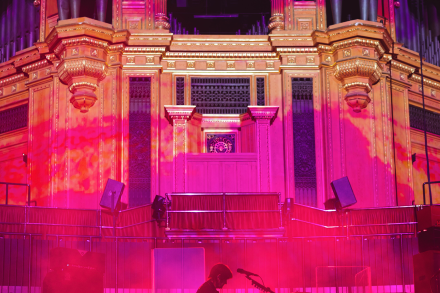
No one who went to see Bruce Springsteen’s Broadway residency a few years back came away disappointed because they knew what they were getting: a tightly scripted show, in which there was more speech than music. The country star Eric Church – who made his name with a single called ‘Springsteen’ – appeared to have been taking notes, for that was the model for his ‘residency’ at the Albert Hall. All that he lacked was the tight script – and Springsteen’s charm and charisma. It was, the MC told us, Church’s first time in the UK in eight years, but the place was horribly undersold, the top tier almost empty and spaces all around the stalls.

We’ve underestimated Francis Rossi

Pop

I have a friend who insists that had Status Quo hailed from Düsseldorf rather than Catford, they would nowadays be as critically revered as Can, Faust, Neu! and those other hallowed Teutonic pioneers of unyielding rhythm from the 1970s. Maybe so. Very probably not. Canned Heat and ZZ Top seem more reachable comparisons. But it’s true that ‘the Quo’ have been underestimated and unjustly derided throughout their six-decade career, not least by themselves. The band has happily perpetuated their position as rock and roll neanderthals: a 2007 album is titled In Search Of The Fourth Chord. There was always a little more to it than that. Personally, I have always divined a terrible sadness at the heart of their music.

I think I’ve found the new Van Morrison

Pop

Young male singers won the right to be sensitive in 1963, when The Freewheelin’ Bob Dylan was released. And in the 63 years since, being young and vulnerable and questing has been one of the great default settings. I’d say you can’t go far wrong singing sadly about your feelings, but of course you can, as the great mountain of discarded troubadours proves. Yet the size of that rejects mountain also tells us how alluring the prospect of baring one’s feelings to strangers can be. Zach Condon, who works as Beirut, and Dove Ellis are at different points on the sensitive young man spectrum. Condon is 39 for a start, so the young bit doesn’t even hold true.

The powerfully disorienting world of Mark Eitzel 

Pop

There’s a lot to be said for an artist making an audience feel uncomfortable. Richard Thompson used to say that he considered it sound practice to keep punters ill at ease and on their toes. Mark Eitzel would probably agree, although it’s never been entirely clear whether the nervous exhaustion he induces among his fans is deliberate or unintended. Mercurial is one way of describing his on-stage aura. Volatile and unpredictable others. The first time I saw Eitzel perform, in 1993, he was still the singer in the great San Francisco group, American Music Club. That night, he drank a pint of whisky and returned for the encore with a slice of processed ham stuck to his forehead.

A triumphant show: Self Esteem, at Duke of York’s Theatre, reviewed

Pop

The most compelling character in the newish documentary One to One: John & Yoko isn’t either John or Yoko. It’s one A.J. Weberman, inventor of ‘Dylanology’ and ‘garbology’. He’s shown practising both in the film, rummaging through Bob Dylan’s bins for clues to the thought process of genius.  Fifty years on, two things struck me. The first is how odd it is that Lennon and Dylan would let someone as obviously potty as Weberman anywhere near them. The second is that everyone is now Weberman. Think of the Swifties who decode every missive from Taylor; the fanatics who obsess over the sexual antics of boy bands based on convoluted readings of song lyrics; and people like me who spend wintry Saturdays driving around the Jersey shore visiting Springsteen locations.