Culture

Culture

The good, the bad and the ugly in books, exhibitions, cinema, TV, dance, music, podcasts and theatre.

Why aren’t Spoon filling stadiums?

Pop

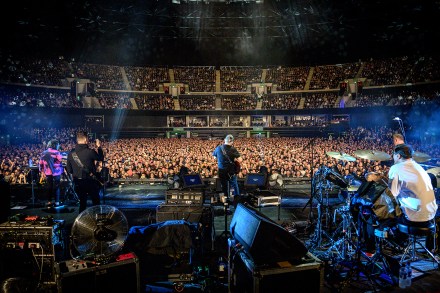
Here’s a mystery for you. Why were Spoon, one of the most dynamic, sharpest rock bands in the world, playing a single night in a north London town hall (capacity 890) while Arctic Monkeys were playing three nights at Arsenal’s ground (capacity 59,000) as part of a UK tour that encompassed eight other stadiums in the UK, plus one arena, one park and Glastonbury? It’s not that Arctic Monkeys aren’t good – no one gets that kind of critical unanimity without being good. It’s just that Spoon are better, and better than almost everyone else. Onstage in London, aided by a genius sound engineer, Spoon were perfection So why aren’t Spoon filling stadiums? First, they rarely come to the UK.

Is Richard Thompson Britain’s Bob Dylan?

Pop

There are artists you go to see expecting to be challenged, surprised, even let down. And there are artists you can rely on to deliver more or less the same experience every time. Each approach has its merits. Richard Thompson is a ‘death and taxes’ kind of guy. The fact that his excellence feels inevitable can make it seem less excellent somehow, which doesn’t entirely seem fair. Richard Thompson’s greatest songs drink deeply of the dark stuff A founding member of folk-rock pioneers Fairport Convention, Thompson has been described as the British Bob Dylan. This makes sense in some ways.

Brilliantly unhinged: Grace Jones, at Hampton Court Palace, reviewed

Pop

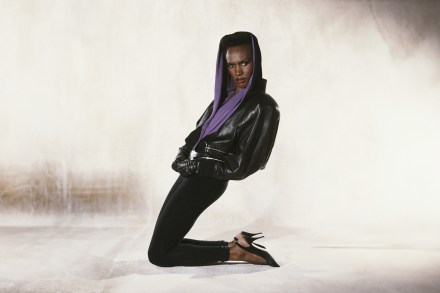
Some artists need flash bombs to make an impression on stage. Some need giant screens. Some need to run around like hyperactive toddlers. All Grace Jones needed was a hula hoop – not the delicious potato snack, but the plastic ring. For the ten minutes or so of ‘Slave to the Rhythm’ that ended her set on a balmy evening in the courtyard of Hampton Court Palace, she languidly rotated the ring around her hips, all while she strode across the stage, then climbed a set of stairs. Not a single revolution was missed. I realise that you don’t come to these pages for reviews of hula hooping, but by God, it was astonishing. I like to think it was what Henry VIII would have wanted. It was a fitting end to a brilliantly unhinged show.

Let’s hear it for the lesser-spotted nepo daddy

Pop

Rob Grant releases his debut album, Lost at Sea, this week. A 69-year-old millionaire and former ad man, furniture exec and domain developer, Grant has made a record of ambient, ocean-themed piano doodles glorying in titles such as ‘In the Dying Light of Day: Requiem for Mother Earth’, ‘A Delicate Mist Surrounds Me’ and ‘The Mermaids’ Lullaby’. Not incidentally, he is also the father of one of the world’s biggest (and best) alt-pop stars, Lana Del Rey. The title track features his daughter’s unmistakeable contralto, while her name is emblazoned on the front cover. Father’s Day is just around the corner, and Ms Del Rey has delivered a pearl of a present for Pappy: his very own album.

One of the most tuneless, vapid, dismaying things I’ve ever seen: Mötley Crüe, at Bramall Lane, reviewed

Pop

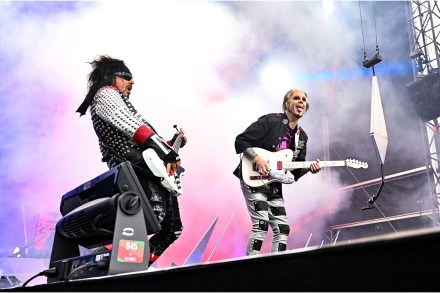
I’m not sure I’ve ever seen anything worse than Mötley Crüe in Sheffield. Nothing more tuneless, empty, vapid and dismaying. The Los Angeles glam-metal band became superstars in the 1980s, largely by wearing lots of make-up and doing terrible things, but I’ve never understood why. Even those who weren’t repulsed by the band members’ behaviour and personalities surely couldn’t have detected any actual tunes in there. At Bramall Lane, with a viciously loud PA, the few melodies that were there were largely undetectable. And the band – now in their sixties – still gloried in their obnoxious infantilism.

Dazzling – if you ignore the music: Beyoncé, at Murrayfield Stadium, reviewed

Pop

Scheduling open-air concerts in mid-May in northern Europe is a triumph of hope over experience. I last spent time with Beyoncé – I’m sure she remembers it fondly and well – in 2016, in a football stadium in Sunderland on a damp, drizzly, early-summer English evening of the type that even strutting soul divas struggle to enliven. I don’t think it was merely the weather which left me underwhelmed by her brutalist attack, the sheer choreographed drill of the show, the lack of engagement, of spontaneity, of joy. By then, Beyoncé was no longer seeking to be regarded as a mere pop star. She had recently taken on the unearthly qualities of an alien presence, entirely unrelatable, tilting for something far more culturally significant than a spot in the charts.

The new Pogues: The Mary Wallopers, at O2 Forum Kentish Town, reviewed

Pop

I was listening the other week to a solo album by an ageing rock guitarist, once terrifically famous. It was really very good, but I couldn’t bring myself to care about it because it clearly didn’t matter: this man’s career is static and it is likely to remain so. The album will make no impact on the wider world and, despite liking it, I felt no need to listen again. Had it been the debut by a band of 21-year-olds, on the other hand, I would have been all over it. Rock and pop musicians are most interesting in the transitions; that is, on the way up or on the way down. The journey up always – but always – accounts for the most interesting bit of any musician’s memoir, because they’re remembering when life was exciting.

Heartfelt but bland: Ed Sheeran’s – (Subtract) reviewed

Pop

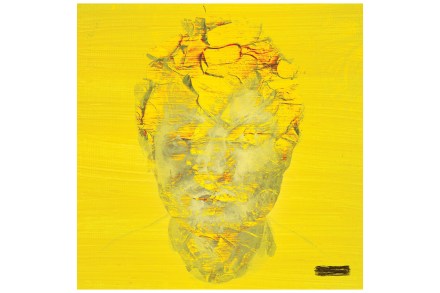
Whether by accident or design, the mathematical theme of Ed Sheeran’s previous album titles (+, ×, ÷ and = respectively) resolves rather neatly with – (Subtract). I interviewed Sheeran around the time of × and found him likeable enough but a bit out of reach. Multiplication did indeed seem to be foremost on his mind. Perched on the edge of a bed in a room above RAK studios in central London, he came across as a man obsessed with sales figures and chart placings, a coolly pragmatic mix of talent and ambition. (You don’t think Sheeran is talented? I watched him entertain 60,000 people in a football stadium for two hours with just a guitar, loop pedals and a lot of chutzpah. He’s got talent, all right.

A phenomenally exciting new band: The Last Dinner Party, at Camden Assembly, reviewed

Pop

A user’s guide to how pop music works in the 21st century. Step one: you see a great new band. Step two: you tweet about them being very good. Step three: you get told by people that they are clearly nepo babies, denying crucial exposure to other bands. Step four: you discover that newspaper articles are using these Twitter conversations as evidence of a backlash about said new band. That’s what happened after I went to see the Last Dinner Party. For reference, the Last Dinner Party have released precisely one song: their debut single ‘Nothing Matters’, which had come out a few days before. On YouTube you can find complete recordings of some of the few shows they have played, filmed by zealous young fans.

Americana Coldplay: The National’s First Two Pages of Frankenstein reviewed

Pop

Once upon a time, rock bands wished for nothing more than to look as though they posed a clear and present danger to your children. Though a few true believers still hold to this honourable creed, nowadays most groups are comprised of the kind of people one might expect to be grading your offspring’s dissertation at a respected Russell Group institution. If the National were an author, they might be Anne Tyler The National exemplify rock’s professorial bent: bespectacled academic types, bearded, literate, wry and congenitally suspicious of happiness. Relatability sells, apparently.

Glorious: Elton John’s farewell tour, at the O2 Arena, reviewed

Pop

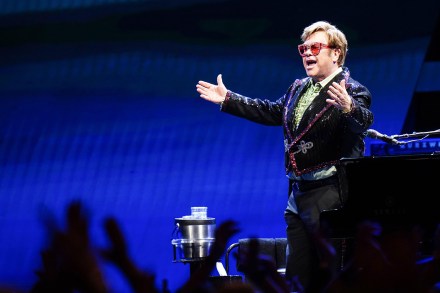
Elton John has now been retiring for nearly five years. The Farewell Yellow Brick Road tour began in Allentown, Pennsylvania, in September 2018. Why there? Because it’s a hop and a skip from the small town of Lititz in Amish country, where scores of the big arena shows are built – it’s the real rock’n’roll capital of the world. Since then, with breaks for Covid and other health worries, he has played roughly 300 shows, grossing north of $800 million as of January this year – this is the most commercially successful tour ever. Retirement, or the threat of retirement, has always been a canny career move: Frank Sinatra played more than 1,000 concerts and recorded ‘Theme From New York, New York’ after he quit the business in 1971.

Why can’t I let go of my records?

Pop

I’m not a natural lender. I’m a reasonably soft touch when it comes to money, but regarding the important things in life – books, music, pens – I loan with a gently thrumming underscore of anxiety. While I’ve weaned myself off my mother’s habit of writing her name in every book she buys, I still tend to keep an internal inventory of where each one has gone, and when I’d like it back. Add in the fact that I’ve never possessed the zealot’s desire to convert others to my enthusiasms, and I’m forced to concede that I make a poor practitioner of the art of lending. Leonard Cohen was the same, apparently. As he confessed in ‘The Land of Plenty’: ‘Don’t really have the temperament to lend…’ In his case, it was a helping hand. In mine, it is mainly records.

Why supergroups nearly always suck

Pop

Recently in these pages, ruminating on the ghastly Rock and Roll Hall of Fame, I wrote that music does not conform to any equation. I should have added: except, of course, for the occasions when it does. One tried-and-true formulation is that ‘super-groups’, those bespoke vehicles bringing together artists best known either for working alone or within other bands, tend to add up to considerably less than the sum of their parts. Supergroups are in thrall to the idea of their own existence; the music trails sluggishly behind We could blame Eric Clapton. Indeed, it seems remiss not to. Blind Faith – a fatally untidy union of Clapton (ex-Cream), Steve Winwood (ex-Traffic) and Ginger Baker (exhausting) – started the whole thing off in 1968, and not in a good way.

Pretty, charming and largely unremarkable: Devonte Hynes & the LSO reviewed

Pop

Think of pop music as being like the parable of the sower. These days the seed falling on stony ground comes from the young rock bands, while the stuff that’s finding fertile earth is on the edges of R&B where it shades into other styles, especially psychedelia. It works from both ends: the Australian group Tame Impala went from being a workaday psychedelic rock band to being festival headliners by bringing dance music into their sound. Meanwhile within black music, Janelle Monae – perhaps better known as an actor – and Solange Knowles are regarded by critics as something not far short of deities for their Afrofuturist, trippy takes on R&B. In the UK, Devonte Hynes has become our leading representative of the unlimited possibilities of combining genres.

The most exciting live band in Britain right now: Young Fathers, at the O2 Academy, reviewed

Pop

There are several reasons why Young Fathers currently feel like the most exciting live band in Britain, but for now let’s concentrate on effect rather than cause. The Edinburgh trio have somehow managed to dispense with all the froth and blather of concert-making – gratuitous chat; choreographed audience interaction; the fat and gristle – to deliver a show that is all attack. Every minute is a prime lean cut, direct and thrilling. They don’t mess about during the first of two sold-out Glasgow shows, but then brevity appears to be a kind of manifesto. The new album, Heavy Heavy, their fourth and not quite their best, lasts barely 30 minutes. Tonight, they perform 17 songs in an hour. The set is similarly minimalist.

Full of love: Butler, Blake and Grant, at the Union Chapel, reviewed

Pop

Years ago, I asked Robert Plant what he felt about the world’s love of ‘Stairway to Heaven’. He said he no longer really knew what the song was about, and it didn’t mean an awful lot to him. But, he added, that didn’t really matter because the people who loved the song had given it their own meaning. Songs don’t have to be as ubiquitous as ‘Stairway to Heaven’, however, to work their way into your soul. It’s perhaps even easier to develop a personal connection with a song that one doesn’t have to share with the entire world. Lots of people just wanted to feel 21 all over again Last weekend I went to two shows that were very specifically about the past.

His nasal American-Yorkshire voice struggles to convince: Yungblud, at OVO Hydro, reviewed

Pop

Even before albums became bloated, thanks to the largesse offered by CDs and streaming, most contained filler: those so-so songs merely passing needle time, weak aural bridges between the big hits and superior deep cuts. Bubblegum-punk and Auto-Tuned pop, sung in a distinctly nasal American-Yorkshire hybrid Increasingly, live concerts have filler, too. With the collapse of record sales, young pop performers feel compelled to jump into huge arenas more quickly than might be wise. It’s not always as easy as it looks. A massive social media profile doesn’t always translate into having sufficient willing bodies to fill these vast spaces, and while you can ship in pyrotechnic back-up, fancy sets and snazzy screens, one thing you can’t subcontract out are the songs.

Down with the Rock and Roll Hall of Fame!

Pop

There is footage on the internet of Robert Smith, lead singer in the Cure, being interviewed on the occasion of his band being inducted into the Rock and Roll Hall of Fame in 2019. At high pitch and tremendous volume, the host yells up a storm about the incredible honour being bestowed upon the group, while Smith claws at his face, grimaces, and rolls his eyes. ‘Are you as excited as I am?’ she shouts. ‘By the sounds of it, no,’ Smith mutters – speaking, surely, for all of us. Of all the many reasons to dislike the RRHOF – some of which we’ll get to shortly; and yes, the acronym is one of them – it is the jarring mix of shrieking self-love and august earnestness which rankles most.

Widescreen pop-rock that deserves to be better known: Metric, at the Roundhouse, reviewed

Pop

Why aren’t Metric stars? In their native Canada, several of their albums have gone platinum, but the rest of the world? Not so much. Twenty-five years after Emily Haines and James Shaw formed the band, here they still are, playing to a not-quite-full Roundhouse to promote their eighth album, Formentera. It was a pretty good turnout – about 3,000 people on a Wednesday night in January – but I doubt anyone ever formed a band thinking: ‘In a quarter of a century, we might be able to not quite fill one of London’s mid-sized venues!’ Writing very good songs isn’t enough to take a band to the top, but Metric do write very good songs All of which is a shame because they were flatly brilliant.

Two of Scotland’s most inventive solo musicians: Fergus McCreadie, Maeve Gilchrist + Mr McFall’s Quartet reviewed

Pop

Folk is the Schiphol of Scottish music. Eventually, every curious traveller passes through. From arena rockers to rappers, traditional music remains an undeniable source. Which is why the second word in ‘Celtic Connections’ is at least as significant as the first. Now in its 30th year, lighting up the otherwise unpromising prospect of a Glasgow January, this year’s instalment of the roots festival features artists from all corners of the globe. Many of them would regard folk only as their second or third musical language, rather than the mother tongue. One of the early highlights makes the point rather beautifully. It’s a homegrown affair, showcasing pianist Fergus McCreadie and harpist Maeve Gilchrist, two of Scotland’s most inventive solo musicians.

A brilliant show : The 1975, at the O2, reviewed

Pop

The great country singer George Jones was famed not just for his voice, but also for his drinking. Once, deprived of the car keys, he drove his lawnmower to the nearest bar. In the very good Paramount+ drama about Jones and Tammy Wynette – entitled George and Tammy, so there’s no excuse for forgetting – Michael Shannon, playing Jones, is asked time and time again why he keeps on making such a mess of his life and his career. ‘That’s what the people want from me,’ he shrugs in reply. That came to mind watching the 1975’s return to British arenas, in a tour grandiosely and amusingly billed as ‘In Show and In Concert – The 1975 At Their Very Best’.

Beautiful bleakness crowned with slivers of hope: John Cale’s Mercy reviewed

Pop

There’s a case to be made for John Cale being the most daring ex-member of the Velvet Underground. Lou Reed redefined the transgressive possibilities of literate three-chord rock’n’roll. Cale, arguably, has travelled even further. A Welsh miner’s son who won a scholarship to Goldsmiths, Cale engaged with the early flowerings of Fluxus before mixing with John Cage and La Monte Young’s Theatre of Eternal Music in New York’s downtown avant-garde scene. His droning viola, hammering piano and relentless bass brought the serrated edge to the Velvet Underground’s art music. More than anyone in the band, he rendered Reed’s whiplash words in sound.

Not everything Bowie did was genius – he was more interesting than that

Pop

I’m generally not a fan of New Year’s resolutions, but one occurred to me recently as the younger members of my family were blasting out a patchy David Bowie playlist: Stand Up Against Revisionism. It’s harder than ever these days not to succumb to printing the myth – reality can be so so-so – but critics have a duty to keep a clear head while others are losing theirs. Even around the dinner table on New Year’s Day. Bowie would have been 76 this week; he was born on 8 January 1947, and died two days after his 69th birthday in 2016. He’s not getting any less popular in posthumous old age. In fact, business is booming. At the end of last year, the latest hefty Bowie box set arrived, titled Divine Symmetry and covering the Hunky Dory era.

Christmas songs that will reduce your gas bills

Pop

It’s unlikely that Irving Berlin was pondering the energy price cap when he composed the seasonal standard ‘I’ve Got My Love To Keep Me Warm’ in 1937. ‘I can’t remember a worse December, just watch those icicles form,’ he wrote, a sentiment many of us can surely relate to right now – but wait! ‘What do I care if icicles form,’ he continues. ‘I’ve got my love to keep me warm.’ Good for you, sir. Meanwhile, the rest of us are watching the digits ticking incessantly upward on our smart meter with the murderous fascination of a gun dog fixated on a fox hole. For the first time in my life, I’m actually hoping to get socks from Santa – and perhaps one of those natty woollen jumpers Shakin’ Stevens wore in the video for ‘Merry Christmas Everyone’.

Why I love Rod Stewart

Pop

Reader, I let you down. But I did so for the right reason: for love. On a night when all of London’s music critics were at the Royal Festival Hall for Christine and the Queens, I deserted my duty. But, honestly, I don’t regret it. The reports back from the RFH suggested some baffling melange of performance art, am dram, experimental pop and gender identity, wrapped up in a concept piece about red cars. Not me. I’ll stick with Rod, a man so comfortable with his gender identity that he’s a byword for male libido. Rod is a man so comfortable with his gender identity that he’s a byword for male libido My love for Rod Stewart is pure and noble.

Like A-ha after an extensive rewilding process: Sigur Ros, at Usher Hall, reviewed

Pop

Plus: it's quite clear that MUNA are going to be huge What is it with Icelanders and mushrooms? Just weeks after Bjork releases a fungal-themed album, Fossora, Sigur Ros appear on stage with dozens of sporey lights illuminating the gloom. It’s boom time for mycophiles, but with Sigur Ros the link makes a certain kind of sense. Their aesthetic is not so much post-rock as glacial. For almost three decades the Icelandic quartet have been making large-screen, epically elemental music: celestial choral pieces, art-house concert films, ambient soundscapes and the occasional relatively conventional rock and pop song. Whether aware of it or not, you will have heard ‘Hoppipolla’ on numerous BBC nature documentaries. We won’t hear it tonight, though.

Odd, rich and adventurous: Erykah Badu, at the Royal Festival Hall, reviewed

Pop

You couldn’t call Erykah Badu one of the world’s most productive artists: it’s 12 years since her last album, and she’s released just five of them in 25 years, plus a couple of mixtapes. You’re more likely to see her name in the papers for something stupid she’s said – that she can see the good in everybody, even Hitler, because he was ‘a wonderful painter’, for example – than because she’s done something musical. Which is a shame because like her equally unproductive neo-soul contemporaries (Maxwell – five albums in 26 years; D’Angelo – three in 27 years), the music still sounds extraordinary.

The joy of B-sides

Pop

Paul Weller releasing a collection of solo B-sides is cause for mild celebration. After all, the Jam were one of the great B-side bands. ‘Tales From The Riverbank’, ‘The Butterfly Collector’, ‘Liza Radley’ – all A-list songs, relegated to the subs’ bench. Remember the B-side? That bijou, creative safe space which didn’t merely permit but positively encouraged artists to write parallel narratives of exploration, experimentation and extemporisation. I still remember the first B-side I fell in fascination with. It was called ‘Christ Versus Warhol’, a queasily psychedelic, wilfully odd indulgence on the wrong side of the Teardrop Explodes’ determinedly poppy ‘Passionate Friend’. I felt like the protagonist in Gregory’s Girl.