Culture

Culture

The good, the bad and the ugly in books, exhibitions, cinema, TV, dance, music, podcasts and theatre.

A stellar night at Celtic Connections

Pop

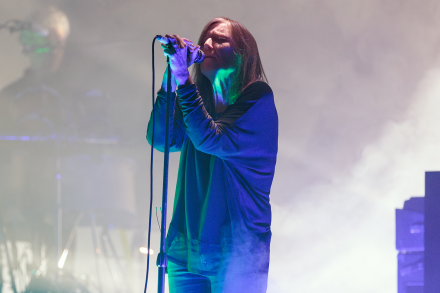
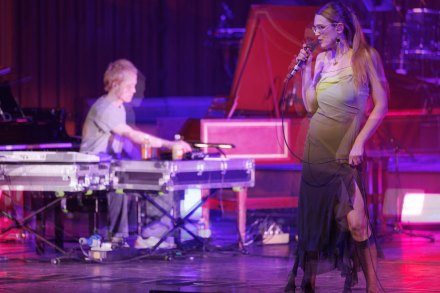
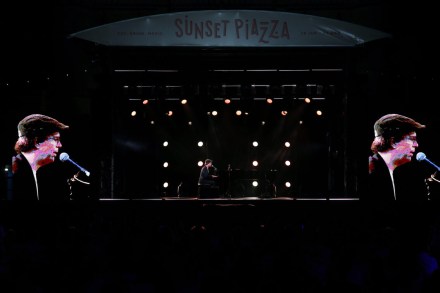
Sometimes I think, in the end, only the voice truly matters. Dress it however you wish, zhuzh it up with textural condiments: cool electronics, warm strings, harsh noise, romantic rhythm, ambient atmospherics. It’s all decoration. The human voice is what we respond to most fervently and instinctively in popular music. This – far from infallible – notion occurred to me while attending a concert celebrating 50 years of the Scottish Chamber Orchestra as part of Celtic Connections, Glasgow’s annual (and always inventive) festival of roots music. Led by American conductor Eric Jacobsen, the SCO opened with a lively rendition of Mendelssohn’s Hebrides Overture before providing supple, sympathetic support for four voices. Each was unique and evocative. One was truly transportive.

Without Pitchfork, bands like the Clientele would never have attracted any attention

Pop

The whole world might have been different had Alasdair MacLean, singer and guitarist of the delicate, pastoral, slightly psychedelic band the Clientele, had his way. In 2006 he told music website Pitchfork about the time he was working for a publisher and strongly recommended they turn down a children’s fantasy novel that had been submitted. They overruled him and published Harry Potter and the Philosopher’s Stone anyway. We all know what happened to J.K. Rowling. MacLean ended up leaving the world of books, and in due course the Clientele got a music deal that enabled them to turn full time, though I have no idea whether they still survive solely on the tiny margins a working indie band can carve out.

Americans still think ‘punk rock’ was about the music, bless them

Pop

Of their many cultural quirks, Americans retain a slightly ridiculous and yet rather touching belief in the power of ‘punk rock’ (nobody in the UK ever calls it that, of course: it’s just ‘punk’). Despite laying claim to the progenitors of the whole punk thing – the Stooges, the New York Dolls, the Ramones – Americans still don’t quite seem to understand it. They actually think it was about the music, bless them. More bafflingly, they seem to regard ‘punk rock’ as something that has enduring currency, rather than being a brief – though significant – cultural phenomenon of the mid-to-late 1970s that was more or less over before it began. Americans still don’t seem to understand punk.

The confusing, overwhelming, exhilarating music of Jockstrap

Pop

Shall we get the pop predictions for this year out of the way first? Taylor Swift will continue to conquer the world; the charts will continue their descent into meaninglessness; some long-forgotten group or style will become inexplicably popular because kids use it to soundtrack their TikTok videos. There. That’s the coming year taken care of. And how did the old one wrap up? With a week of gigs in the run-up to Christmas that was so overloaded it was impossible to get to them all. That still left plenty of treats, though, beginning with Jockstrap. The band was joined on stage by strings, a percussionist, a soprano, as well as someone on stilts dressed up as a monster straight from the props cupboard of Terry Nation-era Doctor Who.

Albums should be forced by law to reveal where each song was written

Pop

Bob Dylan is heading into the new year with a reduced property portfolio, having sold his Scottish bolthole, Aultmore House in Speyside, for a shade over four million quid. Though the spec looks grand – 16 bedrooms, 11 bathrooms, a folly (to complement his Christmas album, presumably) – only one aspect interests me: did Dylan ever write anything notable there? Is some piece of the Cairngorms National Park forever preserved in a line – perhaps the one he cribbed from Robbie Burns about his heart being in the Highlands – that came to him while gazing out enigmatically over the croquet lawn?

Small moments vs Big Ideas: Peter Gabriel’s i/o reviewed

Pop

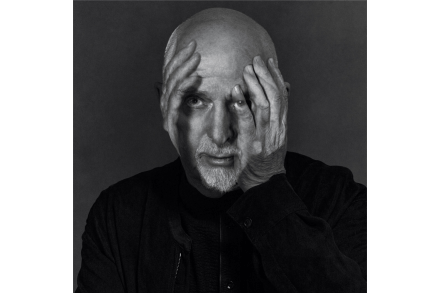
Peter Gabriel is terribly fond of a Big Idea. With Genesis he would sing in character as a lawnmower, a fox and as ‘Slipperman’. His final work with the band, in 1974, was The Lamb Lies Down on Broadway, a double album driven by what we might kindly describe as a ‘kaleidoscopic’ narrative involving a Puerto-Rican protagonist on a voyage of self-discovery in New York City. Since going solo there has always been plenty of stuff whirling around each new Gabriel project. His Real World HQ in the West Country is part recording studio, part hi-tech hippie lab, encompassing conceptual technological probing, multimedia collaborations, NGOs and various foundations.

‘Stomp clap hey’ music: Noah Kahan, at O2 Forum Kentish Town, reviewed

Pop

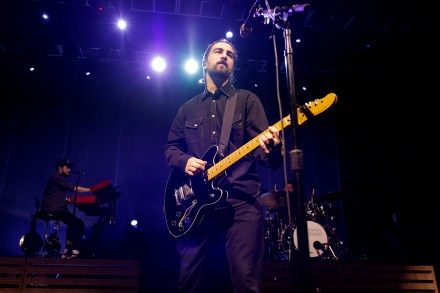
I first heard of Noah Kahan in a cave in France this summer, when my 23-year-old daughter started wailing with distress at realising she had missed the chance to buy tickets to see him because she was in a cave when they went on sale (two shows at the Forum sold out in seconds). Kahan, a 26-year-old singer-songwriter from Vermont, has so far made very little impact on the world of the over-thirties, but his contemporaries and those a little younger adore him. If you Google reviews, you won’t find very much from the traditional music press or from big newspapers and magazines – but you’ll find plenty from student papers. What they like so much about him is a little mysterious.

Melodic elegance and literate sass: Ben Folds, at Usher Hall, reviewed

Pop

Choose your weapon. Artists are closely defined in the public imagination by their instrument of choice. Though the most untamed and transgressive progenitors of rock’n’roll – Jerry Lee Lewis and Little Richard – were piano pounders, and despite the later efforts of Elton John, over time the instrument has come to be associated with restraint and politesse; the straight second cousin to rock’s clichéd wild child, the electric guitar. He strolled on stage like a stranger and left 100 minutes later as an old friend I hadn’t realised I’d missed American singer-songwriter Ben Folds has been playing with these expectations for the best part of 30 years, first in Ben Folds Five, then as a solo artist.

Gig of the year: Ezra Collective, at the Royal Albert Hall, reviewed

Pop

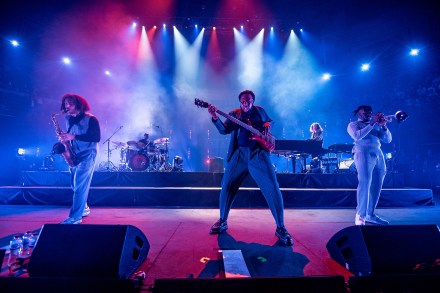
The American music website Pitchfork is the journal of record for alternative America. It has became this generation’s Rolling Stone, for both good and ill. Long before it was bought by Condé Nast, however, it was famous for a disastrous jazz review in which the site’s founder chose to employ what he appeared to believe was the vernacular of a jazz ‘cat’ of the early 1960s. All is forgiven, though. Here was the London outpost of the Pitchfork Festival, opening with jazz stars Ezra Collective, the quintet who earlier this autumn won the Mercury Prize for their second album, Where I’m Meant To Be. Ezra Collective are very easy to like.

This recreation of Dylan’s Free Trade Hall concert is supremely good

Pop

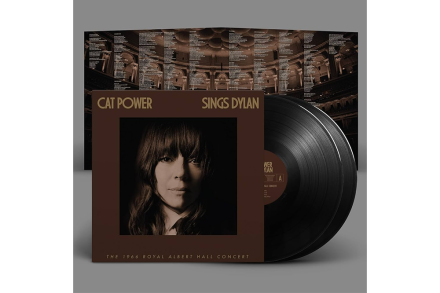
In May 1966, Bob Dylan toured the UK with The Band, minus drummer Levon Helm, and abrasively pulled the plug on any lingering notions of his being a mere folk singer. Playing two sets every night – the first acoustic, the second electric – even the solo numbers were wild, lysergic, unravelled. The electric ones whipped through the tweed and tradition like the howl of a strange new language. The crowds booed and one chap famously cried ‘Judas!’ (though presumably many of those present also enjoyed it). Dylan muttered and swore and was unbowed. The fast-moving currents of pop culture changed course almost perceptibly.

Spellbinding performance of a career-defining record: Corinne Rae Bailey, at Ladbroke Hall, reviewed

Pop

You won’t see two more contrasting shows this year than Corinne Bailey Rae performing her album Black Rainbows and Brian Eno presenting work with a symphony orchestra. One had music that did everything; one had music that did very little. But both were overwhelming and filled with joy of rather different kinds. When Bailey Rae last made an album, in 2016, it was gentle, tasteful, soulful R&B, the kind the young professional couple in a prestige Netflix drama listen to before their lives are overturned by a vengeful nanny. Black Rainbows,by contrast, from earlier this year, was an abrupt embrace of everything: from scuzzy garage punk to psychedelic soul to American show tunes, all inspired by the Stony Island Arts Bank in Chicago and its exhibits on the black experience in America.

The case against re-recording albums 

Pop

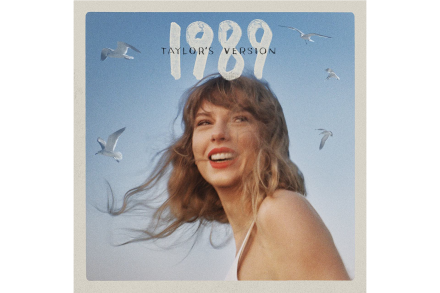
In 2012, Jeff Lynne released Mr Blue Sky: The Very Best of Electric Light Orchestra. Except it wasn’t. It was 11 new re-recordings of classic ELO songs – which isn’t the same thing at all. Lynne, bless him, believed that having gained more experience as a producer, he could now improve the songs that made him famous. ‘You know how to make it sound better than it did before,’ he said, ‘Because I have more knowledge… and technology.’ Sheesh. How wrong can one man be? Pop music is all about the definitivearticle. Not only the bold prefix attached to its greatest practitioners – Beatles, Byrds, Wailers, Temptations, Fall, et al – but the notion of a defining recording of a song. The stage is the place for revision: to jam, change the words, the rhythm, the feel.

Virgin on the astonishing: Madonna, at The O2, reviewed

Pop

When I was a kid listening obsessively to AC/DC and Iron Maiden and Black Sabbath, I despaired of music writers. How come none of them – except the staff of Kerrang! magazine and a couple of writers on Sounds – could see the majesty and splendour of this music? Why were they always banging on about flipping Echo and the Bunnymen and Joy Division, or harking back to old man Dylan? These days, all three of those bands are to some degree or another as revered. Not everyone loves them, but you won’t find many serious critics – even those who don’t personally care for ‘Whole Lotta Rosie’, ‘The Number of the Beast’ or ‘War Pigs’ – who’ll simply write them off as worthless. ‘A wandering worthless exercise’, wrote NME of Madonna’s Like a Virgin.

New Order’s oldies still sound like the future

Pop

The intimate acoustic show can denote many things for an established artist. One is that, in the infamous euphemism coined by Spinal Tap, their audience has become more ‘selective’. Attempting to make the best of a bad job, the artist shifts down a gear while aiming upmarket, much in the manner of a balding man cultivating a fancy moustache. The cosy concert is also favoured by pop stars craving some old fashioned string-and-wire authenticity. Occasionally, the urge is a creative one, propelled by the sense that the material being promoted lends itself to a less triumphalist approach.

An awfully long night for a band without any bangers: The National, at Alexandra Palace, reviewed

Pop

Over the past few years, the National have become the most important band in modern rock music. The strange thing is that this has happened at a point when their own work has perhaps lost a little of its earlier intensity. They’ve become important because they have come to represent something to other artists: a kind of adventurous but accessible integrity. The brothers who are the musical core of the band – guitarists Aaron and Bryce Dessner – have been so in demand that they have worked with, between them, (deep breath) Taylor Swift, Ed Sheeran, Michael Stipe, Sharon Van Etten, Bon Iver, Philip Glass, Steve Reich, Paul Simon, Sufjan Stevens, Nico Muhly, Jonny Greenwood, Bruce Springsteen and Ryuichi Sakamato. And those are just the ones you might have heard of.

In praise of the Festival Song – the four-minute wonder that can sustain a career for decades

Pop

As the sun sets on another too-long summer festival season, let us take a moment to reflect on the Festival Song. This is the one tune by a band that even the most reluctant festival attendee will know. It is the song producers stick on the TV highlights package for bored insomniacs surfing the red button. It can save a set, turn grey skies blue and get old bones shaking. The Festival Song survives the artist’s critical nadir; it is the musical cockroach that emerges unscathed from a commercial apocalypse. It is the cast-iron guarantee to every festival booker in the land that an act can still bring something to the party.

If you can’t get something out of the songs of Shania Twain, you’re a lost cause

Pop

Pop critics routinely make the mistake of assuming the most important acts are the ones copied by the groups they like. So to a generation of writers who grew up listening to 1980s and ’90s indie, the Velvet Underground are the second most important group of all time, after the Beatles. Don’t get me wrong, I love the Velvet Underground, and they are hugely important in rock history. But in reality the second most important group in rock history is Van Halen, because for a decade or so the vast majority of hard-rock bands – who in the 1980s were commercially huge – were trying to imitate them in one way or another.

Mildly pleasant 1980s hard rock: ‘Angry’, by the Rolling Stones, reviewed

Pop

The new Rolling Stones single, supposedly their best in many a decade, is called ‘Angry’. And while on the surface it seems to be about the millionth anguished plea from Mick Jagger to some unseen woman to give him a shag, it reportedly stems from Mick’s mystification as to why everybody is angry these days. I suppose he is forgetting that youth has always been in a more or less perpetual state of pre-rational, pettish fury – a fury which, back in the day Mick was canny enough to take advantage of. You may remember his incandescence at being unable to attain any satisfaction, for example, or at the unwanted ingression of an unidentified person on to the cloud he was occupying.

The Strokes are always terrible – why do I keep going back to see them?

Pop

Quite when the concept of coolness became a thing is uncertain, even to etymologists. As early as 1884, an academic paper noted the expression ‘Dat’s cool!’ among African-Americans. But it’s about 100 years since ‘cool’ entered the lexicon as an unambiguous description of something to aspire to (via jazz, inevitably), and it’s still a crucial concept in the world of pop: it’s being cool that meant the Strokes could attract 50,000 or so people to east London, even though most of those present were at primary school when the band released their two first two albums, which are the two on which their reputation rests, and songs from which comprised nearly half their set.

A 50-quid, hour-and-a-bit troll: Aphex Twin, at Field Day, reviewed

Pop

Forty per cent of London is green space. And what we do with all that grass – all that potential – is pave it with music festivals. This year, Hyde Park hosted Billy Joel and Bruce Springsteen. Gunnersbury Park had Boygenius. Finsbury Park welcomed Pulp and Travis Scott. Field Day is a staple of the season. Always falling on a Saturday in late August, the day is wholly reserved for electronic music. Reams of twentysomethings make the pilgrimage: set off from wherever, change at Bank, District Line to Mile End, 15-minute walk, enter, set aside £7.50 for a can of warm Red Stripe. Everything is very clean: the organisers don’t want Woodstock. The first thing you see upon entry is a stand to buy Alpine’s MusicSafe Pro High Fidelity Earplugs.

Invention and irreverence: Lankum, at The Queen’s Hall, reviewed

Pop

In a few days, Lankum will most likely win the 2023 Mercury Music Prize for their fourth album False Lankum – but don’t let that put you off. Increasingly, the Irish quartet feel like they belong to the lineage of artists who have wreaked radical and lasting change upon British and Irish folk traditions, from Davey Graham, Fairport Convention and Pentangle to Steeleye Span, the Pogues and Lau. The kind of artists who burrow deep into the forest of tradition in order to plant dynamite within the heartwood. At times, we might have been below deck on a ship heading for Ellis Island Appearing at the Edinburgh International Festival (EIF), Lankum played a set spilling over with invention, irreverence and attrition.

It was midnight in a field in Wales and I was lying face down in six inches of mud: Green Man Festival reviewed

Pop

I love Green Man. The smallish festival is the second most beautiful site I’ve ever visited (after G Fest, which is situated on a beach in a fjord in the Faroe Islands). Nestled in a valley between the mountains of the Brecon Beacons, it has great bills, it’s impeccably organised and I feel nourished by it. But, in the interests of being honest about festivals for those who have never been, I should also confess that this year it supplied the single most miserable experience of my music-watching life. It was midnight, in a field in Wales, and I was lying face down in six inches of mud Friday was the kind of day Noah might have felt a little discombobulated by. It began raining before dawn and it never let up. Come nightfall, the wind picked up too.

Uneasy listening: Kathryn Joseph, at Summerhall, reviewed

Pop

I have always been fascinated by artists who bounce between tonal extremes when performing, particularly the ones who serve their songs sad and their stagecraft salty. Adele, for example, fills the space between each plushily upholstered soul-baring ballad by transforming into a saucy end-of-pier variety act, coo-cooing at the crowd and cursing like a squaddie. John Lennon gurned and clowned his way through the Beatles’ concerts, subverting the naked suicidal plea of ‘Help!’ in the process. John Martyn would belch and joust in mock-Cockney at the conclusion of a particularly sensitive piece. Jackie Leven punctuated songs of immense pain and sadness with eye-watering stories of defecating in alleyways and getting blootered with the Dalai Lama’s bodyguard.

Is it all an elaborate practical joke? Mac DeMarco, at Hackney Empire, reviewed

Pop

It’s not just who our pop heroes are that marks the passing of the generations; it’s how those heroes present themselves. Kevin Rowland, who turns 70 next week, appeared on stage for his London album launch in a jaunty sailor’s hat and striped top, looking as though he’d just come from a fashion shoot. Mac DeMarco, aged 33, ambled on in baseball cap, shlubby T-shirt and jeans. Rowland was upstanding, commanding and just a little forbidding. DeMarco sat on a stool and told a long story claiming that he and his keyboard player had been Oregon miners: a story which extended to include coprophagia, hair fetishism and maple syrup. Rowland is total commitment; DeMarco is total detachment. Both were adored above and beyond the usual level of dedication.

The problem with pop-literary collaborations

Pop

‘We all secretly want to be rock stars,’ the 2022 Booker Prize-winning author Shehan Karunatilaka said recently. By ‘we’ he meant novelists, and he was more or less right. Most authors want to be rock stars, just as many rock stars aspire to bookish credibility. The former crave a whiff of glamour and instant gratification; writing offers precious little of either. Musicians seek gravitas and some wider recognition that they possess the tools to extend their literary genius beyond three verses and a killer chorus. Both parties tend to discover that they do what they do as a day job for a good reason.

A giddy delight: Regina Spektor, at the Royal Festival Hall reviewed

Pop

We’ll get on to the brilliance of Regina Spektor in a moment. But first a question: why are pop music fans treated so abysmally? The afternoon of Spektor’s second sold-out show at the Royal Festival Hall, the venue tweeted that she would be on stage at 7.30 p.m. She actually took to the stage a few minutes past 8 o’clock. Spektor was absolutely magnificent once she did come on. She filled the room with charisma, charm and wit If that were a one-off, so be it. But anyone who goes to a lot of shows is familiar with how malleable the concept of stage-time is in pop music. Lana Del Rey had her Glastonbury set cut short because she was so late coming on – apparently she was having her hair done. It’s maddening. Why can they not meet their call times?

An album of not terribly happy ballads: Blur’s The Ballad of Darren reviewed

Pop

Bands that have hung around, or gone away and come back again, occupy an increasingly sizeable percentage of pop’s bandwidth. When it comes to making new music, many are happy not to rock the boat, scraping by on the goodwill accumulated from past endeavours. Others strive to present a moving target, enjoying a more evolved, even argumentative, relationship with the sounds of their glory days. Two new albums tackle this dilemma, with varying degrees of success. Together for the first time since 2015, Blur do a fine job of straddling past and present.

Intoxicating: Bruce Springsteen, at BST Hyde Park, reviewed

Pop

Seven years ago, I asked Bruce Springsteen what he meant when he talked of the covenant between himself and his audience. It was a long, thoughtful and thorough answer, and when I transcribed it, I realised he would have won Just a Minute, so clear was his reply. Part of what he said was this: ‘I have built up the skills to be able to provide, under the right conditions, a certain transcendent evening, hopefully an evening you’ll remember when you go home. Not that you’ll just remember it was a good concert, but you’ll remember the possibilities the evening laid out in front of you, as far as where you could take your life, or how you’re thinking about your friends, or your wife, or your girlfriend, or your best pal, or your job, your work, what you want to do with your life.

Still one of the great vocalists: Peter Gabriel, at OVO Hydro Glasgow, reviewed

Pop

Most artists begin an arena show with a bang: emerging from the floor, the gods, on a hoist, everything short of being sprung headfirst from a cannon. Touring for the first time in seven years, Peter Gabriel shrugged off such rote conventions. At 8 p.m. on the dot, he shuffled on alone in a flat cap, for all the world a man with nothing more on his mind than inspecting his spuds down at the allotment. He offered a few words, some avuncular jokes, a self-deprecating jibe at his appearance. I found myself bracing for a PowerPoint presentation, but the message was simple enough not to need one: there are no stars here.