Culture

Culture

The good, the bad and the ugly in books, exhibitions, cinema, TV, dance, music, podcasts and theatre.

Hits you where it hurts: Welsh National Opera’s Madam Butterfly reviewed

Opera

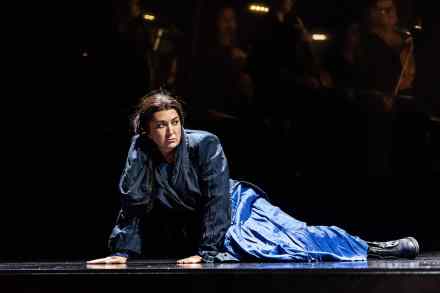
‘It’s generally agreed that in contemporary practice, this opera proposes significant ethical and cultural problems,’ says the director Lindy Hume in the programme book for her new production of Madam Butterfly, and if you’ve just shelled out 75 quid in the expectation of attractive scenery and luscious tunes, that’s you told. In truth, it’s rarely advisable to read what a director thinks about their own work, at least until after the show, when it can serve as a bemusing footnote to the evening’s entertainment. Ah, so that’s why they were wearing pink beehive wigs! If a director is any good at their job, it’ll come across on stage without any need for commentary.

Neither Tristan nor Isolde quite convinced: Glyndebourne’s Tristan und Isolde reviewed

Opera

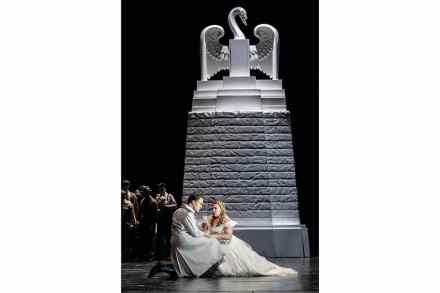
Glyndebourne is nothing if not honest. ‘In response to the ongoing Covid-19 restrictions our 2021 performances of Tristan und Isolde will be presented as a concert staging, after the 2003 production by Nikolaus Lehnhoff’, says the programme, and what we get is not a full production but a compromise imposed by the peculiar circumstances of August 2021. The London Philharmonic Orchestra huddles on stage. Behind them the back wall glows and fades in washes of blue and pink; in front, a stepped apron extends over the redundant orchestra pit. The singers slip on and off from the wings or, in a basic but effective trick of lighting design, appear to materialise from the embracing darkness. It’s an approach to Wagner that can work well.

Springtime for Putin: Grange Park’s The Life and Death of Alexander Litvinenko reviewed

Opera

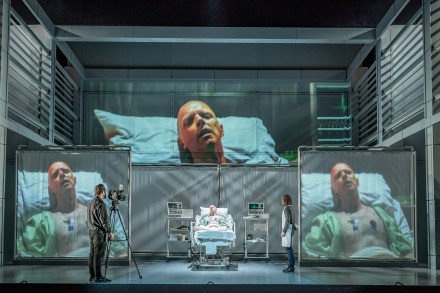
Alexander Litvinenko lies in a London hospital, dying of polonium poisoning. That photograph from 2006 haunts the memory: the medical robe, the electronic monitors, Litvinenko’s accusing gaze and bald, ravaged head. But in case we needed reminding, Grange Park Opera handed out copies of Death of a Dissident, the account of the crime by Litvinenko’s widow Marina, and the principal source for Anthony Bolton and Kit Hesketh-Harvey’s new opera The Life and Death of Alexander Litvinenko. Minutes later, a hospital bed rolled on stage replicating that exact image. And then Litvinenko — the tenor Adrian Dwyer — opened his mouth and started to sing. Opera plays a high-stakes game with dramatic realism at the best of times, but this was startlingly upfront.

Zips along with enormous vim: Malcolm Arnold’s The Dancing Master reviewed

Opera

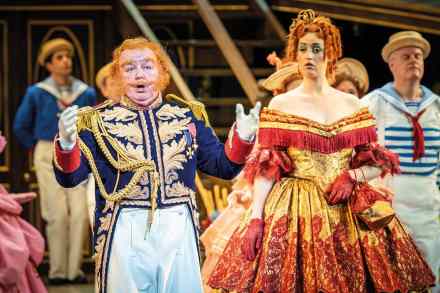
Malcolm Arnold composed his opera The Dancing Master in 1952 for BBC television. It never appeared, the problem being the source material — William Wycherley’s 1671 farce The Gentleman Dancing Master. Jokes about wedding nights and ‘scarlet foppery’ might have flown in the reign of Charles II but the New Elizabethans at Broadcasting House were altogether more shockable. ‘Too bawdy for family audiences,’ was Auntie’s official verdict, leaving The Dancing Master largely forgotten until a premiere recording late last year, and now — conducted by John Andrews and using almost the same cast — its first ever professional production, at the Buxton International Festival.

The finest Falstaff you’ll see this summer

Opera

Comedy’s a funny thing. No, seriously, the business of making people laugh is as fragile, as mercurial as cryptocurrency — a constellation of shifting risk factors, many beyond control, any of which can kill a joke deader than Dogecoin. Opera is already at a disadvantage. Timing — comedy’s accelerant of choice — is predetermined, dictated by the demands of unwieldy choruses and slow-moving sets, pinned down to the second by a score whose creator may be anything but a natural comedian. Just ask Verdi, whose early farce Un Giorno di Regno was such a comprehensive flop that he gave up the genre altogether for almost an entire career. But at 75, all but retired after a sequence of bloody tragedies, the composer returned for one last shot at comic victory.

You’ll shrug where you should marvel: Garsington’s Amadigi reviewed

Opera

When you think of Handel’s Amadigi (in so far as anyone thinks about the composer’s rarely staged, also-ran London score at all) it’s as a magic-opera. Sorcerers and sorceresses do battle in a fantasy land not found on any map. The stage directions alone are enough to stir the commercial loins of any 18th-century impresario. Enchanted palaces are ‘split asunder’, caves transformed into ‘beautiful palaces’, monsters ‘ascend from the bowels of the Earth’ and a chariot ‘descends covered in clouds’.

Wow, this is good: Grange Park Opera’s Ivan the Terrible reviewed

Opera

There are worse inconveniences than having to wear a face mask to the opera. But there’s one consequence that hadn’t really struck home until an hour into Rimsky-Korsakov’s Ivan the Terrible. The citizens of Pskov are massing in the streets. The Tsar’s army is approaching, and Rimsky is building one of those surging Russian crowd scenes: bass-heavy chorus blazing away while ominous bell sounds — basses, horns and rasping gong — shake the orchestra to its bones. Suddenly a bloodstained figure staggers in and collapses; a refugee from nearby Novgorod. ‘Your brother-city sends its greetings, and asks you to arrange its funeral,’ he gasps.

Lush, elegant and vivid: Der Rosenkavalier at Garsington reviewed

Opera

At the turning point of Richard Strauss and Hugo von Hofmannsthal’s Der Rosenkavalier, all the clocks stop. Octavian has arrived at the house of the teenage bride-to-be Sophie von Faninal as bearer of the silver rose — the symbol of a love that is simultaneously as artificial and as eternal as any human creation can be. Sophie smells real roses; yes, says Octavian, there is a drop of Persian fragrance amid the silver petals. ‘Like a heavenly, not an earthly rose’, sings Sophie: and her voice soars higher and purer than anything we’ve heard so far, suspended in stillness while Strauss’s orchestra shimmers around her. The thing is, in Bruno Ravella’s new staging for Garsington Opera we already know the rose’s secret.

World-class music, heavily symbolic staging: Glyndebourne’s Katya Kabanova reviewed

Opera

At the first night of Glyndebourne Festival 2021 there was relief and joyful expectation as Gus Christie made his speech of welcome. Never mind the hit to takings from the closed bar and the necessarily half-empty auditorium; never mind the scaled-back orchestra and abridged score. The new production of Katya Kabanova provided the thirsty opera-goer with a long cool drink of world-class music and heavily symbolic staging. Janacek’s exploration of a yearning female psyche has parallels with Anna Karenina and Madame Bovary. It lives or dies by its lead, and the Czech soprano Katerina Knezikova excelled as Katya.

The two composers who defined British cinema also wrote inspired operas

Opera

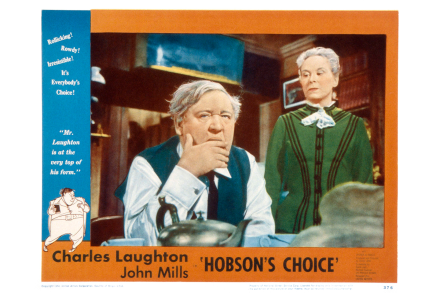
It’s my new lockdown ritual. Switch on the telly, cue up the menu and scroll down to where the vintage movies gather — Film 4, or the excellent Talking Pictures TV. Then search through their early-hours offerings, and press ‘record’ more or less at random. Gainsborough costume flicks; Rattigan adaptations; anything with John Mills in a submarine — it’s all good. Then, next day, trawl through the catch to see what’s surfaced, and who wrote the music. On a good night you might get Vaughan Williams in 49th Parallel, Richard Rodney Bennett in Billy Liar or — bewilderingly — the fire-breathing serialist Elisabeth Lutyens, keeping herself in cigarettes and brandy with scores for The Skull or Dr Terror’s House of Horror.

Another cracking take on the opera film: Marquee TV’s Turn of the Screw reviewed

Opera

I’m still waiting for the Royal Opera to step up. Nearly a year into the Covid crisis and what do they have to show for it? One stonking concert staging of Ariodante, a couple of gala-ish performances and some operatic scraps. Where’s the creativity? Where’s digital ingenuity, the willingness to experiment, reinvent, adapt? Where, frankly, is opera? When companies with a far greater reliance on box office than the heavily subsidised Royal Opera can do their bit — look at Grange Park’s tireless stream of content, ENO and Scottish Opera’s various car-park Bohèmes, English Touring Opera’s monodramas and song cycles, Glyndebourne’s Offenbach-in-the-garden — it’s hard not to feel frustrated.

Hear the greatest Parsifal of our time sing like a Muppet: Jonas Kaufmann’s Christmas album reviewed

Opera

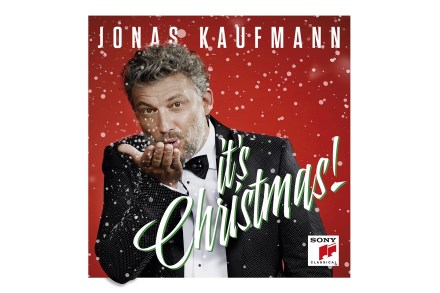
In classical music circles, Christmas arrives with the overture to Handel’s Messiah. Or so they’ll tell you. In truth, festivities kick off when you hear a ping from your phone and glance down at your inbox: OMG — you have to hear this! There follows, as tonic follows dominant, a link to YouTube and the 2014 Christmas in Vienna Medley — the occasion, still barely fathomable to anyone who believes that we share a common European culture, when a quartet of opera singers in full evening dress, and shimmying on the spot like a vicar at a Sunday School disco, attempted to cover George Michael’s ‘Last Christmas’. But not this year. Oh no.

A coherent evening of real opera: GSMD’s Triple Bill reviewed

Opera

Covid has been many things to the arts — most of them unprintable. A plague, a scourge, a disaster from which many institutions and artists won’t recover, it has also been a great equaliser. Suddenly there’s space to be heard, silence to be filled. In a digital world no one cares about the size of your stage. All you need is a laptop and a good idea and you’re competing alongside the Met or the Royal Opera. In the case of the Virtual Opera Project it was a shed and a homemade green-screen. Oh, and a cast, chorus and creative team of well over 100. And did I mention the London Philharmonic Orchestra?

A new opera that deserves more than one outing: Royal Opera’s New Dark Age reviewed

Opera

It’s quite a title sequence. Puccini swells on the soundtrack and words flash before your eyes. ‘Ecstatic!’ ‘Spellbound!’ ‘Passionate!’ ‘Dazzled!’ Champagne fizzes, ballerinas pirouette; for some reason Bryn Terfel hovers in the roof of the Floral Hall. The Royal Opera House is back in the game, bringing the uplift of live music-drama to an opera-starved Britain, and if you’re watching it online, the only remaining question is whether the offering on stage can possibly live up to the energy, colour and sheer affirmation of the Royal Opera’s on-screen intro. Don’t be silly. What we get is New Dark Age — a double bill that takes its name from its second half, the latest creation of director Katie Mitchell.

I pounded my car horn like a Neapolitan cabbie: ENO’s drive-in Bohème reviewed

Opera

The email from English National Opera was blunt: ‘Your arrival time is 18.25. If you arrive outside your allocated time slot, you may not be allowed entry.’ Perhaps, to habitual London drivers — if such people exist — negotiating the residential streets of Muswell Hill during a Saturday rush hour is all good clean urban fun. I couldn’t say. I just know that by the time I’d been marshalled into a parking space at Alexandra Palace, my no-claims bonus miraculously still intact, I was in no mood for an evening of updated and interval-free Puccini. Three hours later I was pounding my car horn like a Neapolitan cabbie.

Why imperfect operas like Don Carlo are more interesting than perfect ones

Opera

In the 62 years since I first heard and saw Don Carlo, in the famous and long-lasting production by Visconti at the Royal Opera, my feelings about it have grown ever stronger, both in passionate attachment and in critique. Imperfect operas, like other imperfect phenomena, can be more interesting than perfect ones, because they’re more thought-provoking, more enticing. The libretto, very freely based on Schiller’s play, was by two Frenchmen, and Verdi, eager to make a bigger splash than he had so far in Paris, made too much of one. The first performance, in 1867, ran so late that the members who lived outside central Paris missed their last trains, which were at 12.35 a.m. (Royal Opera and ENO: please take note).

The best recordings of Ravel’s L’enfant et les sortilèges

Opera

‘I don’t want to do my work. I want to go for a walk. I want to eat all the cakes… to shout at everybody!’ Which of us hasn’t felt like this at some point during the past ten weeks? The small child at the centre of Ravel’s L’enfant et les sortilèges speaks for us all as he rages against the restrictions of his suddenly enclosed and joyless world. Shut in the schoolroom until he finishes his homework, the little boy lashes out, spilling ink on the carpet, smashing the crockery, snapping the pendulum off the clock, tearing the wallpaper and terrorising the cat. But just as his tantrum is exhausted he finds that the tables have turned as the furniture, objects and animals that surround him come to life and scold him for his behaviour.

No one understood the ennui of lockdown better than Louis XIV and his courtiers

Opera

A few years ago I interviewed an eminent baroque conductor. Prickly and professorial, tired after a day of rehearsals, he batted question after question away until we landed on the subject of French baroque opera. No longer disinterested, now he was furious. He’d recently had a conversation with a major UK opera house, who had decided never again to stage anything by Lully, Rameau or Charpentier. Why? ‘It doesn’t sell.’ Since then we’ve had precisely one professional production of this repertoire in this country. It’s not the first time that English audiences have been suspicious of foreign imports. Back in the 18th century, when the cultural invasion came from Italy, feelings on this subject ran high.

It costs a lot of money to look this cheap: Metropolitan Opera’s At-Home Gala reviewed

Opera

Desperate times call for desperate measures. With the world’s opera houses currently dark, the New York Metropolitan Opera tackled the crisis the way it knows best — by assembling the most glamorous possible list of vocal megastars and presenting them at astronomical expense. But dollars can’t get around social distancing, and in lockdown even the greatest voice is only as good as the mic on a smartphone. Cue four hours of free-to-view party pieces from 43 of the world’s greatest singers, broadcast live from their homes without orchestra, without editing and without excuses.

The musical vaccination we all needed: ETO’s Cosi fan tutte reviewed

Opera

Anyone familiar with Joe Hill-Gibbins’s work will brace instinctively when the curtain goes up on his new Figaro. He’s the young British director who smeared the Young Vic with jelly and custard (The Changeling) and transformed it into a giant mud pit (A Midsummer Night’s Dream), covered the Almeida in blood and more mud (The Tragedy of King Richard the Second) and bathed his cast in a stomach-turning blend of salad cream, ketchup and baked beans at the Edinburgh Festival (Greek).So when the curtain rises on a white-walled corridor whose sterile purity is broken up only by four equally white doors you do mentally reach for a mop. But Hill-Gibbins’s plans for Figaro are surprisingly clean and surprisingly, well, dry.

A lost opera from the most powerful musician you’ve never heard of: La ville morte reviewed

Opera

Who was the most influential figure in 20th-century classical music? Stravinsky? Pierre Boulez? What about Bernstein or Britten? John Cage or Karlheinz Stockhausen? Powerful public figures all. But there’s a case to be made for a very different kind of character — less king than kingmaker, a musical éminence grise.With a Who’s Who of pupils that included Leonard Bernstein and Aaron Copland, Elliott Carter and Astor Piazzolla, Philip Glass, John Eliot Gardiner and Daniel Barenboim, Nadia Boulanger is the most powerful musician you’ve never heard of, ‘the most important teacher since Socrates’, as one composer only partly joked. Photographs show us a stern, spectacled, almost invariably elderly figure.

Eurotrash Verdi: ENO’s Luisa Miller reviewed

Opera

Verdi’s Luisa Miller is set in the Tyrol in the early 17th century, and for some opera directors that’s a problem. After all, they’re busy people. They probably never had time to read Wolf Hall, or to speak to any of the 100 million people worldwide who watched Game of Thrones. It’s self-evident to them that modern audiences will be unable to empathise with anything involving swords, castles or feudal hierarchies. Which is why they work hard to imagine new contexts that can make these hopelessly dated dramas address contemporary life as we live it, right here, right now. Counts, village maidens and men in ruffs? Baffling. But a clown strapped to a gyrating crucifix being stabbed with arrows by a group of dancers in flesh-coloured swimming caps and black fetish wear?

Are we going to have to start taking Calixto Bieito seriously? ENO’s Carmen reviewed

Opera

Calixto Bieito’s Carmen: three words to make an opera critic’s heart leap. Until quite recently, Bieito was the operatic provocateur of the century — the director who opened Verdi’s Un ballo in maschera with a row of men defecating on stage, and who presented Mozart with a side order of torture porn. Veterans of his Carmen told of fellatio and gratuitous nudity; it all sounded very promising. Add the malicious pleasure of seeing what unrevivable horrorshow ENO had lumbered itself with now — what steaming paella of body fluids it was about to dish up to an audience who’d paid for an evening of good tunes and sultry senoritas — and the review practically writes itself.

More misogynistic than the original: ENO’s Orpheus in the Underworld reviewed

Opera

It’s Act Three of Emma Rice’s new production of Offenbach’s Orpheus in the Underworld, and Eurydice (Mary Bevan) is trapped in the backroom of a Soho peep show. But that doesn’t really matter because Jupiter (Willard White), a cigar-toking love walrus in a silk bathrobe, has transformed himself into a fly and is about to ravish her, once he’s worked out the practicalities of doing so while three millimetres long. Eurydice’s more than game. ‘Zzzz, zzz,’ she sings, draping herself lasciviously over the mattress. ‘Zzzz, zzz,’ buzzes Jupiter, wings popping erect. Rice’s puppeteer darts about with a toy fly on a string, dressed in a black catsuit and (the killer detail) a beatnik beret.

More Grace Kelly than Grace Jones: Welsh National Opera’s Carmen reviewed

Opera

How do you take your Carmen? Sun-drenched exotic fantasy with a side order of castanets, or cool and gritty, sour with violence and politics? Jo Davies’s new production for Welsh National Opera seems unable to make up its mind. Sternly rejecting colour and fantasy, it then fails to commit to an alternative, leaving both its heroine and audience stranded in an unlovely theatrical no-man’s land. Programme notes place us in contemporary Brazil, in a favela painted in unvarying textures of brown and steel. But there’s little in the action to confirm this. Who are the soldiers that guard the compound with desultory inefficiency, and what is their relationship to the women they wolf-whistle and the children who run riot around their feet?

Why are so many operas by women adaptations of films by men?

Opera

Opera’s line of corpses — bloodied, battered, dumped in a bag — is a long one. Now it can add one more to the list: the broken, abused body of Bess McNeill. The heroine of Lars Von Trier’s uncompromising 1996 film is a curious creation. Striving against the restrictions of her austere, Presbyterian community on a remote Scottish island, she marries oil-worker and ‘outsider’ Jan. But when an accident on the rig leaves him paralysed, a promise to her husband and a bargain with God leads her into increasingly degrading and dangerous sexual encounters. Savant or innocent, saviour or sacrificial victim — Von Trier leaves it unclear.

Secret pleasures

Opera

Should a secret pleasure ever be shared? Spoiler alert: Susanna’s secret, unknown to her husband Gil, is that she smokes. And when, in his opera Il segreto di Susanna, Ermanno Wolf-Ferrari finally gets her alone with her longed-for cigarette, he makes it feel like nothing in heaven or earth could top the sensuous bliss of that first solitary drag. Clarinet and flute coil languidly upwards, the air hazes over with muted strings, and the celeste adds the little spasms of tingling pleasure that Wolf-Ferrari’s contemporary Richard Strauss saves for love at first sight. Salome has nothing on this. By rights, Il segreto di Susanna ought to carry a government health warning.

An overcooked blowout

Opera

Think back to when you were 12, and the sensation of re-opening your favourite book. (This is The Spectator; I’m assuming you were all bookish 12-year-olds.) The Silver Chair, perhaps, or The Phoenix and the Carpet — some fantastic alternative world, anyway, filled with characters who felt like old friends. The lumbering iron giants, powered by fire and water. The scary-funny vegetable-monster. The terrifying but magnificent queen, and her eerie batsqueak of sexual-ity. And of course, the bit where pillows turn magically into birds and flit about the room. This new project from the designer/director team Barbe & Doucet initially feels like being pulled into one of those beloved classics. We’re in a grand hotel circa 1900, and it looks fabulous.

Chilling out | 11 July 2019

Opera

Think of the children in opera. Not knowing sopranos and mezzos, pigtailed and pinafored or tightly trousered-up to look child-like, but actual children. There are Mozart’s Three Boys, Menotti’s Amahl, possibly Debussy’s Yniold and Handel’s Oberto and, if you stretch a point, Marie’s little son in Wozzeck. But that’s about it. Until, that is, you come to Benjamin Britten. It’s a rare Britten opera that doesn’t include a child. Whether it’s Grimes’s doomed apprentice, the chattering powder monkeys of HMS Indomitable, teenage vision Tadzio in Death in Venice, Tytania’s fairies or the watchful Miles and Flora, they are ever-present, but why?