Culture

Culture

The good, the bad and the ugly in books, exhibitions, cinema, TV, dance, music, podcasts and theatre.

Francisco de Zurbarán had a Hollywood sense of drama

Exhibitions

It seems suitable that just round the corner from the Zurbarán exhibition at the Palais des Beaux Arts is the Musée Magritte. Surrealism was in the air of 20th-century Belgium, just as much as it was in the atmosphere of Spain. And of course in many cases its leading figures — Buñuel, Dalí, René Magritte

The great and the good and the gassed and the dead

Exhibitions

Last week, three exhibitions celebrating the art of Germany; this week, a show commemorating the first world war fought against that great nation. In this centenary year of the beginning of WW1, there will be numerous events marking the start of hostilities. (Will there be as many celebrating the anniversary of their cessation, I wonder?)

Julian Cooper's rock profiles

Exhibitions

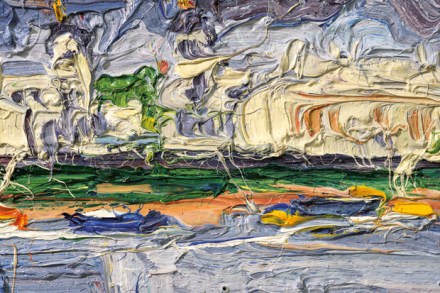
Like most ambitious artists, Julian Cooper has been pulled this way and that by seemingly conflicting influences. The son and grandson of Lake District landscape painters — his mother was a sculptor — he fell among abstractionists at his London art college, Goldsmith’s, in the late 1960s. But when I first saw his work in

Upside down and right on top: the power of George Baselitz

Exhibitions

It’s German Season in London, and revealingly the best of three new shows is the one dealing with the most modern period: the post-second world war era of East and West Germany and the potent art that came out of that split nation. In Room 90 is another immaculately presented British Museum show of prints

The tubular joys of Fernand Léger

Exhibitions

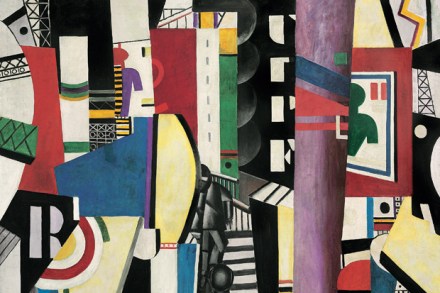
In 1914 Fernand Léger gave a lecture about modern art. By then recognised as a leading Cubist artist, he had the year before signed up with the dealer Daniel-Henry Kahnweiler, who already represented Picasso and Braque. ‘If pictorial expression has changed, it is because modern life has necessitated it,’ Léger argued. ‘The existence of modern

Richard Deacon – from Meccano into art

Exhibitions

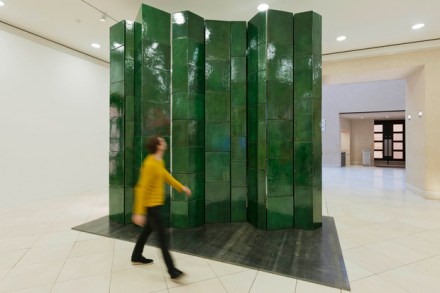
When I visited the Richard Deacon exhibition at Tate Millbank, there were quite a lot of single men of a certain age studying the exhibits with rapt attention — some even making notes. (I realise I’ve just described myself…) This is perhaps because the show is all about the glories of construction, and reminiscent of

The Ikon Gallery's greatest hits

Exhibitions

In a crowded storeroom at Ikon, Birmingham’s contemporary art gallery, its director Jonathan Watkins is unwrapping the pictures for his latest show. His excitement is infectious. He’s like a big kid on Christmas day. This exhibition marks the start of Ikon’s 50th season, for which he’s devised a special programme — a history of Ikon,

The best exhibition of architecture I have ever experienced

Exhibitions

Curtain walls, dreaming spires, crockets, finials, cantilevers, bush-hammered concrete, vermiculated rustication, heroic steel and delicate Cosmati work are all diverse parts of the architect’s vocabulary. But while Gothic, Classical, Baroque and Modern are well-thumbed volumes in his library of style, the architect’s real language is profound and prehistoric. Or, at least, it consists of prehistoric-style

Who knew that Cézanne had a sense of humour?

Exhibitions

Tourists are attracted to queues, art lovers to quietude. So while the mass of Monet fans visiting Paris line up outside the Musée d’Orsay and the Orangerie, connoisseurs head to the Musée Marmottan, an institution so surprisingly little known that it had to rename itself the Musée Marmottan Monet to flag up the fact that

Hannah Höch – from Dada firebrand to poet of collage

Exhibitions

I suspect I am not alone in finding it surprising to encounter at the close of this exhibition an unexpected Hannah Höch — a gently spoken elderly lady filmed wandering among the overgrown flowers in her garden, talking of beauty. A far cry from the radical firebrand and Dada collagiste of interwar Berlin whose works

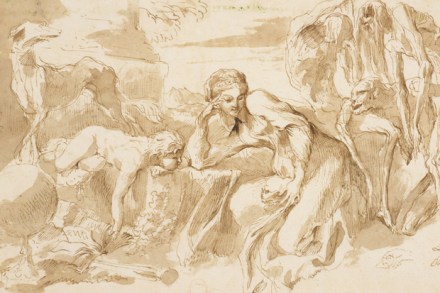
'Castiglione: Lost Genius' loses his genius in a sea of brown

Exhibitions

Giovanni Benedetto Castiglione (1609–64) was, I must admit, unknown to me until I visited this show, the only Castiglione I was properly aware of being the one who wrote The Book of the Courtier published in 1528; clearly not the same man. The artist Castiglione was a tempestuous character, always losing his temper and getting

'Uproar!' The Ben Uri gallery punches above its weight

Exhibitions

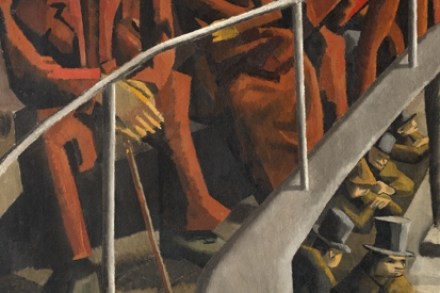
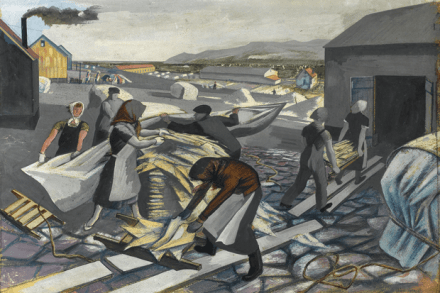
Last year saw the centenary of the London Group, a broad-based exhibiting body set up in a time of stylistic ferment in the art world as an independent alternative to the closed shops of the academies. Formed from the amalgamation of the Allied Artists’ Association and the Camden Town Group, it boasted such notable founder

Painting Now doesn't represent painting now. Thank goodness

Exhibitions

The death of painting has been so often foretold — almost as frequently as its renaissance — that any such prediction today is nothing short of foolhardy. Of course, painting is alive and well and living in London, but you wouldn’t know that from the current exhibition of five artists at Tate Millbank. (By the

Turner's seafaring ways — and his blazingly competitive art

Exhibitions

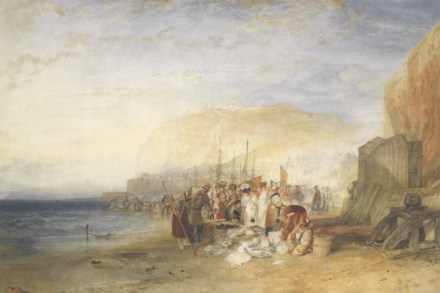
Turner’s contemporaries regarded him primarily as a marine painter. This perception extended to his persona, with many who met him commenting on his nautical gait, manner of speaking and other salty characteristics. He frequented ports and coastal parts, relished sailing in storms, was immune to seasickness and famously had himself lashed to the mast to

Daumier's paintings show he is at heart a sculptor

Exhibitions

There hasn’t been a decent Daumier exhibition in this country for more than half a century, so art lovers have had to be content with the handful of pictures in national collections and books of reproductions. This works all right for the lithographs, which were after all made to be reproduced, and it is on

Where's the fun, Barbican? 

Exhibitions

Pop Art Design, curated by the Vitra Design Museum and currently at the Barbican, opens with Richard Hamilton’s 1956 ‘Just what makes today’s homes so different, so appealing?’. Made as a poster for the Whitechapel show This is Tomorrow, it’s a witty collage of consumer fantasies scissored out of magazines, reminding us that interest in

The Lisson show is so hermetic, sometimes we flounder for meaning

Exhibitions

The title of the Lisson Gallery’s new show, Nostalgic for the Future, could sum up the gallery’s whole raison d’être. From its inception in 1967, the Lisson has championed the cutting edge, providing a British and European platform for the major conceptual and minimal artists from the States — Sol LeWitt, Carl Andre and Dan

The painter of poetry

Exhibitions

The famous court case in which Ruskin accused Whistler of ‘flinging a pot of paint in the public’s face’ continues to rumble through the public response to art in this country. The man in the street, the man on the Clapham Omnibus and most of the men who drive black cabs all like their art

How China's Bayeux Tapestry differs from ours

Exhibitions

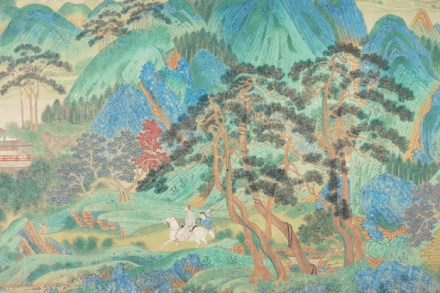
The V&A’s remarkable survey of Chinese painting begins quietly with a beautiful scroll depicting ‘Court Ladies Preparing Newly Woven Silk’, from the early 12th century, which, with its bright colours, shallow space and lack of setting, invites comparison with a western masterpiece of a similar date, the Bayeux Tapestry. The crowded urgencies and narrative drive

What my addiction to Chinese painting made me do

Exhibitions

My addiction to Chinese landscape painting began in 1965 at the V&A, in a travelling exhibition of the Crawford Collection from America. The catalogue entries were supplied by the doyen of Chinese art historians in Britain, Michael Sullivan, who died aged 97 just a month before the opening of this latest exhibition of Chinese painting

Is Paul Klee really a great modern master?

Exhibitions

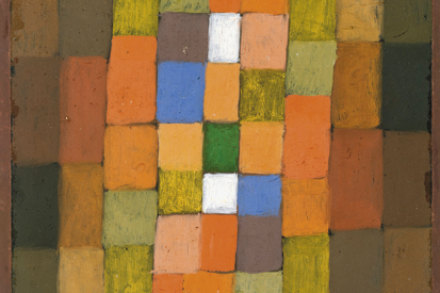
There is a school of thought that sees Paul Klee (1879–1940) as more of a Swiss watchmaker than an artist, his paintings and drawings too perfect, too contrived. Viewing this new exhibition at Tate Modern, one might add that they are also too mannered and precious. I had been looking forward to this show, but

The master of living, breathing landscapes

Exhibitions

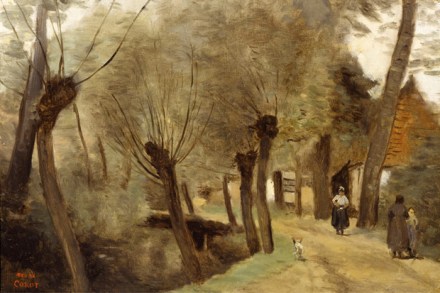
One sometimes forgets when looking at French 19th-century art that the painting revolution that produced Impressionism coincided with a political one. This is because most French painters, Delacroix and Manet excepted, chose to ignore it — none more completely than Camille Corot, who, as a travelling view painter, had every excuse to get out of