Culture

Culture

The good, the bad and the ugly in books, exhibitions, cinema, TV, dance, music, podcasts and theatre.

A last hurrah for the Zoom play

Theatre

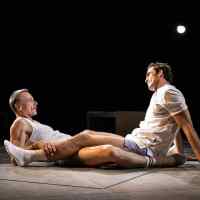
Lockdown is about to end but some theatres are gripped by cabin fever and want to explore the two new formats created by the pandemic. One is the Zoom play with multiple actors, the other is the sequence of filmed soliloquys linked by a theme or storyline. Tim Crouch has directed a Zoom version of B.S. Johnson’s satire House Mother Normal, which is set in an old folks’ home in the 1960s. The inmates are detained in a communal ward run by a sadistic nurse, the ‘house mother’, who enforces a programme of singalongs and party games. The house mother carries a weapon and feels free to beat anyone who defies her authority. That sounds peculiar but in the mid-20th century it was common for medical staff to lord it over their patients like public school prefects.

How has this complete original been sidelined?

Exhibitions

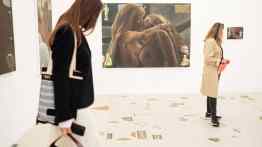
A party of disorderly couples has gatecrashed the Picture Gallery at Bath’s Holburne Museum, climbing on to the antique furniture, hanging off the track lighting and sprawling on the floor, putting the noses of the resident Gainsboroughs, Constables and Zoffanys out of joint. Lawks-a-mercy! What has come over the Holburne? A passel of Mrs & Mrs Popes, that’s what: 36 years’ worth, to be precise. Nicholas Pope carved his first married couple from sliver-thin Forest of Dean stone in 1978 in homage to Van Eyck’s ‘Arnolfini Portrait’. At the time, this young minimalist contemporary of Antony Gormley, Richard Deacon and Tony Cragg was on the up and up: in 1980, aged 31, he would represent Britain at the Venice Biennale.

The Turner Prize shortlist is an embarrassment

More from Arts

In 2019 I was asked to be on the jury for the Turner Prize. I was pretty happy about this. As an art critic, to be asked to judge one of the biggest art prizes feels like something of a professional endorsement. I even rang my mum to tell her. ‘But don’t tell anyone yet!’ I said over the phone. ‘It’s not been announced.’ A week or so later, home to see my parents, I walked into the village pub. One of my dad’s friends looked up from his pint and shouted: ‘I heard you’re judging the Turner Prize!’ Mum isn’t known for discretion. The rest of the evening was spent with various locals asking if I was going to give the award to ‘a pile of bricks’ or ‘an unmade bed’.

Why Thomas Becket still divides opinion

Arts feature

Visitors to the British Museum’s new exhibition will become acquainted with one of the most gloriously bizarre stories in the history of English Christianity: the tale of Eilward, a 12th-century Bedfordshire peasant. One day Eilward is in the pub when he has the misfortune to run into his neighbour Fulk, to whom he owes a small debt. An angry confrontation follows; eventually Eilward storms off drunkenly — in the direction of his creditor’s house, where he breaks in and starts trashing the place. Fulk catches him red-handed, beats him up and then hands him over to the authorities. One account suggests Eilward was framed; but whatever the truth of the matter, the judge sentences him to blinding and castration.

Quietly radiates a wholly justified confidence: BBC 1’s The Pact reviewed

Television

There was certainly no lack of variety among new TV dramas this week, with a standard British thriller up against more glamorous American competition in the shape of some extravagant Victorian sci-fi and an adaption by an Oscar-winning director of a Pulitzer-winning novel. (All three, mind you, did naturally feature a one-dimensional white bloke as the embodiment of sexist and/or racist villainy.) The surprising thing at this stage is that it’s the plucky British show that looks most promising. The Pact began, like many a thriller before it, with a frightened woman running through some dark woods. So far we still don’t know why — unless it was just force of TV habit.

A window on a fascinatingly weird place: Some Kind of Heaven reviewed

Film

Some Kind of Heaven is a documentary set in The Villages, Florida, which is often described as a ‘Disneyland for retirees’ — it, too, has its own faux-historical town centre — and is the fastest-growing metropolitan area in America. (Current pop: 130,000.) The vibe is, I would say, cruise ship, but with golf. Hell, in other words, unless, that is, I’m going to be left to rot in a nursing home, in which case: I can learn golf! This is a film by Lance Oppenheim, who lived in The Villages for several months. It is a fascinatingly weird place and the film is worth seeing if only to get a sense of that. It is self-contained, with its own (uniform) houses plus banks and cinemas and restaurants and churches, and there are more than 3,000 clubs you can join.

Clever, funny and fearless: Good Girl at Soho Theatre online reviewed

Theatre

A new work by Alan Bennett features in Still Life, a medley of five ‘untold stories’ from Nottingham Playhouse. The dramas were filmed during lockdown. Before the Bennett première, there’s a monologue by a wittering granny complaining about the price of cereal in a deserted food bank. Then, a banality-crammed slice of jabber between two van drivers eating lunch on a flight of stairs. This is followed by a ten-minute soliloquy from a precocious schoolgirl whose insights include, ‘my books are very heavy’ and ‘England is not part of Scotland’. A fourth cascade of tosh is parroted by a dim cab driver who trundles around the city bantering aimlessly with an eminently forgettable passenger.

The sermons poked out of the songs like busted bed springs: Van Morrison livestream reviewed

Pop

Over the decades, Van Morrison’s role within the tower of song has shifted from chief visionary officer to head of complaints. It’s not a promotion. The title track of his new album, Latest Record Project, Volume 1, is a rebuke to those who insist on living in an artist’s past rather than his present. A laudable sentiment, perhaps, but one less easy to put into practice when Morrison’s present consists of 28 tracks which hone an already ornery world view to a paranoic peak. When he isn’t griping about his divorce he’s peddling half-baked conspiracy theories, sneering at internet users and ‘media junk’, and bitching about modern music, crooked politicians and false prophets.

For fans of neglected, niche and uncool music, lockdown has been a blessing

Classical

When this whole mess is over, there’ll be a shortish MA thesis — or at least a blog post — to be had from analysing classical music’s evolving response to the crisis. Already, looking back, distinct phases are emerging from the viral fog. Phase One: the Banana Bread Apocalypse — that first lockdown, when Jamie Oliver was telling us to smoosh up frozen peas and pretend it was pesto, and phonecam footage of a cellist playing Bach in the spare bedroom felt like a kind of miracle. Phase Two: orchestras working out what they could actually do while socially distanced and audienceless. Cue a spike in online performances of works for small (or spaced-out) orchestra. Lots of Tallis Fantasias and Siegfried Idylls.

The art of the asparagus

More from Arts

Manet’s ‘Botte d’asperges’ are probably the most famous asparagus in the world. The artist painted the delicious white- and lilac-tinged spears for the collector Charles Ephrussi in 1880 before invoicing him for 800 francs. Ephrussi was so delighted with them that he paid Manet 1,000 instead, to which Manet responded by sending a second picture. ‘One appears to have escaped your bunch,’ the painter quipped in his accompanying note. The new canvas featured a single asparagus. Manet was in the last decade of his life when he began sending small paintings of fruit and flowers to his friends.

‘I’m not interested in moral purity’: St Vincent interviewed

Arts feature

St Vincent — Annie Clark, a 38-year-old singer-guitarist of prodigious gifts — spends a lot of time confounding people. She confounds them with stage shows that are less gig than theatre, ostentatiously choreographed and fabulously provocative (though not in any crude sense). She confounds them with an image that morphs from album to album (for her sixth, Daddy’s Home, she has adopted the dissolute Cassavetes-heroine look). She confounds them by, in a puritan age, placing sex squarely within her work, though usually in a plausibly deniable way (the title Daddy’s Home refers to her father’s release in 2019 from prison after serving nine years for his part in a stock-manipulation scheme. She says of the title: ‘It’s pervy’).

Tom Jones is as nuanced a vocalist as Ian Paisley

The Listener

Grade: C Revisionism has been extraordinarily kind to Tom Jones, ever since he barked his way through Prince’s ‘Kiss’ with the kind of subtlety you might expect from someone who is about to nut you in the mouth. That enormous fruity bellow is one part threat, one part music hall. He was repackaged as someone whose roots supposedly lay in R&B, but I don’t remember Sam Cooke singing ‘It’s Not Unusual’ or ‘What’s New, Pussycat?’. What Tom does, with everything, is belt it out, with bombast and bravado and the faint whiff of faggots and peas. He is as nuanced a vocalist as the late Revd Ian Paisley.

Audiences don’t want woke: comic-book writer Mark Millar interviewed

Arts feature

Mark Millar has a raging hangover but he couldn’t be more chirpy or enthusiastic. ‘People say they get worse as you get older but I get reverse hangovers where I feel amazing. I wake up at four or five and I’m ready to go!’ I’ve caught him on a Sunday morning, on his way to Mass, after an exhausting three weeks in which he has been doing up to 45 interviews a day to promote Jupiter’s Legacy, his blockbuster superhero series for Netflix. He ought to be nervous: this is his first big project off the blocks since (in 2017) the studio bought up his publishing company Millarworld for a reported $50-100 million. Instead, as ever, he’s fizzing with energy, enthusiasm and optimism. The reason, he explains, is that he was born with a kind of superpower.

This film deserves all the awards and praise: Nomadland reviewed

Film

Nomadland won multiple Oscars including Best Picture, Best Director and Best Actress, and if there’d been an award for Best Film In Which The Woman In Her Sixties Isn’t The Least Developed Character In The Screenplay, Hallelujah, About Time, it would have scooped that too. Not much competition, regrettably, but you have to admire the film just for that, plus there is much to admire generally. It is based on the non-fiction book Nomadland: Surviving America in the Twenty-First Century by the journalist Jessica Bruder, who spent months living with older Americans who, out of economic necessity, eke out a living while travelling from place to place for seasonal employment.

A TV doc that is truly brave: BBC1’s Ian Wright – Home Truths reviewed

Television

Ian Wright: Home Truths began with the ex-footballer saying that the home he grew up in was ‘not a happy one’. As truths go, though, this soon turned out to belong firmly in the category of ‘understated’. Not surprisingly, Wright’s favourite boyhood programme was Match of the Day — which is why his stepfather would make him stand with his face against the wall while it was on. (‘Just because he could,’ Wright explained.) He also beat Wright’s mother: often, Wright recalled, while she repeatedly cried the word ‘Sorry!

Josquin changed musical history – why don’t we hear more of him?

Classical

Stepping into the Sistine Chapel, the choir loft is probably the last thing you’d notice. ‘Loft’ is, frankly, a stretch for what amounts to a small alcove with a wooden bench, carved out of the chapel’s wall. But if you made your way up there and ran your hand over the stone you’d feel something unexpected. Etched into the wall in haphazard graffiti are hundreds of names. In most cases the carvings are all that remain of centuries of singers from the papal choir. But one is different: ‘JOSQUINJ’. Chances are it’s the only surviving signature of Josquin des Prez — a composer whose name and legacy are carved just as deeply into the history of music itself. This August marks the 500th anniversary of Josquin’s death.

Do theatres actually read scripts before agreeing to stage them?

Theatre

Money is a new internet play about financial corruption starring Mel Giedroyc. She appears on-screen for less time than it takes to eat a Malteser. Giedroyc plays the boss of a palm-oil firm that wipes out orangutan habitats in Asia and wants to launder its reputation by donating cash to a London charity. A million quid is on the table. The charity staff meet via Zoom to discuss the gift. But first they brief each other about their latest activities which, predictably enough, consist of stoking grievances and spreading self-pity. Their charitable aims include ‘tackling local loneliness’, and ‘breaking down barriers based on age, race and gender’. The meeting then moves to the big question: should they accept cash from a firm that kills cuddly animals?

The bizarre art of Scottie Wilson deserves to be better known

More from Arts

On eBay I have an alert set for ‘Scottie Wilson’. Nine times out of ten, it’s a diamanté Scottie dog from the jewellers Butler & Wilson. Once in a while, it’s a gem. Scottie Wilson didn’t think much of journalists. Art critics were ‘just jugglers — dodgers’. The sort of people who went to art shows — his or anybody else’s — could be counted on to go about ‘blabbing a lot of stupid muck. A lot of blah blah. They get paid for it too!’ Which makes it tricky to write about Scottie (always Scottie, never Wilson). You just know he’d light a cigarette and scowl. I came late to Scottie.

Kubrick’s Napoleon – the greatest movie never made

Arts feature

Two centuries ago — on 5 May 1821 — Napoleon Bonaparte died in a rat-infested house. The fallen Emperor had spent his final years exiled on the British outpost of St Helena. Yet Napoleon’s ignominious last act was only the beginning of his legend. A recent data-driven study, published by Cambridge University Press, crowned him the second most significant figure in history, after Jesus no less. Stanley Kubrick, the virtuoso director of 2001: A Space Odyssey and The Shining, considered Napoleon the most interesting individual who ever lived. Kubrick’s passion project — never produced — was a biopic of the conqueror. He predicted it would be the ‘best movie ever made’. Napoleon’s life has everything a storyteller could want.

Xenophobic twaddle: Bush Theatre’s 2036 reviewed

Theatre

The Bush Theatre’s new strand, 2036, opens with a monologue, Pawn, which takes its name from the most downtrodden piece on the chessboard. The speaker, Jordan, is an amiable dimwit of mixed Trinidadian and South African heritage whose mother explains his background to him like a condescending anthropologist: ‘Trinidad and South Africa are countries with cultures too rich for most people to understand.’ Jordan describes his life in London which consists exclusively of battling oppression. He buys fried chicken from Yusef, a Turkish food-seller, and he learns a greeting in Turkish that Yusef recognises. So Yusef starts to slip him extra portions as a perk. A white teenager hears of this practice and orders Yusef to suspend the freebies to Jordan.

This Is My House has rekindled my love for the BBC

Television

Here’s a thought that will make you feel old. Or worried. Or both. The poke-fun-at-celebrity-houses series Through the Keyhole — originally presented by Loyd Grossman — was first broadcast as a segment on TV-am in February 1983. That means that we are now as far away in time from Through the Keyhole’s first episode as its debut was from the end of the second world war. It has endured almost till the present (I actually preferred the Keith Lemon version to the stilted and slightly turgid original) because it’s such an addictive format. Most of us fancy ourselves as amateur psychologist sleuths, picking up on those telling details missed by others less blessed with our perspicacity.

Watch kids go giddy in Niamey: Mdou Moctar live in Niger reviewed

Pop

The other week someone posted on Twitter a link to a YouTube clip titled ‘Family Lotus and D.J. Cookin’ at the Golden Inn, July 4 1981’. It showed a bunch of long-haired people on a makeshift stage in the New Mexico desert and a handful of people dancing around in the dust to the music, which was a weird, trippy, hyper-freaky form of electrified banjo music: ‘psychedelic bluegrass’, apparently. Watching the stream of the Tuareg guitarist Mdou Moctar was an unnervingly similar experience: he and his three-piece backing band were set up in the dust outside a friend’s house, watched by whoever came along. And Moctar’s guitar playing — blurrily deft repeating patterns — was deeply reminiscent of the banjo playing in the YouTube clip.

A redemption song, conventionally sung: Sky’s Tina reviewed

Pop

It has never been easy for women in the music industry. Once upon a time the evidence was largely anecdotal. Now it’s being recorded for posterity, frame by frame. Recent documentaries about Britney Spears and Demi Lovato exposed the trauma inflicted on post-millennial pop stars. Two new portraits of Anna Mae Bullock and Marianne Elliott-Said, better known as Tina Turner and Poly Styrene from punk group X-Ray Spex, ponder the price paid by their forebears. Turner’s story feels archetypal, a tale extracted from deep within the DNA of showbusiness. An abandoned child — ‘my mother didn’t like me’ — from a poor Tennessee background, the opportunity to fulfil her gifts came with the classic caveat: subjugation by an older, controlling man.

Are Mozart’s forgotten contemporaries worth reviving?

Classical

There are worse fates than posthumous obscurity. When Mozart visited Munich in October 1777, he was initially reluctant to visit his friend, the Bohemian composer Josef Myslivecek. Myslivecek was in hospital, undergoing treatment (as he told it) for a facial cancer brought on by a recent coach accident. But this being the 18th century, and Myslivecek having a reputation as a gallant, Mozart suspected venereal disease. When he finally appeared at Myslivecek’s bedside, he was appalled by what he saw: ‘The surgeon, that ass, has burned off his nose! Imagine the agony he must have suffered.’ Within four years, the luckless — and noseless — Myslivecek had died in poverty, aged 43. His music effectively died with him.

Moments of pure wonder: Folk Weekend Oxford reviewed

Pop

Has any musical moment extended its tendrils in so many unexpected directions as the English folk revival of the mid-1960s? In its beginnings, it was a source of pilgrimage for Bob Dylan and Paul Simon, who pinched his arrangement of ‘Scarborough Fair’ from Martin Carthy way back in the dim and distant past when the Beatles walked the earth. It spread into progressive rock and heavy metal (the black metal musician Fenriz, of the Norwegian band Darkthrone, told me recently that he considered Steeleye Span to be an important band in promoting pagan traditions).