Winston churchill

The lost art of the bow tie

Whatever you think about Deputy Prime Minister Dominic Raab – whether you think he’s bully or a tomato-thrower, and whether you couldn’t care less if he is or isn’t – there is something you ought to know about him. Apparently, he can’t do up a bow tie. That’s according to the Financial Times journalist Sebastian Payne and his forthcoming book about the last days of Boris Johnson’s government. He tells the story of Raab arriving to counsel the Prime Minister during his last hours in Downing Street, dressed in white tie. ‘Raab awkwardly told Number 10 staffers he had to attend a white-tie dinner at the Mansion House in the City of London that evening, but required assistance with the outfit. An attendant was found with the skills to fix his bow tie.

Churchill and the house that saved the world

A short train journey from London, in the outer reaches of suburbia in Kent, sits the house that saved the world. Or rather: it’s the house that saved the man who saved the world. The property in question, of course, is Chartwell, which 100 years ago this month was bought by a certain Winston Churchill, then a Liberal MP. Back then his career was in ascendance: in 1924, with Churchill having crossed the floor, Stanley Baldwin made him Chancellor, a post he retained until 1929. But then, rather suddenly, he was out in the cold. That was when Chartwell – and the 81 acres it sits in – came to the rescue.

Why I love Her Majesty

I’ve often wondered whether Her Majesty the Queen glances through The Spectator from time to time. And if she does, I wonder whether her kindly eye lights on this column. And if it does, I wonder what she thinks of what she reads there. ‘Philip, there’s a man here writing about going to the Cheltenham Festival and messing his pents.’ ‘Very easily done at Cheltenham, my dear. I’ve often wondered why nobody has written about it before.’ Or, ‘Philip here’s that man again, the one who messed his pents at Cheltenham, assisting the ferret-judging at a country show. It’s frightfully interesting. The judge takes so long to judge each class, they drive a car into the tent so that he can judge them in the headlights.

Why men of a certain age love to get naked

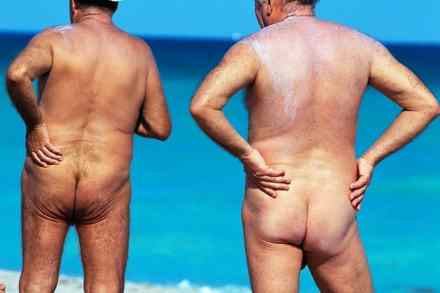
Something very strange happens to men as they get older: they like to go nude. I don’t mean they become practising nudists who seek out and enjoy the company of others of their kind. But unlike most younger men, they feel no embarrassment or regret at being seen naked. Consider the recent battle between one nude man and his neighbour. Simon Herbert (54) was in his Oxfordshire garden mending a fence when he spotted his next-door neighbour — Air Marshal Andrew Turner (54), the RAF’s second-in-command — strolling naked in the paddock of the cottage Turner shares with his wife. Herbert says that his partner and stepdaughter caught an eyeful of the nude air marshal too.

British horse racing’s debt to the Middle East

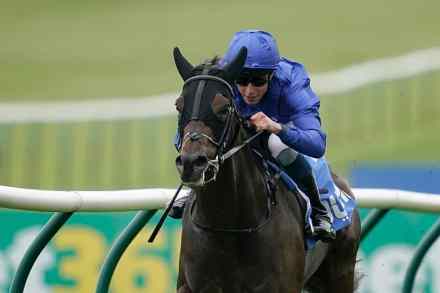
A joyful Saturday at Ascot recently reminded me that when the old Hurst Park Racecourse (near Hampton Court Palace) closed to become a Wates housing estate, the turf was taken to Ascot to form the basis of the jumping track then being established there. It was living beside Hurst Park — where the seven-furlong start abutted the Thameside Upper Deck swimming pool and jockeys focused on bikini-clad local lovelies sometimes missed the off — that turned me in my boyhood into a racing enthusiast, standing on the saddle of my bike perched against the boundary fence to watch the horses flash by or goggling at Prince Monolulu in his headdress flogging tips outside the front gate.

Is Cambridge university ashamed of Winston Churchill?

When I first started at Churchill College, Cambridge, I was proud that I had joined an institution whose very existence was a testament to the legacy of a personal and national hero. As I walked around the college grounds, I felt that I was now part of a community that was much bigger than myself; a community partly defined by the life and times of our country’s greatest leader. Standing for the college toast at my first formal dinner, the words ‘To Sir Winston, and the Queen’ almost made me believe that my own life was now, in a small but important way, linked to the life of the great man himself. It seems that the college leadership, however, don’t feel the same way.

How Starmer can beat Boris

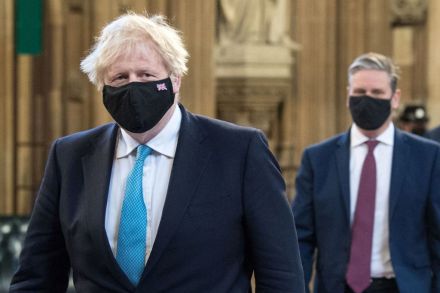
How should Keir Starmer deal with a problem like Boris Johnson? Despite the Prime Minister's mistakes in the handling of the pandemic – and a string of embarrassing stories about his private life and finances – Boris seems unassailable. Johnson is seen as best suited to be Prime Minister by 40 per cent of voters compared to just 23 per cent for Starmer; most surveys give the Tories a double digit lead over Labour. Party leaders receive much unsolicited and often useless advice. Starmer is not alone in that. Over the years, Sun Tzu’s The Art of War has been scoured for helpful aphorisms, while Machiavelli’s The Prince is still seen as a repository of sage advice. But relevance – and obscurity – are often a problem with such sources.

The sweet smell of success: the story behind Chanel No 5’s popularity

This is a curious book, by turns profound and whimsical. Karl Schlögel, a professor of Eastern European history at Frankfurt, begins by stating he didn’t know anything about his chosen subject of perfume beyond going into department stores and duty-free shops to encounter a ‘peculiar mélange of scents... the light and sparkle of crystal, the rainbow of colours, mirrors and glass’. Although he always felt this to be an alien environment, he was also repeatedly captivated. Then by chance he discovered a link between Chanel No. 5 and the Soviet perfume Red Moscow.

Churchill’s enigma: the real riddle is why he cosied up to Stalin

Dresden. Tonypandy. Gallipoli. Bengal. Winston Churchill’s reputation has withstood an array of charges, made by each generation with their own prejudices. Whereas in the 1970s it was Richard Burton and Jim Callaghan accusing him of a vendetta against the Welsh miners, today it’s racism, imperialism and white supremacy. The words ‘Was a Racist’ were scrawled on his statue in Parliament Square during last year’s Black Lives Matter demonstrations. Earlier this week police protected the statue at a rally as protesters chanted ‘Protect women, not statues’.

The campus Churchill delusion

Was Winston Churchill a racist? For students like me who attended Churchill College, Cambridge, it's a question which barely even merits an answer: of course he wasn't. But some Cambridge academics appear to take a different approach when it comes to assessing the record of Britain's most famous prime minister. Churchill College recently announced a ‘year-long programme’ into Sir Winston’s allegedly ‘backward’ conceptions of empire and race. As part of this review, the college has held events such as ‘The Racial Consequences of Mr Churchill’. Many students are simply bemused. Academic debate is, of course, no bad thing. It is something to be encouraged at any university.

Why you can’t trust supermarket cheese

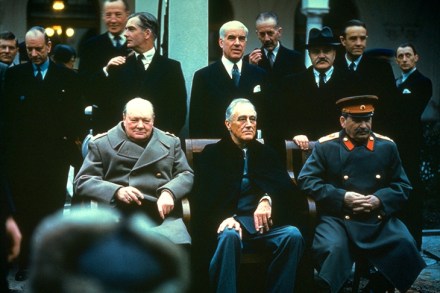
We were celebrating the end of lockdown by talking about war and deer stalking — over a business lunch, naturally. My friend David Mathew, from a distinguished legal, military and political family, told a story about Churchill’s arrival in Athens at Christmas in 1944. David’s father, Robert, then a young officer, was sent to meet the great man, who was grumpy and preoccupied, with good reason. He had come to save Greece from communism, with little guarantee of help from the Americans, let alone left-wing opinion in Britain. The sucking-up to ‘Uncle Joe’ Stalin may have been necessary to win the war. It would not be helpful for winning the peace.

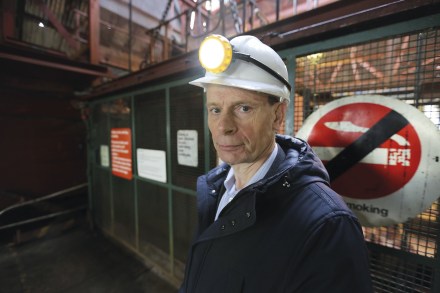
Watch Andrew Marr stare at places where stuff happened: New Elizabethans reviewed

Congratulations, everyone! It turns out we’re much better than those bigoted old Brits of the 1950s. After all, they were ‘class-obsessed, overwhelmingly white and Christian, and deeply conservative about the role of women’ — whereas we ‘accept difference and diversity in a way that would have been almost unthinkable in 1953’. This was the reassuring message in the first episode of New Elizabethans by Andrew Marr, where Marr surveyed Britain’s changing social attitudes since the Queen came to the throne, and liked what he saw. These days, needless to say, the ‘great man theory’ of history has rather fallen out of fashion — so instead Marr brought us a sort of ‘great activist’ version.

Boris’s Dunkirk moment

It’s hard to deny that Boris Johnson’s government has so far had a ‘bad war’ against the pandemic. Our death toll is high compared with other countries and our economy is in worse shape. We face rising cases, increased hospital admissions and more restrictions. It’s all so bleak; yet that is why now is precisely the moment for Boris to imitate his great hero, Winston Churchill. In the coming months, Britain can play as pivotal a role in a global victory against the virus as we did in the second world war. The war analogies only go so far, of course. We are fighting a virus, not an evil ideology. But there are similarities. Like the second world war, Covid has caused UK government debt to exceed GDP.

Is Britain a nation in fear of safetyism?

It should come as no surprise that Britain's city centres remain, in the words of CBI chief Carolyn Fairbairn, 'ghost towns', and nor is it a shock to hear a civil service union boss shoot down Boris Johnson's plea for public sector workers to head back to the office. Safety first, said the union man, echoing the caution of his teaching counterparts. As Trevor Kavanagh wrote in the Sun last week, Britain is ‘a scaredy-cat nation of masked hypochondriacs who won’t leave home for fear of dropping dead’. A poll last month bore this out, revealing that while two thirds of workers in France, Spain and Italy were back at their desks, in Britain barely a third of the workforce had plucked up the courage.

It was Bevin, not Bevan, who was the real national treasure

On a family holiday almost 40 years ago I visited Winsford, the village on the edge of Exmoor where Ernest Bevin was born (and Boris Johnson was raised). Having read the first book in Alan Bullock’s scholarly three-volume biography, I’d become a convinced Bevinite (not to be confused with the followers of Nye Bevan, his near namesake and bête noire). As it was the centenary of Bevin’s birth I expected to find some kind of commemoration, but there was nothing apart from a faded plaque on the cottage he was born in. I asked the woman serving in the Post Office opposite if I’d missed anything, but she’d never heard of the great man.

In praise of statue-toppling

I couldn’t disagree more with Sir Keir Starmer (it was ‘completely wrong,’ ‘it shouldn’t have been done in that way’) or with Boris Johnson (‘if people wanted the removal of the statue there are democratic routes which can be followed’). No, there was something magnificent about the sight of the Bristol mob throwing into the harbour the statue of a man whose trade was notorious for throwing sick slaves with no monetary value into the sea. 1890s Britain raised that statue.

Why is the Labour left so averse to Winston Churchill?

It has become a ritual almost as traditional as the Changing of the Guard. During a weekend of mostly peaceful protests, Winston Churchill’s statue in Parliament Square was once again vandalised. The first recorded defacement of Ivor Roberts-Jones’ imposing rendition of Churchill took place during London’s 2000 May Day anti-capitalist protests. A strip of grass placed on the statue’s head gave the impression it sported a Mohican haircut. James Mitchell, a former soldier in his twenties, also sprayed its mouth with blood-like red paint. Mitchell said he did this because: ‘Churchill was an exponent of capitalism and of imperialism and anti-Semitism. A Tory reactionary vehemently opposed to the emancipation of women and to independence in India’.

The vindication of Boris Johnson’s Brexit strategy

The Brexit deal agreed with the EU is a spectacular vindication of the Prime Minister’s approach: to go back to Brussels with the genuine prospect that Britain would leave with no deal on 31 October. The EU started off by saying it would never reopen the withdrawal agreement, but with a no-deal Brexit back in prospect, compromise — and thus a deal — has been possible. And yes, parliament has said it would force the Prime Minister to ask for an extension of EU membership; but No. 10 said it would find a way to not do so. It seems that this was enough to focus minds in Brussels. Boris Johnson's deal is the opposite to that struck by Theresa May in that the more you look at it, the better it seems.

Excessive gambling is dangerous – a flutter on the horses is not

Sorry is allegedly the hardest word to say — so Carolyn Harris, chair of the all-party parliamentary group studying gambling-related harm, scored a significant success recently by extracting apologies from a number of leading gambling-industry executives about the damage caused by their business. Representatives from Paddy Power Betfair, William Hill, Sky Bet and bet365 agreed that their firms hadn’t done enough to tackle problem gambling after Dan Taylor of Flutter Entertainment, Paddy Power Betfair’s parent company, acknowledged: ‘The industry has got things wrong and has caused harm to individuals. We mustn’t forget that.

Jog on

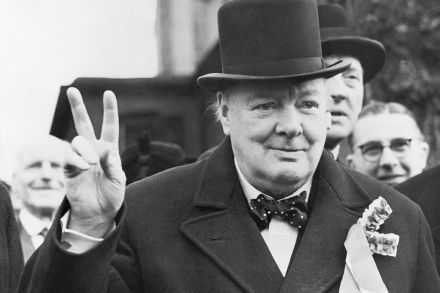
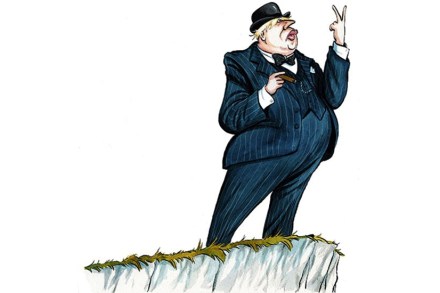
Forget the cigar, the homburg and the V-for-victory sign. If Winston Churchill were around today, he’d be pounding the streets in T-shirt, shorts and chunky trainers. Jogging is an almost compulsory obsession for any Tory alpha male. Boris Johnson and Jeremy Hunt are forever out running; Michael Gove has lost a drastic amount of weight racing around west London; and Boris has revealed he’s down to 15 and a half stone, from 16 and a half. He’s also declared he’d freeze obesity taxes on fattening food — the answer to losing weight was more exercise, he said — and admitted to failing to keep up a vegan diet (he likes cheese too much). But he is certainly looking slimmer since he started going out with Carrie Symonds, 24 years his junior.