Washington dc

Can I read Trump’s mind?

From our US edition

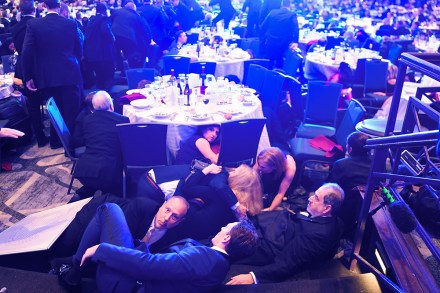
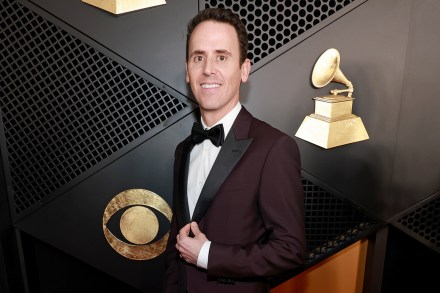
Making time to prepare to host the White House Correspondents’ Dinner has not been easy. Presently I’m flying back to New York, where I live, on a red-eye after a show in Las Vegas. My wife and five kids, all under the age of ten, are at home waiting for me. On average, I have one media appearance every day and a half between now and then. I’m not asking you to cry for me. All of this momentum and publicity is terrific. And my preparation for the big night on April 25 is always simmering below the surface. It feels as if reading minds for the last 30 years has been training for this moment. My goal is to have Donald Trump take part – and to save the best for last. If I could read only one mind in this world, it would be that of the most powerful person in the world.

oz pearlman

DC’s rat genocide

From our US edition

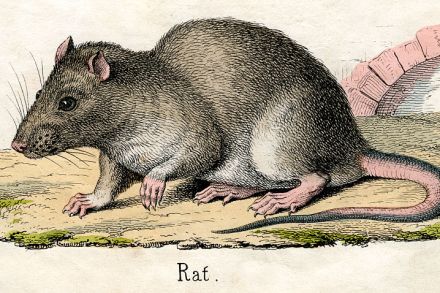
Like Amsterdam, like New York City, Washington is a rat city. Old buildings and moisture create the conditions for them to thrive. Rats provide the midsized city with classical urban charm. On the other hand, they’re vermin. As of this week, it’s official: DC Health is putting rats on the pill. The agency is planning to put “edible fertility control bait in areas prone to large numbers of rats.” Cockburn wonders if putting rodents on birth control is a little like attempting a regime change in a foreign nation. How much do we actually know about the delicate balance of the ecosystem? If we sterilize the rats, what comes next? Must we then move to kill all the eels in the Potomac?

No one in the DC political class is cool

From our US edition

No one in the DC political class is cool. For all our American spirit of independence, democracy still defers to the majority, and power compels even the most singular, Machiavellian mind to mold itself in the image of the people. Politics drains the blood out of the individual, replacing him or her with a bland and legible product, flattened into the image of at least 50 percent of the population. Prediction markets are a perfect example of this effect, shining the brightest lights into the caverns of cool, calcifying opinions into trends, trends into probabilities, and probabilities into certainties. There is nothing that poses more of a threat to cool than this, and no market hungrier for it than the politicos of Washington, DC.

Trump has given America back its heroes

From our US edition

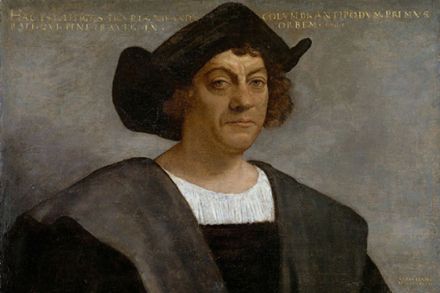
This weekend, two statues were installed on the White House grounds. On the north side of the Eisenhower Executive Office Building stands a statue of Christopher Columbus. On the south side is “Freedom’s Charge,” a life-size portrayal by Chas Fagan of two soldiers in the Continental Army, one with a rifle, the other with a billowing Bunker Hill flag. In ordinary times, the temporary placement of such tokens of America history at the White House might pass without comment. These are not ordinary times. On the contrary, America is just now emerging from a destructive frenzy of woke self-loathing and iconoclasm.  Just a few years ago, no emblem of American achievement was safe from crusading vandals.

Christopher Columbus (Getty) heroes

What Trump got right in his State of the Union address

From our US edition

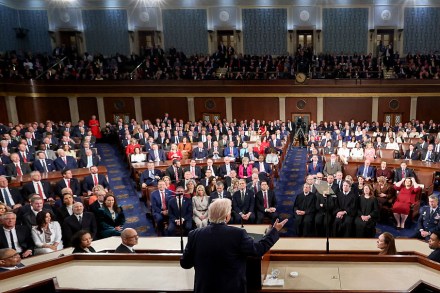
Watching Donald Trump’s State of the Union Address tonight, I thought of two homely things. One was something that a friend used to say to her young daughter: “Don’t forget to have an attitude of gratitude,” she would remind her preteen when that attitude was absent. The second thing I thought about was a fact I recently learned about Ulysses S. Grant. He was a great general, yes, and he was also a great, if generally under-appreciated, president. One sign of his greatness came posthumously. At his funeral, two of Grant’s pallbearers were Confederate generals. Grant had won the civil war, defeating the Confederacy, saving the Union. But in death he underscored his ultimate purpose: to unite the country.

sotu address

The deep state vs Nixon

From our US edition

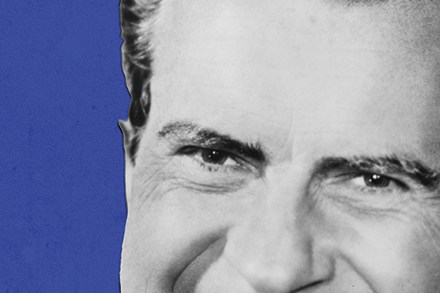
Americans took a break from their partisan vituperation in February to mull over newly revealed testimony that Richard Nixon gave to grand jury investigators in 1975, a year after the Watergate scandal drove him from power. James Rosen, a veteran Washington journalist and the biographer of Nixon’s attorney general John Mitchell, revealed the episode in the New York Times. Nixon had argued that his program of wiretaps had been made necessary by another spying operation that senior American military commanders were carrying out against him and his top aides.

nixon

My theatrical Senate confirmation hearing

From our US edition

It’s a bit difficult to explain a Senate confirmation process to those who haven’t gone through it. It is, to put it in a single word, intense. Years ago, the first time I had a hit piece written about me, I wanted to crawl into a hole in the ground and die. During my confirmation hearing, my attitude was more, “Oh, Chuck Schumer is denouncing me from the Senate floor as a racist, anti-Semitic, white supremacist. It must be Monday.” I still haven’t even bothered to read the vast majority of press accounts or descriptions of me that have come out in the days since the hearing. It’s important in these processes to always know and remember who you are, because if you know that, what they are saying you are just doesn’t matter all that much.

Jeremy Carl Senate

The redemption of Richard Nixon

From our US edition

In the last five years of his life, when I knew Richard Nixon, nothing described him better than Milton’s “calm of mind, all passion spent.” During the most tumultuous political career in American history he had come back many times, but the greatest comeback of all was in full swing. His enemies had seized control of the puritanical conscience of America to slay him, unjustly, and he was manipulating the same national conscience, which was founded on Plymouth Rock and has survived all the corruption and hypocrisy and violence of American public life, and when aroused, is insuperable. Since his political fall, and later his death, polls increasingly indicate public unease about the treatment of Richard Nixon.

A late Congolese ruler with a new following

From our US edition

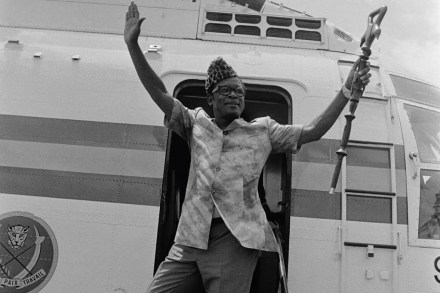
At the exit of the National Museum in Kinshasa, capital of the Democratic Republic of Congo (DRC), is a whiteboard for visitors to leave their comments. On that whiteboard, full of underlinings and exclamation marks, are messages like this: “Thank you for your life.” “Thank you for our national unity.” “You left behind a glorious historical legacy. We plan to follow in your footsteps.” A giant photograph of the man the messages refer to hangs in the museum’s main hall as part of its new exhibition, a man in dark glasses and leopard-skin toque, smiling down at his people. More than 28 years after fleeing into exile, Mobutu Sese Seko, once known as “The Leopard” and “The Great Helmsman,” is back in the limelight in the DRC.

Pete Hegseth is a polarizing figure who doesn’t quit

From our US edition

Pete Hegseth’s Saturday begins with personal training. The Secretary of War, @SecWar on your socials, is very fond of working out with the troops – something most defense secretaries have done without someone dutifully filming the experience for Instagram. Then he heads off to the Reagan National Defense Forum, the annual gathering of war hawks, policy nerds and defense contractors in Simi Valley, California. Hegseth, the veteran of the Global War on Terror, is there to fulfill his mission of denouncing the neocons. “Out with idealistic utopianism, in with hard-nosed realism,” he declares, insisting the United States will no longer be “distracted by democracy-building, interventionism, undefined wars, regime change, climate change, woke moralizing and feckless nation-building.

The theater of Washington

From our US edition

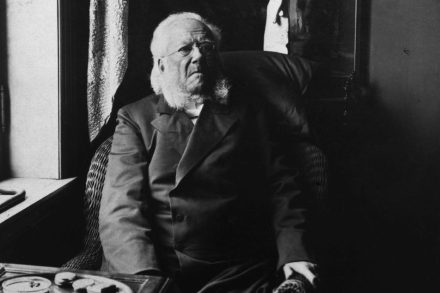
Suddenly it’s Ibsen season in Washington, DC. It’s true that only Shakespeare’s plays are performed worldwide more often than Henrik Ibsen’s. But to have two of the great 19th-century Norwegian playwright’s works running at once in the nation’s capital is unusual. And the works in question – An Enemy of the People and The Wild Duck – deliver contradictory messages. Together they say something not only about the state of the arts in Washington, but also about the state of the liberal mind. Politics is very much a presence on the capital’s stages. The city’s two main Shakespeare organizations, the Shakespeare Theatre Company and the Folger Theatre, last year presented seasons heavily influenced by the presidential election.

henrik ibsen
partiful

Why DC loves to hate Partiful

From our US edition

If you’re under 50, you may have noticed that Partiful has quietly annexed the American social calendar over the past year or two. The event-planning app, founded by former Palantir employees, began as another Silicon Valley toy, but it didn’t stay regional for long. Its loud dashboard aesthetic spread quickly through the Bay Area and then achieved escape velocity in Washington, DC. I wouldn’t be surprised if the strong cultural current between tech and defense is what created near-perfect conditions for a social revival in nerd world. While I understand a bit of snobbery over the aesthetics, I’ve been surprised by the constant performative disdain I’ve observed accompanying its rise. Everywhere I go, I hear people say they “hate” Partiful.

Cockburn will come to your Christmas party

From our US edition

Cockburn woke up bleary-eyed, splashed water on his face and took stock of his calendar this Black Friday. It is already filling up with events from embassies, magazines and cautious frenemies. He spent his Thanksgiving down South, practicing grounding techniques and avoiding stirring pots, except for the pot of cranberry sauce. It isn’t easy being Washington’s nosiest socialite – and even Cockburn needs to get away from the swamp once in a while. However, the time for wholesome family fun has ended. Your disoriented correspondent will be on a plane headed back to Reagan before all the decorations are up in the White House.

Trump blames Biden for shooting of National Guardsmen

From our US edition

In response to the attack on Thanksgiving eve by a suspected Afghan national upon two West Virginia National Guardsmen, President Trump demanded a renewed effort to expel illegal immigrants. During a brief and uncompromising address from West Palm Beach that bore the rhetorical fingerprints of White House advisor Stephen Miller, Trump ripped into illegal immigration and former president Joe Biden. The President deemed the influx of refugees from Afghanistan and elsewhere the “single greatest national-security threats” facing America. Biden was a “disastrous president.” Trump reserved special scorn for his detractors who he said purport to protect constitutional liberties but are leaving America exposed to rampant criminality.

The Dr. Strangelove taxonomy of DC types

From our US edition

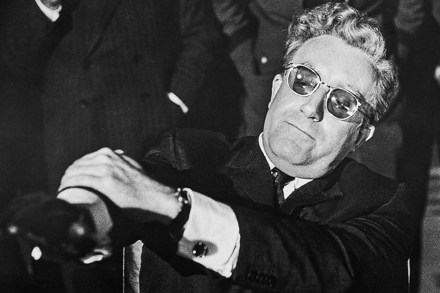
I tweeted the other day that my social life in Trump’s DC is just getting dinner or drinks with a different Dr. Strangelove character every week. It sounds like an exaggeration, but it’s not. Not really. Every week brings its own apocalypse – and the cast of characters responds accordingly. Find here a taxonomy of DC types: Dr. Strangelove (The theorist) The end of the world approaches and only the strong will survive it. Hands trembling slightly from too much caffeine and suppressed grandeur, he (it’s always a he) declares his grand theory of the world in so many words. Women, of course, will be spared. Perhaps you, too, will be counted among the lucky ones. Oh, you’re over 30? If you just read a little more Spengler. Learned a little more about semiconductors.

dr strangelove

The cruel, cold intellect of DC and San Francisco

From our US edition

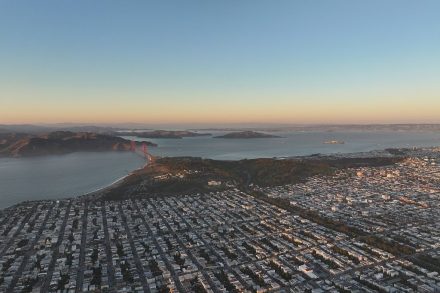
New York vs Los Angeles is done to death. Those cities have already captured the American heart on stage and screen. The next great rivalry (or is it an alliance?) is unfolding between the bastions of the nerds: Washington, DC, and San Francisco. Each prizes a different facet of intellect – DC the operator, San Francisco the inventor, functioning as co-architects of a new American order. We tell ourselves SF and DC represent different values: disruption and order, innovation and stability. And yet the cities are locked in a symbiotic embrace. San Francisco builds new worlds in the image of its algorithms; Washington manages those worlds through policy and process. But this is a cold comfort. While both claim to act in the public interest, each sees the human as a problem to be solved.

san francisco
egly-ouriet

What doesn’t kill Egly-Ouriet makes it stronger

From our US edition

In recent columns, we have visited some lesser known spots in Burgundy – Saint-Romain, Maranges, Ladoix – where the wines are good and the prices reassuring.  This time, I’d like to travel to Champagne to introduce you to one of my most exciting recent discoveries, the wines of Egly-Ouriet. You know about Dom Pérignon, Krug, Bollinger and Taittinger. They can be very good. Egly-Ouriet is something else. Remember that Champagne occupies the northernmost precinct of French wine production. The northeastern bit of the area borders Belgium. It’s chilly up there, and damp. Nietzsche famously declared that, “What doesn’t kill me makes me stronger.” That may not be true of people. I am pretty sure it is not. But the observation has a certain application to wine.

Trump’s Ballroom will make America great

From our US edition

There is nothing like the thrill of getting a White House invitation. Even though I worked there at the time, I vividly recall the sparkly feeling when I read that "The President and First Lady" requested the pleasure of my company at a reception for the US Embassy hostages who had just come home from captivity in Iran. It was a great stroke for my ego, simultaneously a sensation of importance and reward for work well done. My origins are plebeian and it ranked among the most exciting things that happened to me since being unexpectedly invited to tea with Princess Margaret at Oxford. A White House social invitation is an informal tool of presidential power. From George and Martha Washington onward White House invitations have been used to achieve policy aims.

Ballroom

The devil over Washington

From our US edition

It is difficult to romanticize the political theater of Washington, DC, when you live so close to it. The absurdity feels routine after a while. You grow desensitized to the Machiavellian scheming, the name-calling, the ceremonial outrage. News outlets blast cinematic plot twists to the American public while quieter forces go unnoticed. With September growing late and the humdrum heat and headlines of Washington refusing to break, I turned to film in an attempt to re-enchant myself with the city in which I live. I rewatched two movies which capture its deeper moods. In spite of their tonal differences, both struck me in their portrayal of life just apart from the curtain – Washington not as the center of power, but as a place shadowed by it.

Washington

Do cities need the National Guard?

From our US edition

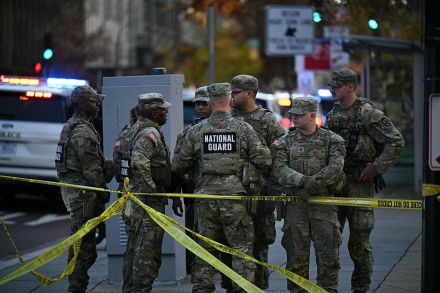
“They are the ones who are making it a war zone,” Governor J.B. Pritzker of Illinois bloviated on CNN recently, as Jake Tapper listened, displaying his best Resting Serious Journalist Face. “They need to get out of Chicago. If they’re not going to focus on the worst of the worst, which is what the President said they were going to do, they need to get the heck out.”   ICE has overreached its authority, according to Pritzker, arresting innocent children and zip-tying grandparents in the middle of the night, asking people for their citizenship papers on the street. And yet here comes the National Guard, as ordered by Donald Trump, an “invasion” of trained soldiers from Texas. “Every American needs to stand up and stop this madness,” Governor McCheese tweeted.

national guard