War

Russian military chief lets slip the cost of invasion

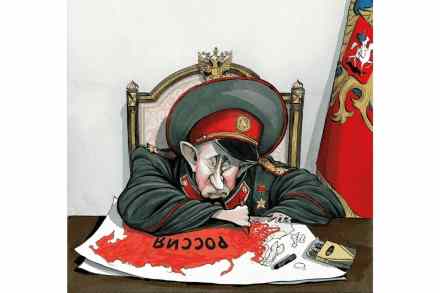
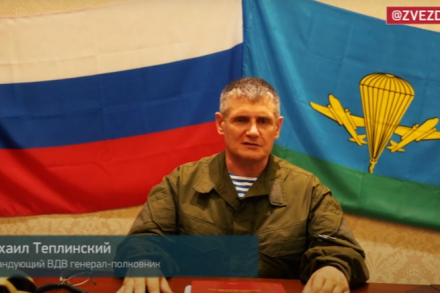
When it comes to disclosing the true cost of the war in Ukraine for Russia, the Kremlin has rarely, if ever, chosen to be honest. But occasionally, things slip out. Last Wednesday, Mikhail Teplinsky, commander-in-chief of the Russian Airborne Forces, congratulated his troops on the anniversary of the division’s founding. He said how proud he was of the ‘special military operation’ in Ukraine and reeled off the number of soldiers honoured as ‘Heroes of Russia’, as well as the 30,000 who had received other honours from the state. A video of his speech, below, was posted to the Russian ministry of defence’s social media channels and website. But the video was taken down quickly because Teplinsky let some other figures slip.
The Ukrainian war is coming to Moscow

A few hours after Ukrainian kamikaze drones struck the proud towers of the Moscow City business centre, a Muscovite friend received a cold call from her insurance company. Would she like to upgrade her home insurance to include drone attacks, a chirpy salesman asked. Another couple of friends, out for a walk in the woods not far from Vladimir Putin’s country residence at Novo-Ogaryovo, were surprised to discover a pair of Pantsir-S1 mobile anti-aircraft batteries parked by the edge of a field, their warheads pointing warily towards Ukraine. A Muscovite journalist shares a new listing for bed space in an underground garage that he has converted into a bomb shelter.

The death of sportsmanship

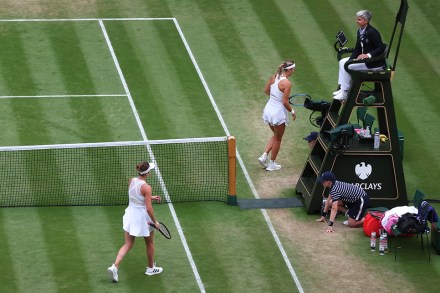
Now that Wimbledon is over, a few thoughts about youthful brains showing traces of horse tranquillisers, angel dust and cannabis, the ingredients that spell ‘moron’. I mean those sporting idiots who booed Victoria Azarenka after she lost the tiebreak 11 to 9 in the third set to the charming Ukrainian Elina Svitolina. Here’s Vica – a woman, a mother, a wonderful player and, through no fault of her own, a Belarusian – being booed for going along with the decision of Ukrainian players not to shake hands with Russian or Belarusian opponents. When a Ukrainian player refused to shake hands during the French Open last month, the public booed her, not her Russian opponent. The frogs were right. Since when does the accident of birth make one a pariah?

Napoleon heralds the return of the man’s movie

From our US edition

The trailer for Ridley Scott’s eagerly awaited magnum opus Napoleon has finally arrived — and it does not disappoint. Boasting what looks like another Oscar-worthy performance from Joaquin Phoenix, the trailer teases an intoxicating mixture of full-throttle battle scenes, executed and shot on a scale unparalleled in modern cinema, as well as insight into the complex psyche of the French emperor, to say nothing of his often-tortuous relationship with his wife Josephine (played here by Vanessa Kirby.)  https://www.youtube.com/watch?

napoleon

The strange allure of disaster tourism

Some people call me a disaster tourist. I’ve been to Afghanistan, Somalia, North Korea, Syria and Ukraine, to name just a few. I’ve been threatened by kidnappers and have been shot at, but it’s never seriously bothered me. A taste for danger is just part of who I am. That’s why I respect those five men who perished in the Titan submarine last week. They were prepared to descend into the crushing depths of the North Atlantic in a tiny submarine to look upon the most notorious shipwreck in the world, the Titanic. They wanted to experience a place so dangerous that only a handful of people on earth would ever dare go. With gunfire blazing all around, I felt more alive because I was closer to death There’s an allure to danger that is difficult to explain.

Why the economic war against Russia has failed

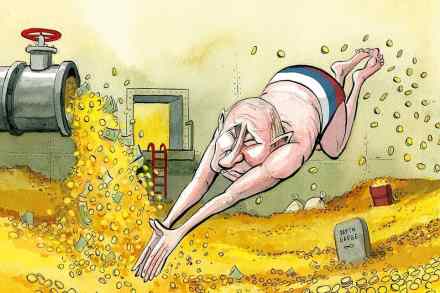
There was much mirth in the West this week when Vladimir Putin’s Victory Day parade through Red Square included just one tank, itself a relic from a museum. The inference was that Russia has lost so much military kit in Ukraine that it is a shadow of the military superpower the Soviet Union used to be. Russia has certainly borne heavy losses (although any country conducting a foreign war would presumably have its military hardware on active duty rather than on ceremonial parade). But we should avoid being smug. The truth is that the war is not going well for the West either – at least in one respect. When Putin sent tanks into Ukraine on 24 February last year, western countries rapidly adopted a two-pronged strategy.

In Kyiv, tech start-ups are thriving

What better cocktail to try in Kyiv than ‘Lesya Ukrainka’s Dream’? Born in 1871, Ukrainka was a fierce feminist, poet, titan of Ukrainian literature and the angel-faced symbol of independent nationhood. In this time of war, writers like Ukrainka and Taras Shevchenko, the great 19th-century poet persecuted by the Russians, a man who has come to define Ukrainian national identity and liberation, are all the rage. The last verse of Ukrainka’s poem ‘Contra Spem Spero’ (‘I hope against hope’) captures the national mood: Yes, I will laugh despite my tears, I’ll sing out songs amidst my misfortunes; I’ll have hope despite all odds, I will live! Away, you sorrowful thoughts!

Ukraine’s vitality is its greatest strength

From our US edition

Lviv, Ukraine Deep in a forested park, hundreds of people — men, women, children — in traditional embroidered clothes danced, clapped, and sang in a wild circle around fiddle-playing musicians. It was war, but it was also Easter, celebrated then according to the old calendar by the Greek Catholics of Lviv.  In that forest grove on a chilly afternoon, I stood next to Linda Netsch, a professor at Harvard Law, who had just arrived by train to give wartime guest lectures at Lviv’s Ukrainian Catholic University.  “Now I know why Russia cannot defeat Ukraine,” she told me as she pointed at the crowd of people dancing on the chilly grey afternoon while a friend poured me a whiskey. “It’s this. This is real power.

ukraine

A Chinese wargame in the halls of Congress

From our US edition

The House Select Committee on the CCP held a wargame Wednesday evening where members played the role of the US in a showdown with Beijing over Taiwan. As Committee Chairman Mike Gallagher said after the event, “We are well within the window of maximum danger for a [CCP] invasion of Taiwan, and yesterday’s wargame stressed the need to take action to deter CCP aggression and arm Taiwan to the teeth before any crisis begins.” The results of the game were — as Gallagher predicted in his opening statement — “sobering.”  A source close to the Committee told The Spectator that a critical lesson taken by participants was that deterrence must be the top priority.

xi jinping wang huning wargame militarizing IP china

How to win the war that everyone is losing

From our US edition

Russia is losing the war in Ukraine. So is Ukraine. And so are we. Imagine the good guys win tomorrow. What exactly will we have won? Ukraine was the poorest country in Europe even before the war. Afterward it will remain as dependent on American dollars as it is now — and on American arms. Russia will not have disappeared, after all. The last war-torn and impoverished country that required open-ended American support was Afghanistan. Yet all the weapons and funds we lavished on Hamid Karzai and Ashraf Ghani failed to keep the Taliban at bay after we left. The money also didn’t help with Afghanistan’s corruption problem. Will it help with Ukraine’s? In 2021, Transparency International ranked Ukraine second only to Russia as the most corrupt country in Europe.

war

Why war museums matter

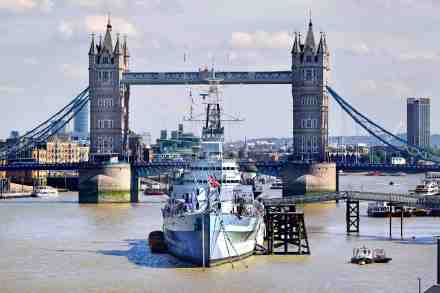
On Christmas Day 1942, the German battlecruiser Scharnhorst, along with five destroyers, left its Norwegian base and headed for a series of Arctic convoys, the British fleets transporting material and support to the Soviets. The townclass cruiser HMS Belfast, used to escort the convoys through some of the most dangerous seas in the world, played a vital role in the Royal Navy’s clever game of bait-and-blast that resulted in the destruction of the Scharnhorst, a monster that had already sunk a British carrier and two destroyers. Belfast, the most powerful cruiser in the Navy at her relaunch in 1942 (she hit a mine in 1939 and needed three years of repairs), now sits in the Thames by City Hall, a visitor attraction operated by Imperial War Museums.

Edward Luttwak, the uncontained strategist

From our US edition

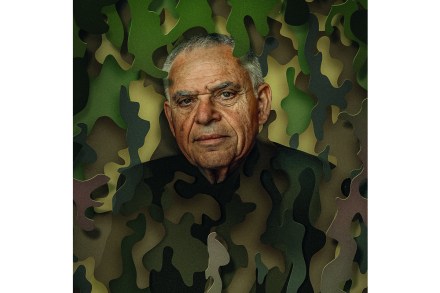
“Christ, Edward! No!” Edward Luttwak has just lunged at me with a knife in the study of the house he shares with his wife in a suburb of obdurate anonymity near Washington, DC. He is giving an unsolicited demonstration of how to most effectively stab someone. “Let your hand go limp, then feint a punch with your non-knife hand,” he says with gusto, his left fist fluttering around my face, “then stab into the diaphragm upwards. The air will go out of them like a balloon and they’ll drop to the floor. They may live another twenty years, but they’ll certainly be out of action for the next twenty minutes.” The demonstration has come after a brief typology of knives for my benefit — also unsolicited.

Luttwak

War games do something seriously unpleasant to our brains

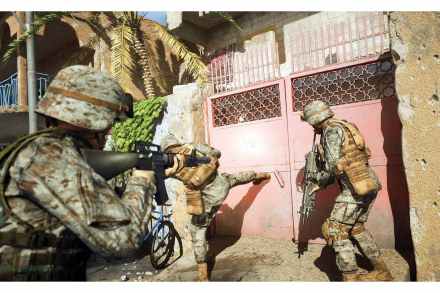
Three years ago, I killed several thousand people over the course of a single weekend. Late into the night, I ran around butchering everyone I saw, until by the end I didn’t even feel anything any more. Just methodically powering through it all, through the wet sounds of splattering heads, bodies crumpling, shiny slicks of blood. I thought I was past caring. But when I finally went to bed, I couldn’t sleep, and in my dreams I was haunted by all the men I’d killed. I saw their brains exploding, again and again and again. In my defence, I’d had a bad week. It was December: a grotty English winter, not particularly cold but still utterly grim. The kind of winter that seems to stick to everything, like a layer of congealed grease. I was worried about money.

What Zelensky has taken from his former TV career

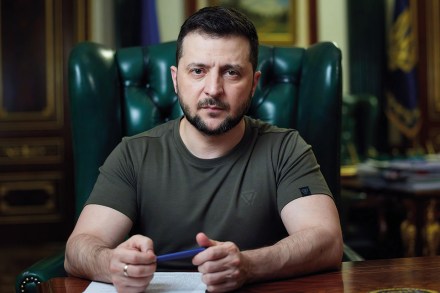
Volodymyr Zelensky is one of the few leaders of modern times whose charisma, determination and sheer cojones can be said, without exaggeration, to have changed the course of history. In the first hours of the Russian invasion the US famously offered to evacuate him from Kyiv to a safer location, to which his response was (in spirit, if not in actual words): ‘I need ammo, not a ride.’ His determination to remain in the heart of his besieged capital seriously confounded Putin’s invasion plans, which were predicated on quickly toppling or murdering him.

Homage to Kyiv

From our US edition

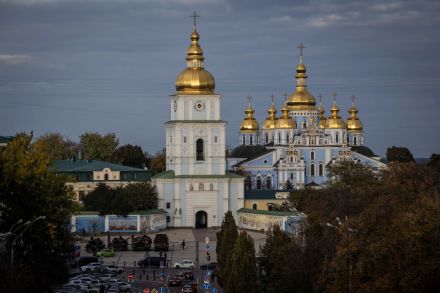
It was 11:15 p.m. in Kyiv, just after the curfew, and the military had set up its checkpoints on the city streets. Finding your way home after hours can be a hazardous business. The city is paranoid about assassins and saboteurs, and in wartime few are above suspicion. Things were looking ominous until my friend Sasha declared: “we are late for breakfast.” The guards waved us through. This was the daily password, shared with those important enough to move around after curfew. Checkpoints and curfews were a few reminders of the war in Kyiv, where I was just before last week’s deadly air strikes. In the capital city, life was approaching some form of normalcy.

kyiv

Are we ready for the next war?

Is Britain ready to fight tomorrow’s wars? ‘Ish,’ answers James Heappey, the armed forces minister. Britain’s military is in an okay state, he says. But we need to spend more money on ammunition, medics and logistics systems. Our high-tech kit, the kind that helps us wage electronic warfare and collect data on our enemy’s positions, needs to be better connected with what our soldiers on the ground are doing. Liam Fox, the Tory MP and former defence secretary, is scathing about how we identify threats. ‘We have to stop substituting wishful thinking for critical analysis’, he says, to approving murmurs from the audience at Tory party conference.

The Woman King is satisfying but it sanitizes African slavery

From our US edition

Every large-scale historical drama is a product of its time. The introduction to Cecil B. DeMille’s beloved The Ten Commandments explicitly outlines the film’s anti-communist agenda: “Are men the property of the state or are they free souls under God? This same battle continues throughout the world today.” Similarly, Gladiator, released in 2000 at the height of neoliberal dominance, anachronistically portrays the arc of Roman history as bending away from despotism towards democracy. 2022’s The Woman King is no exception to this rule. It centers on a fearless female leader who defends a pan-African, antislavery vision while reckoning with her own private traumas. Historically questionable? Yes. A satisfying movie? Also yes.

Exhausted by America’s culture of fear

From our US edition

When I try to sleep at night, I can't relax. I blearily turn on the TV, but I can't change the channel. My TV is telling me I am going to die, maybe from Covid (they say there's a new variant, you know, called Monkeypox); maybe from climate change because it is likely already too late. Before I drown because of climate change, I'll be hungry because supply chains don't work anymore, and inflation is stripping away my purchasing power, and some sort of fascist coup will happen, and I'll probably have to wear all gray clothes all the time like in the dystopian movies. Then there are the TV diseases, bowel disorders and skin problems that medicines I can't afford might fix except side effects can include blindness, paralysis, saying thingstoofasttounderstandanditallisjustablur of fear.

The stalemate in Ukraine won’t last forever

Addressing the vexed question of who is winning the war in Ukraine, six months on, is a task to challenge military strategists, geopolitical analysts – and semanticists, because so much depends on what ‘winning’ means. On one level, after all, one could suggest everyone is losing. That said, we cannot escape the fact that both Moscow and the West had essentially written Ukraine off at the start of the war. The conventional wisdom was that it would take perhaps a fortnight for Vladimir Putin’s much-vaunted war machine, the product of two decades of heightened military spending, to defeat its Ukrainian counterpart.  Instead, the Ukrainians proved determined and disciplined in the defence, and imaginative and impassioned in the attack.

The strange morality of sponsoring weapons

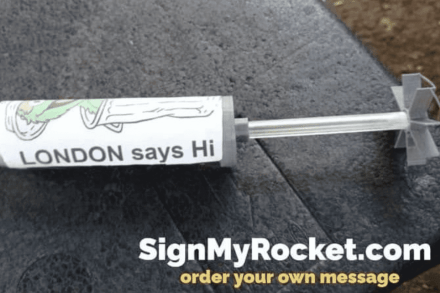
Forget fund-raising concerts donating spare clothes and offering your spare room to a refugee family. There’s a better way of showing your sympathy for Ukrainians: you can now sponsor weapons, and arm it with your very own message. For up to £2,500, Brits can send a personalised message to the crowdfunding site Sign My Rocket, who will then write it on a missile destined for the Russian army. Sending hostile messages to the enemy, of course, is not new, and may be as old as war itself. Dropping black propaganda leaflets from planes for the benefit of the enemy beneath has long been standard practice. Nor was it unusual for those on the production line at armaments factories or even those loading the ammunition to add their own special something.