War

Ukrainians aren’t surprised by Amnesty’s victim-blaming

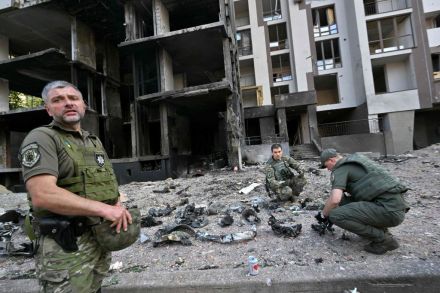
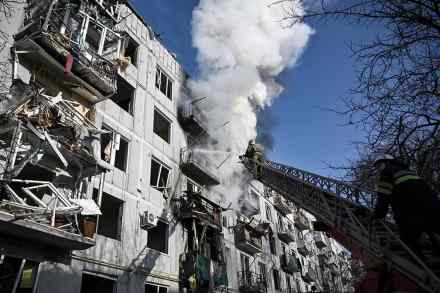
Is Amnesty International victim-blaming? The Ukrainian military has been endangering civilians, it said, by establishing military bases and putting weapons systems in residential areas. Agnès Callamard, the organisation's secretary-general, remarked that ‘being in a defensive position does not exempt the Ukrainian military from respecting international humanitarian law’. It was a bizarre statement. Russian forces are attacking villages and large cities with dense populations. The Ukrainian armed forces can’t sit in a field, or put their weapons on a boat and sail away from coastal cities. As well as the morality of shifting the blame on to the aggressor, Amnesty’s statement doesn’t recognise the realities of the war situation.
Will China blockade Taiwan?

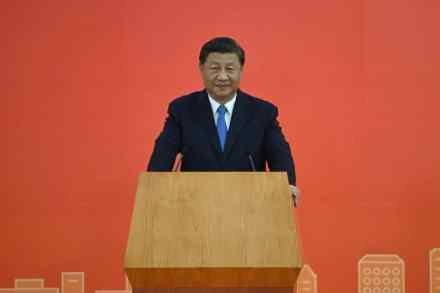
Xi Jinping has made it very clear over the years that he is determined for China to reunite with Taiwan. He has staked his legacy and his legitimacy on it. The problem for Beijing is that the polls in Taiwan continually show that only one per cent of the population is in favour of reunification now. If Xi wants Taiwan then he will almost certainly have to take it by force. Although some western commentators argue that Russia’s travails in Ukraine have made an invasion less likely, there is no evidence to support a change in policy in Beijing. Even though Taiwan’s military is undertrained and equipped with tanks and planes from a half-century ago, three-quarters of its citizens say they are prepared to fight to keep the island free from mainland rule.

The Ukraine war enters its sixth month

From our US edition

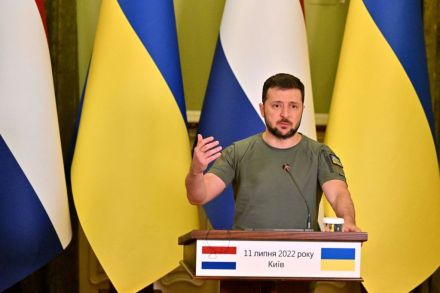
On February 24, Volodymyr Zelensky, the comedic actor-turned-president of Ukraine, addressed his countrymen at the same hour Russian missiles were landing in multiple Ukrainian cities simultaneously. Clad in olive garb and sporting a light stubble on his face, Zelensky promised his citizens victory for Ukraine and defeat for the Russians — and he implored the Russian people to protest the actions of their government in Moscow and St. Petersburg. As the war entered its sixth month this Sunday, Zelensky — this time dressed in a camouflage army uniform with a full beard — is just as defiant and sure of victory today as he was on that depressing February night. "Even the occupiers admit that we will win,” Zelensky boasted during his daily speech to the nation.

Enlarging Nato will ostracise Russia (1997)

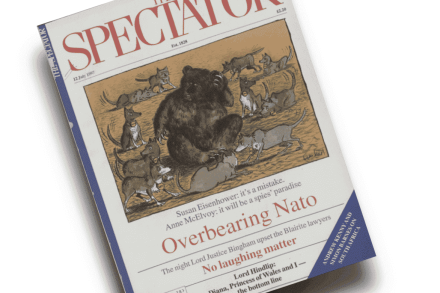
It's 25 years this month since Poland, the Czech Republic and Hungary were invited to join Nato. The Spectator’s cover story that week was this essay by Susanne Eisenhower, president of the Eisenhower Group and granddaughter of President Eisenhower. Explore The Spectator’s archive here. Washington, DC When historians, decades from now,  consider the 20th century they will probably be struck by how the major conflicts of the century were ultimately resolved. At the century's end, Germany, the country that wreaked more destruction on the world than any other power, is economically prosperous, unified and firmly locked within Nato — all due to the magnanimity of its victors.

The recapturing of Snake Island shows what Ukraine can do

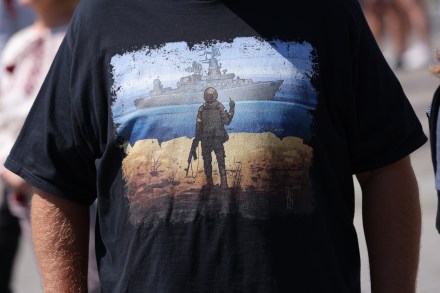
After days of missile strikes, Ukrainian forces have forced Russia off Snake Island in the Black Sea. ‘The enemy hastily evacuated the remnants of the garrison in two speedboats and left the island’, according to the Ukrainian Operational South Command. Russia's defence ministry appeared to concede defeat, saying that ‘Russian forces have completed the assigned tasks and withdrew as a step of goodwill’. The retreat is huge news in Ukraine, as Snake Island is not only important strategic territory, but has acquired a cult status as a representation of Ukraine’s resistance. Snake Island became world famous on the first day of the war when Ukrainian troops broadcast a message saying: ‘‘Russian warship, go fuck yourself’.

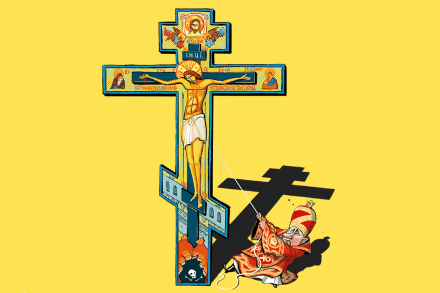
Is Russian Orthodoxy dying in Ukraine?

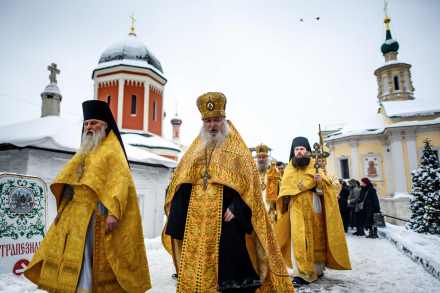
Ivano-Frankivsk has just become the first city in Ukraine to have no Russian Orthodox Church, amid a mass defection of churches away from the Moscow patriarchate and towards the breakaway Orthodox Church of Ukraine.  At the start of the invasion in February, almost two-thirds of Orthodox churches were still formally aligned with the Russian Orthodox Church whose leader – Patriarch Kirill – is a close ally of Putin. Until recently, the Russian Orthodox Church claimed dominion over Ukraine for centuries. The 2014 invasion of Crimea dampened its appeal. In 2019 a new Orthodox Church of Ukraine was recognised by Patriarch Bartholomew – the archbishop of Constantinople and the de facto leader of Orthodoxy.

What happens to US fighters captured in Ukraine?

From our US edition

Alex Drueke and Andy Huynh are two former American military members now in Russian custody, captured by the Russians in Ukraine, where they were fighting for the Ukrainian government. What is going to happen to them? The most likely thing is that both men will eventually be traded to the US in return for captured Russians. Prisoners are very valuable and rarely wasted in executions unless those carry much more value than the prisoners held by the other side. The deal may be public or secret, and the US can expect to pay a premium. Israel usually releases ten or more Palestinian prisoners in exchange for one of its captured troops.

2022 Biden contradicts 2001 Biden over action in Taiwan

From our US edition

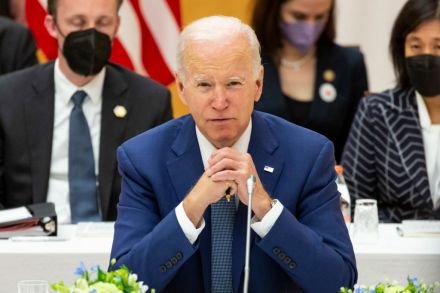
Cockburn is not one to point fingers (as they are often preoccupied with his cigar), but he finds himself making an exception for President Biden over his apparent U-turn on the issue of the United States using military force to help defend Taiwan against China. Tyler Cowen, an economics professor at George Mason University, just unearthed a 2001 Washington Post op-ed then-senator Joe Biden wrote dissenting from President George W. Bush’s stance that the “United States had an obligation to defend Taiwan if it was attacked by China.” Biden wrote that “words matter,” and that Bush’s extreme language had "damaged US credibility with our allies and sown confusion throughout the Pacific Rim.” Speaking of confusion...

Why I’ve spent £68,500 on a tank

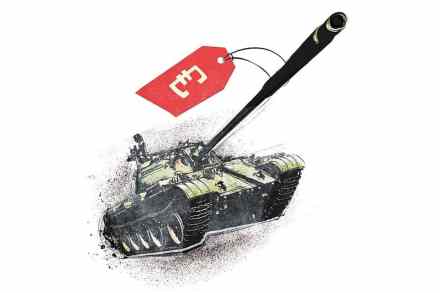
Buying a tank is not as easy as you might think. When we started looking for one, people delighted in telling us: ‘Oh, you should have bought one in the 1990s. There were hundreds available for practically nothing!’ Well, not anymore. Especially not if you are picky about what sort of tank you want. I’m collecting artefacts for a new museum of totalitarianism and wanted a T-54 or T-55, two models which are pretty much the same as each other with just a few alterations and which are the most-produced tanks in history.

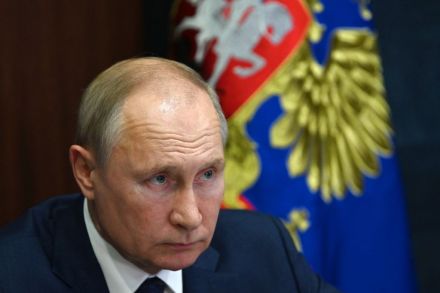
Putin’s Victory Day speech shows he’s not backing down

From our US edition

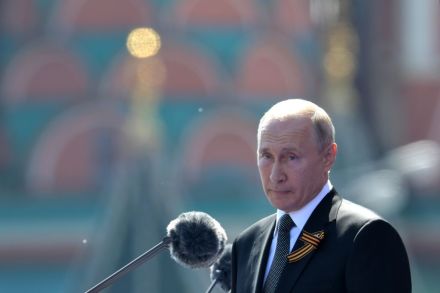
“Victory Day” is one of the most solemn events on the Russian calendar. Every year on May 9, the country gets together to celebrate the defeat of Nazi Germany in what Russians call “the Great Patriotic War,” in which as many as 26 million Soviet troops and civilians perished. It’s a time for reflection, for an appreciation of history, and, yes, for pomp and circumstance, with Russian troops decorated in dazzling uniforms marching in unison throughout Moscow's Red Square. This year’s Victory Day celebrations, however, had much of the world on edge. In next-door Ukraine, Russian forces were taking a beating, with smaller but nimbler and more determined Ukrainian units continuing to mount stiff resistance against a Russian military offensive in the Donbas.

The sin of neutrality

Yet again, millions of civilians across the Horn of Africa are starving. The world blames the crisis on drought and climate change, which nowadays is the way we excuse these countries for environmental mismanagement. But as ever, war is really the single greatest reason why people are killed year after year in this region. And while western countries pour billions of dollars of food aid into Ethiopia, Somalia and South Sudan, the weapons flooding those states originate mainly from Russia, China, Belarus – and Ukraine. In response to an article I recently wrote in The Spectator about why I think so few African governments condemn Russia’s invasion of Ukraine, I have had the usual deluge of ad hominem attacks so familiar to anybody who dares to criticise African governments.

Where will the war in Ukraine go next?

From our US edition

Almost every night in Russia, it seems, a government building bursts into an unexplained fire. Fuel depots, office buildings, infrastructure hubs — and once a bridge. No doubt people have their theories. Insinuation abounds. "Karma is a cruel thing," one Ukrainian official has said on Telegram. But in the main, both the Russian government and Ukraine maintain an eloquent silence. The metaphor is apt. The fires are an unexpected consequence of Russia’s war in Ukraine, an eventuality, no doubt, that no one in the Kremlin inner circle anticipated, or planned for. And yet they burn merrily nonetheless.

Putin’s war is a cross to bear for all Russians

‘The photographs of murdered civilians, their hands tied behind their backs, shot in the head and tossed like animals on to the street… we will not forget, and no one will let us forget,’ wrote Russian journalist and author Yevgenia Albats last week. ‘The guilt for this will lie on our children and grandchildren. Bucha, Irpin, Motyzhin – we will now have to live with them for ever.’ Powerful words and moving nostra culpa for Russian atrocities in Ukraine. But they raise a vital question. Who, exactly, is the ‘we’ who is to bear the blame, guilt and punishment? All Russians? The 70 per cent of Russians who official polls claim actively support the war? Russian soldiers responsible for the atrocities?

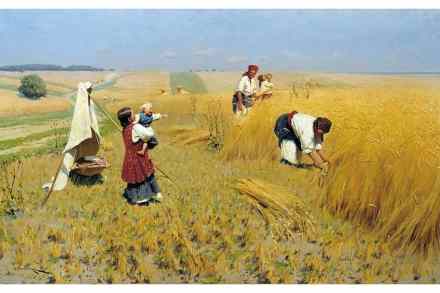
Bitter harvest – how Ukraine’s wheat has always been coveted

Publishers love books with ambitious subtitles such as ‘How Bubblegum Made the Modern World’, and this one’s, about American wheat remaking the world, was no doubt devised to appeal to readers in the United States. It is not really appropriate: for ‘American’, read ‘Ukrainian’. The focal point of Oceans of Grain lies very far from the vast wheat fields of North America. This is mainly a book about Ukraine and the Black Sea, and the importance of Ukrainian grain in world history. Its appearance during the current war is extraordinarily timely. Scott Reynolds Nelson insists that grain supplies have lain at the heart of millennia of conflict.

Washington’s dirtiest war at last goes silent

From our US edition

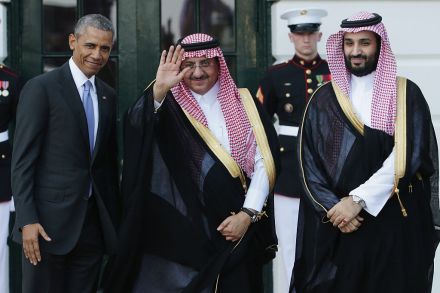
Something strange, but miraculous, is happening in Yemen right now: no bombs are falling from the sky. According to the Yemen Data Project, an independent group keeping track of the violence in the Arab world’s poorest country, there hasn’t been a single Saudi coalition airstrike over the last week. This is the first time since Yemen’s civil-turned-proxy war began that an airstrike hasn’t been recorded, an unprecedented and welcome development for the millions of Yemenis who have lost so much as their rich Saudi neighbors seek to drive the Houthi-led rebel movement to the negotiating table.

The Kremlin’s clown prince

From our US edition

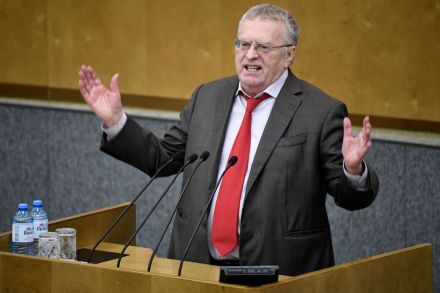
The beginning of the year has not gone as well as it could have for Vladimir Zhirinovsky. Mostly because he is now dead, but also because Zhirinovsky, a Russian politician of the “managed” (pro-Kremlin) opposition, predicted and vigorously supported Russia’s invasion of Ukraine. If Zhirinovsky were able to follow the campaign from his hospital bed, it could not have met his expectations. The imperial Russia of his imagination ought to have come into glorious existence, but its armed forces instead suffered reversal and humiliation. Zhirinovsky was the long-time leader of the Russian Liberal Democratic Party — a grouping that, as many wags have separately concluded, was under his leadership neither liberal nor democratic nor, in some lights, a party.

Our children are at breaking point – and it’s our fault

I think it’s time we stopped scaring the children. I think they’ve had enough. They’re at breaking point now, every generation more anxious than the last – and anxious younger, too. There’s a record number of British children diagnosed with anxiety, and a record wait – two years – for therapy, though I’m not at all sure the therapy as it is helps much. The usual idea is that if the kids are troubled, it’s the world that’s to blame: smartphones, Instagram, the constant comparing; Trump, Putin, the existence of Tories; Covid, global warming. No wonder they have the heebie-jeebies. But I think in fact that we’re doing it to them. It’s us, the parents, carers, teachers in charge.

War, wine and the brilliance of Beychevelle

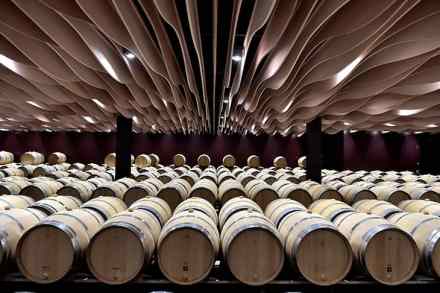
If only toasts and good wishes were weapons of war. At every serious repast I have attended since the invasion began, someone has raised a glass to the heroes – and heroines – of Ukraine. The rest of us have responded with a blend of solemnity and moist-eyed emotion. One’s emotions are strange. I can read about the deaths of warriors on the battlefield, now riding with the Valkyries on their way to Valhalla, and merely respond with a dry-eyed salutation.

40 years on, war still casts a shadow over the Falklands

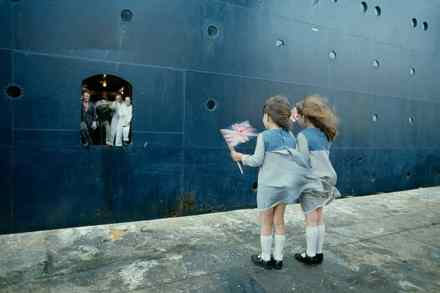
For the Falkland islanders, the war in Ukraine brings back haunting memories of their own trauma four decades ago. Having themselves experienced a barbaric invasion by a big bully next door, they understand all too well what the people of Ukraine are going through. ‘I still feel that gun in my back,’ one islander told me recently, describing the day Argentine troops landed on Pebble Island and brutally rounded up the locals. Much has changed in the Falklands since 1982, nearly all of it for the better, yet the war remains seared in the memory. This year’s 2 April is, therefore, hugely significant – the 40th anniversary of the invasion.

Secret bioweapon labs are Putin’s MacGuffin 

From our US edition

Some commentators have already noted the strange homology between Russia’s evocation of “secret bioweapon labs” in Ukraine and the US evocation of Saddam Hussein’s weapons of mass destruction, which in both cases were used to justify military attack. It’s not that the US was unsure if Saddam had WMDs; they positively knew he did not have them, which is why they risked a ground offensive in Iraq, rather than sticking to air bombing. The nonexistent Iraqi weapons of mass destruction perfectly fulfill the role of a “MacGuffin” in Alfred Hitchcock’s films. A MacGuffin is “an object, event, or character in a film or story that serves to set and keep the plot in motion despite usually lacking intrinsic importance,” per Merriam-Webster.

bioweapon labs