Wall street

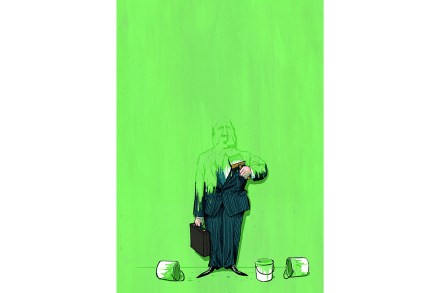
Lloyd Blankfein – guiding light of Goldman Sachs

Goldman Sachs inspires awe and envy in equal measure. Those who survive the Wall Street investment bank’s annual cull earn fortunes. Leavers join an alumni network that makes the Freemasons look like plodders. The ‘Government Sachs’ roll call includes prime ministers (Mark Carney, Mario Draghi, Rishi Sunak and Australia’s Malcolm Turnbull); US Treasury secretaries (Bob Rubin and Hank Paulson); and central bank governors galore, not to mention two recent BBC chairmen (Gavyn Davies and Richard Sharp).  After the global financial crisis, which Goldman navigated more adroitly than rivals, Rolling Stone compared the bank to ‘a vampire squid wrapped around the face of humanity’. New York magazine ran a cover story which asked: ‘IS GOLDMAN SACHS EVIL?

Masculinity in crisis – portrayed by Michael Douglas

There isn’t another actor alive whom I’d rather watch than Michael Douglas. Just as Pauline Kael once said that the thought of Cary Grant makes us smile, so the thought of Michael Douglas makes me grin, smirk, nod, wink, cackle, cheer – and walk a little taller, too. Even his anti-heroes are heroic in their truth to self. From the sly, ophidian sneer of his washed-up money man in A Perfect Murder to the salty, satanic leer of his trigger-happy cop in Basic Instinct, Douglas has embraced self-destruction, stared down absurdity and made plain what Nietzsche meant when he said that man is either a ‘laughing stock or a painful embarrassment’. But no matter how much Douglas means to me, he means a whole lot more to Jessa Crispin.

The rotten core of Credit Suisse

The tale of Credit Suisse ought to be Buddenbrooks on steroids. A staid Swiss lender enters marriage with a racy Wall Street investment bank and gives birth to a monster. Scandal follows scandal. CEOs come and go. In March 2023, the bank ends up being flogged to its arch rival UBS for a miserly $3 billion. Inside Credit Suisse, the backstabbing and treachery were more suited to a medieval court Duncan Mavin is well placed to tell this corporate horror story, having written a book about one of Credit Suisse’s most notorious clients, Lex Greensill, an Australian melon farmer turned fintech champion. Greensill Capital, which employed David Cameron as a Whitehall lobbyist and international frontman, turned out to be a house of cards.

Western economies are failing – but capitalism isn’t the problem

Real wages have barely increased for more than a decade. Banks have had to be bailed out, and many still exist on a form of state life support. Growth has stalled, taxes are at 70-year highs, yet governments are still bankrupt. Unless you happen to be part of a tiny plutocracy made up mostly of tech entrepreneurs and financiers, there has rarely been a point, at least since the nadir of the mid-1970s, when the economic system seemed beset by quite so many challenges as it is today. The left has smartly stepped into the intellectual space that has been created with a series of well-timed polemics, which, while they vary in precise analysis and on solutions, have at least one thing in common. They argue that the system is fundamentally broken, and it will take radical action to fix it.

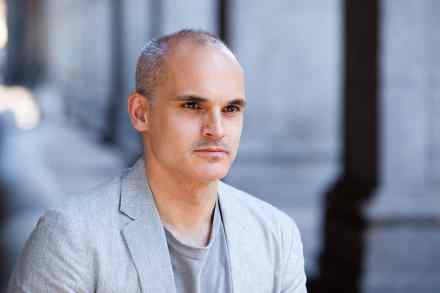
Wall Street madness: Trust, by Hernan Diaz, reviewed

‘I don’t trust fiction,’ the famous author told me, both of us several glasses to the good. ‘It contains too much truth.’ I nodded and she laughed and we drank more wine, but that sentence stayed with me in all its aphoristic glory. When she died, this was the first thing I remembered: our conspiratorial conversation in the deepest dark of 1990s Soho. This is not true. It has the feel of lived experience, yet it is entirely invented. The context, its placement and the fact that it is printed in a magazine gives it credence. As readers, we do not expect to be lied to. With a work of fiction, the opposite is true. Lies are all we can hope for.

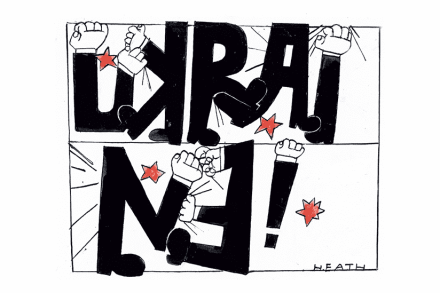
The Ukraine invasion is good news for Wall Street

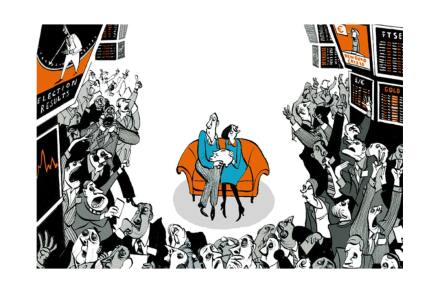
Don’t be fooled by the pictures that will shortly start to emerge of traders apparently tearing their hair out against of backdrop of red screens. A proper crisis is exactly what Wall Street traders want — to provoke yet another stimulus package, as well as the cancellation of interest rate rises. In the Alice in Wonderland world of bubblenomics, bad news is good, and good news is bad. If we have good economic figures, there is a danger that the Fed, the Bank of England and other central banks will take away the punch bowl. On the other hand, all we need is a sudden crisis that gives the impression, however briefly, that the world is coming to an end — and back will come the bowl, with an even stronger mix than before.

The capitalist nihilism of WallStreetBets

When Croatian movie director Dario Jurican ran in the country’s presidential election in 2019, his campaign slogan, 'corruption for everybody', promised that normal people would also be able to profit from cronyism. The people reacted with enthusiasm although they knew it was a joke. A similar dynamic is present on the WallStreetBets subreddit, which subverts the financial system by over-identifying with it or, rather, by universalizing it and thereby revealing its in-built absurdity. The story is well-known already, but let's briefly recap. Wallstreetbets is an online group in which millions of participants discuss stock and options trading. It is notable for its profane nature and promotion of aggressive trading strategies.

Money money money: 10 movies about the markets

The furore in the US over the rocketing shares of previously written off companies such as GameStop, Blackberry, AMC Entertainment and Macy’s (the ‘Reddit Revolt’) has introduced stock market trading terms to the general public, with some folks newly opining (with a patina of assumed knowledge) about ‘hedge funds’, ‘penny shares’, ‘junk bonds’ ‘short-selling’ and ‘pump and dump’. But this is hardly the first-time similar events have occurred.