Vladimir putin

The new unpatriotic conservatives

From our US edition

The die against conservatives opposed to the Iraq war was cast by David Frum in a now-infamous essay for National Review back in 2003. Not only were the right's antiwar sorts unpatriotic, Frum charged, they were defeatist and conspiratorialist appeasers. “They have made common cause with the left-wing and Islamist antiwar movements in this country and in Europe,” he wrote. As one can imagine, this made it quite difficult for this small but active faction of the conservative movement (which included the American Conservative magazine and libertarians like Texas Congressman Ron Paul) to penetrate the mainstream, or build trust with their compatriots across the aisle.

Kudos to Macron for going to Moscow

From our US edition

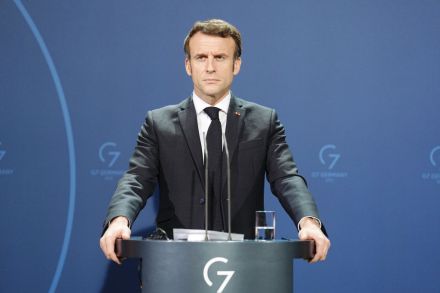
Landing in Moscow on February 7, French President Emmanuel Macron had a twinkle in his eye and a spring in his step. There he was, taking it upon himself to be the first European head-of-state to meet Russian President Vladimir Putin since over 130,000 Russian troops massed on Ukraine’s border from three sides. Macron's mission was to explore whether a de-escalation with Russia was possible. “I believe that our continent is today in an eminently critical situation, which requires us all to be extremely responsible,” he told reporters before his five-hour session with Putin began. The other option, what could be the largest land war in Europe since World War II, would be far worse.

Viktor Orbán or: How I Learned to Stop Worrying and Love Putin

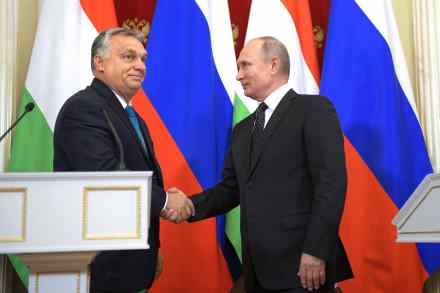
Viktor Orbán first came to prominence when in 1989 he declared on live TV that Hungary must put an end to the ‘Russian occupation’. On the first day of February this year, he held his thirteenth meeting with Vladimir Putin. What’s changed? Like much of his generation, Orbán initially believed that the fall of communism would mean a ‘return to Europe’ — with not only western democracy but also a western standard of living. Yet after a brief and unpleasant stint studying in Oxford, the student politician discovered that Britain’s future elites were ignorant and decadent.

America’s control over the international system is slipping

From our US edition

The US-led expansion of NATO in the direction of the Russian border took place when America was at the peak of its power — the "unipolar moment" — and when Russia had hit geostrategic rock-bottom. The global balance of power has changed since then, and that helps explain what is happening now. Vladimir Putin is correct when he argues that, since the collapse of the Soviet Union, the United States and its Western allies have taken advantage of Russian weakness. It may sound simplistic, but back then in the immediate aftermath of the Cold War, American policymakers did a lot of things just because, well, they could do them. And then they created geostrategic narratives to justify what they wanted to do.

biden putin

Sanctions on Russia won’t work

From our US edition

Another battle in the West’s sanctions war against Russia is set to begin. The US and its NATO allies have put together what they’re calling a strong package of economic restrictions on Russia in response to its military buildup near Ukraine’s border. What’s in the package remains a secret but it appears to focus on Russia’s energy sector. A State Department spokesperson told NPR on Thursday that the Nord Stream 2 pipeline from Russia to Germany would remain inoperable if an invasion happened. The Financial Times suggested that other new Russian gas developments are also on the sanctions list. The UK wants Russia booted from SWIFT, the Belgian financial messenger services company, while the West also floated the idea of sanctioning Russian President Vladimir Putin.

Save Ukraine by admitting Georgia into NATO

From our US edition

As the Ukraine crisis continues to develop, it has become impossible to avoid mentioning Georgia and its relations with the West. This is not only due to the similarities in the two countries' geopolitical circumstances, but also because Georgia is explicitly mentioned with Ukraine in President Putin's demands to the West to forego any future NATO expansion. Like Ukraine, for years, Georgia has sat in the uncomfortable position of being pro-Western without enjoying the protections afforded by membership in both NATO and the European Union. Yet a country that was once a staunch Western ally has become mired in accusations of authoritarianism, behind-the-scenes governance, and covert pro-Russian sentiment. Georgia and Ukraine have occupied a unique position in the post-Soviet space.

vladimir putin alexei navalny

Trump was tougher on Russia than Biden

From our US edition

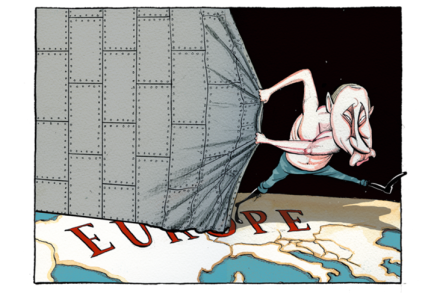
Vladimir Putin’s new year is off to quite a start. The Russian autocrat isn't just massing troops on the Ukraine border, kicking off a diplomatic panic in European capitals and in Washington. In recent days he's also backed a refugee stand-off with Poland, helped Kazakhstan's strongman squelch pro-democracy protests, maintained a presence in Assad’s Syria, established new footholds in Mali and Central African Republic, cozied up to communist China, and, in a nod to Khrushchev, hinted he might build military infrastructure in Cuba and Venezuela. What's remarkable about this geographically expansive, chaos-inducing, dangerous spectacle is that it was entirely avoidable. Mr. Putin is no cipher.

Russia may very well invade Ukraine

From our US edition

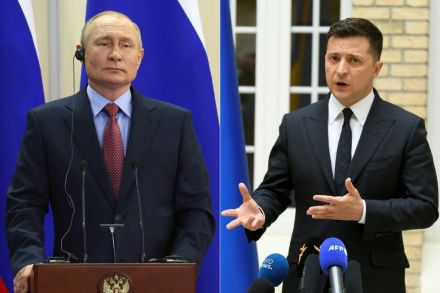
The United States is doing what it can to deter Russian President Vladimir Putin from ordering another invasion of Ukraine. Despite the cool and collected persona that Ukrainian President Volodymyr Zelensky is trying to present to his people, the White House still believes Russian military action is "imminent.” The Biden administration recently put 8,500 American troops on alert for deployment to Eastern Europe. Washington has spent the last several weeks trying to convince the Kremlin that any incursion into its neighbor would be costly. On Tuesday, the US sent a third shipment of lethal equipment to the Ukrainian military, including 300 additional Javelin anti-tank missiles. This comes on top of the 200,000 pounds of lethal aid that had already been provided by Washington.

Russia is the lost great power

From our US edition

Lost in the endless debate about whether Russia will invade Ukraine is the real reason that Moscow — armed with nuclear weapons and one of the most advanced militaries on the planet — feels so threatened by its neighbors, the NATO alliance, and ultimately the United States. While the expansion of NATO in the 1990s plays a big role, it is Russia’s everlasting internal debate about its place in the world that is the real source of tension. It's a historical black hole no one wants to get sucked into, but unless resolved it has the potential to be a source of armed conflict the likes of which Europe has not witnessed since World War II. Geography and history are both a blessing and a curse for Russia.

What does Russia hope to achieve in Ukraine?

From our US edition

President Biden said this week that a “minor incursion” of Russian troops into Ukrainian territory would not bring about the severe economic sanctions the White House threatened in response to a “significant invasion.” His counterpart in the Kremlin can probably hardly believe his luck. Effectively, Vladimir Putin has been given carte blanche by the West to launch military operations against Ukraine. Of course, the fact that there is no definition of what constitutes a “minor incursion” gifts the White House a preemptive get-out clause from having to truly confront Moscow.

ukraine

Can Putin ever be stopped?

From our US edition

Vladimir Putin has been the most effective practitioner of Realpolitik for the past two decades. With an economy about the size of Italy’s, and just as corrupt, he has accomplished his most ambitious goal: returning Russia to the status of a Great Power. Now he’s thrown his chips on the table once more, launching a massive troop build-up on the border with Ukraine and sending still more into Belarus (for “joint exercises”), positioning them just north of Ukraine’s capital of Kyiv. Although the numbers don’t appear large enough to conquer all his neighbor’s territory, they are large enough to push through the eastern region (the one bordering Russia) and form a land bridge to Crimea, which Russia conquered in February 2014.

putin

America still won’t risk a war with Russia over Ukraine

From our US edition

Anybody who thought this week’s intense diplomacy between American, European, and Russian officials would magically resolve the ongoing crisis in Ukraine should lie down until the feeling passes. Crisis diplomacy isn’t a walk in the park; if anything, it’s a slow-moving car ride through rush-hour traffic, with plenty of speed bumps along the way. On Monday, January 10, Washington and Moscow met for a round of discussions in Vienna to sound each other out and present their list of seemingly endless grievances. After eight hours of talks, both delegations left the room with, coincidently, similar assessments as to how it all went.

Was the Kazakhstan uprising an attempted Jihadi takeover?

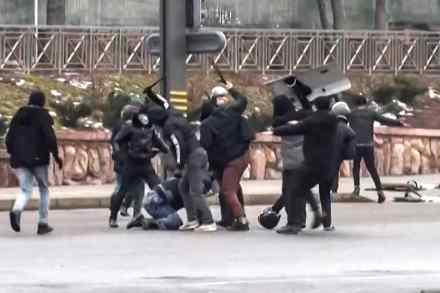
The Kazakh uprising is over. The stench of burnt-out vehicles and bombed out buildings in Kazakhstan’s most populous city and former capital, Almaty, has begun to dissipate. Life is returning to normal. Banks have reopened. Salaries and pensions are being paid. The internet is up and running again. Almaty airport is expected to reopen today. As the fog of war lifts some clarity about these events is beginning to emerge. Officials have reported that 100 businesses and banks were destroyed along with 400 vehicles. Seven policemen died and hundreds more were wounded; 8,000 people have been arrested. Some 164 civilians were killed. The government of President Kassym-Jomart Tokayev has survived and with some ease as it turns out.

Glasnost merely confirmed Russia’s deep-seated suspicion of democracy

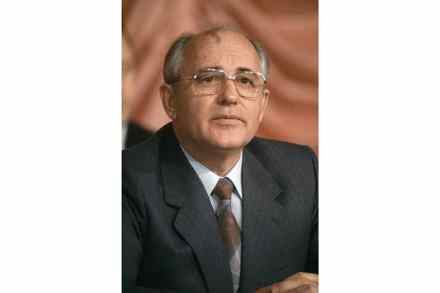
Thirty years ago the Soviet Union was guttering to its close. Those of us who were there remember the exhilarating hope, the apprehension, the illusion. For everyone else it is a distant echo. Russia was always likely to lose the Cold War competition with America. It was unmanageably large, too poor and too reliant on too few products. Stalin’s bloody grip had enabled the Soviet Union to defeat the Germans at a terrible cost to his people. When he died in 1953 his system entered a protracted agony. Over the next decade Nikita Khrushchev tinkered with half-baked solutions. They misfired, and he was overthrown by the hard men in the party, the KGB, and the army. His more cautious successors managed to equal America’s military might.

Biden must encourage Ukraine to negotiate

From our US edition

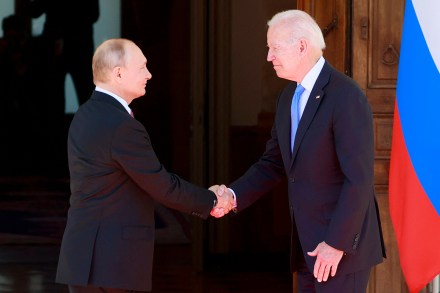
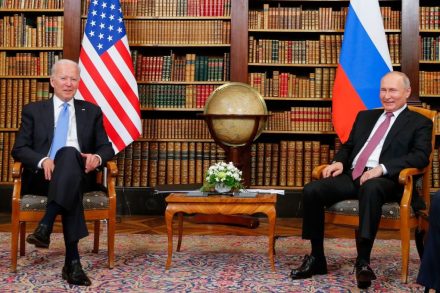
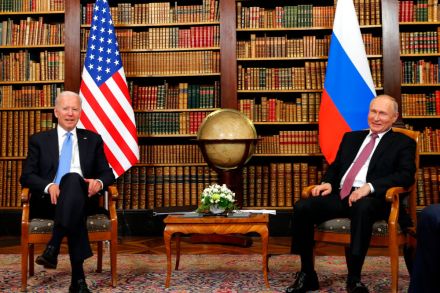
President Joe Biden spoke with Russian President Vladimir Putin today via video conference for just over two hours, the second time in six months that the two leaders have engaged in a face-to-face conversation. For Biden, the message he sought to deliver was strict and to the point: if you, Mr. Putin, go ahead and order a second invasion of Ukraine in nearly eight years, you can expect a raft of economic penalties that will negatively effect everything from Russia’s access to the SWIFT payment system to the ability of Russian banks to convert rubles into dollars. For the security-minded Putin, the meeting was an opportunity to press Biden on his principal demand: a written legal guarantee from Washington and the rest of NATO that Ukraine will not be invited into the alliance.

Why America needs a grand bargain with Russia

From our US edition

Russian is losing influence in a region it once dominated: Eastern Europe. Highlighting this newfound weakness are Ukraine and Belarus, two states that were once solidly in Russia’s sphere of influence and are now on the verge of completely falling away. In 2018, Ukraine enshrined in its constitution the goal of NATO membership and last year Belarus experienced massive pro-democracy protests; both of these events are in Russia’s eyes akin to westernization. The American foreign policy establishment acts as if Russia will ultimately accept being surrounded by Western-allied states. Instead, history shows that losing influence will cause Russia to lash out. If Ukraine moves toward NATO membership, it will incur a Russian invasion.

vladimir

Stop pretending Ukraine will ever be in NATO

From our US edition

Russian President Vladimir Putin is once again making the West nervous. And unlike his previous display of military might near the border with Ukraine last spring, Washington is concerned enough that it's sent CIA director (and former US ambassador to Russia) William Burns to Moscow for talks earlier this month. If Burns’s trip was meant to scare the Kremlin into halting additional military formations near the Russia-Ukraine border, then the confab didn’t work as planned. The Ukrainian government estimates that up to 100,000 Russian forces are now camped out in the area. American and European officials are sharing information with one another about various scenarios the Russians could be contemplating, the most dramatic being a second invasion of Ukraine in seven years.

ukraine

Is Russia preparing to invade Ukraine?

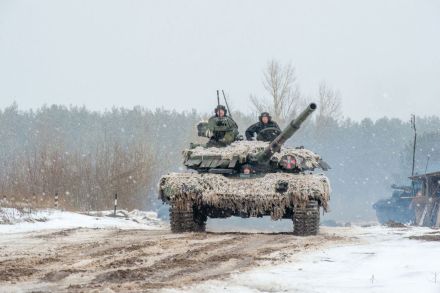
I can still hear the battlefields of eastern Ukraine. Just a mile or so from us, thousands of Russian troops were dug in; shells landed nearby. It was so cold my phone kept switching off. Seven years later, Ukraine is heading into another sub-zero winter. And the Russian troops have returned. Moscow has now massed more than 90,000 troops on Ukraine’s eastern border. Washington is briefing that intelligence suggests an invasion. Moscow says this is ‘alarmist’ and — as usual — accuses Nato of inflaming things. How did we get here? In truth the conflict never ended, it just froze. But it’s also true that the relationship between Kiev and Moscow has tanked this year.

There is no Russia-China axis

You should be careful what you wish for, because you might just get it, so the old cliché goes. In diplomacy at the moment, it seems you should be careful of the threats you prepare for, because you may end up producing them. There is a growing trend in the West towards treating Russia and China as some single, threatening ‘Dragonbear’ (a reference to the two countries' national animals). This underrates the very real tensions between Moscow and Beijing, but risks pushing them even closer together. The most recent case in point was Nato secretary-general Jens Stoltenberg’s interview in the Financial Times, in which he criticised ‘this whole idea that we either look Russia, or to China… because it goes together.

The mystery of Vladimir Putin’s mistresses

There’s an odd thing about 18-year old Luiza Rozova’s instagram feed. You can see photos of her breakfasts (sliced exotic fruit on heart shaped plates); her bikini selfies and her smart Paris apartment; her new shoes and her trips to the Louvre (heavily masked). But you never see her face. Take a look at screen-grabs of her insta feed before it was purged of all recognisable images and you realise why. Luiza – born Elizaveta Vladimirovna Krivonogykh – bears a striking resemblance to Vladimir Putin. It’s the same story with her mother, Svetlana Krivonogykh. The blonde 46-year-old’s social media pages were once full of photos of Svetlana in a helicopter and of charming views over the Vieux Port of Monaco taken from the balcony of a waterfront apartment.