Vladimir putin

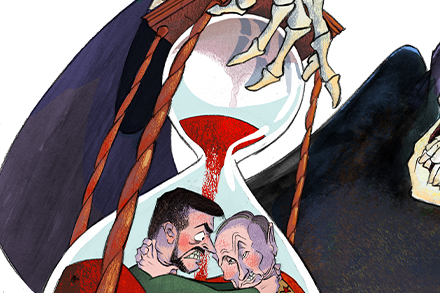
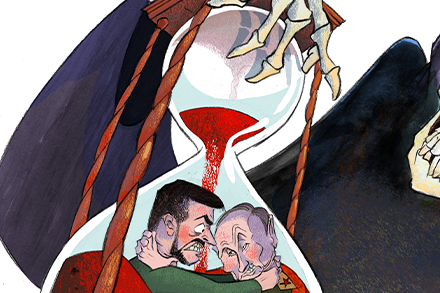
Putin has lost touch with reality

From our UK edition

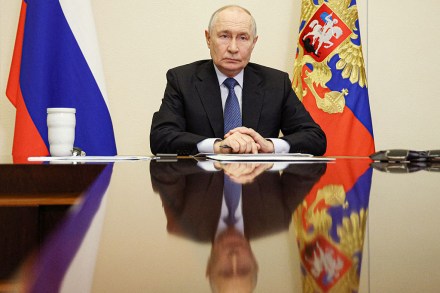
As dark clouds of burning oil billow like thunderheads on the skyline of Moscow and black rain falls across the capital, why does Vladimir Putin fail to see that something fundamental is changing in the dynamic of his war? Why, when Donald Trump effectively agreed to hand over every inch of the Ukrainian territory Russia has captured and offered the Kremlin an easy off-ramp studded with juicy business deals, did Putin refuse? And why, for that matter, did the Russian President choose to launch his full-scale invasion of Ukraine in the first place? One answer is that Tsar Vladimir is mad, so blinded by his imperialist ambitions that he deliberately chooses to ignore the reality of a crashing economy, half a million dead fellow countrymen and a war that is obviously unwinnable.

Chinese puzzle or matryoshka doll – the complexity of Sino-Russia relations

From our UK edition

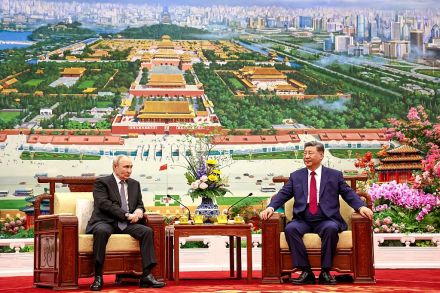
China and Russia are twins. Both are great Asian land empires; both are continental, multi-ethnic powers that expanded by pushing forward their borders rather than by crossing oceans; both have a deep tradition of autocracy that survives to this day; and both (more plausibly in China’s case) believe that their social contract, ideology and system of government is a universal one superior to all others. In Entangled Empires, the German historians Sören Urbansky and Martin Wagner explore the convoluted story of Russo-Chinese relations from the moment in the mid-17th century that roving Cossack bands bumped up against Siberian tribes who owed fealty to Beijing up to the latest performative amity between Vladimir Putin and Xi Jinping.

The ‘great man’ era is passing away

Not long ago, I participated in one of the many off-the-record discussions in Washington about ending the war in Ukraine. This conversation was quite detailed, with American academics and policy wonks asking a European who was especially well-informed on Russian matters just what a land-for-peace deal or security guarantees acceptable to all parties might look like. When my turn to speak came around, however, I had to wonder whether all this wasn’t moot. There just isn’t much time to reach an agreement – let alone implement one –before the end of Donald Trump’s second term. And when America elects its next president in November 2028, Vladimir Putin will be 75 years old.

The President is winning the geopolitical battle with China

Almost all media commentators seem convinced that Donald Trump’s foreign policy in his second term is a disaster. He is bogged down in Iran, snookered in Ukraine, his tariff agenda has failed and he has alienated his NATO allies. But this consensus has been too hastily formed. Looking at the bigger global picture, Trump’s foreign policy has been a spectacular success. Take the western hemisphere. We have the so-called “Donroe Doctrine,” the updated version of the 19th-century Monroe Doctrine.

war

Forever war: will Zelensky and Putin be brought to an exhausted peace?

Volodymyr Zelensky stood proudly on the steps of 10 Downing Street earlier this month, flanked by Sir Keir Starmer and the leaders of France and Germany, ready to discuss Europe’s latest package of support for Ukraine’s ongoing war effort. Though the conflict has now lasted longer than World War One, Zelensky is in some ways in the most heroic period of his presidency. Ukraine not only continues to stand firm against intense Russian assaults but also seems to be regaining a strategic advantage with its long-range drone strikes. Europe has stepped up to replace US funding and diplomacy and the fall of Hungary’s Viktor Orbán has unlocked a €90 billion loan package. Yet it is also the most sordid period of Zelensky’s presidency.

Forever war: will Zelensky and Putin be brought to an exhausted peace?

Volodymyr Zelensky stood proudly on the steps of 10 Downing Street this week, flanked by Sir Keir Starmer and the leaders of France and Germany, ready to discuss Europe’s latest package of support for Ukraine’s ongoing war effort. Though the conflict has, as of this week, lasted longer that the first world war, Zelensky is in some ways in the most heroic period of his presidency. Ukraine not only continues to stand firm against intense Russian assaults but also seems to be regaining a strategic advantage with its long-range drone strikes. Europe has stepped up to replace US funding and diplomacy and the fall of Hungary’s Viktor Orban has unlocked a €90 billion loan package. Yet it is also the most sordid period of Zelensky’s presidency.

Russia is relying on drones to bring it victory in Ukraine

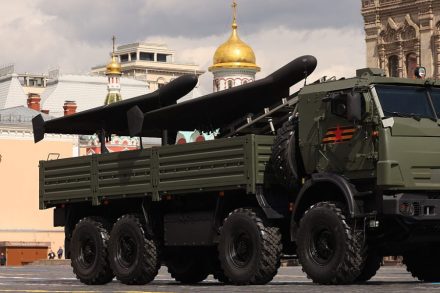
Earlier this week, Ukraine was subjected to one of the largest aerial assaults by Russia since the start of Vladimir Putin’s invasion over four years ago. Overnight from Monday into Tuesday, Russia sent 73 missiles and 656 drones into Ukraine, killing at least 21 and injuring dozens across the country. According to the Russian Ministry of Defense, this strike was retaliation for a Ukrainian attack on a vocational school in the occupied region of Luhansk on May 22. But, as the Kremlin’s war grinds on well into its fifth year, it also appears to signal a step change in how the Russian armed forces are choosing to fight.

russian

How Iran turned Trump’s propaganda against him

From our UK edition

On 19 November 1941, King George and Queen Elizabeth paid a visit to Woburn Abbey, home of Britain’s covert propaganda war against the Nazis. Surrounded by a park full of rare monkeys, and among corridors bearing Old Masters, the King and Queen were presented with ‘Britain’s Secret Army’, a fleet of radio stations that broadcast subversive content deep into enemy territory. Sefton Delmer, who before the war had been a foreign correspondent for the Daily Express, presented his new German station. While the officious BBC German Service was lecturing Germans about the virtues of democracy and the evils of fascism, Delmer was trying something different.

Should Europe mediate Russia-Ukraine talks?

The worst job in the world is to try negotiating with President Vladimir Putin to end the war in Ukraine to everyone’s satisfaction. Yet European leaders want to do just that. Frustrated by the failure of the Trump administration to negotiate anything of value with Putin, Europe is scurrying around looking for the ideal candidate to confront the Russian leader across the table and bash out a peace deal. It’s a fantasy world, of course. If Putin obstructed Trump, his old sparring partner, and never remotely got close to a deal with the Americans, why would he consider sitting down with some European leader, or ex-leader, to bring the four-year war to an end?

europe

Is the West deserting Ukraine at precisely the wrong moment?

From our UK edition

Moscow is coming under direct drone attack, the Russian economy is creaking, patriotic bloggers are ever more apocalyptic in their predictions of military disaster and evidence is piling up that Russia’s elites are becoming seriously disillusioned with the war and Vladimir Putin himself. Is this the moment for Britain to desert Ukraine by easing sanctions and refusing to commit more money to Kyiv’s military? Last week, the British government issued licences for the import of gasoline products from Russia refined in a third country. No. 10 also approved  licences for British companies to continue to service tankers carrying Russian liquefied natural gas (LNG).

How Putin got the Hollywood treatment

Sometimes life disappoints you in interesting ways. I hated Giuliano da Empoli's 2022 book The Wizard of the Kremlin, a fictional political thriller about the dawn of Putinism, with a shuddering passion. I had, therefore, been looking forward to despising the film version when it arrived in cinemas last month, too.  Yet it turns out that TWotK, directed and co-written by French filmmaker Olivier Assayas, is an impressive film: visually stunning, well cast, a straight story well told. Paul Dano (the greasy-faced young preacher from There Will Be Blood) plays Vadim Baranov, the fictional ‘Wizard’ of the title, a whizkid theatre and TV executive tasked with creating and curating a successor to the ailing Boris Yeltsin.

Russians no longer believe Putin’s war propaganda

A year ago, Russia marked the May 9 Victory Day celebration with a spectacular display of fireworks that lit up the Moscow sky. This year the fireworks have again been spectacular – but this time they have been caused by long-range Ukrainian attack drones slamming into refineries, pumping stations and factories deep inside Russia. In the Black Sea port of Tuapse, fireballs of burning gasoline 15 stories high erupted over the local oil refinery, while rivers of burning fuel ran down the city’s streets. Firefighters took three days to extinguish the inferno, which created a plume of smoke so high it was filmed by skiers from the slopes of the Caucasus mountains more than 60 miles away.

russia putin russians

Russians no longer believe Putin’s war propaganda

A year ago, Russia marked the 9 May Victory Day celebration with a spectacular display of fireworks that lit up the Moscow sky. This year the fireworks have again been spectacular – but this time they have been caused by long-range Ukrainian attack drones slamming into refineries, pumping stations and factories deep inside Russia. In the Black Sea port of Tuapse, fireballs of burning gasoline 15 storeys high erupted over the local oil refinery, while rivers of burning fuel ran down the city’s streets. Firefighters took three days to extinguish the inferno, which created a plume of smoke so high it was filmed by skiers from the slopes of the Caucasus mountains more than 60 miles away.

Russia is running out of workers

Vladimir Putin likes good statistics. At a government meeting on April 15, even as he acknowledged that growth was slowing, he pointed proudly to Russia's unemployment rate: 2.1 percent, a record low. Proof, he suggested, that the economy remains fundamentally sound despite everything the West has thrown at it. The Russian President would do better to worry. A record low unemployment rate is not, in normal circumstances, cause for alarm. In Russia's case it signals something closer to a slow-motion emergency. For the first time in its post-Soviet history, Russia has run out of workers.

workers
coup

No, Russia is not on the verge of a coup

However much Western leaders inveigh against Russian disinformation (which, yes, is a real issue), we should never pretend this is not a two-way street. The sudden spate of news stories reporting that a conveniently anonymous "European intelligence agency" claims that the Kremlin fears a coup looks suspiciously more like a psy-op meant to generate paranoia in the Russian elite than a serious assessment. The claim is that Putin’s personal security has been dramatically stepped up, not simply to protect him from increasingly frequent and far-ranging Ukrainian drone strikes but, in particular, because since the beginning of March, the Kremlin and Vladimir Putin himself have been concerned about the risk of a plot or coup attempt targeting the Russian President.

The chaotic truth about Russia’s internet blackouts

From the modern metropolises of Moscow and St. Petersburg to Arkhangelsk on the permafrosted northern coast and Khabarovsk on the Chinese border, for over a week now, Russian cities have been experiencing unprecedented interruptions to mobile internet coverage. Ostensibly for security reasons, the rumor mill has inevitably cranked out all kinds of alternative explanations, from fear of a coup to preparations for a comprehensive imposition of state control on the "runet," Russia's online world. Notions that Vladimir Putin fears some imminent coup can most quickly be laid to rest. There is dissatisfaction with the continuing war and its economic consequences, but nothing to suggest anything more serious.

russian

Those who believe in liberalism must now fight for it

I’m conscious that, just as the easiest way to lose an argument is to mention Hitler, so the easiest way to lose journalistic credibility is to invoke the 1930s. Yet the similarities to our own dismal decade are now too numerous to ignore. There is the same collection of morbid symptoms: the rise of strongmen, the collapse of the political centre, the intellectual organisation of political hatreds. Even more worryingly, there is the same sense of hurtling towards global conflagration. The similarities begin with the disintegration of the international order.

The Iran war is just what Putin’s depleted coffers need

Of all the parties watching the chaos in the Middle East unfold, one should be rubbing its hands together with particular satisfaction. Russia has not fired a shot in this conflict, lost no allies it cannot afford to lose and has so far gained rather a lot, with more to come. A cynic might call it the perfect war for Vladimir Putin. Moscow's public reaction has been characteristically theatrical. The Foreign Ministry denounced American and Israeli actions as a "reckless step" and a "dangerous adventure." Things have gone no further. There has been no announcement of political or military support for Iran from the Kremlin – nor is there likely to be: Russia needs its drones and missiles for Ukraine.

putin

Putin is enjoying the Iran war

After Iran unleashed a torrent of missiles against its neighbors – including those with whom it had enjoyed friendly relations such as Turkey and Azerbaijan – few regional leaders are in the mood to congratulate the new Supreme Leader Ayatollah Mojtaba Khamenei. Few, but not none. "At a time when Iran is confronting armed aggression, your work in this high office will undoubtedly require great courage and dedication," wrote Vladimir Putin in an official message of congratulation to Khamenei Junior. "I am confident that you will honorably continue your father’s legacy and unite the Iranian people in the face of these severe trials.

‘More than half our squad were executed’: Inside Russia’s rotten army

The Russians are on the warpath – and Europe is Vladimir Putin’s next target. That was Sir Keir Starmer’s alarming claim at the Munich Security Conference earlier this month. Britons ‘must be ready to fight, to do whatever it takes to protect our people, our values, and our way of life’, Starmer warned. Britain and Germany’s top military commanders delivered the same message in a recent article. Russia’s military posture ‘has shifted decisively westward’, wrote Air Chief Marshal Sir Richard Knighton and General Carsten Breuer. Soon the Kremlin ‘may be emboldened to extend its aggression beyond Ukraine’. Really? According to much western coverage in mainstream and social media, the Russian army is crumbling, corrupt and inept.