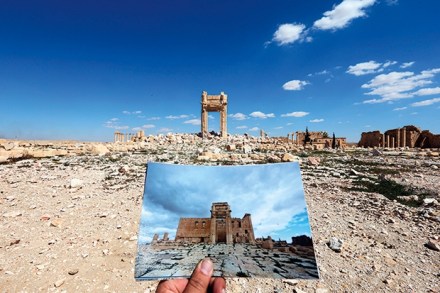
From the Tate to Palmyra: to preserve great art, let it decay and regenerate
Strolling around Tate Modern’s recent Alexander Calder exhibition, something bothered me. Calder is best known for creating mobile, rather than static, sculptures; most of his pieces were intended to move, but some were now sitting lifelessly by the gallery’s white walls. It’s hard to appreciate how radical Calder’s kinetic art was in its time. Hergé, who owned one of Calder’s sculptures, put it best: 'I don’t know if you are familiar with his "mobiles". They consist of elements of light metal, assembled by thin wires. When hung from the ceiling, the slightest draught will make them move. They are graceful, light and extraordinarily poetic.' They sure are, or were.