Visual art

The demise of London’s junk shops

‘The place through which he made his way at leisure was one of those receptacles for old and curious things which seem to crouch in odd corners of this town and to hide their musty treasures from the public eye in jealousy and distrust.’ In Dickens’s The Old Curiosity Shop, Nell Trent’s grandfather loses his precious shop to the malicious money-lender Quilp. London’s junk shops have, it seems, always been under some form of threat. But the forces against them today appear unstoppable. The junk shop is increasingly the sole preserve of the city’s ‘odd corners’ – pushed out by hiked rents, the charity-shop boom with its variety of cost

The alt-right are clueless about neoclassicism

The adherents of the American alt-right are not known for their delicate aesthetic sensibilities, but there is an exception. They love neoclassical architecture and are calling for it to be deployed in the 250th celebrations this year of what they still call ‘the country of liberty’. Judging from the desecration of the Oval Office and its surroundings, and the plans for the world’s most expensive dance hall, what they have in mind is a style derived not from ancient Greece and Rome but 1950s Technicolor movies. Donald Trump’s White House interior reminds me of Hogarth’s crisp verdict on French 18th-century rococo interiors: ‘All gilt and beshit.’ Expect more of the

How fantastic to see Hogarth’s largest paintings in their original glory

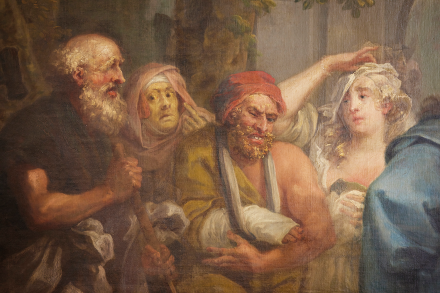
The long overlooked staircase by Hogarth at St Bartholomew’s Hospital has been cleaned and restored in a £9.5 million scheme. It is now open to the public, the management says, for the first time since the 1730s, although when I lived nearby in the 2000s, I used to slip in to look at it sometimes. No one seemed to mind. Murals are of course the original site-specific artworks, and you have to enter a working hospital to see this one. Literally: turn right for the clap clinic, turn left for the Hogarth mural. Turn right for the clap clinic, turn left for the Hogarth mural You might pass a small

In praise of French brothels

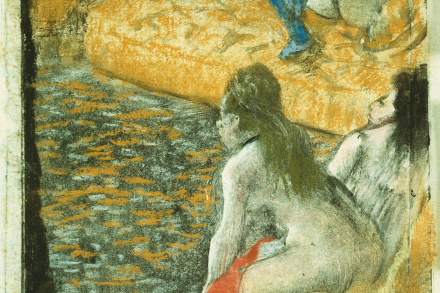
In the days of the Belle Époque and Jazz Age, a trip to Paris would have included, for the discerning tourist, a visit to the Eiffel Tower, Notre-Dame and the Comédie Française, but also to Le Chabanais, the One-Two-Two or Le Sphinx. There would have been no need to give the driver an address: they would have known exactly where to go, for these were Paris’s most luxurious brothels, famous the world over for their beautiful inhabitants, sumptuous interiors, outlandishly themed rooms and specially designed erotic furniture. This year marks the 80th anniversary of the abolition of the French maisons closes system – also known as maisons de tolérance –

Constable changed the course of painting, not Turner

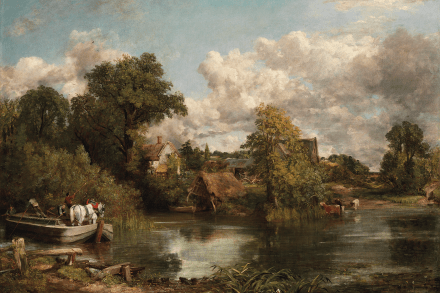
Flanders and Swann; Tom and Jerry. Some things come in pairs. Like Turner and Constable, even though our two most famous painters were more like chalk and cheese than cheese and pickle. They were close contemporaries: Turner was born in 1775, Constable a year later. Both painted landscapes. But that’s almost all they had in common. In every other way that matters, personal and artistic, they could hardly have been more different. Turner was a prodigy, a student at the Royal Academy Schools from the age of 14 and an associate (ARA) at 24. That same year, Constable had only just enrolled in the Schools, and was not elected ARA

Am I a useful idiot visiting Uzbekistan’s first art biennial?

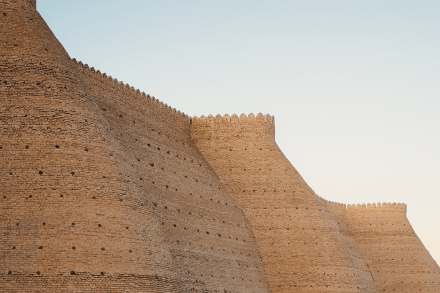
In the ruins of a 16th-century mosque, in the heart of the ancient silk-road city of Bukhara, dozens of abstract figures stand mute and motionless. As the desert sun dips below the horizon, and the shadows thicken, the effect is eerie. Wandering among the statues alone, you feel as though you’ve stumbled upon the aftermath of a forgotten, inscrutable rite. But these aren’t Ozymandian relics. They’re an artwork, ‘Close’, installed last summer by the British sculptor Antony Gormley. His work was one of more than 70 scattered across the Unesco World Heritage city as part of the inaugural Bukhara Biennial, which ran from 5 September to 23 November last year.

Why is divorce so seldom addressed in art?

Two years ago I was flown to Reykjavik to interview the Icelandic performance artist Ragnar Kjartansson. It was a weird old trip, booked in at 48 hours’ notice, but Ragnar was consistently charming and generous. Indeed, the only slightly touchy moment came when I asked him about his 2012 video installation The Visitors, a berserk undertaking split across nine screens, in which the artist and an entourage of musician friends spend 52 minutes chanting the baleful refrain from a song written by his then recent ex-wife. The artist tensed up as he considered the question. ‘Shit, I gotta go,’ he said. He probably did, but his reticence might also have

Why was the 19th century so full of bigots and weirdos? 

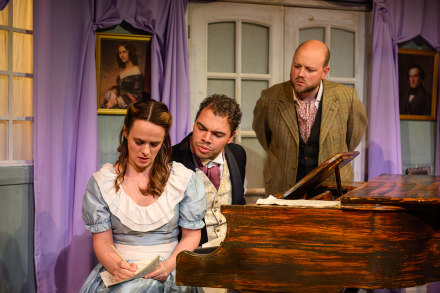
Da Vinci’s Laundry is based on an art world rumour. In 2017, Leonardo’s ‘Salvator Mundi’ sold at Christie’s for $450 million but some experts claimed that the attribution was inaccurate. Could the world’s costliest artwork be a fake? Writer, Keelan Kember, considers the provenance of a fictional Leonardo owned by a thuggish oligarch, Boris, who claims to have bought the masterpiece at a flea market. He invites two posh British experts, Christopher and Milly, to authenticate the painting and when Christopher questions its origins he earns Boris’s instant displeasure. Boris threatens to toss Christopher from the roof of his luxury mansion. Enter a brash American, named Tony, who wants to

Condoms in 18th-century painting

Waldemar Januszczak and Bendor Grosvenor’s art podcast has returned after nearly five years. It is, says Januszczak, ‘the podcast they could not stop – but they did have a jolly good try’. What happened? It isn’t clear; there are teases that it revealed too much, which is anyway a good ploy for attracting listeners. ‘Subversive’ is not the first word that springs to mind when tuning in to the two unlikely chums. Their regular feature, ‘Shocking News from the Artworld’, is more Apollo than Nigel Dempster. For example: Christie’s has closed the digital art department that dealt in NFTs, the crypto tokens going the way of the dodo. And Gabriele

Save art history!

A few weeks ago I went along to a lecture on the Welsh artist, poet and soldier David Jones. Kenneth Clark considered him ‘the most gifted of all the young British painters’. The talk, by a recent art-history graduate with a first-class degree from a reputable university, began at a cracking pace. It was only when he started to show slides to illustrate his talk that I began to feel very hot and sweaty. The paintings were not by Jones but his near-contemporary Stanley Spencer. Jones did share with Spencer the experience of serving with the British Army during the first world war. And both were stimulated by this immersion

R.S. Thomas – terrific poet, terrible husband

Love’s Moment is one of those quiet radio programmes you’re unlikely to have read about. It aired without fanfare at 4 p.m. on Tuesday, an understated yet engrossing one-off, half-hour documentary. It can now be found in the recesses of BBC iPlayer. It opened with a compelling question: ‘What happens when two artists fall in love and marry, and as one’s reputation soars, the other’s is slowly forgotten?’ Narrator Gwyneth Lewis, former National Poet of Wales, might have been alluding to any artistic couple in history, but her subjects were R.S. Thomas and Mildred Eldridge. Thomas was one of the most popular poets in Wales in the last century. He was an

How the railways shaped modern culture

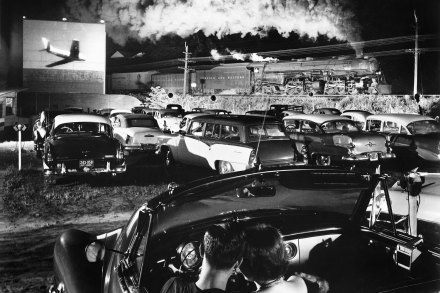
Cue track seven of Frank Sinatra’s 1957 album Only the Lonely and you can hear Ol’ Blue Eyes pretending to be a train. It’s not that he’s a railway enthusiast (though Sinatra, like many musicians, was an enthusiastic collector of model trains). No, it’s written into the words and music of Harold Arlen and Johnny Mercer’s song ‘Blues in the Night’: ‘Now the rain’s a-fallin’, hear the train a-callin’ “whoo-ee”.’ And so Sinatra sings it, just as Ella Fitzgerald, Peggy Lee and Louis Armstrong sang it. It’s an American classic, defined by the sounds that permeate the soul of American popular music: the sounds of the railway. Two hundred years

The greatest decade for British painting since Turner and Constable? The 1970s

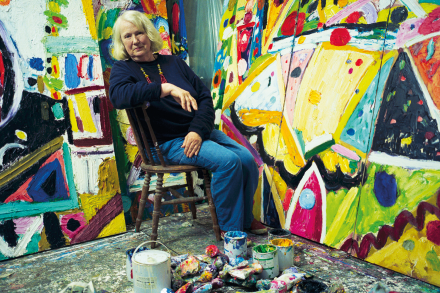
Slowly the canvas was unfurled across the concrete floor of a warehouse on an industrial estate in Suffolk. On and on it went, a flurry of paint marks and brush strokes, yellow, green and occasionally blue, like a cornfield at harvest time. By the time we got to the end some seven metres of it lay stretched out at our feet. It was the first time anyone had seen this unknown magnum opus by Gillian Ayres since it was rolled up in 1974 – and it looked sensational. Recently I’ve been reflecting on the 1970s for a couple of reasons. One is that I’m working on a book about art

In defence of deaccessioning

There’s more than a grain of truth in the popular caricature of a curator as a mother hen clucking frantically if anyone gets too near her nest – not that her eggs are about to hatch, let alone run. The recent threat of the British Council to ‘deaccession’ – to put it more bluntly, sell – its 9,000-strong collection of British art has caused a predictable flurry in the curatorial world. Doesn’t the British Council know that public art collections are sacrosanct and must be preserved for all time? When I was director of Glasgow’s museums and art galleries, I remember talking to my committee about my long-term plans for

The triumph of surrealism

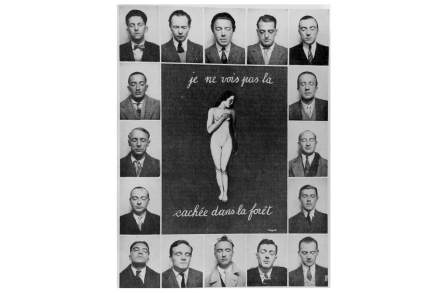
When Max Ernst was asked by an American artist to define surrealism at a New York gathering of exiles in the early 1940s, he pointed across the room at André Breton and said: ‘That is surrealism.’ Even today it can seem as if no other answer is available, so tenacious was his grip. A former student of neurology and psychiatry, with no qualifications other than an instinct for the coming thing (‘an astute detector of the unwonted in all its forms’, as he later described his fellow conspirator Louis Aragon), Breton encountered the early writings of Freud as a medical orderly on a trauma ward, during the first world war,

How did we ever come to accept the inhumane excesses of capitalism?

What was neoliberalism? In its most recent iteration, we think of the market seeping into every minute corner of human existence. We think of privatisation, off-shoring and the parcelling out of services to the highest bidder. Neoliberalism takes the proud liberal individual – in pursuit of his or her happiness, rather keen on freedom – and shreds them through a mean-spirited calculator to come up with some sort of shrunken market midget, an efficient risk-evaluating robot. Neoliberalism takes the proud individual and shreds him or her through a mean-spirited calculator Yet even though the market is supposed to be the arbiter of everything, repeated state intervention appears to be necessary

Why art biennales are (mostly) rubbish

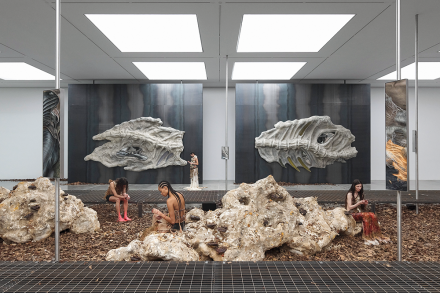
Should you visit Malta this spring, you may notice something decidedly weird is afoot. Across the public squares of its capital, Valletta, performance artists are blocking busy thoroughfares and causing havoc on packed café terraces. The Hospitaller and British military forts that dominate the capital’s famous harbour, meanwhile, are full of dysfunctional installation work, while the curio-filled vitrines of local museums are forced to compete with video art. Even the Grandmaster’s Palace – for centuries the country’s seat of power – has accommodated several dozen mini-exhibitions on the theme of ‘the Matri-archive of the Mediterranean’. As more than one artist showing work in these places told me, the venues were

Why did this brilliant Irish artist fall off the radar? 

Sir John Lavery has always had a place in Irish affections. His depiction of his wife, Hazel, as the mythical figure of Cathleen ni Houlihan, which appeared on the old ten shilling and subsequently on the watermark of the Irish pound notes, meant, as the joke went, that every Irishman kept her close to his heart. He was indeed Irish – born in Belfast – but was at home in Scotland, and was the best known of the spirited group of painters called the Glasgow Boys. Yet he lived most of his life in London, was friends with Winston Churchill (they took a painting trip together) and also with Michael

The greatest artist chronicler of our times: Grayson Perry, at the Edinburgh Art Festival, reviewed

The busiest show in Edinburgh must be Grayson Perry: Smash Hits which, a month into its run, still has people queuing at 10 a.m. His original title, National Treasure, was rejected because ‘national’ is a politically loaded term in Scotland. But Perry’s lens is resolutely fixed on England and Englishness. Seen from a Scottish perspective, this riot of rococo folkishness is familiar and exotic. Grayson Perry is the greatest artist chronicler of our times, with an omnificent style that’s all substance The exuberant exhibition, which is curated by the National Galleries of Scotland but showing at the Royal Scottish Academy and ends on 12 November, slaps the viewer around the

Joshua Reynolds’s revival

In front of the banner advertising the RA Summer Exhibition, the swagger statue of Sir Joshua Reynolds (1723-92) by Alfred Drury stands garlanded with flowers. But the Academy he founded won’t be marking his tercentenary with a retrospective, just a small display and a series of artists’ lectures. For an anniversary show, you have to travel to his native Devon. Ever since the Pre-Raphaelites dubbed him ‘Sir Sloshua’, Reynolds has been out of fashion Ever since the Pre-Raphaelites dubbed him ‘Sir Sloshua’, Joshua Reynolds has been out of fashion: blame the outmoded ideals of beauty he promoted in his Discourses and his role as portraitist to the Georgian establishment. But